

Introduction: Automation Upgrade in Powder Handling Systems
In modern industrial production, automatic bag opening and feeding in pneumatic conveying systems has become a key solution for improving efficiency, reducing labor costs, and ensuring clean material handling, especially in industries where powders are delivered in bags and require continuous feeding into production lines. Traditional manual bag handling methods are not only labor-intensive but also prone to dust generation and inconsistent feeding, which can negatively impact the overall performance of a pneumatic conveying system.
By integrating automatic bag opening machines with pneumatic conveying technology, manufacturers can achieve a fully automated workflow that connects bag unloading, material feeding, and pipeline transport into a seamless and efficient process.
Material Characteristics and Handling Challenges
The implementation of automatic bag opening and feeding in pneumatic conveying systems is particularly important for handling powders and granular materials that are sensitive to dust, contamination, or inconsistent flow conditions. Common materials include cement powder, chemical additives, flour, sugar, plastic resins, and pharmaceutical ingredients, many of which are fine, lightweight, and prone to dispersion during manual handling.
In addition, some materials may have poor flowability or may generate static electricity, which can complicate feeding and conveying processes, making automated systems essential for maintaining stable and controlled material transfer.
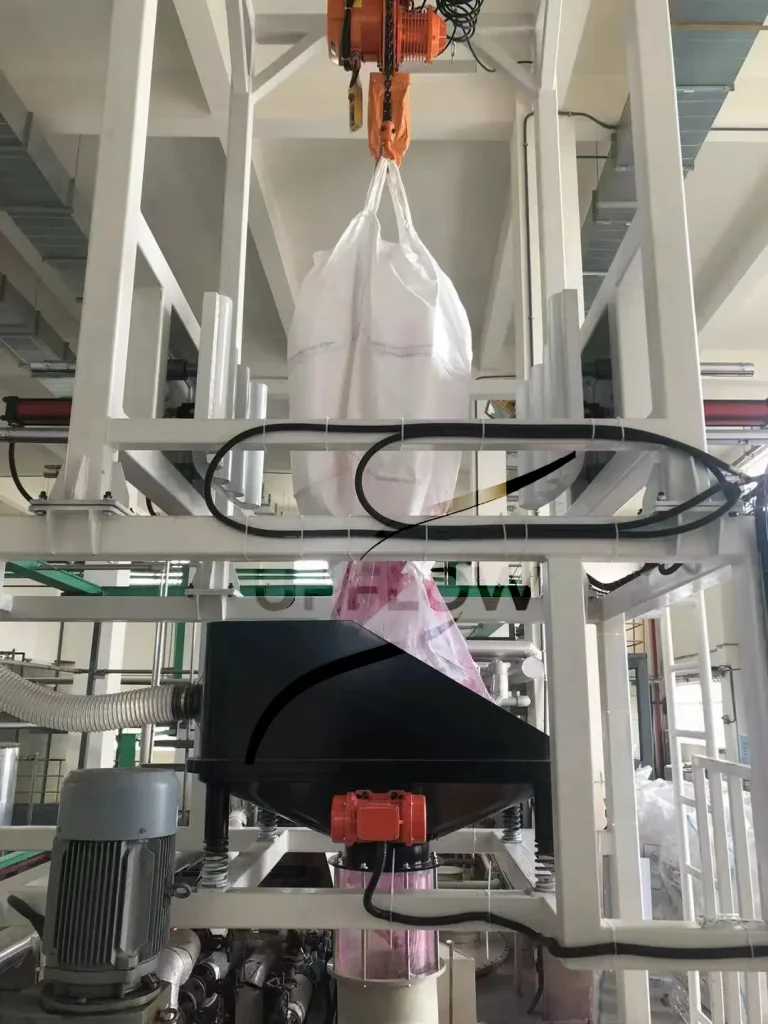
Working Principle of Automatic Bag Opening and Feeding Systems
The process of automatic bag opening and feeding in pneumatic conveying systems involves several coordinated steps, beginning with loading bagged materials into an automatic bag opening machine, followed by cutting or tearing the bags and discharging the contents into a feeding hopper. Once the material is released, it is immediately transferred into the pneumatic conveying pipeline, where airflow transports it to downstream equipment such as silos, mixers, or packaging systems.
This automated sequence eliminates manual intervention while maintaining a closed and dust-controlled environment, which significantly enhances both efficiency and hygiene in industrial production.
System Components and Integration
A complete solution for automatic bag opening and feeding in pneumatic conveying systems typically includes an automatic bag opening machine, feeding and metering devices, conveying pipelines, dust collection units, and control systems, all of which are integrated into a unified material handling system. The bag opening equipment separates packaging materials from the powder, while feeding devices such as rotary valves or screw feeders regulate the flow into the conveying line to ensure stable operation.
At the same time, dust collection systems capture airborne particles generated during bag opening, ensuring that the entire process remains clean and compliant with environmental standards.
Advantages for Pneumatic Conveying System Performance
Integrating automatic bag opening and feeding in pneumatic conveying systems significantly improves overall system performance by ensuring continuous and controlled material input, which helps maintain stable airflow conditions and reduces the risk of pipeline blockage. Compared with manual feeding, automated systems provide consistent feeding rates, allowing the pneumatic conveying system to operate at optimal efficiency without unnecessary pressure fluctuations.
Furthermore, automation reduces labor requirements and minimizes operator exposure to dust or hazardous materials, contributing to safer and more efficient production environments.
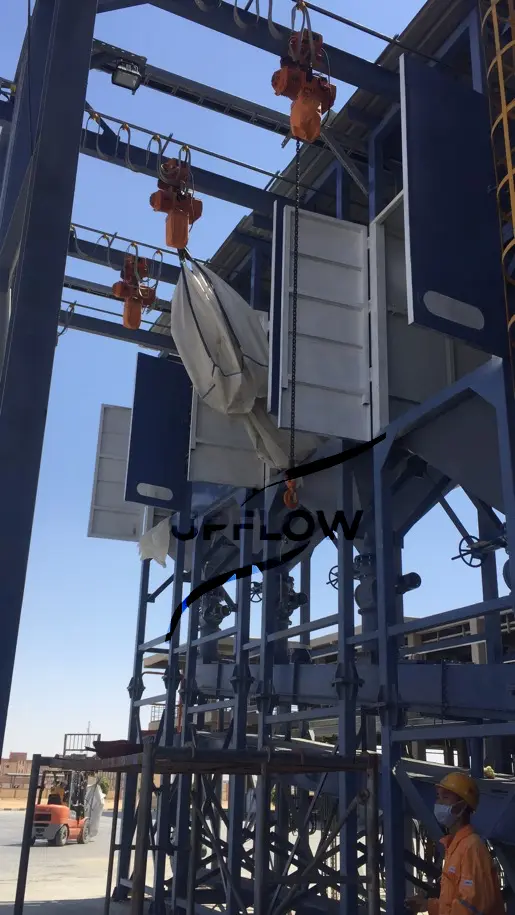
Applications in Industrial Production Lines
The use of automatic bag opening and feeding in pneumatic conveying systems is widespread across industries such as chemicals, food processing, pharmaceuticals, plastics, and construction materials, where large quantities of bagged materials must be handled efficiently. In many cases, these systems are integrated into fully automated production lines, enabling materials to be transferred directly from bag unloading stations to processing equipment without intermediate handling.
This integration supports higher production capacity, improved process consistency, and better plant layout optimization.
Conclusion: A Key Upgrade for Modern Pneumatic Conveying Systems
Overall, automatic bag opening and feeding in pneumatic conveying systems represents a significant advancement in material handling technology, providing a cleaner, safer, and more efficient alternative to traditional manual processes. By combining automation with enclosed conveying, manufacturers can achieve higher productivity, reduced operational costs, and improved environmental performance, making this solution an essential component of modern industrial powder handling systems.