
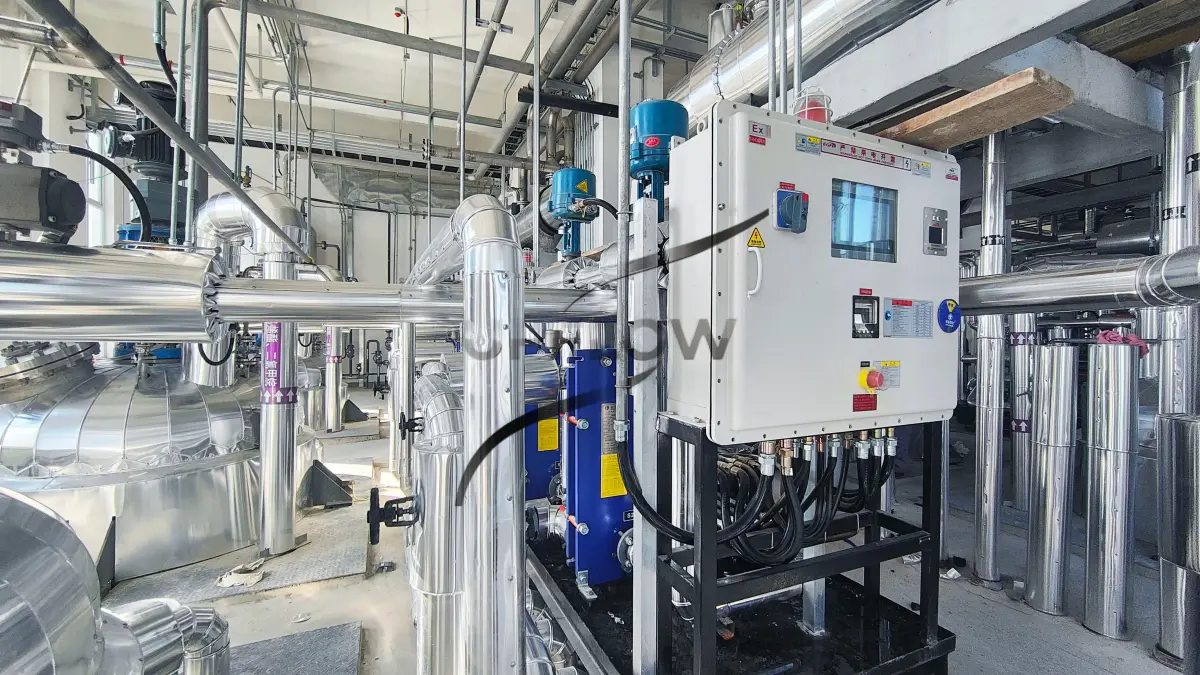
In modern chemical production environments where safety, efficiency and environmental protection are increasingly critical, a well-designed positive pressure conveying system has become one of the most reliable and scalable solutions for handling bulk powders and granular materials, as it enables continuous, enclosed and dust-free transportation over long distances while maintaining stable throughput and minimizing contamination risks, making it particularly suitable for chemical plants that process materials such as calcium carbonate, PVC powder, resins, additives and various fine chemicals.
Industry Background: Why Chemical Plants Prefer Positive Pressure Conveying Systems
Compared with traditional mechanical conveying equipment such as screw conveyors, which often suffer from dust leakage, wear, material degradation and complex maintenance requirements, chemical manufacturers are increasingly shifting towards pneumatic solutions because they can achieve a higher level of automation, improve workplace cleanliness and significantly reduce manual intervention, especially in processes where materials need to be transported between multiple production stages or over long horizontal and vertical distances within confined plant layouts.
Furthermore, chemical materials often exhibit characteristics such as fine particle size, abrasiveness, hygroscopicity or potential explosiveness, which require a conveying method that not only ensures smooth flow but also minimizes the risk of blockage, segregation or environmental contamination, and this is where a properly engineered positive pressure pneumatic conveying system demonstrates its advantages by using compressed air as the driving force to move materials through pipelines in a controlled and efficient manner.
System Solution: How Positive Pressure Conveying Works in Chemical Applications
A typical positive pressure conveying system for chemical industry operates by introducing compressed air at the feeding point, which generates a forward-moving airflow that pushes bulk materials through a closed pipeline toward one or multiple discharge points, allowing flexible routing and centralized material distribution across different processing units.
Unlike vacuum conveying systems that rely on negative pressure and are generally limited in conveying distance and capacity, positive pressure systems are particularly suitable for medium to long-distance conveying, high throughput requirements and multi-destination delivery, which are common in large-scale chemical plants where materials need to be transferred from storage silos to reactors, mixers or packaging lines.
In practical engineering design, these systems are often integrated with upstream and downstream equipment such as automatic bag emptying machines, dosing systems and storage silos, forming a complete powder handling and conveying solution that ensures seamless material flow throughout the production process.
Key Components of a Positive Pressure Conveying System
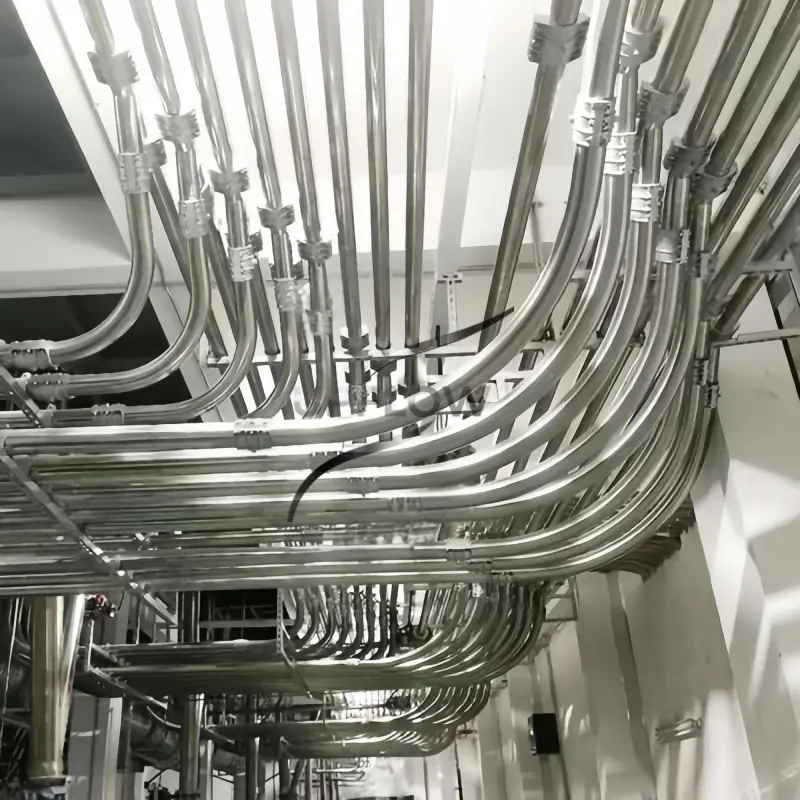
To ensure stable performance and long-term reliability, a well-designed system typically includes several critical components working together in a coordinated manner, including a feeding device such as screw feeder that introduces materials into the pipeline while maintaining pressure balance, a compressed air source that provides the driving force for material transport, a pipeline network designed to minimize pressure loss and prevent material accumulation, and a separation unit such as a cyclone or dust collector that efficiently separates the conveyed material from the conveying air at the discharge point.
Design Considerations for Chemical Industry Applications
When designing a positive pressure conveying system, it is essential to carefully evaluate multiple parameters that directly influence system performance, including material properties such as bulk density, particle size distribution, moisture content and flowability, as these factors determine the appropriate conveying mode (dense phase or dilute phase) and air velocity required to achieve stable transport without causing pipeline blockage or excessive material degradation.
In addition, conveying distance, pipeline layout and elevation changes must be considered during the design phase, as longer distances and complex routing can increase pressure drop and energy consumption, requiring optimized pipe diameter selection and air supply configuration to maintain efficiency.
For chemical applications involving abrasive or sensitive materials, the selection of wear-resistant pipeline materials or special coatings may also be necessary to extend system lifespan and prevent contamination, while explosion-proof design and dust control measures should be implemented when handling combustible powders to ensure compliance with safety regulations.
Application Case: Integrated Conveying System for Chemical Powder Handling
In one of our recent projects for a chemical processing plant handling calcium carbonate powder, the client required a solution capable of conveying material from bulk bag unloading stations to multiple storage silos and downstream mixing equipment over a distance of more than 60 meters, while maintaining a clean working environment and minimizing manual handling.
To address these requirements, we designed and supplied an integrated positive pressure conveying system combined with an automatic bag emptying station and dust collection unit, which allowed operators to unload bulk materials efficiently while ensuring that all conveying processes were enclosed and dust-free.
After implementation, the system not only improved conveying efficiency and reduced labor intensity but also significantly enhanced workplace cleanliness and production stability, demonstrating the effectiveness of a well-designed pneumatic conveying solution in chemical industry applications.
Conclusion: Why Positive Pressure Conveying is the Preferred Choice
As chemical plants continue to pursue higher levels of automation, environmental compliance and operational efficiency, positive pressure pneumatic conveying systems are becoming an increasingly preferred solution due to their flexibility, scalability and ability to handle a wide range of materials under controlled conditions, making them suitable for both new installations and upgrades of existing production lines.
Get Your Customized Conveying Solution
If you are looking for a reliable and efficient positive pressure conveying system for chemical industry, our engineering team can provide customized system design, equipment selection and complete turnkey solutions tailored to your specific material characteristics and production requirements.
Contact us today to get a free technical consultation and quotation within 24 hours, and let us help you optimize your powder handling process with a high-performance conveying system.