
Introduction
In modern industrial production, a barium carbonate pneumatic conveying system is widely used for transporting powder and granular materials through enclosed pipelines using airflow as the driving force, and it plays an important role in improving production efficiency, reducing dust pollution, and enabling automated material handling across chemical, ceramics, glass, and building material industries. Compared with traditional conveying methods, a well-designed barium carbonate conveying system ensures stable operation while minimizing material loss and environmental impact.
Barium Carbonate Material Characteristics
Barium carbonate (chemical formula: BaCO₃), also known as witherite, is a white powder material widely used in ceramics, glass, bricks, and chemical processing industries. It typically has a bulk density of approximately 0.8–1.2 t/m³ in powder form, and due to its fine particle size, it is prone to dust generation during handling.
Under dry conditions, barium carbonate generally exhibits moderate flowability, but in humid environments it may absorb moisture and become cohesive, which can lead to agglomeration, bridging, or even blockage in pipelines. Therefore, the use of a properly designed barium carbonate closed conveying system is essential to ensure stable material flow and maintain product quality.
Overview of Barium Carbonate Pneumatic Conveying
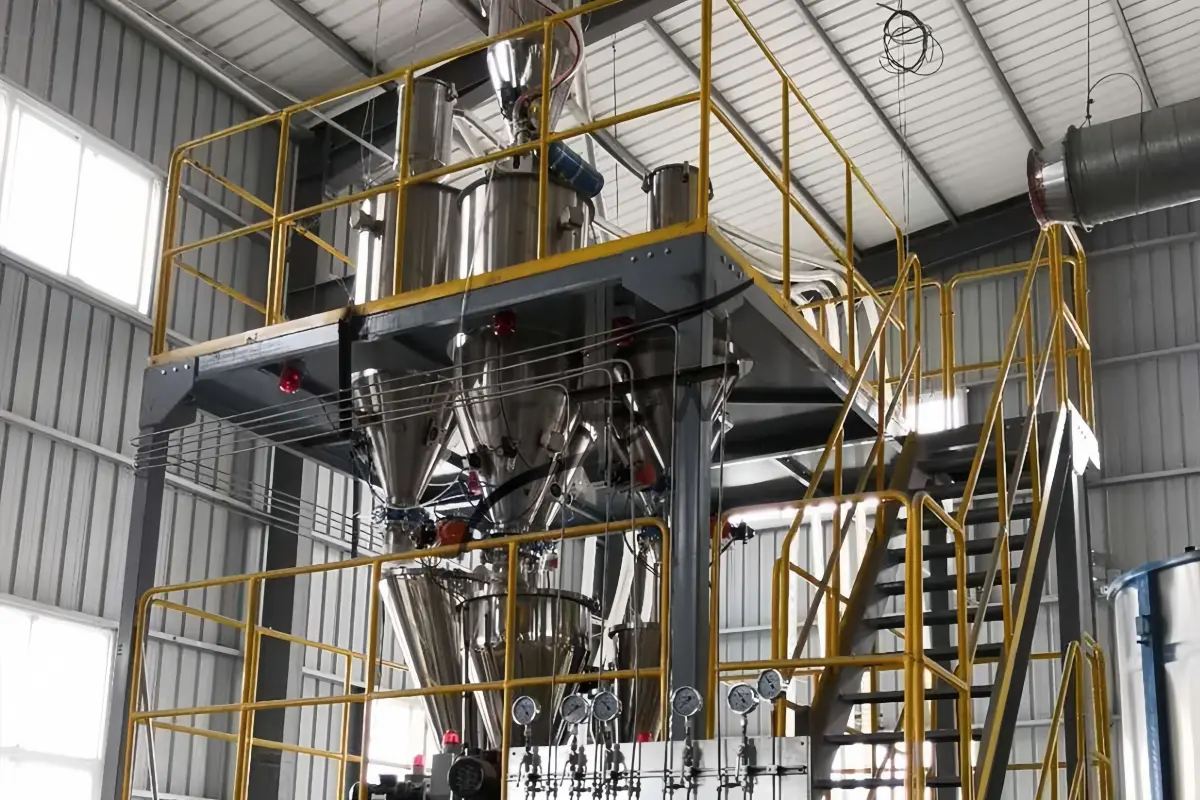
A barium carbonate pneumatic conveying system is a material handling solution that combines jet conveying technology and fluidization principles, allowing powder materials to be transported efficiently within enclosed pipelines. The system features modular design, flexible pipeline layout, reliable operation, and ease of use, making it suitable for long-distance conveying, dust collection, material recovery, and process integration.
Functions of Barium Carbonate Conveying System
A barium carbonate conveying system integrates multiple functions such as material transport, dust-free operation, explosion prevention, and process assistance, while using air or gas flow as the conveying medium to move bulk solids through pipelines. Compared with conventional systems, this solution provides a cost-effective and reliable method for powder handling, especially when environmental protection and automation are required.
In addition, a barium carbonate positive pressure conveying system or barium carbonate negative pressure conveying system can be selected depending on process requirements, ensuring flexibility and adaptability in different production environments.
System Features and Performance
A barium carbonate pneumatic conveying system offers several key features, including fully enclosed conveying, automated control, and stable material transfer, while also supporting auxiliary processes such as mixing, classification, and dust removal. The system structure is relatively simple but technologically advanced, and it typically includes modules such as a control system, dust collection unit, and storage system, ensuring efficient and continuous operation.
Applications in Industrial Production
A barium carbonate conveying system is widely used in various industrial scenarios where efficient and clean material handling is required. It enables dust-free transport, reduces environmental pollution, and improves working conditions by minimizing material leakage and airborne particles.
In addition, the system supports continuous conveying of various powder and granular materials, including cement, fly ash, plastic granules, mineral powders, and chemical materials, significantly reducing manual handling and improving operational efficiency. In many chemical and pharmaceutical processes, a barium carbonate closed conveying system can also serve as part of the production process, enabling functions such as mixing, drying, cooling, and classification.
Furthermore, the system is highly adaptable to complex plant layouts and challenging environments, including high temperature, high humidity, corrosive conditions, or explosive atmospheres, while flexible pipeline design allows better space utilization and improved production line integration.
Structural Advantages of Barium Carbonate Pneumatic Conveying System
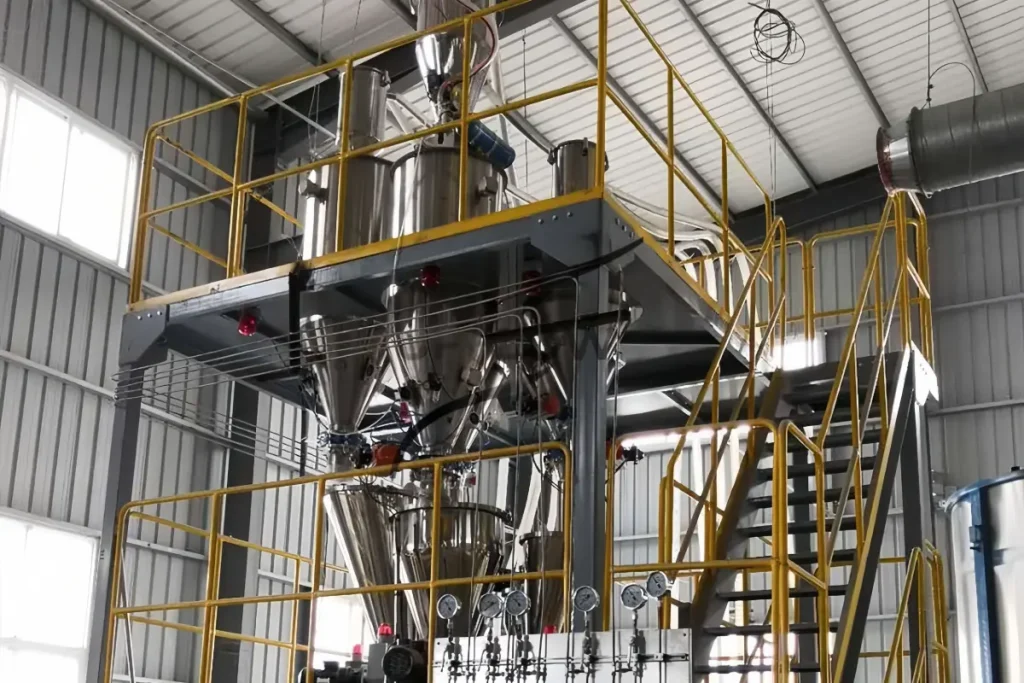
A barium carbonate pneumatic conveying system consists of several key components working together to ensure stable and efficient operation.
The storage silo system is used for temporary storage and controlled discharge of materials, and it is typically designed with conical or pyramidal structures to facilitate material flow and prevent buildup. The feeding device, such as a screw feeder, ensures stable and uniform material input into the pipeline, which is critical for maintaining system stability.
The air source unit, provides the necessary airflow energy for conveying, while the dust collection system ensures that dust and exhaust gases are properly treated to meet environmental standards. Finally, the control system, often based on PLC technology, acts as the “brain” of the system by monitoring and adjusting key parameters such as airflow velocity, pressure, and material flow, ensuring reliable and automated operation.
Conclusion
Overall, a barium carbonate pneumatic conveying system is an efficient, clean, and flexible solution for powder handling, offering advantages such as dust-free conveying, low maintenance, strong adaptability, and integration with modern automated production lines. By selecting the appropriate system design, including barium carbonate positive pressure conveying system or barium carbonate negative pressure conveying system, industries can achieve stable operation, improved efficiency, and long-term cost savings while meeting environmental and safety requirements.