
Introduction
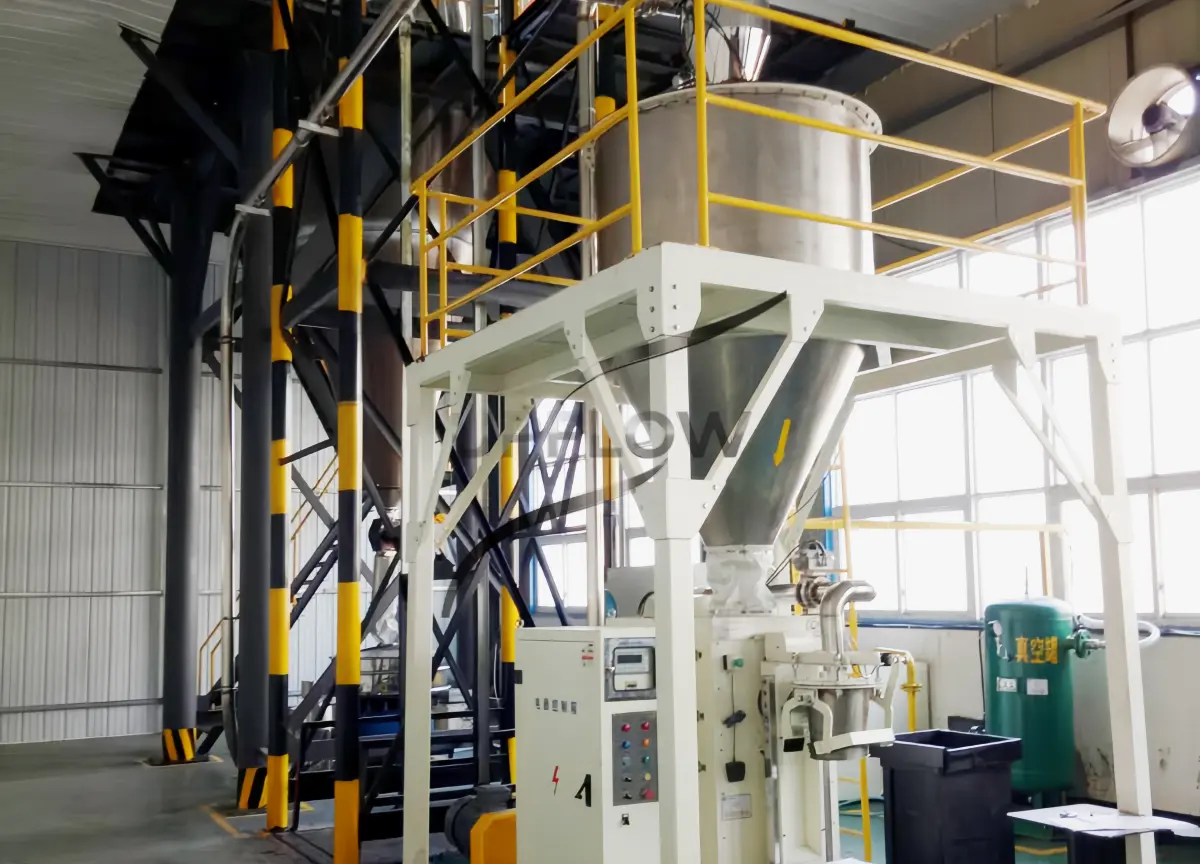
A barium sulfate pneumatic conveying system is an advanced material handling solution that uses compressed air or gas flow to transport powder or granular materials through enclosed pipelines, and it is widely used in industries such as plastics, chemicals, construction materials, coatings, and environmental engineering where efficient, dust-free, and automated material transfer is required; compared with traditional mechanical conveying, this type of powder conveying system significantly improves efficiency while reducing dust emission and material loss.
Barium Sulfate Material Characteristics
Barium sulfate (chemical formula: BaSO₄), also known as barite in its natural mineral form, is a white, high-density inorganic material widely used as a filler or pigment in coatings, plastics, rubber, and drilling fluids. It typically has a bulk density of approximately 1.5–2.5 t/m³ depending on particle size and processing method, and is usually handled as fine powder.
Barium sulfate can be classified into natural barite powder and precipitated barium sulfate (PPS), where precipitated barium sulfate has finer particle size, higher purity, and better dispersion performance, making it more widely used in high-end applications. Due to its fine particles and relatively high density, it may generate dust during handling, and in some cases, improper conveying conditions may lead to material buildup or wear inside pipelines.
Product Features
A barium sulfate pneumatic conveying system offers advantages such as simple automation, convenient operation, easy maintenance, wide material adaptability, and high production efficiency, while its fully enclosed structure ensures clean and dust-free operation. The system typically consists of conveying pipelines, feeding devices, air supply units, dust collection systems, and environmental protection components, forming a complete powder conveying system suitable for various industrial applications.
Applications and Functions
The barium sulfate conveying system is suitable for handling bulk materials such as powders, granules, and free-flowing solids, and it can be used for transporting materials like cement, fly ash, plastic pellets, pharmaceutical powders, and mineral materials, enabling efficient transfer between different processing stages.
In addition, this system supports long-distance conveying, making it ideal for large-scale plants or cross-area material transport, while its flexible design allows multi-point conveying, enabling materials to be transferred from multiple sources to a single destination or distributed from one point to multiple locations.
Furthermore, the system can be integrated with auxiliary equipment to perform material mixing, classification, heating, cooling, or drying, enhancing production efficiency and product quality. With built-in dust collection and purification systems, it effectively captures airborne particles, ensuring a clean working environment and reducing environmental pollution.
Working Principle
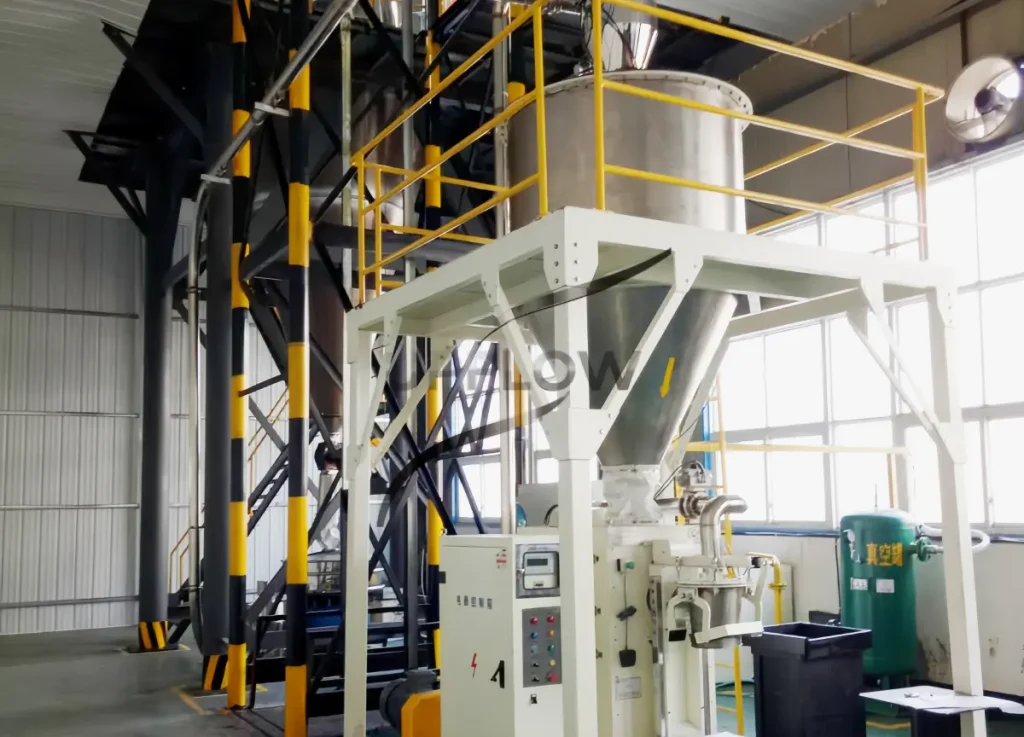
The barium sulfate pneumatic conveying system operates based on aerodynamic principles, where compressed air or gas creates a controlled airflow inside pipelines, allowing materials to be suspended or conveyed in a dense or dilute phase depending on system design. This process enables continuous, stable, and enclosed material transport, making it suitable for powder conveying, powder transfer, particle conveying, and even vacuum conveying systems when negative pressure is applied.
By adjusting airflow velocity, pressure, and material feed rate, the system can achieve precise control over conveying capacity while maintaining stable operation and minimizing dust emission.
System Advantages
A well-designed barium sulfate pneumatic conveying system provides several key advantages, including high safety performance with explosion-proof design options, environmentally friendly operation with minimal dust emission, and strong adaptability to different materials and process conditions.
In addition, the system offers flexible layout, reliable performance, low energy consumption, and reduced maintenance requirements, making it suitable for industries such as pharmaceuticals, foundry, building materials, food processing, and chemical production.
Through the application of gas-solid two-phase flow technology, the system ensures synchronized transport of air and material, enabling continuous and efficient conveying over long distances while maintaining product quality and system stability.
Conclusion
Overall, a barium sulfate pneumatic conveying system is an efficient, clean, and flexible solution for modern powder handling, integrating functions such as powder conveying, granular conveying, and vacuum conveying within a fully enclosed system. By adopting advanced pneumatic conveying technology, industries can achieve improved production efficiency, reduced environmental impact, and stable long-term operation.