
Introduction
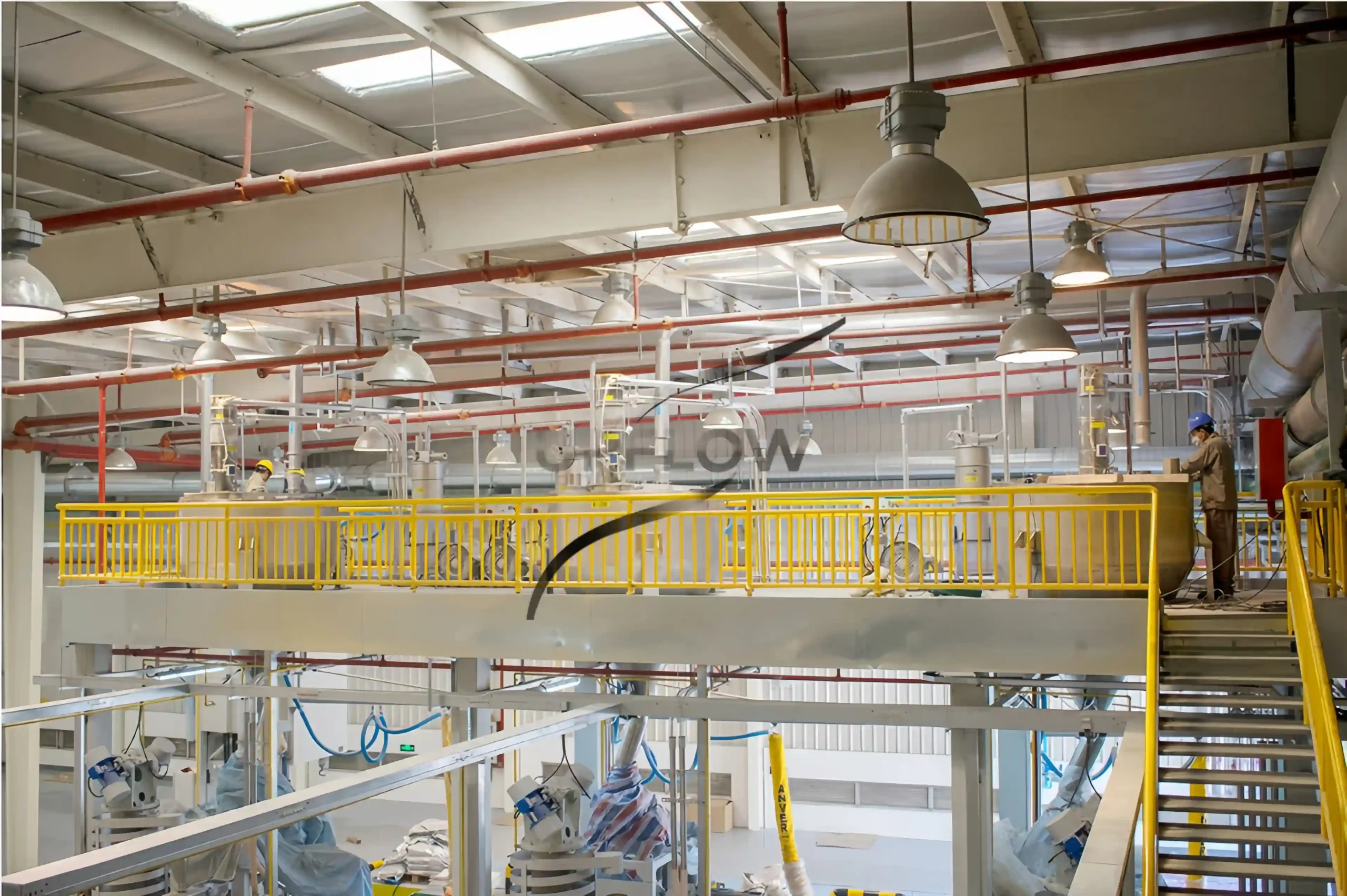
Calcium hydroxide pneumatic conveying is an advanced powder handling method that uses controlled airflow to transport fine materials through pipelines, providing a cleaner and more efficient alternative to traditional conveying methods, especially in industries where dust control, process stability, and automation are essential.
Calcium Hydroxide Material Characteristics
Calcium hydroxide (chemical formula: Ca(OH)₂), commonly known as hydrated lime or slaked lime, is a widely used inorganic material in industries such as construction, chemical processing, and environmental engineering, typically appearing as a fine white powder with a bulk density ranging from 0.5 to 0.8 t/m³.
From a handling perspective, calcium hydroxide presents several challenges, as it is highly hygroscopic and tends to absorb moisture from the air, which may cause agglomeration and reduce flowability, while its fine particle size makes it prone to dust generation during powder conveying or powder transfer processes. These characteristics require a well-designed calcium hydroxide pneumatic conveying solution to ensure consistent and reliable material movement.
Challenges in Powder Conveying
In conventional systems such as screw conveyors, calcium hydroxide is difficult to handle efficiently due to dust leakage, material buildup, and unstable feeding.
Dust emissions not only affect the working environment but can also result in material loss and product contamination, while continuous contact between powder and mechanical components increases wear and maintenance costs. These limitations make traditional powder conveying or powder handling methods less suitable for modern industrial requirements.
Working Principle of Pneumatic Conveying
Calcium hydroxide pneumatic conveying works by using compressed air or vacuum to create an airflow inside pipelines, allowing powder particles to be carried in suspension or controlled flow conditions, ensuring continuous and stable transport.
This method is often referred to as airflow conveying or air conveying, as it relies on the movement of air to transfer material. In applications requiring strict dust control, a vacuum conveying system can be used to maintain a negative pressure environment, preventing powder from escaping into the surroundings.
By optimizing airflow velocity and pipeline design, the system ensures efficient powder conveying while minimizing material degradation and dust formation.
Advantages of UPFLOW Pneumatic Conveying Solution
UPFLOW’s calcium hydroxide pneumatic conveying solution offers several key advantages, overcoming the limitations of traditional conveying systems.
Firstly, the system employs a fully enclosed conveying process, significantly reducing dust emissions and improving environmental performance, which is crucial for industries with stringent emission standards.
Secondly, optimized airflow and system design improve conveying efficiency, enabling stable and continuous powder transport and reducing material loss. Furthermore, the equipment is designed with the physical properties of calcium hydroxide in mind, such as anti-caking and anti-wear properties, thereby extending the equipment’s service life.
Furthermore, the system is highly flexible and can be customized to different production scales and process requirements, achieving efficient pneumatic conveying at varying distances and heights.
Industrial Applications
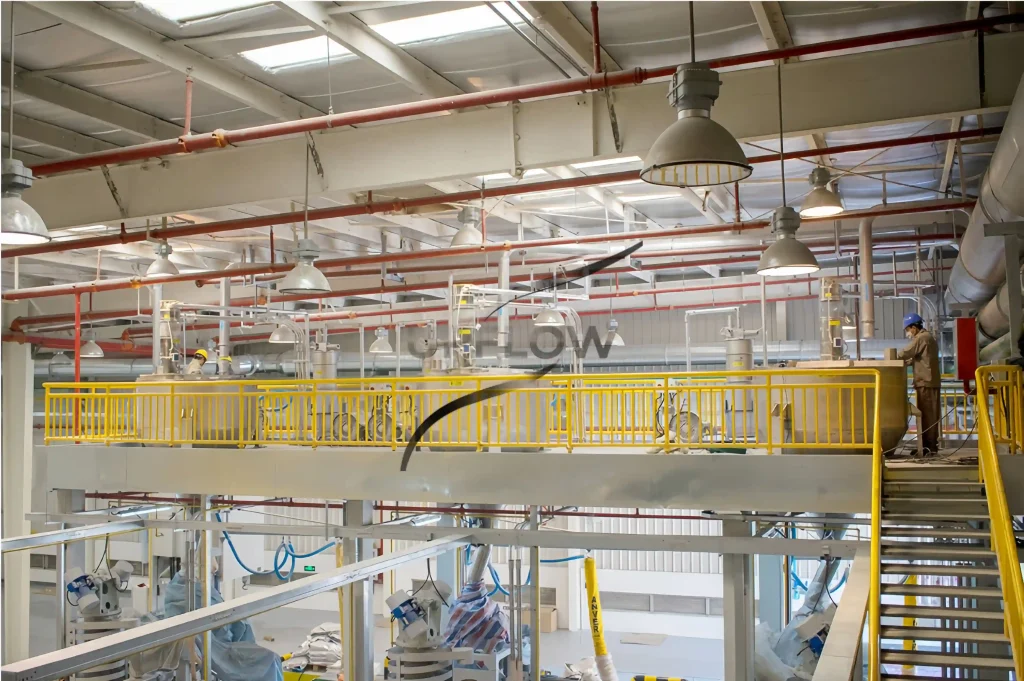
Calcium hydroxide pneumatic conveying is widely used in various industrial sectors. In the building materials industry, it is applied for transporting lime powder into production lines; in chemical plants, it supports material mixing and transfer processes; and in environmental engineering, it plays an important role in flue gas treatment systems such as desulfurization and emission control.
Through these applications, the system enhances operational efficiency while maintaining environmental compliance.
Technical Benefits and Operational Value
The UPFLOW calcium hydroxide pneumatic conveying system improves production performance by enabling automated control, allowing operators to monitor airflow, pressure, and material flow in real time.
From an operational perspective, the system reduces manual handling, lowers labor intensity, and minimizes maintenance requirements. At the same time, the use of a closed powder conveying system ensures safer working conditions and reduced dust exposure.
Conclusion
In conclusion, calcium hydroxide pneumatic conveying provides a modern, efficient, and environmentally friendly solution for handling fine powder materials, combining the advantages of airflow conveying, powder conveying, and vacuum conveying systems to achieve stable and clean material transfer in industrial production.