
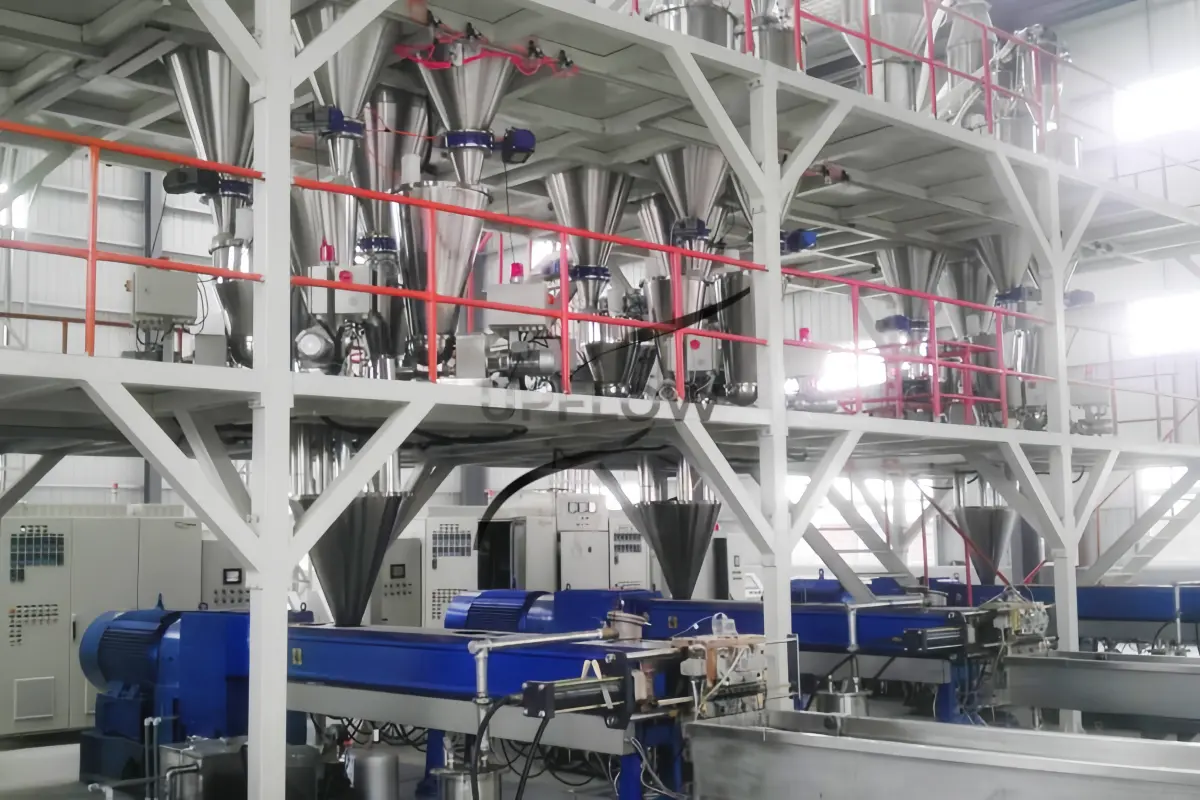
In modern industrial production environments where efficiency, product quality, and environmental control are increasingly critical, the performance of a lubricant powder high pressure conveying system has a direct and measurable impact on overall operational stability, especially in industries such as plastics, chemicals, pharmaceuticals, and food processing where powder handling is frequent and continuous. As a result, more manufacturers are replacing traditional mechanical conveying methods with a lubricant powder pneumatic conveying production line, which not only improves conveying speed but also ensures a cleaner and more automated material handling process that aligns with modern manufacturing standards.
Material Characteristics of Lubricant Powder (Including Talc-Based Materials)
Lubricant powders are a class of functional additives widely used to improve material flowability, reduce friction during processing, and prevent adhesion between particles or equipment surfaces, which makes them essential in applications such as plastic compounding, tablet manufacturing, and powder blending processes. Common lubricant powders include zinc stearate, calcium stearate, magnesium stearate, paraffin wax powder, polyethylene (PE) wax, and in some cases talc powder, which is also used as a lubricant due to its natural lamellar structure and excellent anti-friction properties.
These materials typically share several conveying challenges, such as low bulk density, fine particle size, strong dust generation tendency, and in some cases slight cohesiveness or electrostatic behavior, which means that the conveying system must be carefully engineered to ensure stable flow without pipeline blockage, material degradation, or excessive dust leakage. In particular, talc powder, although often classified as a mineral filler, behaves similarly to lubricant powders during conveying, which is why it is commonly included in the design considerations of a lubricant powder dense phase conveying system or a lubricant powder suction pneumatic conveying system.
High Efficiency Conveying Performance for Continuous Production
A properly engineered lubricant powder high pressure conveying system is capable of transporting materials over long distances within a short time by utilizing controlled airflow and pressure differentials, which significantly reduces the delays and inefficiencies typically associated with traditional conveying systems that rely heavily on mechanical movement. In a complete lubricant powder pneumatic conveying production line, materials can be transferred continuously from storage silos to processing equipment without intermediate handling, allowing production lines to operate with minimal interruption while maintaining a stable and predictable material supply.
For example, in large-scale production environments where high throughput is required, the use of a lubricant powder high pressure conveying system ensures that material feeding keeps pace with processing capacity, thereby eliminating bottlenecks and improving overall equipment utilization while maintaining consistent product output.
Flexible System Design for Different Powder Characteristics
One of the most important advantages of a lubricant powder pneumatic conveying production line lies in its flexibility, as the system can be adjusted to accommodate variations in particle size, bulk density, and flow properties that are commonly observed in different types of lubricant powders, including talcum-based materials. By carefully controlling airflow velocity, conveying pressure, and pipeline configuration, engineers can ensure that materials move through the system at optimal speeds without causing segregation, pipeline wear, or unnecessary energy consumption.
This flexibility allows manufacturers to choose between different conveying modes, such as a lubricant powder dense phase conveying system for gentle and low-velocity transport of sensitive materials, or a lubricant powder suction pneumatic conveying system for applications that require multiple pickup points and more adaptable installation layouts, making the system suitable for a wide range of industrial scenarios.
Dust-Free Operation and Improved Product Purity
A key feature of a lubricant powder suction pneumatic conveying system is its fully enclosed design, which effectively prevents material leakage and minimizes dust emissions throughout the conveying process, thereby creating a cleaner and safer working environment while also protecting product quality from external contamination. The combination of sealed pipelines and high-efficiency filtration systems ensures that fine particles are captured and contained, which is especially important when handling lubricant powders such as talcum that are prone to dust dispersion.
In industries where hygiene and purity standards are strict, such as pharmaceutical and food processing applications, the use of a lubricant powder pneumatic conveying production line provides a reliable solution for maintaining product integrity, as the material is conveyed in a closed system that isolates it from external environmental factors.
Energy Efficiency and Cost Optimization
Compared with conventional mechanical conveying equipment, a lubricant powder high pressure conveying system offers improved energy efficiency by optimizing airflow and pressure usage, which reduces unnecessary energy loss while maintaining high conveying performance. By minimizing moving mechanical parts and relying on controlled air dynamics, the system not only lowers operational energy consumption but also reduces wear and tear, leading to lower maintenance costs over time.
This combination of energy savings and reduced maintenance makes the lubricant powder pneumatic conveying production line an attractive option for companies seeking to improve profitability while maintaining high production standards, especially in industries where large volumes of powder materials are handled daily.
Simple Maintenance and Intelligent System Monitoring
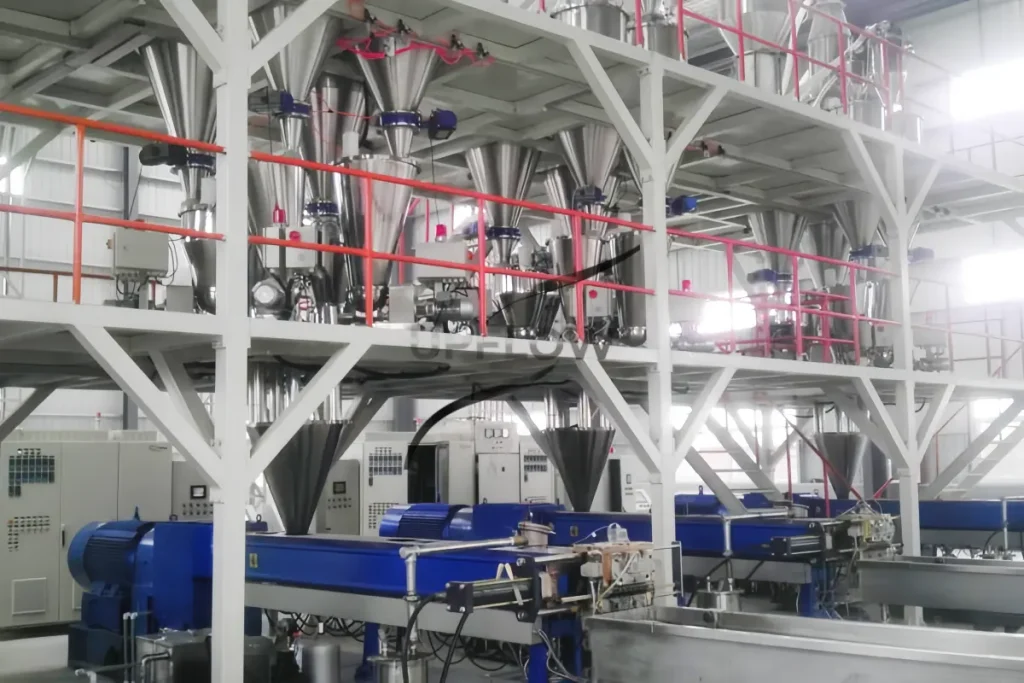
Modern pneumatic conveying systems are designed with ease of maintenance in mind, allowing operators to quickly access and replace key components such as filters, valves, and pipelines without the need for complex tools or lengthy downtime, which helps ensure continuous operation and reduces the risk of unexpected failures. In addition, many systems are equipped with intelligent monitoring technologies that provide real-time feedback on system performance, enabling early detection of potential issues and allowing preventive maintenance to be carried out before problems escalate.
With these features in place, a lubricant powder dense phase conveying system can operate reliably over long periods, ensuring stable production output while minimizing maintenance-related disruptions.
Conclusion: An Ideal Solution for Modern Lubricant Powder Production Lines
With its combination of high efficiency, flexible design, dust-free operation, and energy-saving performance, the lubricant powder high pressure conveying system has become an essential component of modern industrial material handling solutions, particularly for companies that require reliable and clean powder conveying processes. By integrating advanced technologies such as lubricant powder pneumatic conveying production lines, lubricant powder dense phase conveying systems, and lubricant powder suction pneumatic conveying systems, manufacturers can significantly improve production efficiency while ensuring product quality and environmental compliance.
If you are looking to optimize your lubricant powder production line or need a customized lubricant powder high pressure pneumatic conveying system designed specifically for your material characteristics and production requirements, feel free to contact us for a professional solution tailored to your application.