
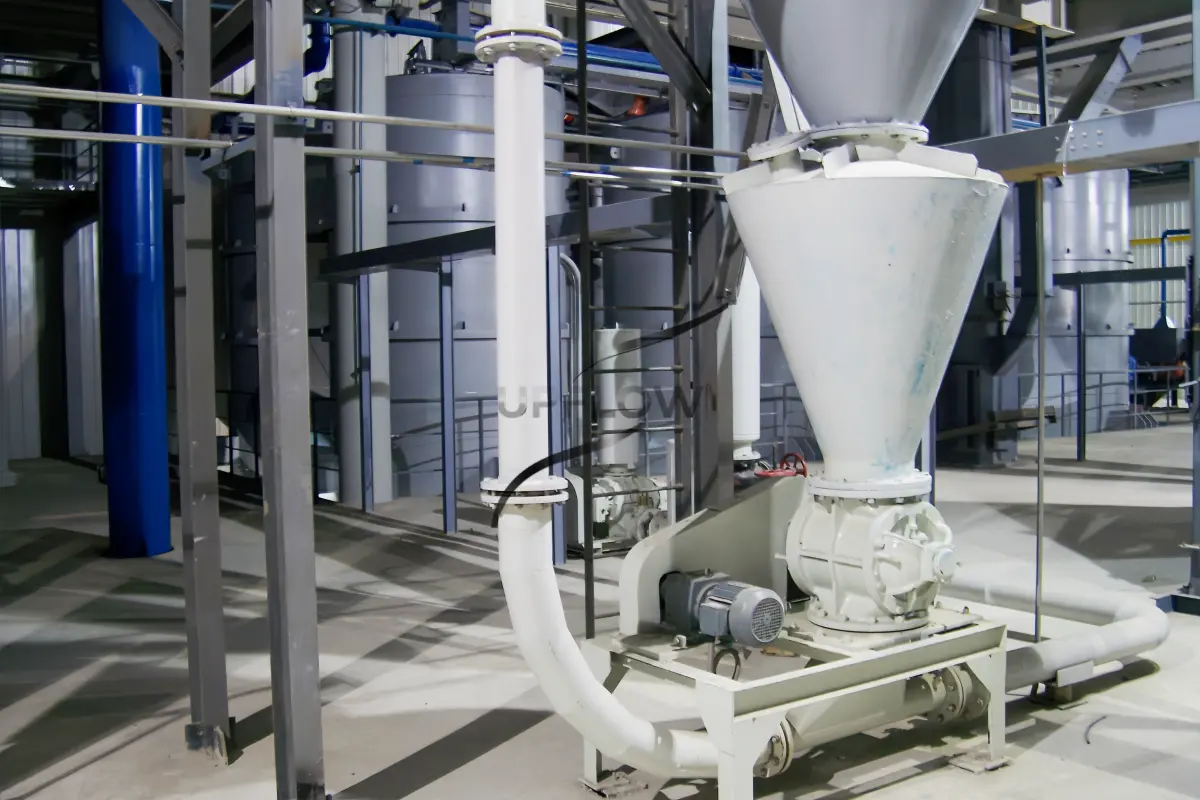
Introduction to Antioxidant Powder Materials
Antioxidants are critical additives used in plastics, rubber, food packaging, and chemical processing industries, where they prevent oxidation, improve thermal stability, and extend the service life of materials. Common types include phenolic antioxidants (such as BHT), phosphite antioxidants (such as tris(nonylphenyl) phosphite), and amine-based antioxidants, which are typically supplied in powder or fine granular form for easy dosing and blending.
From a physical perspective, antioxidant powders usually have a bulk density ranging from 0.4 to 0.9 g/cm³, depending on formulation and particle structure, and are characterized by fine particle size, good dispersibility, and a tendency to generate dust or absorb moisture under certain conditions. These properties make precise, clean, and enclosed material handling essential, especially in industries with strict quality and hygiene requirements.
What Is an Antioxidant Powder Pneumatic Conveying System?
An antioxidant pneumatic conveying system is a specialized solution designed to transport antioxidant powders such as phenolic antioxidant BHT powder or phosphite antioxidant additives through pipelines using controlled airflow.
In industrial environments, this system is also referred to as a feeding system for antioxidant powder materials, a powder conveying system for phenolic antioxidant powders, a fully enclosed conveying system for phosphite antioxidant additives, or a vacuum conveying system for antioxidant powder handling, depending on the process design and application scenario.
By creating a stable gas-solid flow within sealed pipelines, the system ensures continuous, dust-free, and efficient transport, making it highly suitable for automated production lines.
Working Principle of Antioxidant Powder Pneumatic Conveying
The working principle of an antioxidant powder pneumatic conveying system is based on airflow-driven transport, where compressed air or vacuum conditions move powder particles through pipelines.
In a positive airflow feeding system for antioxidant powder materials, compressed air pushes the material through the pipeline, making it suitable for long-distance and high-capacity conveying. In contrast, a vacuum conveying system for phenolic antioxidant powder uses negative pressure to draw material into the pipeline, ensuring higher cleanliness and reduced dust leakage.
During operation, antioxidant particles are suspended or partially suspended in the airflow, forming a stable conveying phase that allows smooth and continuous transport while minimizing segregation or material loss.
Advantages of Enclosed Powder Conveying for Antioxidants
One of the key benefits of an antioxidant pneumatic conveying system is its ability to provide fully enclosed transport, which is essential for maintaining product purity and preventing environmental contamination.
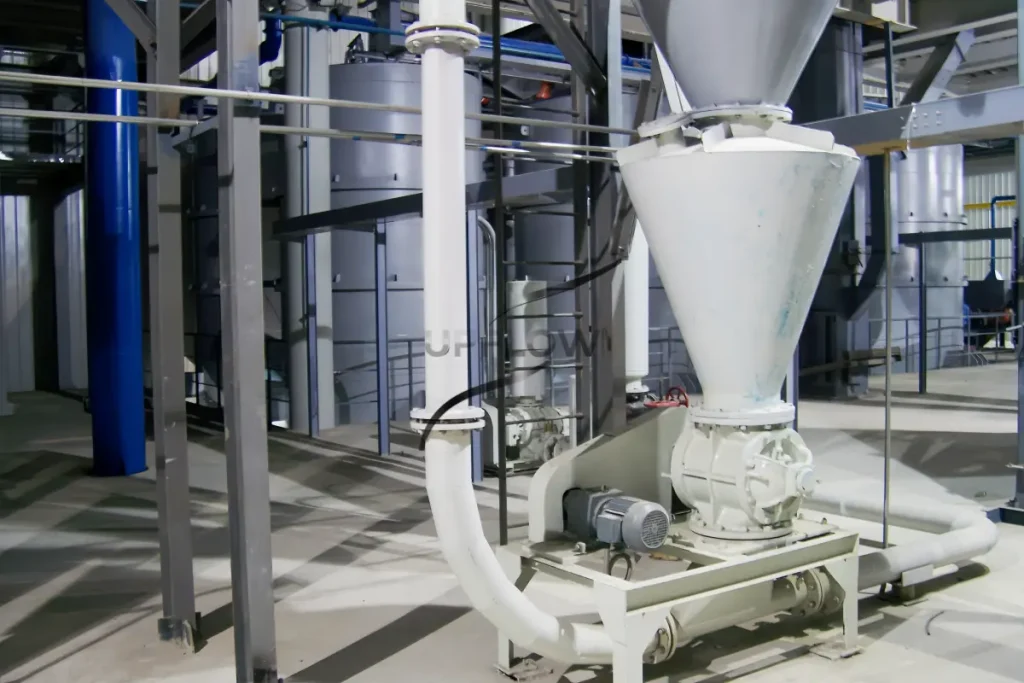
As a sealed powder conveying system for antioxidant additives, it effectively eliminates dust emissions, reduces material loss, and protects sensitive powders from external factors such as humidity and air exposure. This is particularly important when handling BHT antioxidant powder or phosphite antioxidant materials, which may degrade if exposed to unfavorable conditions.
In addition, the system supports high levels of automation, allowing precise control of feeding rates and improving consistency in production processes such as plastic compounding or rubber manufacturing.
System Flexibility and Industrial Applications
The antioxidant powder pneumatic conveying system is widely used in industries such as plastics processing, rubber production, food packaging materials, and chemical manufacturing.
As a powder feeding system for phenolic antioxidant materials, it ensures accurate dosing into mixers and extrusion systems, while a vacuum conveying system for antioxidant powder in polymer production lines provides clean and efficient transport in high-standard environments.
The system can be designed for single-point or multi-point feeding, adapting to complex plant layouts and supporting continuous production operations.
Conclusion
The antioxidant powder pneumatic conveying system offers a reliable, efficient, and environmentally friendly solution for handling fine chemical additives. By integrating feeding systems, powder conveying systems, enclosed conveying systems, and vacuum conveying systems for antioxidant powder materials, manufacturers can achieve stable transport, improved product quality, and enhanced automation, meeting the growing demands of modern industrial production.