
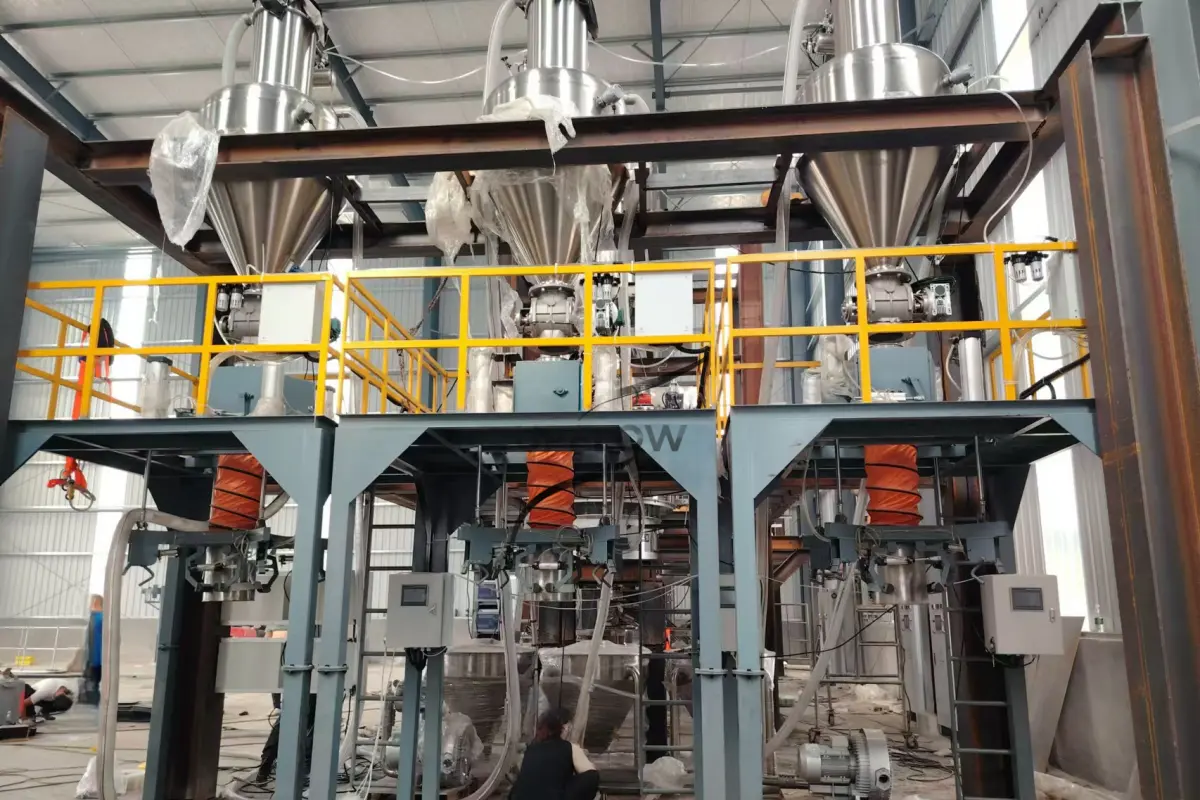
Material Profile: Silicon Powder Properties and Types
Silicon powder, also known as silica powder, silicon metal powder, or Si powder, is widely used in industries such as lithium battery materials, metallurgy, chemicals, and construction. It is typically processed as a fine particulate material, with a bulk density ranging from approximately 0.5 to 1.5 g/cm³, depending on particle size and purity.
Silicon powder is characterized by fine particle size, high surface activity, strong dusting tendency, and potential explosion risk under certain conditions, which makes it highly sensitive during handling and transport. It can be classified into micron silicon powder, nano silicon powder, metallurgical silicon powder, and battery-grade silicon materials, each requiring controlled and safe conveying solutions.
What Is a Silicon Powder Pneumatic Conveying System?
A silicon powder pneumatic conveying system is a specialized material handling solution that uses airflow to transport silicon powder through enclosed pipelines, ensuring efficient, safe, and dust-free movement of materials.
In industrial applications, it is also referred to as a pneumatic conveying production line for silicon powder, a vacuum conveying system for silica powder handling, a low-pressure conveying system for silicon materials, or an airflow conveying system for silicon powder transfer, depending on process design and requirements.
This material pneumatic conveying system for silicon powder enables continuous, automated transport while minimizing contamination and material loss.
Dust Control in Silicon Powder Conveying Systems
Due to the lightweight and fine nature of silicon powder, dust generation is one of the most critical challenges in conveying operations. A fully enclosed pneumatic conveying system for silicon powder materials is essential to prevent dust dispersion and protect both the environment and equipment.
Closed pipeline design significantly reduces dust leakage, while additional dust suppression technologies such as filtration systems and localized dust collectors help maintain clean working conditions. In some cases, spray-based suppression or inert gas conveying may be applied to further reduce airborne particles and explosion risks.
Data Monitoring and System Safety
Modern silicon powder pneumatic conveying production lines rely heavily on real-time data monitoring to ensure stable operation and dust control. Sensors installed in pipelines continuously track pressure, temperature, airflow velocity, and material flow conditions, allowing operators to detect abnormalities early and prevent system failures.
To enhance system reliability, a material conveying system for silicon powder handling integrates automated control systems that adjust conveying parameters dynamically, ensuring stable and efficient transport even under varying production conditions.
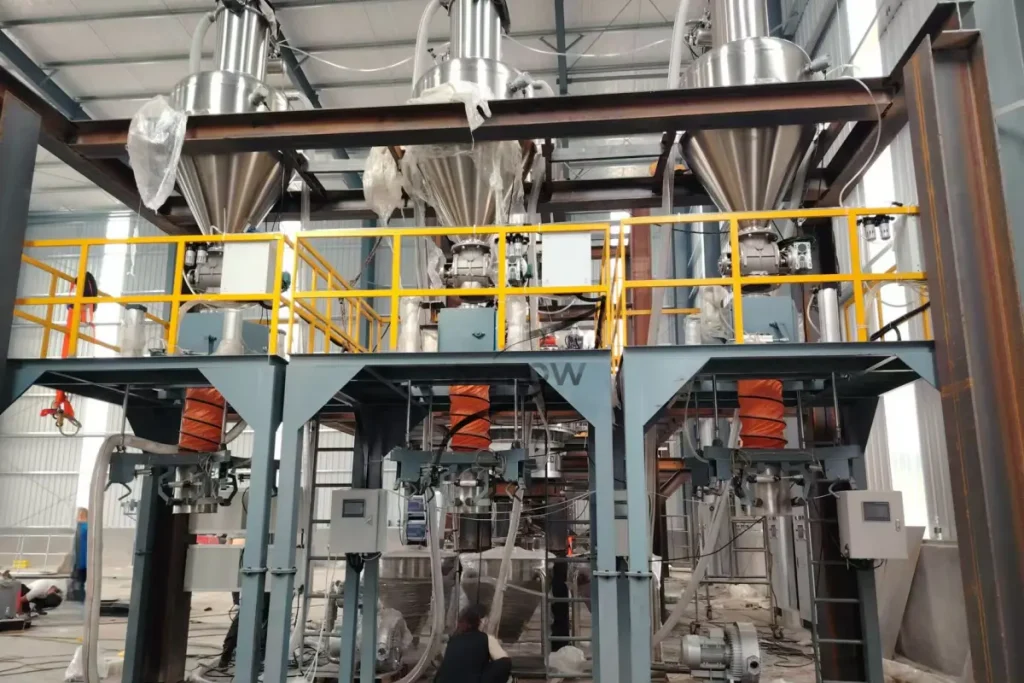
Data Security and Privacy Protection
With the increasing use of automation and digital monitoring, data security and privacy protection have become important considerations in pneumatic conveying systems.
In a vacuum conveying system for silicon powder materials, data collected from sensors and control systems must be protected during transmission and storage. This can be achieved through data encryption, access control, and authentication mechanisms, ensuring that sensitive operational data is not accessed or modified without authorization.
In addition, regular data backup and secure storage strategies are essential to prevent data loss and ensure quick recovery in case of system failure, thereby maintaining continuous and reliable operation.
Advantages of Silicon Powder Pneumatic Conveying Systems
The silicon powder pneumatic conveying system offers multiple advantages for modern industrial applications.
As a dust-free airflow conveying system for silicon powder, it ensures clean and environmentally friendly operation while reducing health risks for workers. The system also supports fully automated material handling, functioning as a pneumatic conveying production line for silicon materials, which improves efficiency and reduces labor costs.
Furthermore, it provides flexible layout and long-distance conveying capability, making it suitable for complex plant designs, while integrated monitoring and control systems enhance operational safety and stability.
Conclusion
The silicon powder pneumatic conveying system is a reliable and efficient solution for handling fine and sensitive materials in modern industries. By combining dust-free conveying design, advanced airflow conveying systems, real-time monitoring, and data security protection, this material pneumatic conveying system for silicon powder ensures safe, stable, and high-efficiency operation in increasingly automated industrial environments.