
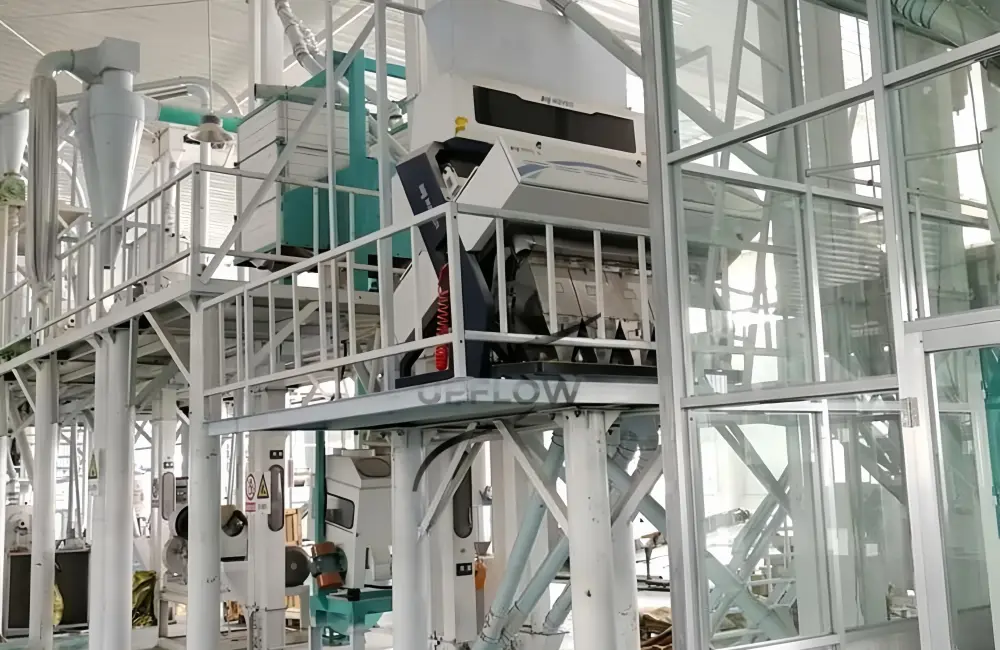
Material Profile: What Is SBR Powder?
SBR powder, also known as styrene-butadiene rubber powder, is a widely used synthetic rubber material in industries such as tire manufacturing, plastics modification, adhesives, and construction materials, and it is also referred to as SBR crumb rubber, rubber powder, or polymer powder, depending on its processing form.
In industrial applications, SBR is typically processed into fine powder or granulated particles, with a bulk density generally ranging from 0.3 to 0.6 g/cm³, and it is characterized by lightweight structure, good elasticity, moderate flowability, and a tendency to generate dust and static electricity during handling. SBR materials can be classified into emulsion polymerized SBR (E-SBR) and solution polymerized SBR (S-SBR), as well as fine powder grades and coarse granular forms, each requiring different conveying considerations.
What Is an SBR Powder Pneumatic Conveying System?
An SBR powder pneumatic conveying system is a material handling solution that uses airflow to transport styrene-butadiene rubber powder through enclosed pipelines, ensuring efficient, dust-free, and automated transfer across production processes.
In industrial scenarios, it is also known as a pneumatic conveying production line for SBR powder, a vacuum conveying system for styrene-butadiene rubber materials, or a powder conveying system for rubber polymer powders, depending on system configuration and process requirements.
By creating a controlled gas-solid flow, this material pneumatic conveying system for SBR powder enables continuous and stable transport while reducing material loss and contamination.
Working Principle of SBR Powder Conveying System
The SBR powder pneumatic conveying system operates based on gas-solid two-phase flow, where compressed air or vacuum pressure is used to move powder particles through pipelines.
In a positive pressure conveying production line for SBR rubber powder, compressed air pushes the material from a feeding point to downstream equipment such as mixers or storage silos. Alternatively, a vacuum conveying system for SBR powder materials uses negative pressure to draw powder into the pipeline, which is particularly suitable for multi-point feeding and clean production environments.
During conveying, SBR particles remain suspended in airflow or move in clusters, ensuring smooth and consistent transfer.
Key Advantages of SBR Powder Pneumatic Conveying Systems
The SBR powder pneumatic conveying system offers several advantages for industrial material handling.
As a fully enclosed powder conveying system for styrene-butadiene rubber powder, it effectively prevents dust emission, improving workplace cleanliness and safety. In addition, it supports automatic feeding and continuous conveying, functioning as a pneumatic conveying production line for SBR materials, which reduces manual handling and enhances production efficiency.
Furthermore, the system provides flexible layout and long-distance conveying capability, making it suitable for complex plant configurations, while its low number of moving parts results in reduced maintenance costs.
Industrial Applications of SBR Powder Conveying
The SBR powder pneumatic conveying system is widely used in rubber processing plants, plastic modification production lines, and construction material industries.
As a material conveying system for SBR rubber powder, it is commonly applied in transferring powder from storage silos to mixing systems, extrusion equipment, or packaging units, ensuring stable feeding and consistent product quality.
Conclusion
The SBR powder pneumatic conveying system provides an efficient, clean, and reliable solution for handling lightweight polymer powders. By integrating pneumatic conveying production lines, vacuum conveying systems, and powder conveying systems for SBR materials, manufacturers can achieve improved efficiency, reduced dust pollution, and stable material handling performance in modern industrial environments.