
Material Profile: Properties of Silicon Powder in Polysilicon Production
Silicon powder, widely used in polysilicon production, is also known as industrial silicon powder, metallurgical silicon powder, or Si powder, and it serves as a key raw material in the synthesis of trichlorosilane and high-purity polysilicon.
In industrial applications, silicon powder is typically handled as a fine granular or powder material, with a bulk density generally ranging from 0.8 to 1.5 g/cm³, depending on particle size distribution and processing method. It is characterized by high hardness (Mohs hardness around 7), strong abrasiveness, good flowability with a repose angle of approximately 30°–38°, and potential explosion risk when dispersed in air, which makes safe and enclosed conveying essential.
Silicon materials can be further classified into coarse silicon powder, fine silicon powder, and ultra-fine silicon powder, as well as metallurgical-grade and chemical-grade silicon, each requiring different conveying strategies and safety considerations.
Why Use a Polysilicon Powder Pneumatic Conveying System?
A polysilicon powder pneumatic conveying system is a modern material handling solution that transports silicon powder through enclosed pipelines using airflow or inert gas, ensuring efficient, clean, and automated material transfer.
In industrial practice, it is also referred to as a closed conveying system for silicon powder materials, a positive pressure conveying system for polysilicon powder, or a pneumatic material conveying system for silicon processing lines, depending on system configuration.
Compared with traditional lifting or mechanical conveying, this material pneumatic conveying system for silicon powder eliminates dust leakage, reduces manual handling, and significantly improves production efficiency.
Selection of Conveying Mode for Silicon Powder
Due to the physical properties of silicon powder, selecting the appropriate conveying method is critical.
Based on its abrasiveness and density, silicon powder is best suited for a low-velocity dense phase positive pressure conveying system, which reduces pipeline wear and energy consumption. In addition, as a closed pneumatic conveying system for silicon powder materials, it ensures that the material is transported safely without exposure to external air.
Because silicon powder is prone to oxidation and may present explosion risks when airborne, nitrogen is often used as the conveying medium instead of air, forming a safe inert gas conveying system for polysilicon powder, which protects both material quality and operational safety.
Working Principle of Dense Phase Pneumatic Conveying
The polysilicon powder pneumatic conveying system operates based on dense phase conveying principles, where material is transported in plugs or clusters rather than fully suspended in airflow.
In a positive pressure dense phase conveying system for silicon powder, compressed gas is introduced into a pressure vessel, where it mixes with the material and pushes it through pipelines under controlled pressure. As long as sufficient flow is maintained, the system operates continuously without blockage, ensuring stable and efficient transport.
This method reduces friction, minimizes pipeline wear, and improves overall conveying efficiency, making it a preferred solution for abrasive materials like silicon powder.
Process Flow and System Configuration
In a typical material conveying system for polysilicon powder, silicon powder is first transferred from a tanker or feeding station into a storage silo using a pneumatic conveying system under nitrogen protection.
From the silo, the material is distributed to downstream process units through multiple conveying lines. In many cases, two independent positive pressure conveying systems for silicon powder materials are installed, each supplying different receiving hoppers, while interconnected valves allow one system to serve as backup for the other, ensuring continuous operation.
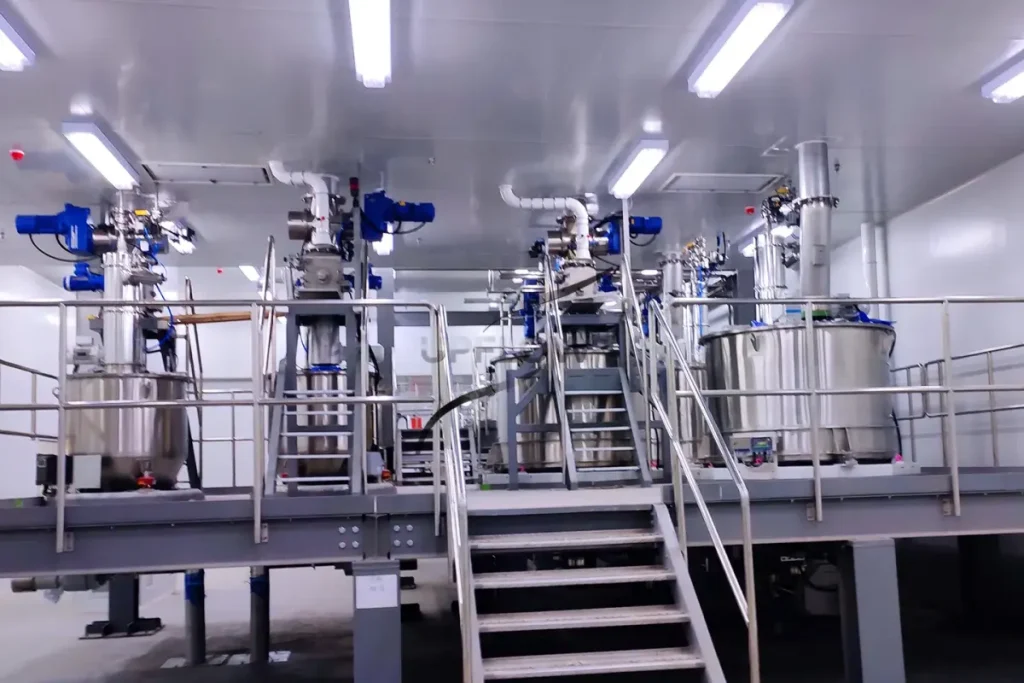
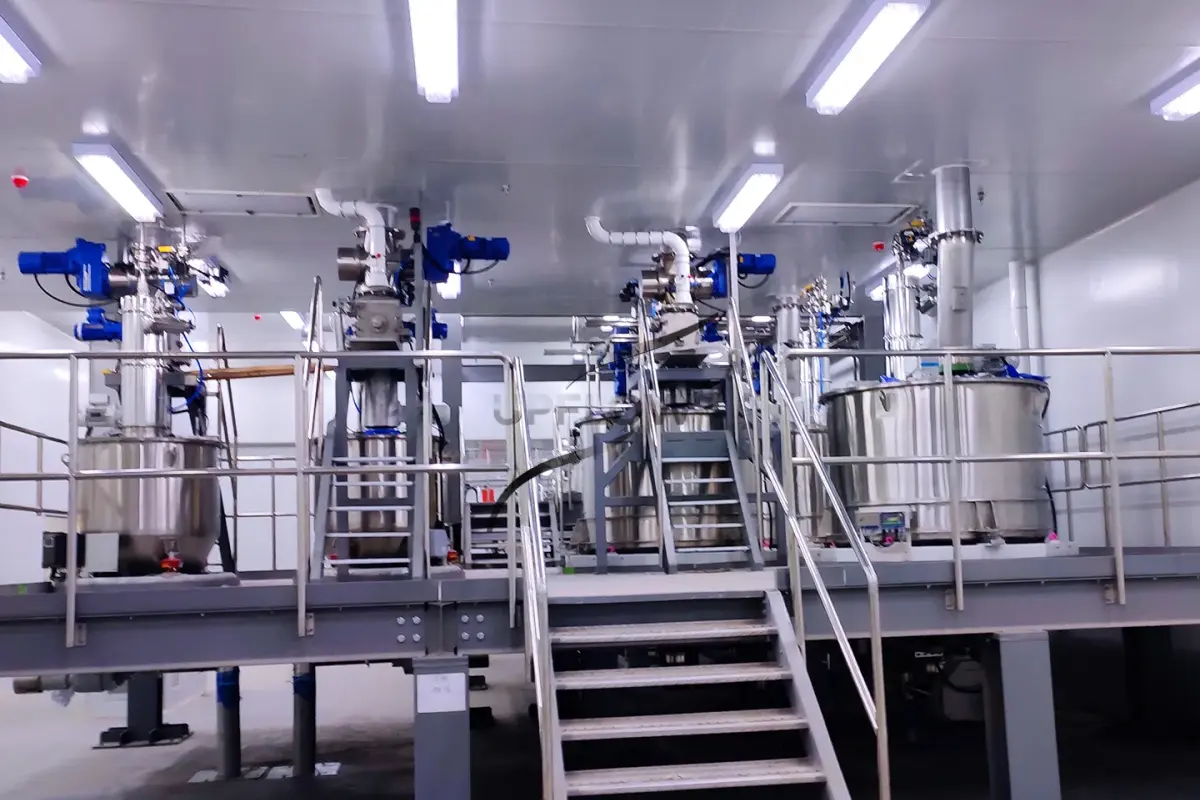
The complete system integrates weighing and batching systems, pneumatic conveying pipelines, and automated control systems, enabling precise material handling and reliable process control.
Advantages of Polysilicon Pneumatic Conveying Systems
The polysilicon powder pneumatic conveying system offers several advantages in industrial applications.
As a fully enclosed conveying system for silicon powder materials, it eliminates dust leakage and significantly improves workplace safety and environmental conditions. In addition, it enables automatic feeding and continuous operation, reducing labor intensity and improving production efficiency.
Furthermore, the system provides high reliability and flexibility, allowing easy integration with existing production lines and supporting long-distance conveying requirements, while its inert gas design enhances safety in handling reactive powders.
Conclusion
The polysilicon powder pneumatic conveying system is a reliable and efficient solution for handling fine and abrasive silicon materials. By integrating positive pressure conveying systems, dense phase conveying systems, and enclosed pneumatic conveying technologies for silicon powder, manufacturers can achieve improved safety, higher efficiency, and cleaner production environments in modern polysilicon processing plants.