
Material Profile: Properties and Types of Sulfide Solid Electrolytes
Sulfide solid electrolytes, also known as sulfide electrolyte powders, solid-state battery electrolyte materials, or lithium sulfide-based compounds, are critical materials in all-solid-state batteries (ASSBs) due to their high ionic conductivity and excellent interface compatibility.
These materials are typically handled as fine powders, with a bulk density ranging from approximately 0.6 to 1.5 g/cm³, depending on composition and particle morphology. They are characterized by extreme sensitivity to moisture, high reactivity with water (often generating H₂S gas), strong dusting tendency, and strict purity requirements, which makes conveying highly demanding. Sulfide electrolytes can be classified into Li₂S–P₂S₅ glass ceramics, argyrodite-type materials (such as Li₆PS₅Cl), and sulfide composite electrolytes, each requiring ultra-controlled environments.
What Is a Sulfide Electrolyte Pneumatic Conveying System?
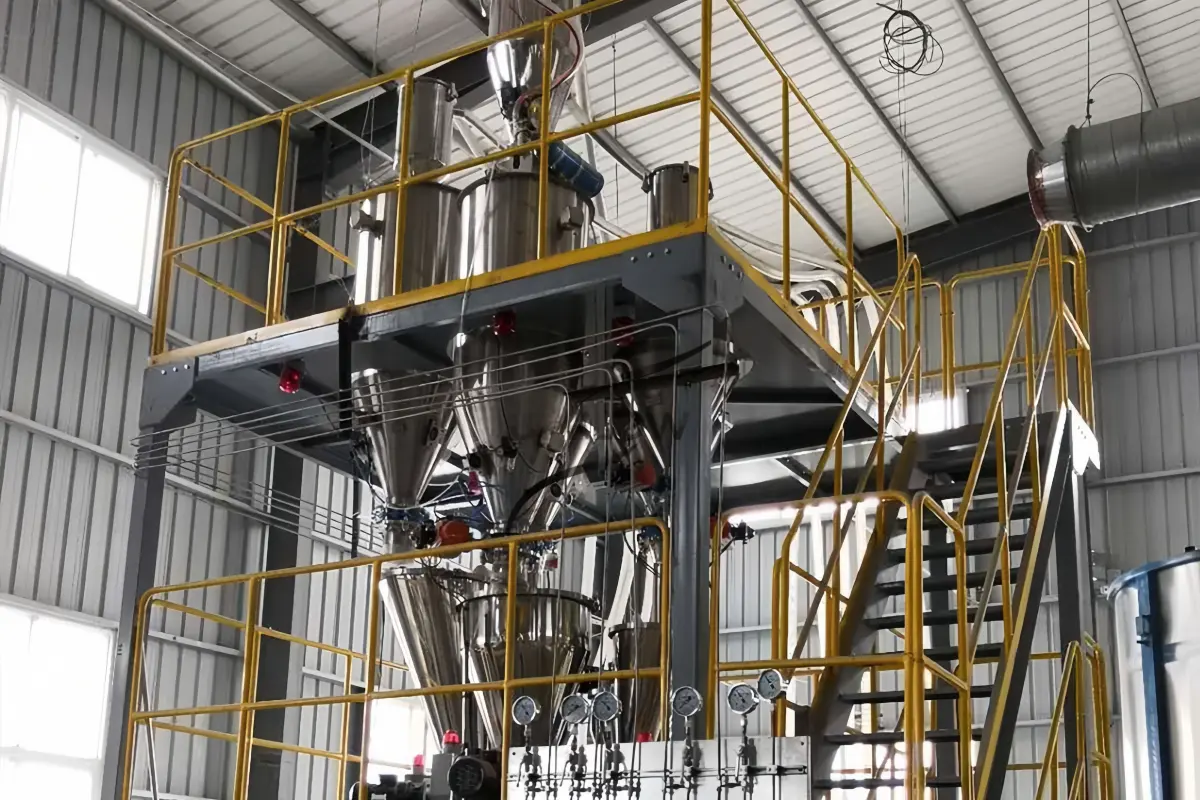
A sulfide electrolyte pneumatic conveying system is a highly specialized solution designed to transport sensitive powders through enclosed pipelines under strictly controlled conditions, ensuring moisture-free, contamination-free, and automated transfer.
In industrial applications, it is also referred to as a powder automatic conveying system for sulfide electrolyte materials, a fully automatic conveying system for solid-state battery powders, or a high-airflow pneumatic conveying system for sulfide electrolyte powders, depending on system configuration. This material pneumatic conveying system for sulfide electrolyte powder is engineered to meet ultra-high standards for safety and cleanliness.
Conveying Strategies for Sulfide Electrolyte Powders
Due to the extreme moisture sensitivity and reactivity of sulfide electrolytes, conveying methods must be carefully selected.
For most applications, a low-velocity enclosed sulfide electrolyte pneumatic conveying system operating under inert gas protection (such as nitrogen or argon) is essential to prevent moisture ingress and chemical degradation. In high-throughput environments, a controlled high-airflow pneumatic conveying system for sulfide electrolyte materials can be applied, but airflow must be precisely regulated to avoid dust generation and maintain stability.
As a fully enclosed powder automatic conveying system for sulfide electrolyte powders, it ensures zero exposure to ambient air, which is critical for maintaining material integrity.
System Operation and Integration
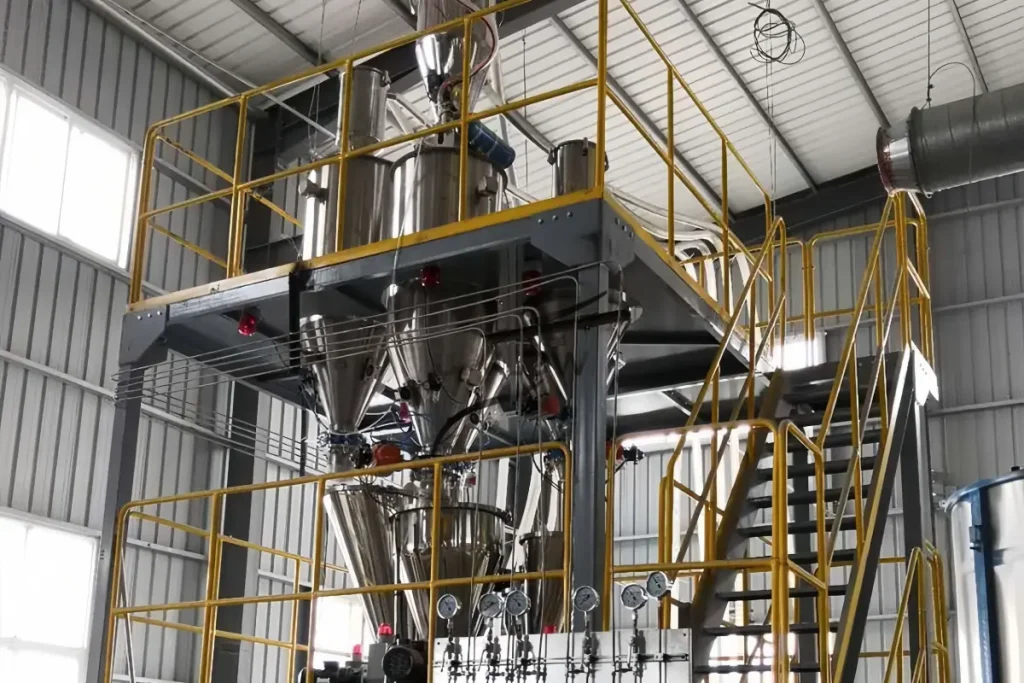
In a typical sulfide electrolyte pneumatic conveying system, powders are transferred from sealed storage units into pipelines through airtight feeding devices, and then transported to downstream processes such as mixing, pressing, or coating.
As a powder automatic conveying system for sulfide electrolyte materials, it integrates advanced monitoring systems to control pressure, airflow, and humidity levels, ensuring stable conveying and precise dosing throughout the process.
Advantages of Sulfide Electrolyte Conveying Systems
The sulfide electrolyte pneumatic conveying system offers several critical advantages.
As a fully automatic conveying system for sulfide electrolyte powders, it ensures completely enclosed operation, preventing moisture contamination and hazardous gas release. In addition, it supports automated feeding, flexible system layout, and high process consistency, functioning as an efficient powder conveying system for solid-state battery materials.
Furthermore, the system enhances safety, reduces material loss, and improves production efficiency in advanced battery manufacturing environments.
Conclusion
The sulfide electrolyte pneumatic conveying system provides a reliable and high-performance solution for handling extremely sensitive battery materials. By integrating powder automatic conveying systems, fully automatic conveying systems, and high-airflow pneumatic conveying technologies for sulfide electrolyte powders, manufacturers can achieve ultra-clean production, stable material transfer, and high-efficiency operation in next-generation energy storage industries.