
Material Profile: Properties and Types of Metal Hydride Powders
Metal hydride powders, also known as hydrogen storage alloy powders, hydride battery materials, or metal hydrogen compounds, are widely used in hydrogen energy systems, nickel-metal hydride (Ni-MH) batteries, advanced energy storage, and specialty alloy industries due to their excellent hydrogen absorption and release performance.
These materials are generally processed as fine metallic powders, with a bulk density ranging from approximately 1.0 to 4.5 g/cm³, depending on alloy composition and particle morphology. Metal hydride powders are characterized by high reactivity, sensitivity to moisture and oxygen, dust generation tendency, and in some cases flammability or pyrophoric behavior, which makes safe conveying especially important. Common categories include rare-earth metal hydrides, magnesium-based hydrides, titanium-based hydrides, and nickel-metal hydride battery powders, each requiring different conveying and protection strategies.
What Is a Metal Hydride Powder Pneumatic Conveying System?
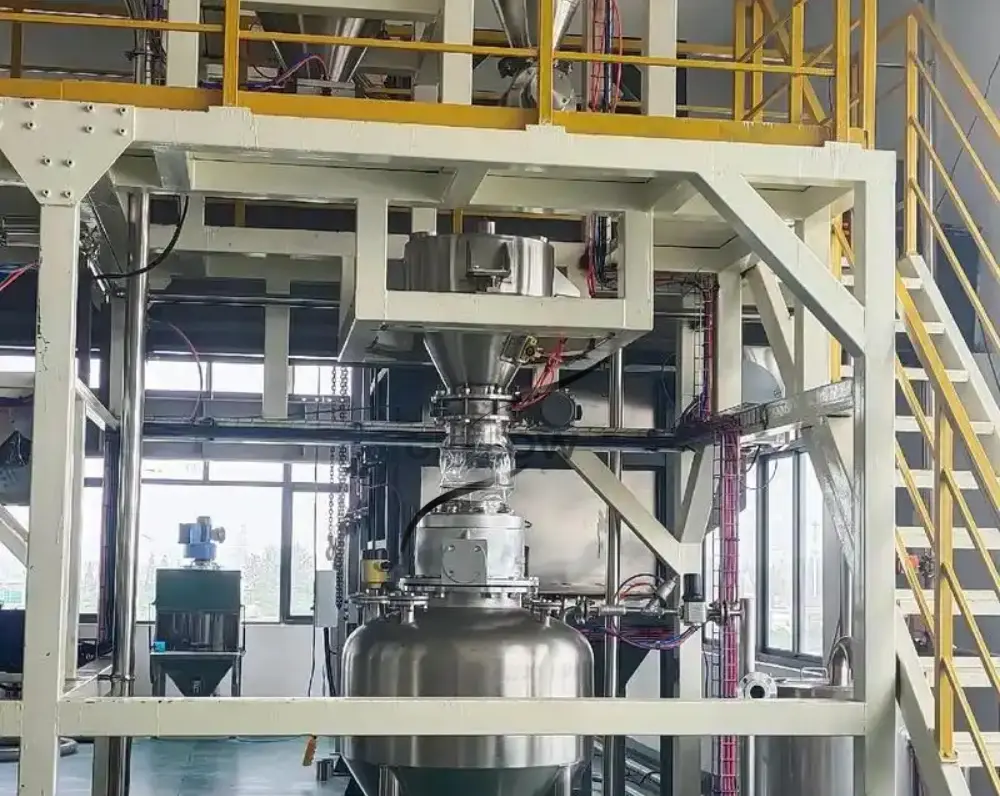
A metal hydride powder pneumatic conveying system is a specialized enclosed material handling solution designed to transfer sensitive hydride powders through pipelines using controlled airflow or inert gas protection, ensuring safe, clean, and automated transport.
In industrial applications, it is also referred to as a long-distance conveying system for metal hydride powders, a positive pressure pneumatic conveying system for hydrogen storage materials, or a battery material production line conveying system for hydride powders. This material pneumatic conveying system for metal hydride powders is suitable for high-purity and safety-critical production environments.
Conveying Requirements for Hydride Battery Materials
Due to the reactive nature of metal hydride powders, selecting the correct conveying method is essential.
For highly sensitive powders, a low-oxygen metal hydride powder pneumatic conveying system operating with nitrogen or inert gas protection is commonly used to prevent oxidation and reduce explosion risk. In large-scale manufacturing applications, a positive pressure pneumatic conveying system for metal hydride materials can provide efficient and stable transfer while maintaining enclosed operation.
As a fully enclosed long-distance conveying system for metal hydride powders, it helps minimize dust leakage, moisture exposure, and material contamination.
System Operation and Integration
In a typical metal hydride powder pneumatic conveying system, powders are transferred from sealed storage silos into conveying pipelines through rotary valves or screw feeding devices, and then transported to downstream equipment such as mixers, reactors, or battery material processing units.
As part of a battery material production line for metal hydride powders, the system integrates automated monitoring functions to regulate airflow, pressure, humidity, and feeding rate, ensuring stable conveying performance and safe production.
Advantages of Metal Hydride Powder Conveying Systems
The metal hydride powder pneumatic conveying system offers several important advantages for advanced material manufacturing.
As a fully enclosed conveying system for reactive metal hydride powders, it ensures dust-free operation and improves production safety while protecting material purity. In addition, it supports automated feeding, flexible pipeline layout, and scalable conveying capacity, functioning as an efficient long-distance pneumatic conveying system for battery materials.
Furthermore, the system reduces material loss, improves operational stability, and enhances production efficiency in modern energy storage industries.
Conclusion
The metal hydride powder pneumatic conveying system provides a reliable solution for handling sensitive hydrogen storage and battery materials. By integrating positive pressure pneumatic conveying systems, long-distance conveying systems, and advanced battery material production line technologies for metal hydride powders, manufacturers can achieve safe, stable, and high-efficiency powder transfer in next-generation energy industries.