
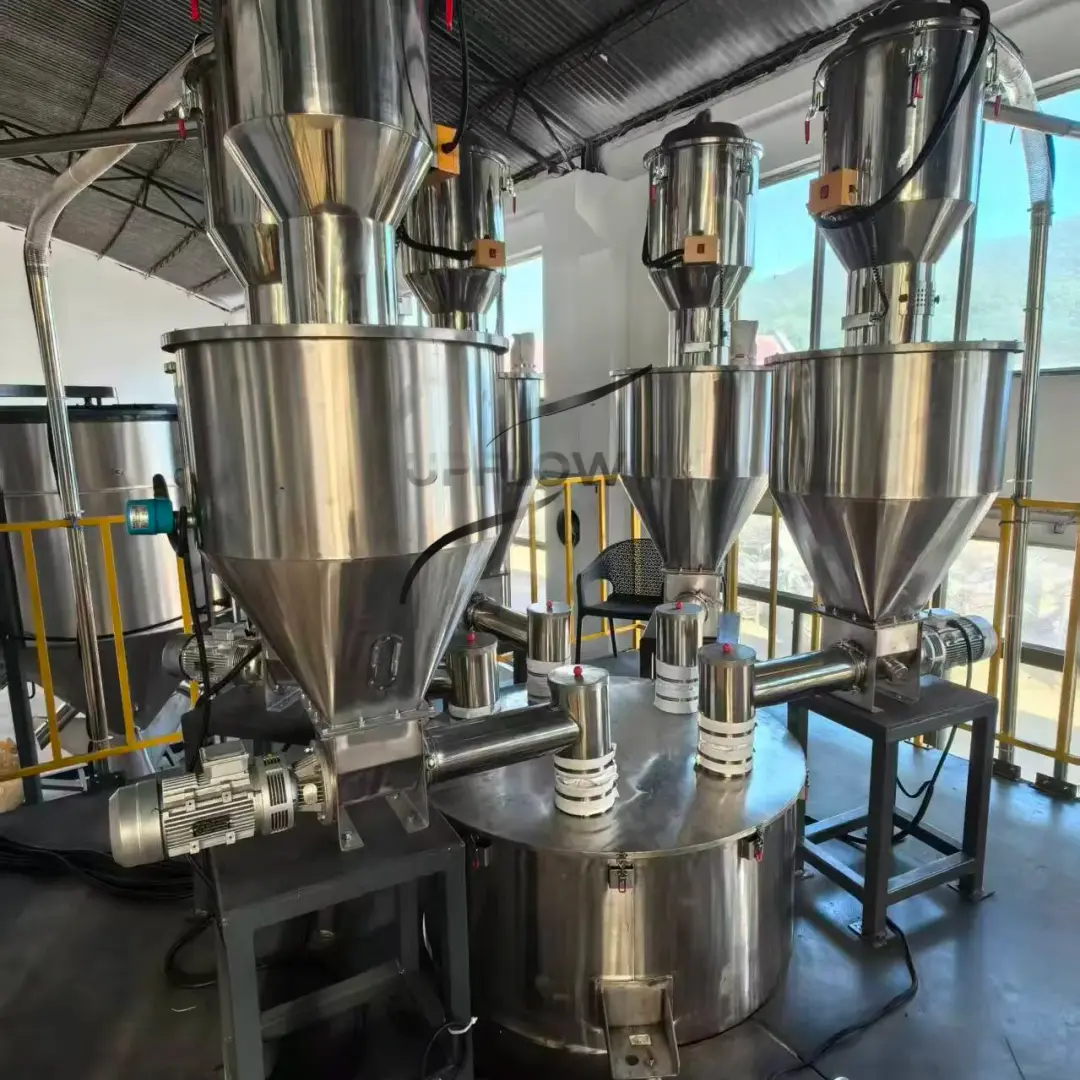
As pharmaceutical manufacturers continue to modernize traditional medicine production through automated processing, standardized formulations, and increasingly controlled powder-handling procedures, the transportation of Traditional Chinese Medicine powders has become an important engineering consideration because botanical powders, herbal extracts, and compound medicinal powders can exhibit complex flow behavior, variable particle sizes, moisture sensitivity, and strong tendencies toward dust generation, making conventional manual transfer increasingly difficult to control in a modern pharmaceutical production environment.
A properly engineered Traditional Chinese Medicine powder pneumatic conveying system can provide an enclosed and automated method for transferring herbal powders between raw material storage, weighing units, mixing equipment, extraction-related processes, intermediate hoppers, granulation lines, capsule or tablet production equipment, and packaging systems, while the conveying parameters can be adjusted according to the characteristics of the specific medicinal powder rather than treating all pharmaceutical materials as identical bulk solids.
Understanding Traditional Chinese Medicine Powder
Traditional Chinese Medicine powder, commonly abbreviated as TCM powder, refers to powdered medicinal materials or processed herbal formulations used in Traditional Chinese Medicine production, and may include powdered Chinese herbs, herbal extracts, medicinal plant powders, compound herbal formulations, and spray-dried or concentrated botanical extracts.
Unlike a single chemical substance such as lactose or a defined active pharmaceutical ingredient, Traditional Chinese Medicine powder is generally a complex mixture of natural substances, meaning that there is no single universal scientific name or chemical formula for all TCM powders.
Depending on the formulation, the material may also be called Chinese herbal powder, Chinese medicine powder, TCM herbal powder, medicinal herb powder, herbal extract powder, or botanical pharmaceutical powder.
Its chemical composition can include polysaccharides, flavonoids, alkaloids, saponins, volatile oils, tannins, proteins, organic acids, and other naturally occurring compounds, while the exact composition depends on the plant species, extraction method, processing conditions, and formulation.
The bulk density of Traditional Chinese Medicine powder can vary substantially, typically falling within approximately 0.30–0.75 g/cm³ for many finely processed herbal powders, although specific products can fall outside this range because particle size, moisture content, extraction concentration, porosity, and drying technology can significantly affect apparent density.
From a conveying perspective, TCM powders can be relatively light, irregular, hygroscopic, cohesive, electrostatic, and dusty, while some herbal powders can also have poor flowability caused by their fine particle size and natural fiber content.
These characteristics mean that a Traditional Chinese Medicine powder pneumatic conveying system needs to be designed around the actual material rather than relying only on theoretical conveying capacity.
Why TCM Powder Requires Controlled Pharmaceutical Powder Conveying
One of the main challenges associated with TCM powder transportation is the significant variation between different formulations, because two medicinal powders with similar appearance may behave very differently during feeding and conveying due to differences in moisture content, particle morphology, bulk density, oil content, and extract concentration.
Fine herbal particles can generate considerable airborne dust when manually transferred from bags or containers, while cohesive powders may bridge or rat-hole inside hoppers and feeding equipment.
In addition, many pharmaceutical manufacturers need to protect the material from unnecessary exposure to the external environment while simultaneously preventing powder from escaping into the production area.
For this reason, a Traditional Chinese Medicine powder pneumatic conveying system can provide a controlled material-transfer route in which the product remains inside a pipeline during transportation, reducing manual handling and creating a more consistent connection between different production stages.
The conveying system should also avoid unnecessarily high air velocity, because excessive turbulence can increase particle impact, generate additional fines, and potentially alter the physical characteristics of delicate herbal extract powders.
Traditional Chinese Medicine Powder Positive Pressure Conveying System
A Traditional Chinese Medicine powder positive pressure conveying system uses compressed or process air to create a pressure differential that pushes the material through a sealed pipeline from the feeding point toward the receiving equipment.
This configuration can be suitable when the material needs to be transported over relatively long distances or from a central feeding point toward one or more processing machines, particularly when the production layout requires a flexible pipeline arrangement.
The system can include a pressure vessel, rotary valve, screw feeder, or other controlled feeding device to introduce the TCM powder into the conveying airflow at a stable rate.
For pharmaceutical applications, the air source and filtration system should be selected carefully according to the product requirements, while stainless steel pipelines and hygienic connection methods can be used where cleanliness and corrosion resistance are important.
A properly controlled Traditional Chinese Medicine powder positive pressure conveying system can therefore provide continuous and automated powder transfer while reducing the need for operators to manually move medicinal powder between processing stages.
Traditional Chinese Medicine Powder Negative Pressure Conveying System
A Traditional Chinese Medicine powder negative pressure conveying system operates by creating a vacuum inside the conveying pipeline, causing atmospheric or filtered process air to move toward the vacuum source and carry the powder from the pickup point toward the receiving equipment.
This operating principle can be particularly useful when the production process involves several material pickup points, because a centralized vacuum source can potentially serve multiple feeding locations through automated valves and properly designed pipeline branches.
Another advantage of negative-pressure operation is that, under normal operating conditions, air tends to enter the conveying system through potential leakage points rather than escaping outward, which can help support dust-controlled material transfer.
For pharmaceutical powder applications, the receiving station can incorporate a high-efficiency filter system that separates the TCM powder from the conveying air before the air reaches the vacuum equipment.
The actual vacuum level, conveying velocity, pipeline diameter, and feeding rate should still be optimized according to the material characteristics, because a Traditional Chinese Medicine powder negative pressure conveying system must balance reliable transportation with low particle degradation and stable powder flow.
Traditional Chinese Medicine Powder Enclosed Conveying System
An Traditional Chinese Medicine powder enclosed conveying system keeps the medicinal powder inside a closed transportation path from the feeding point to the receiving equipment, providing an alternative to manual open transfer methods that can expose the product to the surrounding environment.
This is especially important in pharmaceutical manufacturing, where powder handling can influence production cleanliness, operator exposure, cross-contamination control, and overall process consistency.
A sealed pipeline can reduce the number of open transfer operations and simplify the connection between storage vessels, weighing systems, mixers, tablet presses, capsule filling machines, and other pharmaceutical processing equipment.
The system can also be configured with sanitary clamps, sealed valves, suitable gaskets, polished stainless steel surfaces, and accessible cleaning points according to the required pharmaceutical production standards.
For multi-product facilities, the Traditional Chinese Medicine powder enclosed conveying system can be designed with appropriate cleaning and changeover procedures so that material residues can be controlled between different batches or formulations.
Pharmaceutical Automation with Traditional Chinese Medicine Powder
Automation is increasingly important in modern TCM manufacturing because pharmaceutical production requires greater consistency in weighing, feeding, blending, transfer, and batch management.
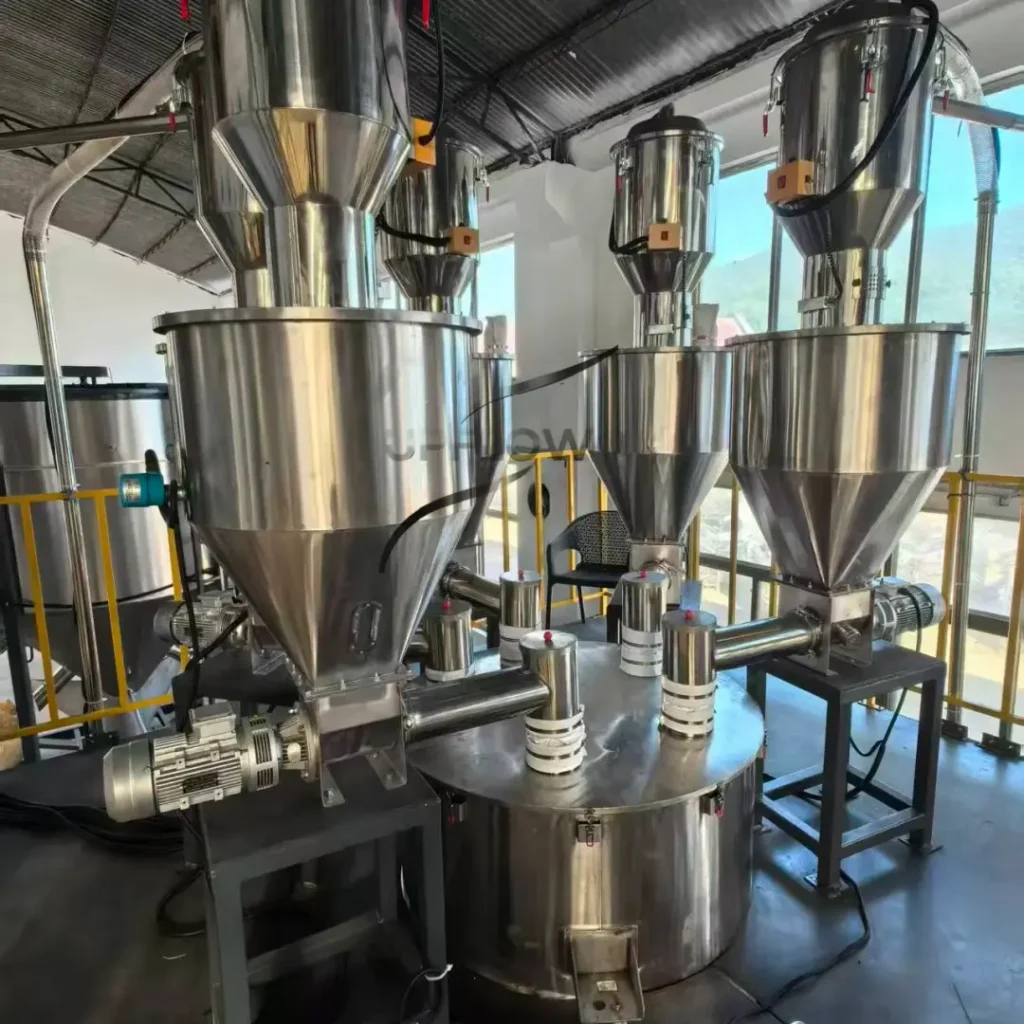
A Traditional Chinese Medicine powder pneumatic conveying system can be connected to weighing hoppers, storage bins, intermediate vessels, automatic valves, filters, level sensors, pressure transmitters, and PLC controls to create a coordinated material-handling process.
Instead of requiring operators to manually transfer each batch, the control system can initiate conveying according to predefined production sequences, monitor receiving hopper levels, detect abnormal pressure conditions, and stop the system when the target material quantity has been transferred.
This approach can help reduce repetitive manual operations while improving the consistency of material transfer between different pharmaceutical processing stages.
For larger facilities, the conveying system can also be integrated into a broader pharmaceutical powder automation architecture in which raw-material preparation, weighing, conveying, blending, and downstream processing are coordinated through centralized controls.
Powder Feeding and Conveying Stability
Feeding stability is one of the most important factors affecting the performance of a TCM powder conveying installation because inconsistent powder feeding can lead to unstable air-to-material ratios, fluctuating pressure, and irregular conveying performance.
Herbal powders with poor flowability may require specially designed hopper outlets, agitation devices, screw feeders, rotary valves, or other feeding mechanisms to maintain a controlled material feed rate.
The interface between the feeding device and the pneumatic pipeline should be designed carefully so that the material enters the airflow without creating excessive surges or blockage conditions.
For some formulations, laboratory or pilot testing can provide useful information about flowability, dispersion behavior, minimum conveying velocity, pressure drop, and material degradation before the final system is manufactured.
This engineering approach allows the Traditional Chinese Medicine powder pneumatic conveying system to be matched more closely to the actual physical behavior of the customer’s material.
Cleaning, Batch Changeover, and Pharmaceutical Production Requirements
TCM pharmaceutical facilities may manufacture numerous formulations using different herbal powders and extracts, which makes cleaning and batch changeover an important part of conveying-system design.
Residual powder inside pipelines, valves, bends, filters, or receiving equipment can become a source of cross-contamination if the equipment is not designed for effective cleaning and inspection.
A pharmaceutical conveying installation should therefore consider pipeline accessibility, connection design, drainability where applicable, filter maintenance, valve selection, and cleaning procedures during the engineering stage rather than treating cleaning as an afterthought.
For facilities with frequent product changes, the Traditional Chinese Medicine powder enclosed conveying system can be configured to minimize material retention areas and simplify disassembly or cleaning of critical components.
The appropriate cleaning strategy will depend on the formulation and pharmaceutical process, and may involve dry cleaning, vacuum cleaning, controlled wet cleaning, or other validated procedures determined by the manufacturer.
Selecting a Traditional Chinese Medicine Powder Pneumatic Conveying Manufacturer
Selecting an experienced Traditional Chinese Medicine powder pneumatic conveying manufacturer is important because successful pharmaceutical powder transportation requires more than simply connecting a blower, vacuum pump, and pipeline.
The supplier should understand the relationship between material characteristics and conveying parameters, including bulk density, particle-size distribution, moisture content, flowability, cohesiveness, dust generation, electrostatic behavior, and sensitivity to mechanical stress.
The manufacturer should also consider the complete production route, including the distance between equipment, vertical lifting height, number of bends, required throughput, feeding method, receiving equipment, cleaning requirements, and automation interfaces.
Where the powder characteristics are uncertain, material testing can help determine whether positive pressure, negative pressure, dilute-phase, dense-phase, or another conveying configuration is more appropriate.
A capable Traditional Chinese Medicine powder pneumatic conveying manufacturer should therefore be able to provide system-level engineering rather than supplying isolated components, covering conveying equipment, feeding equipment, pipelines, filtration, valves, control systems, and integration with the customer’s pharmaceutical production line.
Future Development of TCM Pharmaceutical Powder Conveying
As Traditional Chinese Medicine production becomes increasingly standardized and automated, pneumatic conveying technology is likely to become more closely integrated with digital manufacturing systems.
Future systems may combine real-time pressure monitoring, intelligent feeding control, automated filter monitoring, batch tracking, production data recording, and predictive maintenance functions to improve operational reliability.
For pharmaceutical manufacturers, the objective is not simply to move herbal powder from one point to another, but to establish a controlled material-transfer process that supports consistent production, cleaner operation, reduced manual handling, and better traceability.
The development of flexible conveying systems will also become increasingly important as manufacturers produce a wider range of herbal formulations with different material characteristics and batch sizes.
Conclusion
The transportation of Traditional Chinese Medicine powders presents unique engineering challenges because these materials are often natural, variable, fine, moisture-sensitive, and prone to dust generation, while pharmaceutical production requires controlled handling, consistent feeding, effective cleaning, and reliable batch-to-batch operation.
A properly engineered Traditional Chinese Medicine powder pneumatic conveying system can provide enclosed and automated material transfer between storage, weighing, blending, processing, and packaging equipment while reducing manual handling and improving overall process consistency.
Depending on the production layout and material properties, a Traditional Chinese Medicine powder positive pressure conveying system or Traditional Chinese Medicine powder negative pressure conveying system can be selected, while an Traditional Chinese Medicine powder enclosed conveying system can provide a controlled transportation environment for pharmaceutical powder handling.
By combining appropriate feeding technology, optimized conveying parameters, stainless steel process components, effective filtration, automatic control, and pharmaceutical-oriented cleaning considerations, manufacturers can build a reliable powder-transfer solution that supports the modernization of Traditional Chinese Medicine production.