
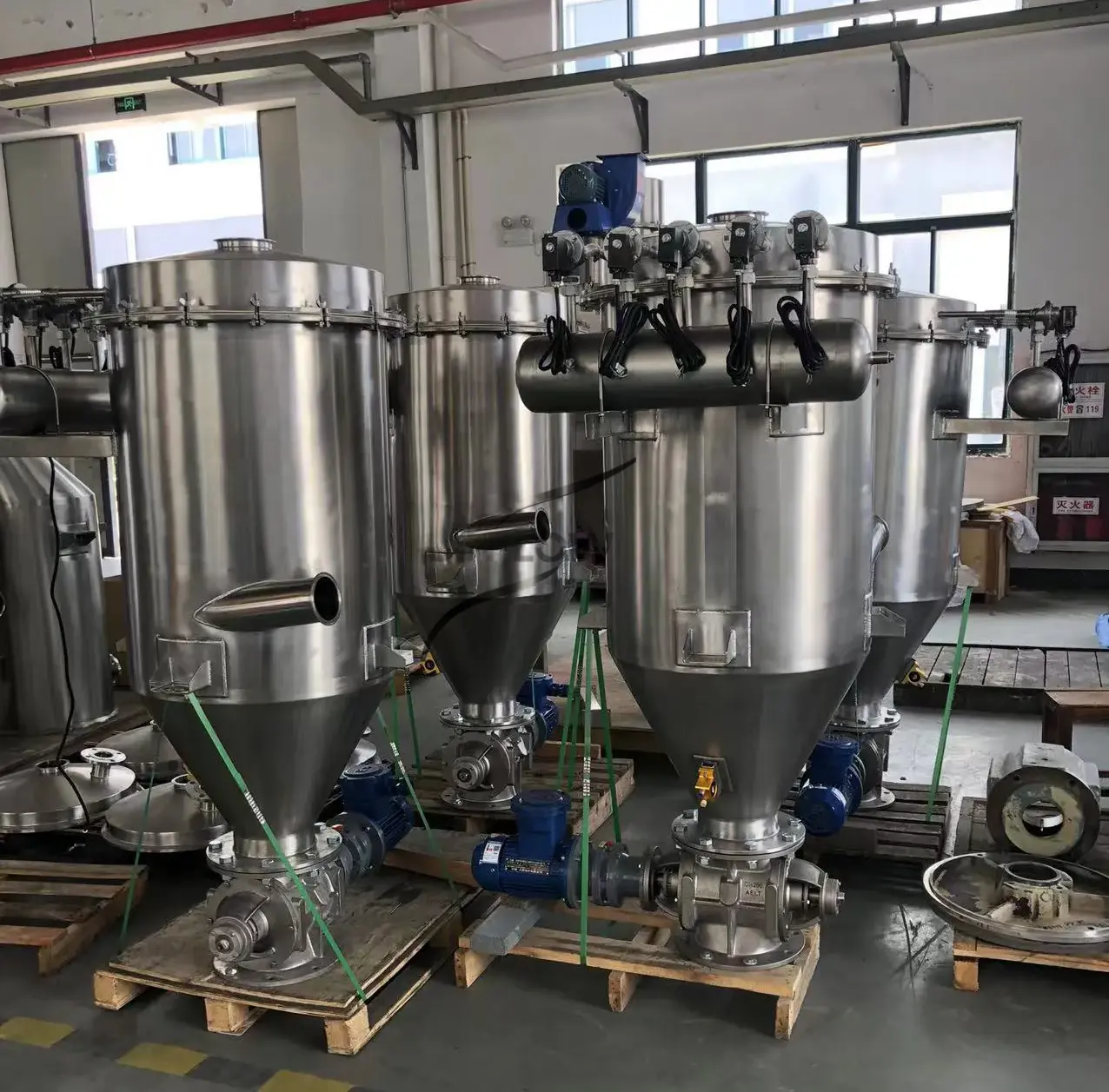
As pharmaceutical, nutraceutical, clinical nutrition, and health-product manufacturers continue to increase the automation of powder processing, the transportation of protein-based powders has become an important part of modern material handling because protein powders can exhibit variable flowability, relatively low bulk density, moisture sensitivity, cohesiveness, and a tendency to form agglomerates, meaning that an effective conveying solution must not only achieve the required production capacity but also protect powder quality while maintaining hygienic and controlled transfer conditions.
A properly designed protein powder pneumatic conveying system can transfer protein powder from bags, bulk containers, storage vessels, weighing hoppers, or intermediate silos to mixers, blending machines, granulation equipment, filling machines, and other pharmaceutical or nutraceutical processing equipment, providing a closed transportation route that can reduce manual material handling while supporting more consistent feeding and production automation.
Understanding Protein Powder as a Pharmaceutical Powder Material
Protein powder is a general material category rather than a single chemical compound, and it may be produced from different protein sources including whey, milk, soy, pea, egg, collagen, or other biological materials, meaning that its exact scientific name, chemical composition, and physical behavior depend strongly on the source and manufacturing process.
Common names include protein powder, protein concentrate, protein isolate, powdered protein, nutritional protein powder, pharmaceutical-grade protein powder, and dietary protein powder, while different commercial products can contain purified proteins, protein fractions, carbohydrates, minerals, amino acids, or other formulation ingredients.
Unlike simple crystalline substances, proteins are complex biological macromolecules, and their chemical structures are commonly represented by general peptide-chain structures rather than one universal molecular formula; for example, whey proteins can contain β-lactoglobulin, α-lactalbumin, serum albumin, and immunoglobulins, while other protein powders have completely different molecular compositions.
The bulk density of protein powder varies according to the protein source, particle size, drying process, degree of agglomeration, and moisture content, but many commercial protein powders have a loose bulk density in the approximate range of 0.30–0.70 g/cm³, with significant variation possible between different products.
From a material-handling perspective, protein powder can be lightweight, dusty, hygroscopic, cohesive, and sensitive to moisture, while some formulations may have relatively poor flowability and can develop bridging or rat-holing inside storage and feeding equipment.
These characteristics make the design of a protein powder pneumatic conveying system fundamentally different from the simple transportation of dense and free-flowing granular materials.
Why Protein Powder Requires Specialized Conveying Technology
Protein powder handling presents several challenges that need to be considered before selecting the pneumatic conveying method.
First, the low bulk density of many protein powders means that a relatively large volume of air may be required to transport the material at the desired mass flow rate, while excessive air velocity can increase turbulence and contribute to particle impact or unnecessary powder degradation.
Second, protein powders can absorb moisture from the surrounding environment, particularly when the powder contains hygroscopic components or has a high surface area, so the conveying system should minimize exposure to uncontrolled ambient air.
Third, fine protein particles can accumulate on equipment surfaces and filters, which makes proper receiver design, filtration, cleaning access, and maintenance important for reliable long-term operation.
Finally, protein powders may be used in formulations where precise dosing and consistent composition are critical, meaning that unstable feeding can directly affect downstream product quality.
For these reasons, a protein powder pneumatic conveying system should be engineered according to actual powder characteristics, conveying distance, required capacity, feeding method, and pharmaceutical production requirements rather than relying on a standard pneumatic conveying configuration.
Protein Powder Vacuum Conveying System for Controlled Powder Transfer
A protein powder vacuum conveying system uses negative pressure to draw protein powder from a pickup point toward a receiving hopper or processing machine.
This configuration can be particularly useful when protein powder needs to be collected from bags, drums, bulk containers, or several material sources and delivered to a central processing location.
Because the conveying pipeline operates under vacuum, the airflow generally moves toward the conveying equipment, which can help limit outward powder leakage when the system is properly sealed and maintained.
A vacuum receiver can separate the protein powder from the conveying air using a suitable filter assembly, allowing the product to fall into the receiving hopper while the filtered air continues toward the vacuum source.
For pharmaceutical and nutraceutical applications, the vacuum level and conveying velocity should be carefully controlled so that the system provides stable transportation without creating excessive turbulence.
The protein powder vacuum conveying system can therefore provide an effective solution for enclosed powder transfer where cleanliness, flexible material pickup, and automated feeding are important considerations.
Protein Powder Feeding System for Stable Production
One of the most important parts of a pneumatic conveying installation is the feeding interface because even a well-designed pipeline can operate poorly if the powder enters the conveying airflow inconsistently.
Protein powders can have relatively poor flowability, and their behavior may change as moisture content, storage time, compaction, or formulation changes.
A dedicated protein powder feeding system can incorporate a suitable hopper, screw feeder, rotary valve, vacuum pickup device, or other controlled feeding mechanism to maintain a stable supply of material to the conveying line.
The feeder should be selected according to the powder’s flow characteristics and required throughput, while the hopper outlet should be designed to reduce bridging and material accumulation.
In pharmaceutical powder production, controlled feeding is particularly important when protein powder is combined with other ingredients because fluctuations in material flow can affect formulation ratios and downstream mixing consistency.
An automated protein powder feeding system can also communicate with weighing equipment and PLC controls so that the material transfer sequence can be coordinated with the production recipe.
Protein Powder Low-Pressure Conveying System for Gentle Handling
A protein powder low-pressure conveying system operates with controlled conveying pressure and airflow rather than relying on aggressive high-velocity transportation.
This approach can be useful when the objective is to move lightweight protein powder while limiting excessive turbulence, particle acceleration, and unnecessary mechanical stress.
Low-pressure conveying does not mean that the system operates without sufficient conveying force; instead, the system is engineered to maintain an appropriate pressure differential and airflow according to the material characteristics and pipeline configuration.
For sensitive pharmaceutical or nutritional powders, controlling conveying velocity can help reduce the generation of fines and prevent unnecessary powder accumulation around bends, receivers, and filters.
The design of a protein powder low-pressure conveying system should therefore consider pipeline diameter, conveying distance, pressure drop, material loading ratio, feeder performance, and the number of elbows in the transportation route.
Where the powder is particularly sensitive or cohesive, pilot testing can help establish suitable operating parameters before full-scale equipment is manufactured.
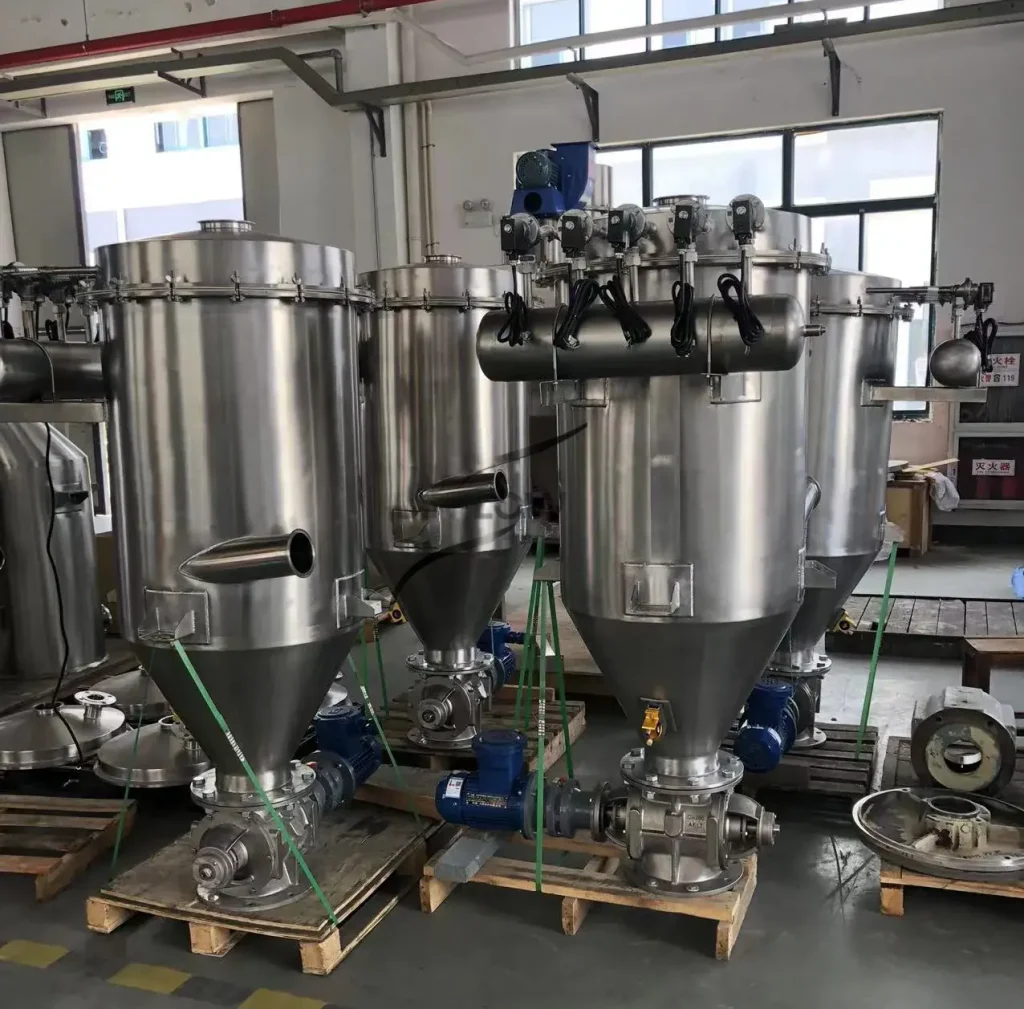
Protein Powder Pneumatic Conveyor and Equipment Configuration
A protein powder pneumatic conveyor is not simply a blower connected to a pipeline, but a complete material-transfer arrangement that normally includes a feeding device, conveying pipeline, air source or vacuum source, receiving hopper, filtration system, valves, sensors, and control equipment.
The selection of each component affects the overall performance of the conveying process.
For example, the feeding device determines how consistently the powder enters the conveying airflow, while pipeline diameter influences pressure loss and air velocity, and the receiver determines how effectively the powder is separated from the conveying air.
The filtration system is also particularly important because fine protein particles can place a significant load on filter elements during continuous operation.
A properly configured protein powder pneumatic conveyor can be designed with stainless steel contact components, sanitary connections, appropriate filter materials, automatic valves, and accessible maintenance points according to the requirements of the pharmaceutical or nutraceutical production environment.
Hygienic Design for Pharmaceutical Protein Powder Handling
Protein powder used in pharmaceutical, clinical nutrition, or highly controlled nutritional applications may require a higher level of hygienic engineering than general industrial powder transportation.
Product-contact surfaces should be selected to minimize contamination and material retention, while pipeline connections should allow inspection, maintenance, and cleaning.
The number of unnecessary dead zones should be reduced during system design, particularly around valves, pipe branches, feeders, and receiving equipment.
Depending on the production process, the system may also require controlled cleaning procedures and suitable filtration arrangements to prevent residual powder from affecting subsequent production batches.
A closed conveying route can reduce the number of manual powder-transfer operations, which can help improve production cleanliness while reducing the possibility of powder being exposed to uncontrolled environmental conditions.
Protein Powder Material Automation System for Pharmaceutical Production
The value of pneumatic conveying becomes greater when it is integrated into a complete protein powder material automation system rather than operated as an independent transfer machine.
A typical automated process may connect raw-material unloading, weighing, feeding, pneumatic conveying, intermediate storage, blending, and downstream filling or packaging equipment.
PLC-based control can monitor hopper levels, conveying pressure, vacuum conditions, filter status, valve positions, and transfer sequences, allowing the system to operate according to predefined production requirements.
For batch production, the control system can coordinate material transfer with weighing and recipe management so that the correct amount of protein powder is delivered to the next process stage.
This reduces the need for repeated manual intervention and can improve consistency between production batches.
A well-designed protein powder material automation system can also provide operating records that help production teams identify abnormal conveying conditions, filter loading, or feeding instability before these issues develop into major process interruptions.
Moisture Control and Powder Quality
Moisture control deserves special attention in protein powder conveying because exposure to humid air can change powder flowability and promote agglomeration.
When protein powder absorbs moisture, the material may become more cohesive and difficult to discharge from hoppers, while increased agglomeration can also affect feeding accuracy and conveying stability.
A sealed conveying system can reduce unnecessary contact with ambient air, while appropriate air filtration and conditioning can help maintain more stable conveying conditions where required by the process.
The actual moisture-control strategy should be determined according to the protein type and product formulation, because different protein materials can have significantly different hygroscopic behavior.
The combination of controlled feeding, appropriate airflow, and enclosed transfer can help maintain more predictable material behavior throughout the production process.
Choosing a Protein Powder Pneumatic Conveying Manufacturer
Selecting an experienced protein powder pneumatic conveying manufacturer is important because protein powder systems require coordinated engineering across feeding, conveying, filtration, receiving, automation, and cleaning.
The manufacturer should evaluate key material parameters such as bulk density, particle-size distribution, moisture content, flowability, cohesiveness, dust generation, and sensitivity to conveying conditions before determining the system configuration.
Process information is equally important, including required capacity, conveying distance, vertical elevation, number of destinations, feeding method, receiving equipment, and expected operating schedule.
For pharmaceutical powder applications, the supplier should also understand the importance of hygienic equipment construction, material-contact surfaces, filter selection, cleaning access, and controlled production environments.
An experienced protein powder pneumatic conveying manufacturer can therefore provide a complete engineering solution instead of simply supplying individual pneumatic conveying components.
Future Trends in Protein Powder Pneumatic Conveying
As pharmaceutical and nutritional powder manufacturing becomes increasingly automated, protein powder transportation is expected to become more closely connected with intelligent process-control systems.
Sensors can be used to monitor conveying pressure, vacuum level, hopper conditions, filter loading, and material transfer status, while automated controls can adjust conveying cycles according to real-time production requirements.
Another important development is the integration of pneumatic conveying with centralized powder handling, automated weighing, recipe management, and batch traceability, which can reduce manual intervention and improve consistency throughout the production process.
For manufacturers handling multiple protein formulations, flexible equipment configurations will also become increasingly valuable because the same production facility may need to process powders with different densities, particle sizes, moisture characteristics, and flow properties.
Conclusion
Protein powders require careful material-handling engineering because their low bulk density, fine particle size, moisture sensitivity, cohesiveness, and variable flowability can create challenges that are not encountered with every conventional bulk powder.
A properly designed protein powder pneumatic conveying system can provide controlled, enclosed, and automated transportation from raw-material storage through weighing, blending, processing, and filling operations.
Depending on the production layout and material properties, a protein powder vacuum conveying system can provide flexible negative-pressure transfer, while a protein powder low-pressure conveying system can help achieve gentler transportation conditions for sensitive powder products.
A reliable protein powder feeding system can maintain stable material flow into the pipeline, while a properly selected protein powder pneumatic conveyor can combine feeding, filtration, receiving, and automatic controls into one integrated handling solution.
When these technologies are combined into a complete pharmaceutical powder-handling process, manufacturers can improve material-transfer consistency, reduce manual handling, control dust, and establish a cleaner and more automated production environment for modern protein-based pharmaceutical and nutritional powder manufacturing.