
- admin
- Sep 7, 2026
- Custom Fabrication
Choosing the right material is one of the first and most important decisions in any custom metal manufacturing project, because the selected stainless steel grade can affect corrosion resistance, mechanical performance, fabrication efficiency, appearance, service life, and overall project cost. For equipment manufacturers and OEM companies, understanding how to select stainless steel for custom fabrication is particularly important when the finished product must meet specific operating conditions rather than simply match a standard commercial specification.
Stainless steel is available in many grades, and no single grade is the best choice for every application. The right selection depends on the working environment, contact with chemicals or moisture, required strength, fabrication method, surface finish, temperature, expected service life, and budget.
What Should Be Considered When Selecting Stainless Steel?
Before selecting a stainless steel grade, manufacturers should first understand how and where the finished product will be used.
A component installed in a dry indoor environment may have very different material requirements from a storage tank exposed to moisture, a process component used around chemicals, or an equipment enclosure operating in a demanding industrial environment.
When selecting stainless steel for custom fabrication, several factors should therefore be evaluated together, including corrosion resistance, mechanical strength, weldability, formability, surface appearance, operating temperature, product dimensions, and total manufacturing cost.
The material should serve the application rather than being selected simply because it is a commonly used stainless steel grade.
304 Stainless Steel for General Fabrication
304 stainless steel is one of the most widely used stainless steel grades for general industrial fabrication because it provides a useful balance between corrosion resistance, strength, formability, weldability, and cost.
It is suitable for many applications where the operating environment is relatively moderate, including equipment enclosures, machine components, workstations, structural assemblies, tanks, cabinets, and various custom OEM parts.
For many industrial projects, 304 stainless steel provides sufficient performance without the additional material cost associated with more specialized grades.
However, the final selection should still consider the actual environment, because exposure to certain chemicals, salts, high humidity, or other corrosive conditions may require a different material.
316 Stainless Steel for More Demanding Environments
316 stainless steel is often considered when improved corrosion resistance is required, particularly in environments where exposure to chlorides or certain chemicals creates greater corrosion risks.
Compared with 304 stainless steel, 316 contains molybdenum, which contributes to its improved resistance in certain corrosive environments.
This makes 316 stainless steel a potential choice for applications involving more demanding environmental conditions, including some chemical processing equipment, marine-related applications, and industrial environments with increased exposure to corrosive substances.
However, choosing 316 simply because it offers higher corrosion resistance is not always economically justified. If the equipment will operate in a relatively clean and controlled environment, 304 may provide an appropriate balance between performance and cost.
Stainless Steel Sheet, Plate, Tube, and Other Forms
Material grade is only one part of material selection. The physical form of the stainless steel also needs to match the product design and fabrication process.
Sheet metal is commonly used for equipment enclosures, cabinets, panels, covers, server chassis, and other formed components, while thicker plate may be required for tanks, structural components, bases, or applications requiring greater rigidity.
Stainless steel tubes and profiles can be used for machine frames, support structures, handrails, workstations, and other fabricated assemblies.
The required thickness should also be evaluated carefully because increasing material thickness may improve rigidity and structural performance but can also increase weight, material cost, cutting requirements, bending force, and welding time.
For this reason, material selection should be considered together with the product’s complete engineering design.
Corrosion Resistance and Operating Environment
Corrosion resistance is often the main reason customers choose stainless steel, but the required level of resistance depends heavily on the actual application.
Factors such as humidity, temperature, chemicals, salt exposure, cleaning procedures, outdoor installation, and contact with different materials can influence corrosion behavior.
For example, an indoor machine frame may not require the same corrosion resistance as a tank used in a chemically aggressive environment, while an outdoor equipment enclosure may need additional protection through material selection and appropriate surface finishing.
When selecting stainless steel for custom fabrication, customers should provide the manufacturer with information about the operating environment whenever possible, because this allows the material recommendation to be based on actual application conditions rather than assumptions.
Formability and Weldability
A stainless steel grade may have excellent corrosion resistance but still require careful consideration from a manufacturing perspective.
Sheet metal products often involve cutting, bending, welding, drilling, grinding, and other secondary processes, and the selected material must be suitable for the required fabrication operations.
For complex sheet metal components, formability can influence bending quality and production efficiency, while weldability can affect the manufacturing of frames, tanks, enclosures, and larger assemblies.
The relationship between material properties and manufacturing processes is therefore important when developing a custom product, particularly when the design contains multiple bends, welded joints, tight dimensional requirements, or complex assemblies.
Surface Finish and Appearance
The required surface appearance can also influence material selection and processing.
Stainless steel components may be supplied with different surface conditions and can undergo processes such as brushing, polishing, grinding, or other finishing operations depending on the application.
For visible equipment such as server chassis, equipment enclosures, workstations, and architectural or industrial components, a consistent surface finish can be an important part of the final product quality.
For tanks and process equipment, the surface requirements may instead be related to cleanliness, maintenance, corrosion resistance, or the specific process environment.
Material selection should therefore consider not only how the stainless steel performs during operation but also how it needs to look and perform after fabrication.
Cost and Total Project Value
Material price is an important consideration, especially for large fabricated products, but selecting the cheapest stainless steel does not necessarily produce the lowest total project cost.
A material that is unsuitable for the operating environment may require more maintenance, earlier replacement, or additional protective treatment, while selecting an unnecessarily expensive grade can increase the initial investment without providing meaningful additional value.
A practical approach is to balance material performance, fabrication requirements, expected service life, maintenance needs, and total project cost.
For OEM manufacturers purchasing components repeatedly, this approach can become even more important because a small difference in material cost can have a significant impact across multiple production batches.
Matching Stainless Steel to the Final Product
Different custom fabricated products can have very different material requirements.
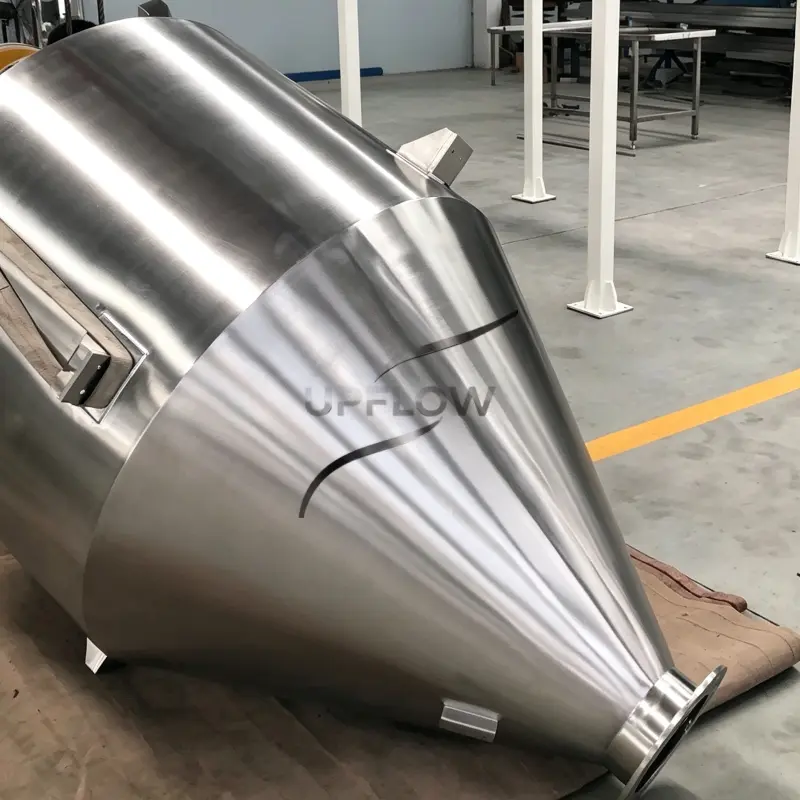
A stainless steel equipment enclosure may prioritize appearance, corrosion resistance, and ease of fabrication, while a machine frame may place greater emphasis on structural strength and dimensional stability. A powder storage tank or process tank may require careful consideration of the stored material, operating environment, connections, and cleaning requirements.
AI server chassis and data center components may prioritize weight, structural rigidity, ventilation design, dimensional accuracy, and surface appearance, while custom OEM brackets or panels may focus more heavily on manufacturability and cost efficiency.
This is why stainless steel for custom fabrication should always be selected according to the finished product and its intended application rather than using one standard material across every project.
Working with a Fabrication Manufacturer
For OEM customers, discussing material selection with the fabrication manufacturer at the beginning of a project can help prevent unnecessary changes later in production.
Customers can provide information such as the intended application, operating environment, required dimensions, material preferences, estimated production quantity, surface finish, and expected service life.
The manufacturer can then review these requirements together with the engineering drawing and fabrication process to determine whether the proposed material is practical for production.
This collaborative approach is especially useful for custom products where material selection, fabrication method, and product design are closely connected.
Choosing the Right Material for Long-Term Performance
There is no universal stainless steel grade that is suitable for every custom fabrication project. The right choice depends on a combination of environmental conditions, mechanical requirements, fabrication processes, appearance, service life, and budget.
304 stainless steel can provide an effective solution for many general industrial applications, while 316 stainless steel may be more appropriate where additional corrosion resistance is required. Other materials and stainless steel grades may also be considered when the project has specific engineering requirements.
For equipment manufacturers and OEM customers, the best approach is to select stainless steel for custom fabrication based on the actual application rather than relying on material grade alone.
UPFLOW provides custom fabrication solutions for stainless steel equipment enclosures, tanks, silos, machine frames, AI server chassis, OEM parts, and other fabricated components according to customer drawings and project requirements.
If you are unsure which stainless steel material is suitable for your project, you can provide your drawing, application information, and technical requirements to UPFLOW for engineering review and material discussion.