
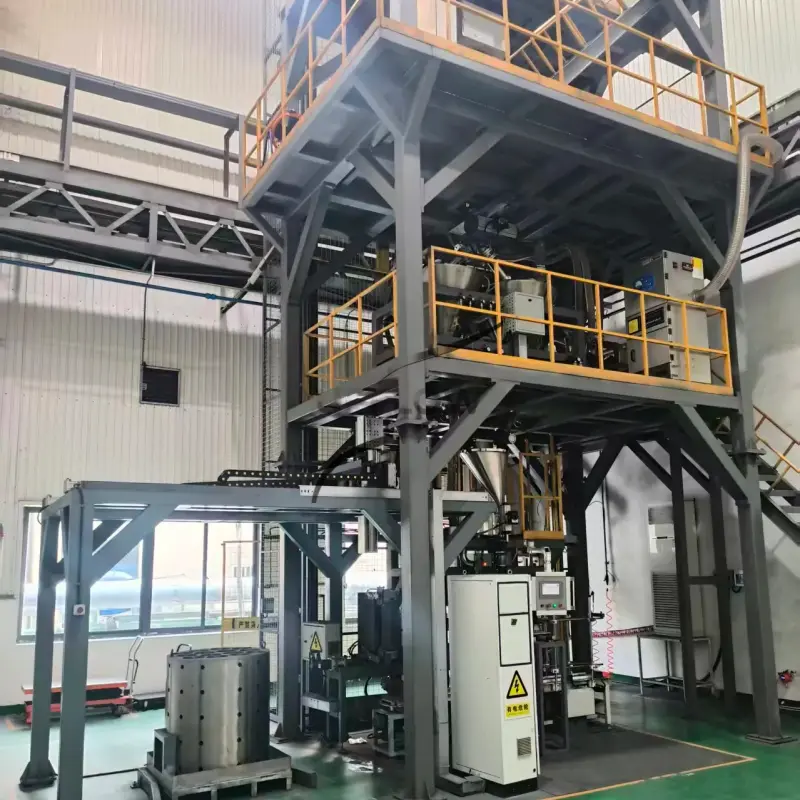
As pharmaceutical and nutraceutical manufacturers continue to improve powder processing through automated dosing, enclosed material transfer, and digitally controlled production lines, the transportation of vitamin powders has become an increasingly important process because these materials are often handled in relatively small quantities but can have high formulation value, fine particle sizes, moisture sensitivity, electrostatic behavior, and strict requirements for dosing accuracy, making the conveying method an important factor in maintaining product consistency throughout modern pharmaceutical powder production.
A properly engineered vitamin powder pneumatic conveying system can transfer vitamin-based powders from raw material containers, intermediate hoppers, weighing stations, or storage vessels to mixers, blending equipment, granulation machines, tablet presses, capsule filling lines, and other pharmaceutical processing equipment, while the closed conveying route can reduce manual handling and provide a more controlled method for moving sensitive powder ingredients between different stages of production.
Understanding Vitamin Powder and Its Material Characteristics
Vitamin powder is a broad category of pharmaceutical and nutritional powder materials rather than one single chemical substance, because commercial vitamin products may contain individual vitamins, vitamin premixes, vitamin salts, vitamin derivatives, carriers, stabilizers, or combinations of several nutritional ingredients.
Common examples include vitamin C powder, vitamin B1, vitamin B2, vitamin B6, vitamin B12, vitamin D, vitamin E, folic acid, and multi-vitamin premixes, each of which has different chemical and physical characteristics.
For example, vitamin C is scientifically known as ascorbic acid and has the chemical formula C6H8O6, while vitamin B2 is riboflavin with the chemical formula C17H20N4O6, and vitamin B6 may refer to pyridoxine or related compounds, demonstrating why vitamin powder should be evaluated according to its actual formulation rather than treated as a single standardized material.
Depending on the product, vitamin powder may also be described as vitamin premix, vitamin ingredient powder, pharmaceutical vitamin powder, nutritional vitamin powder, micronutrient powder, or vitamin formulation powder.
Bulk density varies significantly according to the vitamin compound, carrier material, particle size, drying process, and formulation, but many fine vitamin powders and premixes can have an apparent bulk density of approximately 0.25–0.75 g/cm³, with specific products falling outside this range.
From a material-handling perspective, vitamin powders can be fine, lightweight, dusty, hygroscopic, electrostatic, and sensitive to temperature or environmental conditions, while some formulations may also exhibit poor flowability and a tendency to form agglomerates during storage.
These characteristics mean that a vitamin powder pneumatic conveying system should be designed around the specific vitamin formulation, required transfer rate, conveying distance, and downstream pharmaceutical process.
Why Vitamin Powder Requires Precise Conveying Control
One of the key differences between vitamin powder and many conventional bulk materials is that vitamins may be used as relatively low-percentage ingredients in a larger pharmaceutical or nutritional formulation, which makes accurate feeding and consistent material transfer especially important.
Even when the total conveying capacity is relatively small, fluctuations in feeding rate can affect the composition of a batch if the vitamin ingredient is an active component of the formulation.
Fine vitamin particles can also become airborne during manual transfer, creating unnecessary dust and product loss, while exposure to moisture may change flowability and contribute to caking or agglomeration.
Some vitamin compounds are also sensitive to heat, light, oxygen, or prolonged environmental exposure, depending on their chemical structure and formulation.
A well-designed vitamin powder pneumatic conveying system can address these challenges by providing a controlled transportation path with suitable air velocity, filtration, feeding technology, and environmental protection.
Vitamin Powder Vacuum Conveying System for Pharmaceutical Production
A vitamin powder vacuum conveying system transports material by creating negative pressure within the conveying pipeline, drawing vitamin powder from a source vessel toward a vacuum receiver or processing machine.
This configuration can be particularly useful when vitamin ingredients need to be transferred from bags, drums, intermediate containers, or multiple raw-material stations to a centralized processing point.
Because the system operates under negative pressure, airflow generally moves toward the conveying equipment, which can help reduce outward powder leakage when the equipment is properly sealed.
At the receiving end, a filter separates the vitamin powder from the conveying air before the air continues toward the vacuum source.
The vacuum conveying process can also reduce the amount of manual powder handling required between weighing and blending operations, which is valuable when pharmaceutical manufacturers need repeatable material-transfer procedures.
For fine vitamin ingredients, the vitamin powder vacuum conveying system should be operated with carefully selected conveying velocity and vacuum conditions so that the material can be transported reliably without creating unnecessary turbulence or powder accumulation.
Vitamin Powder Feeding System for Accurate Ingredient Transfer
Feeding accuracy is particularly important for vitamin ingredients because many formulations require precise proportions of active nutritional components.
A dedicated vitamin powder feeding system can combine a hopper with a screw feeder, rotary valve, loss-in-weight feeder, or other controlled feeding technology according to the material characteristics and required dosing accuracy.
The feeding equipment should provide a stable flow of material into the pneumatic pipeline while minimizing sudden powder surges that could cause unstable conveying conditions.
For cohesive or poorly flowing vitamin powders, hopper geometry and discharge design can be especially important because material bridging or rat-holing can interrupt the feeding process.
The vitamin powder feeding system can also be connected with weighing equipment and PLC controls, allowing the feeding sequence to be coordinated with batch recipes and downstream mixing operations.
In automated pharmaceutical production, this approach can reduce repetitive manual weighing and transfer operations while improving the consistency of material addition.
Vitamin Powder Low-Pressure Conveying System for Sensitive Ingredients
A vitamin powder low-pressure conveying system is designed to transport powder under controlled pressure and airflow conditions rather than using unnecessarily aggressive conveying velocities.
This configuration can be beneficial for fine vitamin ingredients where excessive turbulence may increase dust generation, particle collision, or material deposition inside the pipeline.
Low-pressure conveying should not be interpreted as simply reducing pressure without considering the required conveying velocity, because the actual operating conditions must be calculated according to pipeline length, diameter, material loading, pressure drop, and powder characteristics.
For lightweight vitamin powders, maintaining a stable air-to-material ratio can be more important than maximizing conveying speed.
A properly engineered vitamin powder low-pressure conveying system can therefore provide stable transportation while helping reduce unnecessary mechanical stress on the material.
Where a new vitamin formulation has uncertain flow or conveying characteristics, laboratory testing can help establish suitable operating parameters before full-scale equipment is selected.
Vitamin Powder Pneumatic Conveyor and System Components
A vitamin powder pneumatic conveyor normally consists of several coordinated components rather than a single transportation device.
Typical equipment may include a powder feeding unit, vacuum pump or compressed-air source, conveying pipeline, receiving hopper, filter assembly, automatic valves, pressure sensors, level sensors, and PLC control equipment.
The receiving filter is particularly important because fine vitamin particles can create significant filter loading during continuous operation, requiring an appropriate filtration area and a practical cleaning or maintenance method.
Pipeline design should also minimize unnecessary dead zones and sharp changes in direction, especially in pharmaceutical applications where powder retention can complicate cleaning and product changeover.
Stainless steel is commonly selected for product-contact components when corrosion resistance, cleanability, and pharmaceutical production requirements need to be considered.
A properly configured vitamin powder pneumatic conveyor can therefore become part of a complete material-transfer station connecting storage, weighing, conveying, blending, and downstream production equipment.
Hygienic Design and Cross-Contamination Control
Pharmaceutical manufacturers frequently process multiple vitamin formulations in the same facility, making cleaning and cross-contamination control important considerations when designing powder-transfer equipment.
If vitamin powder remains inside pipeline bends, valve cavities, feeder outlets, or receiving vessels after a production batch, residues may become difficult to remove before the next formulation is introduced.
The conveying system should therefore be designed with suitable connection methods, accessible components, minimized powder-retention areas, and an appropriate cleaning strategy.
Closed transfer can also reduce the number of points at which operators need to manually open containers and handle the powder.
For facilities producing multiple vitamin formulations, the conveying system may be configured to support faster batch changeover while maintaining appropriate cleaning and inspection procedures.
The actual cleaning method should be selected according to the material formulation and pharmaceutical process, with dry cleaning, vacuum cleaning, wet cleaning, or validated cleaning procedures applied where appropriate.
Vitamin Powder Material Automation System for Pharmaceutical Manufacturing
The integration of pneumatic conveying with weighing, dosing, mixing, and process control can transform a simple powder-transfer operation into a broader vitamin powder material automation system.
In an automated process, the control system can monitor the level of the receiving hopper, confirm valve positions, control the feeding sequence, and initiate or stop conveying according to production requirements.
When connected to weighing systems, the automation platform can also coordinate the transfer of vitamin powder with predefined batch quantities, helping reduce operator intervention during repetitive production cycles.
For pharmaceutical manufacturers, this type of automation can improve process repeatability because material-transfer steps can be performed according to predefined operating sequences rather than relying entirely on manual decisions.
The vitamin powder material automation system can also collect operating information such as conveying cycles, pressure conditions, filter alarms, and equipment status, providing useful information for maintenance and production management.
Protecting Vitamin Powder Quality During Conveying
Material preservation is another important factor because the physical and chemical stability of vitamin products can depend on environmental and process conditions.
Excessive moisture exposure can affect some vitamin powders, while high temperatures or prolonged exposure to oxygen may influence the stability of certain vitamin compounds.
The pneumatic conveying system should therefore be designed to avoid unnecessary residence time and excessive heat generation while maintaining an appropriately controlled conveying environment.
The air source and filtration arrangement should also be selected according to the requirements of the specific product.
For particularly sensitive formulations, manufacturers may consider controlled process air or an inert conveying atmosphere where technically and economically justified by the material’s stability requirements.
These measures can help ensure that the vitamin powder pneumatic conveying system supports material quality rather than treating transportation as a simple mechanical transfer operation.
Choosing a Vitamin Powder Pneumatic Conveying Manufacturer
Selecting an experienced vitamin powder pneumatic conveying manufacturer is important because the performance of the final system depends on the interaction between material characteristics, feeding equipment, pneumatic parameters, pipeline design, filtration, and automation.
The supplier should understand the actual properties of the vitamin powder, including bulk density, particle size, moisture content, flowability, cohesiveness, electrostatic behavior, and sensitivity to environmental conditions.
Process requirements should also be considered, including required capacity, conveying distance, elevation, number of receiving points, batch size, cleaning frequency, and integration with existing pharmaceutical equipment.
Where the powder is particularly fine or cohesive, material testing can provide valuable information about feeding stability, conveying velocity, pressure requirements, and potential accumulation.
A capable vitamin powder pneumatic conveying manufacturer should therefore provide complete system engineering covering powder feeding, pneumatic transportation, filtration, receiving, automatic control, and integration with the customer’s pharmaceutical production process.
Future Development of Vitamin Powder Conveying Technology
As pharmaceutical manufacturing moves toward greater automation and digital process management, vitamin powder handling systems are likely to become increasingly connected to centralized production-control platforms.
Real-time monitoring of pressure, vacuum level, hopper status, filter loading, and feeding performance can help operators identify abnormal conditions before they interrupt production.
Automated batch management can also coordinate weighing, conveying, blending, and production sequences, creating a more traceable and repeatable material-handling process.
For manufacturers handling numerous vitamin formulations, flexible conveying equipment will become increasingly valuable because different ingredients may require different feeding rates, conveying conditions, and cleaning procedures.
The development of intelligent controls and modular powder-handling equipment can therefore help pharmaceutical manufacturers adapt the same production infrastructure to a wider range of vitamin products.
Conclusion
Vitamin powders require careful conveying design because they are often fine, lightweight, moisture-sensitive, and valuable pharmaceutical ingredients for which feeding accuracy and material consistency are important.
A properly designed vitamin powder pneumatic conveying system can provide controlled and enclosed transfer between storage, weighing, blending, processing, and filling equipment while reducing manual handling and improving production efficiency.
A vitamin powder vacuum conveying system can provide flexible negative-pressure transfer, while a vitamin powder low-pressure conveying system can help maintain gentler transportation conditions for sensitive fine powders.
At the feeding stage, a reliable vitamin powder feeding system can provide stable and accurate material introduction, while a properly selected vitamin powder pneumatic conveyor can integrate feeding, filtration, receiving, and automatic controls into one coordinated handling solution.
When these technologies are integrated into a complete pharmaceutical powder production process, manufacturers can achieve more controlled material transfer, improved dosing consistency, reduced dust exposure, and a higher level of automation for modern vitamin powder manufacturing.