
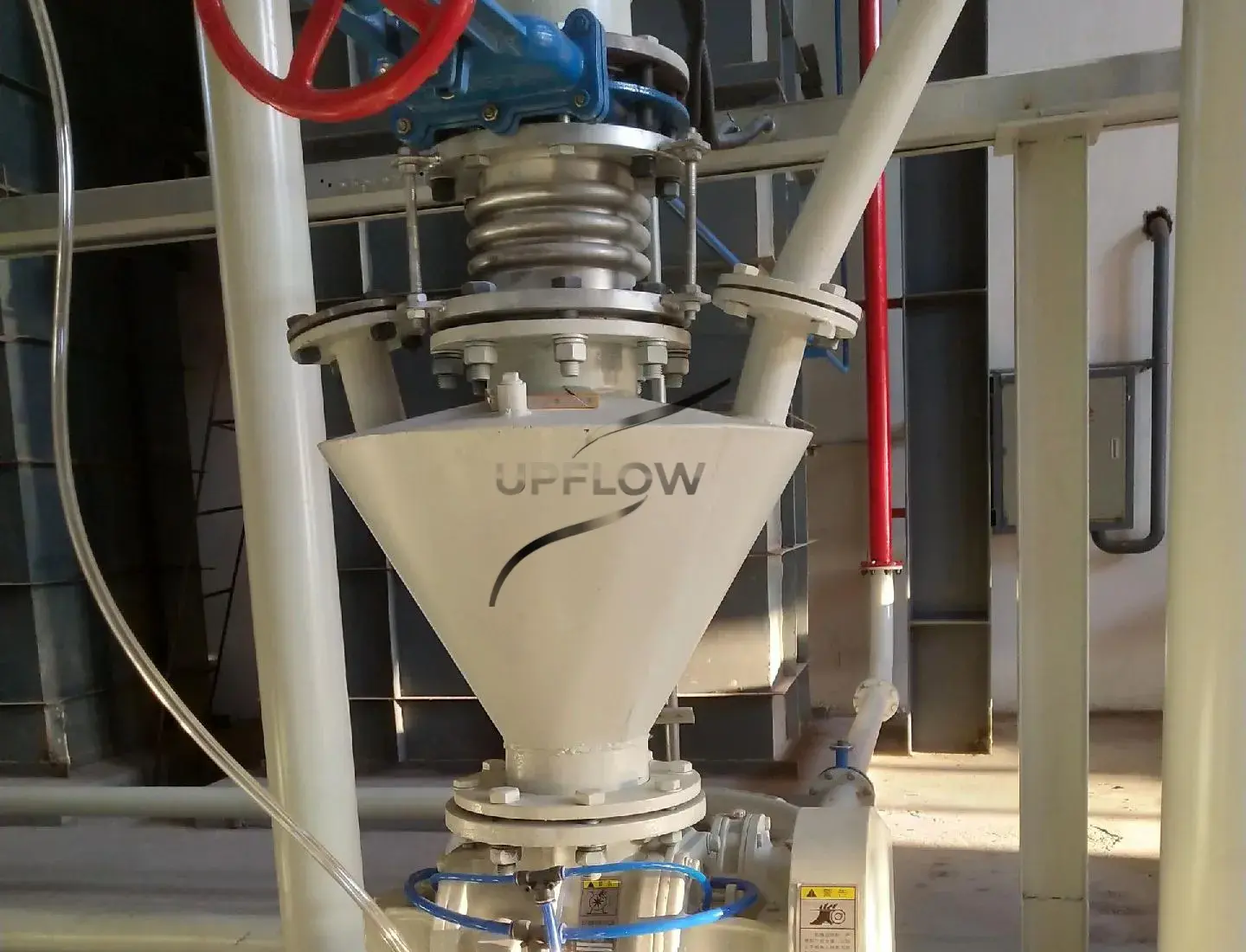
As pharmaceutical manufacturers increasingly handle potent compounds, toxic active ingredients, hazardous intermediates, and other powders with occupational exposure concerns, the way these materials are transferred between production stages has become a critical part of process safety and contamination control, because conventional open powder handling can create opportunities for airborne particles, operator exposure, product loss, and cross-contamination. A properly engineered toxic powder pneumatic conveying system provides a controlled approach to moving hazardous pharmaceutical powders through enclosed pipelines while integrating containment, filtration, automated feeding, and process monitoring into a coordinated material-handling solution.
Understanding Toxic Powder and Its Material Characteristics
Toxic powder is not the scientific name of one specific chemical substance but a broad material category covering pharmaceutical powders and industrial powders that may present toxicological, occupational exposure, or environmental risks when inhaled, contacted, or released into the workplace.
In pharmaceutical manufacturing, such materials may include certain high-potency active pharmaceutical ingredients, toxic intermediates, cytotoxic compounds, hormone-related substances, or other hazardous drug substances, and they may also be described as hazardous powder, toxic pharmaceutical powder, potent powder, high-potency powder, hazardous active ingredient, or toxic API powder.
Because toxic powder represents a category rather than a single chemical compound, there is no universal chemical formula, molecular weight, or density that applies to every material. The chemical formula depends entirely on the specific substance being handled.
The bulk density of toxic pharmaceutical powders can vary considerably, but many fine pharmaceutical powders may have an apparent bulk density of approximately 0.20–0.80 g/cm³, depending on particle size, morphology, formulation, moisture content, and processing history.
From a conveying perspective, toxic powders may be extremely fine, dusty, cohesive, hygroscopic, electrostatic, or poorly flowing, while some high-potency materials may require particularly strict containment because even small releases can create significant occupational exposure concerns.
These characteristics make a toxic powder pneumatic conveying system fundamentally different from a conventional bulk-powder transportation installation, because containment performance and safe material transfer are primary engineering objectives alongside conveying capacity.
Why Toxic Powder Requires High-Containment Conveying
The most important consideration when handling toxic pharmaceutical powder is controlling the potential release of airborne particles into the surrounding production environment.
During manual transfer, opening of bags or drums, hopper charging, equipment cleaning, and conventional mechanical transportation, fine particles may become airborne and create exposure risks for operators.
A closed pneumatic conveying route can substantially reduce the number of open handling points because the material travels from the feeding location to the receiving vessel inside a sealed pipeline.
For this reason, a toxic powder pneumatic conveying system should be designed around containment performance from the beginning, including sealed connections, appropriate valves, suitable filtration, controlled pressure conditions, and carefully selected receiving equipment.
The objective is not simply to transport the powder from point A to point B, but to maintain a controlled material path throughout loading, conveying, receiving, and discharge.
Toxic Powder Vacuum Conveying System for Contained Transfer
A toxic powder vacuum conveying system uses negative pressure to draw hazardous powder from the source toward a receiving vessel, allowing the material to remain within a controlled conveying route during transportation.
Negative-pressure operation can provide an important containment advantage because, when the system is properly designed and maintained, air tends to move into the conveying system rather than escaping outward through minor leakage points.
The receiving unit separates the powder from the conveying air using an appropriately designed filtration system, while the filtered air continues toward the vacuum source.
For hazardous pharmaceutical applications, the receiver, filters, valves, seals, and discharge components must be considered as one containment system rather than as independent pieces of equipment.
A toxic powder vacuum conveying system can be particularly suitable for transferring hazardous powders from controlled charging stations to isolated receiving vessels, intermediate containers, or processing machines.
The exact operating parameters should always be established from the material characteristics, containment requirements, equipment configuration, and validated pharmaceutical process rather than relying on generic conveying settings.
Toxic Powder Feeding System for Controlled Material Introduction
The feeding stage is one of the most important points in a hazardous powder-handling process because introducing material into the pneumatic pipeline can create a potential release point if the equipment is not properly contained.
A dedicated toxic powder feeding system can be designed to connect sealed containers, hoppers, drums, or intermediate vessels with the pneumatic conveying line while minimizing open operator intervention.
Depending on the material and process, the feeding arrangement may incorporate enclosed discharge equipment, controlled feeders, valves, level detection, and automated sequences.
The objective is to maintain a stable material flow while keeping the powder inside the designated containment boundary.
A toxic powder feeding system can also be connected to weighing and batch-control equipment so that material transfer is coordinated with the pharmaceutical production recipe.
For high-potency powders, minimizing manual intervention during feeding can provide an important operational advantage because every manual handling step represents a potential opportunity for exposure or contamination.
Toxic Powder Low-Pressure Conveying System
A toxic powder low-pressure conveying system can be considered when the material requires controlled transportation conditions and the process does not require unnecessarily aggressive conveying.
The objective of low-pressure operation is not simply to reduce system pressure, but to establish a stable relationship between conveying airflow, material loading, pipeline pressure drop, and required throughput.
For fine pharmaceutical powders, excessive conveying velocity can increase turbulence and particle deposition, while unstable conveying conditions can contribute to filter loading, pipeline accumulation, or inconsistent material transfer.
A carefully engineered toxic powder low-pressure conveying system can therefore provide controlled transportation while supporting the broader containment strategy.
For particularly sensitive pharmaceutical materials, system performance should be evaluated through appropriate engineering analysis and material testing so that the final conveying configuration is matched to the actual powder properties.
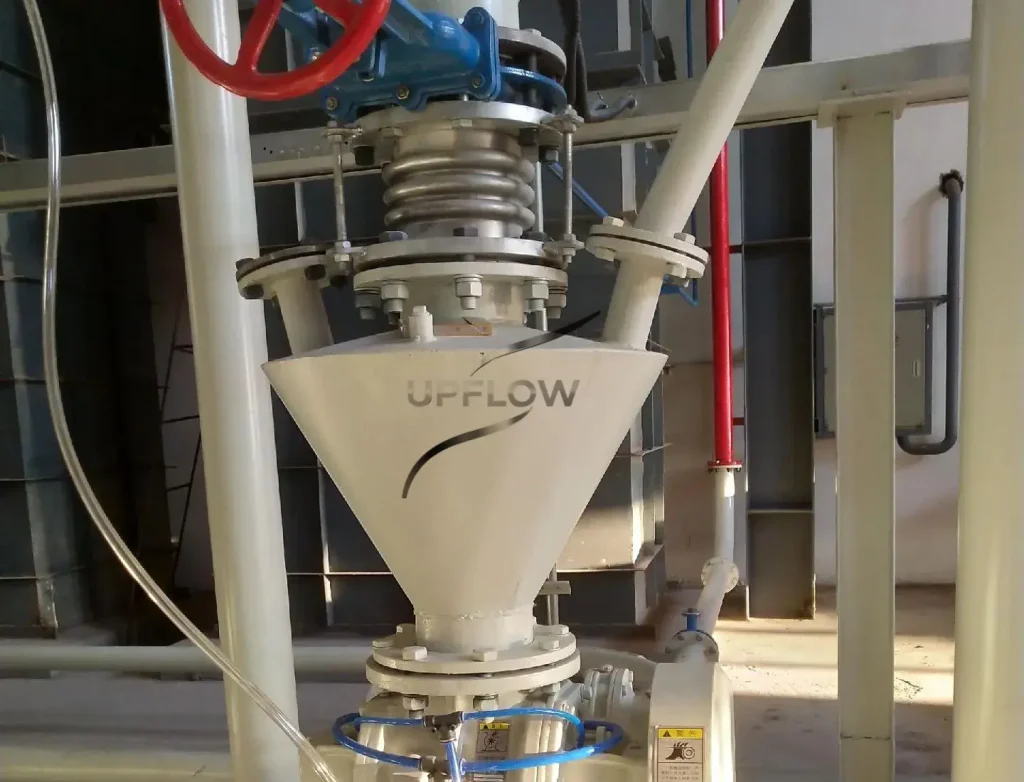
Toxic Powder Pneumatic Conveyor and Containment Components
A toxic powder pneumatic conveyor should be viewed as an integrated containment and transportation system rather than a simple blower-and-pipeline assembly.
Typical equipment can include an enclosed feeding unit, pneumatic pipeline, vacuum or pressure source, receiving vessel, filtration system, automated valves, pressure or vacuum sensors, level sensors, and PLC-based control equipment.
The receiving filter is especially important because it separates the hazardous powder from the conveying air and forms an important part of the containment boundary.
Filter design, sealing, maintenance access, and monitoring should therefore be considered during system engineering.
Pipeline connections are another important consideration because poorly designed joints or unnecessary disassembly points can complicate containment and cleaning.
A properly configured toxic powder pneumatic conveyor can use stainless steel product-contact components and carefully selected seals and connections to create a controlled transportation route suitable for pharmaceutical production environments.
Filtration and Air Management for Toxic Powder Handling
Filtration is central to the performance of a hazardous powder conveying system because the conveying air must be separated from the product before it reaches downstream air-handling equipment.
A suitable filtration arrangement can help prevent fine powder particles from traveling toward the vacuum or exhaust equipment, while differential-pressure monitoring can provide information about filter loading.
The filtration system should be selected according to the specific powder characteristics and containment requirements, with filter construction, sealing, cleaning, replacement, and maintenance procedures considered as part of the overall system design.
For hazardous pharmaceutical materials, maintenance activities are particularly important because opening a contaminated filter housing or receiving vessel can create a potential exposure point.
Therefore, the filtration arrangement should be designed together with the facility’s containment and maintenance procedures rather than treated as an isolated component.
Automated Toxic Powder Material Handling
Automation can significantly reduce manual interaction with hazardous pharmaceutical powders.
A complete toxic powder material automation system can coordinate feeding, conveying, receiving, weighing, valve operation, and production sequences through PLC-based controls.
The system can monitor conveying pressure or vacuum conditions, receiving-vessel level, valve status, filter differential pressure, and material-transfer cycles, allowing abnormal conditions to generate alarms or initiate controlled shutdown sequences.
Automated operation also reduces the frequency with which operators need to approach the material-handling equipment during routine production.
For batch pharmaceutical manufacturing, automation can connect powder transfer with recipe management and weighing systems, helping ensure that the correct material is transferred at the correct stage of the production cycle.
The result is a more repeatable material-handling process with fewer manual interventions.
Cleaning and Batch Changeover for Toxic Pharmaceutical Powder
Cleaning presents a special challenge when the conveyed material has toxicological or high-potency characteristics because residues remaining inside pipelines, valves, feeders, and receiving vessels may create exposure risks during maintenance or subsequent product changeover.
The conveying system should therefore be designed with cleaning and containment in mind from the engineering stage.
Pipeline routing should avoid unnecessary retention areas, while equipment connections should provide practical access for inspection and validated cleaning procedures.
Depending on the material and pharmaceutical process, the cleaning strategy may involve controlled dry cleaning, vacuum cleaning, wet cleaning, or other procedures established by the facility’s validated cleaning program.
For multi-product facilities, a well-designed toxic powder pneumatic conveying system can help reduce the number of open transfer operations during batch changeover and provide a more controlled route for removing or transferring residual material.
The appropriate cleaning procedure must always be determined according to the specific substance, toxicological profile, equipment design, and pharmaceutical validation requirements.
Preventing Cross-Contamination and Material Loss
Cross-contamination is an important consideration when the same pharmaceutical production area handles multiple powders.
Fine toxic materials can remain in small quantities around valve seats, pipeline bends, filters, and receiving equipment if the system has not been designed for effective product recovery and cleaning.
A sealed conveying route can reduce uncontrolled material dispersion, while appropriately designed valves and receiving vessels can help maintain separation between different process stages.
Material recovery can also become important because high-value pharmaceutical powders may represent a significant financial loss if they are dispersed into the surrounding environment.
A complete containment strategy should therefore address product transfer, filtration, cleaning, maintenance, and waste handling as connected operations.
Choosing a Toxic Powder Pneumatic Conveying Manufacturer
Selecting an experienced toxic powder pneumatic conveying manufacturer is particularly important because hazardous powder transportation requires coordinated engineering rather than the simple selection of standard conveying equipment.
The supplier should first understand the actual material characteristics, including bulk density, particle-size distribution, flowability, moisture sensitivity, dust generation, electrostatic behavior, and other relevant handling properties.
For pharmaceutical applications, the material’s hazard classification and occupational exposure requirements are also important inputs for system design.
The manufacturer should evaluate the complete process, including material loading, feeding, conveying distance, elevation, receiving equipment, filtration, cleaning, maintenance, and automation.
A qualified toxic powder pneumatic conveying manufacturer should therefore be able to develop a complete system architecture covering powder feeding, enclosed conveying, filtration, receiving, automated control, and integration with the customer’s existing pharmaceutical production equipment.
Intelligent Monitoring of Hazardous Powder Conveying
Modern pharmaceutical facilities are increasingly using sensors and automated controls to monitor material-handling equipment continuously.
For hazardous powder transportation, monitoring can provide additional information about system performance by tracking vacuum level, conveying pressure, filter differential pressure, hopper level, valve status, and abnormal operating conditions.
This information can be integrated into a centralized control platform so that operators can supervise the conveying process without continuously interacting with the material-handling equipment.
Predictive maintenance can also become more practical when operating data is collected over time, allowing maintenance teams to identify trends such as increasing filter resistance or abnormal conveying behavior.
The development of intelligent monitoring therefore supports not only production efficiency but also a more controlled approach to hazardous powder handling.
Future Development of Toxic Powder Conveying Systems
The future of hazardous pharmaceutical powder transportation is likely to focus increasingly on containment-by-design, automation, remote monitoring, and simplified maintenance.
Instead of treating containment as an additional feature added to a conventional pneumatic conveying system, manufacturers are increasingly expected to consider the complete material path from source container to final receiving equipment.
Automation can reduce operator intervention, while improved filtration and monitoring can provide better control of the conveying environment.
Modular equipment and flexible pipeline configurations may also help pharmaceutical manufacturers handle different hazardous powders while maintaining appropriate cleaning and changeover procedures.
As pharmaceutical production continues to adopt more potent compounds and increasingly complex formulations, the demand for reliable high-containment powder handling solutions is likely to continue growing.
Conclusion
Handling toxic pharmaceutical powders requires a different engineering approach from conventional bulk material transportation because containment, operator protection, filtration, cleaning, and controlled material transfer are fundamental requirements of the process.
A properly engineered toxic powder pneumatic conveying system can provide an enclosed route between feeding and receiving equipment while reducing unnecessary manual powder handling and supporting a more controlled pharmaceutical production environment.
A toxic powder vacuum conveying system can provide negative-pressure material transfer, while a toxic powder low-pressure conveying system can offer controlled transportation conditions when the application requires gentler pneumatic handling.
At the material entry point, a properly designed toxic powder feeding system can reduce manual interaction, while a suitable toxic powder pneumatic conveyor can integrate conveying, filtration, receiving, monitoring, and automatic controls into a coordinated system.
For pharmaceutical manufacturers working with hazardous powders, the most effective solution is not simply a higher-capacity conveying machine, but a complete material-handling system engineered around the specific powder characteristics, containment requirements, production process, cleaning strategy, and automation objectives.