
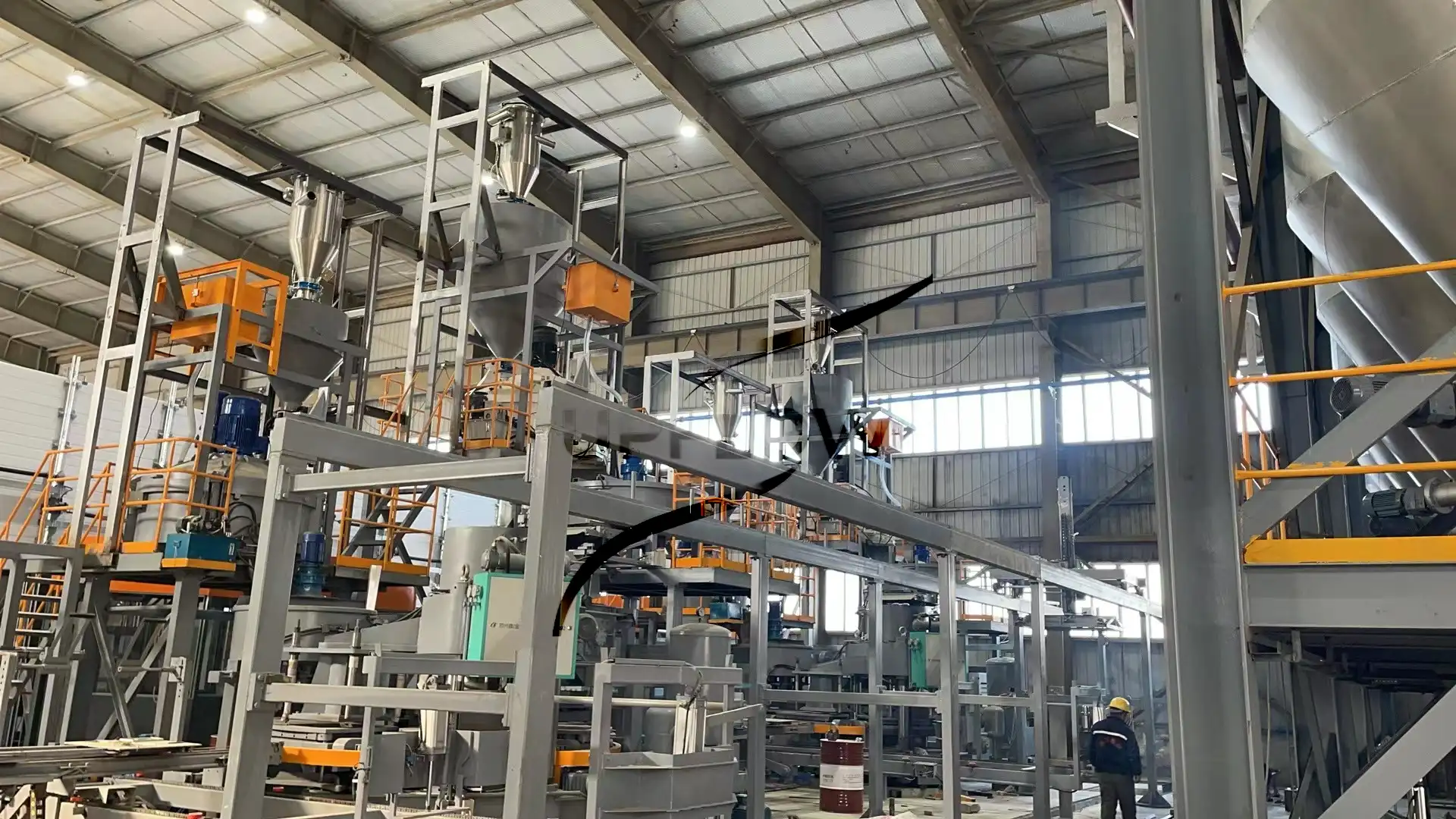
Vacuum conveying systems are widely used to transfer powders from storage hoppers, bulk bag unloading stations and feeding equipment to downstream production machines. However, when the receiving equipment is a continuous mixer, coordinating material transfer becomes more challenging because vacuum conveying often operates in intermittent cycles, while the mixer requires a stable and uninterrupted supply of raw materials.
If the conveying system cannot maintain sufficient material availability, the mixer may experience feed interruptions, unstable ingredient ratios or reduced production output. A suitable system design should therefore coordinate vacuum conveying cycles, buffer storage, metering equipment and mixer feeding requirements.
This article explains how to integrate vacuum conveying with continuous mixer feeding to maintain a stable material supply in industrial powder processing applications.
1. Why Does Continuous Mixer Feeding Require a Buffer Hopper?
A typical vacuum conveying unit collects powder through a pipeline and transfers it into a receiving vessel during each conveying cycle. After reaching the required material quantity or operating condition, the unit stops conveying, discharges the collected powder and prepares for the next cycle.
A continuous mixer, however, needs material to enter at a relatively stable rate throughout its operating period.
Connecting an intermittent vacuum conveyor directly to a continuous mixer may therefore cause fluctuations in material supply, particularly when the conveying cycle takes longer than the available material buffer.
An intermediate buffer hopper can separate these two operating processes by receiving powder from the vacuum conveying system and supplying the mixer independently.
This arrangement allows the vacuum conveyor to operate according to its own collection and discharge cycle, while the downstream feeding equipment maintains a more consistent material flow.
2. Calculate the Required Buffer Hopper Capacity
The buffer hopper should contain enough usable material to maintain mixer feeding during the next vacuum conveying cycle or any expected delay in material transfer.
The required buffer capacity depends on:
Continuous mixer feeding rate.
Vacuum conveying cycle time.
Material quantity delivered per conveying cycle.
Powder bulk density.
Available hopper volume.
Required operating reserve.
A simplified calculation is:
Required buffer mass = Mixer feeding rate × Required buffering time
For example, if a continuous mixer consumes 500 kg of powder per hour and the buffer must support 15 minutes of feeding without replenishment:
500 × 15 ÷ 60 = 125 kg
The buffer therefore needs at least 125 kg of usable powder inventory for this assumed operating condition.
The actual hopper volume must also account for material bulk density, freeboard, discharge geometry and the required minimum operating level.
For cohesive or poorly flowing powders, the hopper outlet and internal geometry should be designed to reduce bridging and ensure reliable material discharge.
3. Use a Metering Feeder to Maintain Stable Material Flow
A buffer hopper stores powder, but it does not automatically guarantee a stable feeding rate into the continuous mixer.
A screw feeder is commonly used between the buffer hopper and mixer because its rotational speed can be adjusted to regulate material delivery according to the required production rate.
For example, if a mixer requires 500 kg/h of a particular ingredient, the screw feeder can be configured to deliver the corresponding material quantity under the specified operating conditions.
For applications involving several ingredients, individual feeding units may be required to maintain the correct formulation ratio.
Depending on material characteristics and dosing accuracy requirements, the system may use volumetric feeding, gravimetric feeding or loss-in-weight control.
The feeder should be selected according to powder flowability, bulk density, required throughput and the actual operating range rather than relying only on its nominal motor power.
4. Coordinate Vacuum Conveying with Hopper Level Control
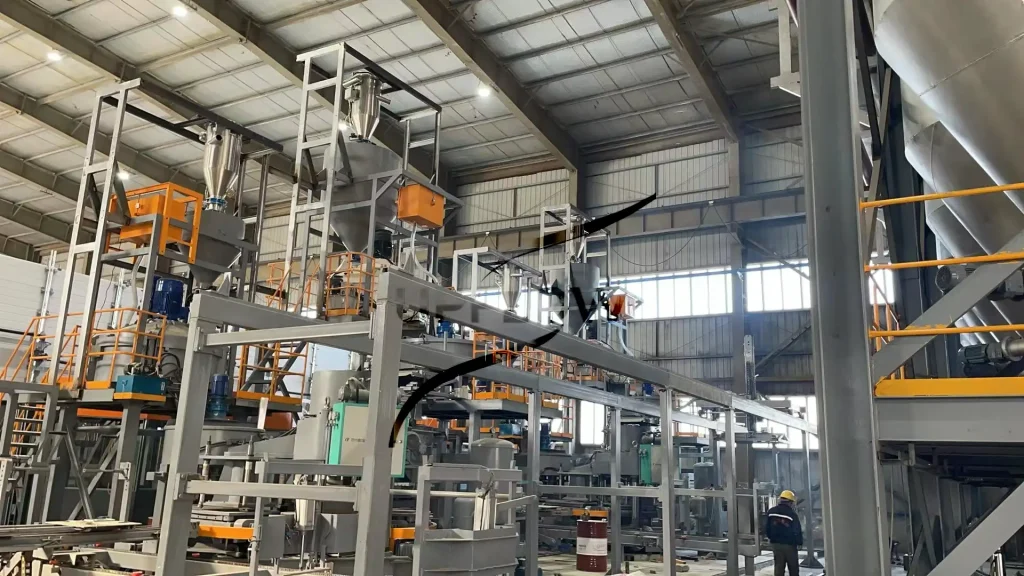
Level monitoring helps prevent the buffer hopper from becoming empty or overflowing during continuous production.
A typical arrangement may include high-level, low-level and low-low-level detection points.
When the material level reaches the low-level setpoint, the PLC can request another vacuum conveying cycle. When the high-level condition is reached, the conveying unit can stop receiving additional powder until sufficient buffer capacity becomes available.
A practical control arrangement may include:
Low-level signal to request material replenishment.
High-level signal to stop or pause incoming conveying.
Low-low-level alarm to protect continuous mixer feeding.
High-high-level protection against hopper overfilling.
Feeder speed control according to the required mixer feed rate.
The actual level control method should be selected according to the powder properties because fine, aerated or low-density materials can affect the reliability of some level measurement devices.
5. Integrate the Equipment Through PLC Control
The vacuum conveying unit, buffer hopper, screw feeder and continuous mixer should operate as coordinated parts of one material handling system.
A PLC can receive signals from the mixer and hopper, control vacuum conveying cycles and regulate the feeding equipment according to the production requirements.
For example, the control sequence may follow these steps:
The continuous mixer starts and requests a specified material feeding rate.
The screw feeder begins supplying powder from the buffer hopper.
The hopper level decreases during continuous feeding.
When the low-level setpoint is reached, the PLC requests a new vacuum conveying cycle.
The vacuum conveyor transfers powder into the buffer hopper.
Once the required material level is restored, the system returns to normal replenishment operation.
Additional interlocks can prevent conveying when the receiving hopper is unavailable or when the discharge valve is not in the correct position.
For systems handling multiple ingredients, the control program should also maintain the required feeding ratios and coordinate material replenishment without interrupting the continuous mixing process.
6. Consider Material Characteristics and Equipment Layout
Different powders behave differently during vacuum conveying, storage and continuous feeding, so the buffer hopper, filter arrangement and metering feeder should be designed around the actual material properties.
Fine powders may require suitable filtration and dust containment, while cohesive materials may need additional flow-assistance measures around the hopper outlet.
For abrasive powders, the feeder and material contact components should be evaluated for wear resistance. Hygroscopic materials may require suitable sealing and environmental protection to maintain material quality.
The installation layout should also consider the vertical distance between the vacuum receiver, buffer hopper and mixer, together with pipeline routing, maintenance access and cleaning requirements.
7. UPFLOW Project References
Korean Vacuum Conveying and Powder Feeding Project
UPFLOW designed and supplied customized vacuum conveying and automatic powder feeding equipment for a Korean industrial customer handling sodium sulfate, oxalic acid and calcium hydroxide.
The system integrated vacuum conveying units, intermediate hoppers, screw feeders, weighing equipment and centralized PLC control, providing an engineering reference for coordinating material transfer and downstream feeding equipment.
Read more about the Korean Vacuum Conveying and Powder Feeding Project.
Artificial Graphite Airflow Mixing Project
UPFLOW supplied 12 airflow mixing machines to a battery material manufacturer through four separate contracts.
Each machine has a design volume of 60 m³ and a maximum loading weight of 30 tonnes per batch. The project includes coordinated material feeding, weighing equipment, PLC and HMI control, and downstream material discharge arrangements.
This project demonstrates the importance of integrating powder feeding, mixing equipment and process control in large-capacity battery material production.
Read more about the Artificial Graphite Airflow Mixing Project.
PVC Powder Feeding and Vacuum Conveying Project
UPFLOW supplied five UPFLOW-320 conveying units for a PVC powder handling application, together with bag unloading equipment, stainless steel pipelines, receiving hopper modifications, level detection and centralized electrical control.
The project provides an engineering reference for coordinating vacuum conveying equipment with receiving hoppers and multiple downstream feeding points.
Read more about the PVC Powder Feeding and Vacuum Conveying Project.
8. Frequently Asked Questions
Q1. Can a vacuum conveyor directly feed a continuous mixer?
It may be possible in certain configurations, but when vacuum conveying operates intermittently, an intermediate buffer hopper and metering feeder can help maintain a more stable material supply.
Q2. How large should the buffer hopper be?
Its usable capacity should be calculated according to mixer consumption, replenishment cycle time, bulk density and the required operating reserve.
Q3. Why is a screw feeder installed between the buffer hopper and mixer?
A screw feeder provides controlled material discharge and can regulate powder delivery according to the continuous mixer’s required feeding rate.
Q4. Can a PLC automatically replenish the buffer hopper?
Yes. Hopper level signals can trigger vacuum conveying cycles, while high-level signals can stop replenishment when sufficient material has accumulated.
Q5. Can several powders be supplied to one continuous mixer?
Yes. Multiple storage hoppers and individual metering feeders can supply different ingredients according to predefined feeding rates and formulation requirements.
Conclusion
Coordinating vacuum conveying with continuous mixer feeding requires a suitable combination of intermittent material transfer, buffer storage, metering equipment and automatic control.
By matching buffer capacity to mixer consumption, maintaining reliable hopper discharge and coordinating replenishment through PLC control, manufacturers can reduce material supply interruptions and improve the stability of continuous powder processing operations.
UPFLOW provides customized vacuum conveying, automatic powder feeding and material handling solutions for chemical, food, pharmaceutical, battery material and other industrial applications.
Planning a continuous mixer feeding project? Contact UPFLOW with your material specifications, mixer feeding rate, bulk density, conveying distance and equipment layout to discuss a suitable system configuration.