

Mechanical conveying and pneumatic conveying systems are two major technical categories for industrial powder conveying. Their selection requires comprehensive consideration of factors such as material characteristics, process requirements, and economic efficiency. The following is a comparative analysis of the two from multiple dimensions.
I. Working Principle and System Composition
Mechanical Conveying System: Utilizes the mechanical force of transmission components (such as belts, chains, screw blades, scrapers, and hoppers) to directly move materials along a predetermined path. Common equipment includes belt conveyors, screw conveyors, bucket elevators, scraper conveyors, and tubular chain conveyors.
Pneumatic Conveying System: Utilizes the energy of airflow (positive or negative pressure) to convey powder or granular materials within a closed pipeline. The system mainly consists of basic components such as an air source, feeding device, conveying pipeline, and air-material separator.
II. Comparison of Key Characteristics
| Comparison items | Pneumatic conveying system | Mechanical conveying system |
| System sealing | The fully enclosed pipeline transportation system minimizes the risk of material leakage and effectively prevents dust from escaping and cross-contamination. | Materials are usually directly exposed to the conveying components, posing a risk of dust escape. Additional protection is required in situations where high sealing is required. |
| Moving parts and maintenance | It has very few moving parts, mainly valves and filters. Cleaning is simple, maintenance costs are relatively low, and the risk of unplanned downtime is minimal. | With numerous moving parts (such as drive units, bearings, chains, and belts), wear is severe, resulting in a large maintenance workload, high cleaning difficulty, and potentially higher overall maintenance costs (parts, labor, downtime). |
| Delivery path flexibility | The pipeline layout is flexible, making it easy to achieve long-distance, multi-directional (including vertical and horizontal) and complex routes (such as bypassing obstacles), and the installation footprint is relatively small. | The conveying path is usually relatively fixed and linear, and changes in direction depend on specific equipment (such as the tubular chain conveyor). Long-distance or complex path conveying may require multiple devices connected in series, and the structure may take up more space. |
| Adaptability to material properties | Suitable for dry, fine, and free-flowing powders (such as flour, cement, starch, and plastic granules). 2. Requires special design or may not be suitable for hygroscopic, brittle, highly abrasive, high-moisture, or explosive materials. | It is better suited for conveying heavy, granular, high-moisture, sticky, or fragile materials (such as whole grains, gravel, wet sand, and large food particles). It is prone to generating dust with powdery materials. |
| Energy consumption and operating costs | Power consumption per unit of transported volume is typically high, making it potentially uneconomical for short-distance transport. However, for long-distance or complex route transport, its energy costs may be lower than those of mechanical methods. Long-term operation may also result in high energy efficiency due to low frictional losses. | In short-distance, high-capacity conveying scenarios, power consumption is typically significantly lower than that of pneumatic conveying. However, friction in transmission components can lead to substantial energy loss, and vibration and noise can increase operating and environmental management costs. |
| Initial investment costs | This involves pneumatic equipment, piping, and control systems, and the initial investment cost is usually high. | The equipment is relatively simple to manufacture and install, and the initial investment cost is usually more economical. |
| Safety and Automation | Fully enclosed automated conveyor systems significantly reduce manual handling, lower workplace injury risks, and facilitate centralized control. | Some equipment (such as bucket elevators) poses safety hazards such as metal-to-metal friction sparks. The degree of automation varies from piece to piece of equipment. |
III. Comprehensive Selection Recommendations
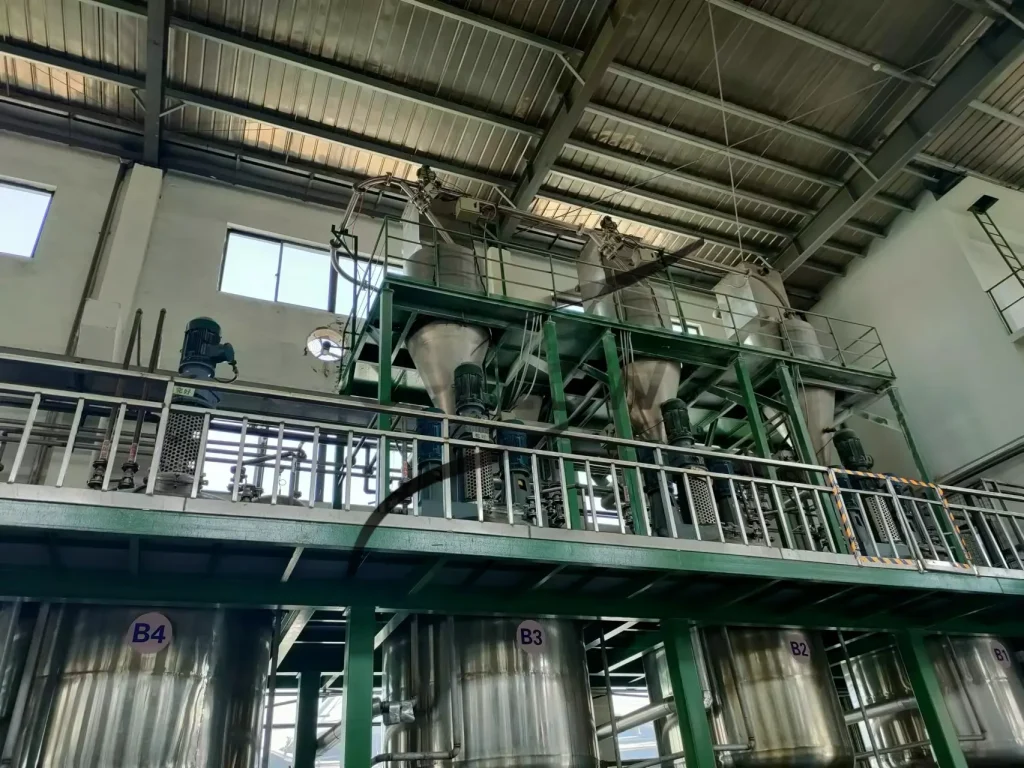
The choice of system is not absolute and must be weighed based on the specific application scenario:
Scenery where pneumatic conveying is preferred: Longer conveying distances, complex routes; materials are dry fine powders requiring high levels of sealing and dust prevention (e.g., food, pharmaceuticals, chemical raw materials); extremely high cleanliness and hygiene requirements; limited site space or need for flexible pipeline layout; emphasis on automation and production safety.
Learn more about our Positive Pressure Pneumatic Conveying System for Long-Distance Transport.
Scenery where mechanical conveying is preferred: Shorter conveying distances; materials are heavy particles, high moisture content, or fragile; lower initial investment is desired; relatively lower requirements for sealing and dust prevention.
For applications requiring dust-free conveying, you may also explore our How to Reduce Dust Emissions.
Special Equipment Considerations: Among mechanical conveying types, tubular chain conveyors, due to their closed conveying, low energy consumption, and ability to change direction in three dimensions, may be a cost-effective compromise for short-to-medium distance conveying scenarios requiring closed systems and complex paths.
The final decision should be based on a comprehensive assessment of the material’s physical properties (particle size, density, moisture, flowability, abrasiveness, etc.), conveying parameters (distance, speed, direction), process environment (indoor/outdoor, hygiene level), and life cycle cost (initial investment, energy consumption, maintenance, downtime losses).
Looking for a reliable pneumatic conveying system manufacturer? Contact us today for a free consultation and quotation.