

In modern powder processing industries such as food, chemicals, pharmaceuticals, and building materials, pneumatic conveying systems are widely used for transporting powders and bulk solids. However, when materials like flour, cement powder, mineral powders, or chemical additives are conveyed, dust emissions can become a significant concern.
If not properly controlled, dust emissions may cause material loss, environmental pollution, workplace safety issues, and equipment wear. Therefore, reducing dust emissions in pneumatic conveying systems is a critical aspect of system design and operation.
A well-designed conveying system can significantly reduce dust generation by combining sealed pipelines, proper airflow control, efficient dust collectors, optimized equipment selection, and routine maintenance practices. This article explains the most effective strategies used by engineers to reduce dust emissions in industrial pneumatic conveying systems.
Why Dust Emissions Occur in Pneumatic Conveying Systems
Before discussing solutions, it is important to understand why dust emissions occur during powder conveying.
Dust generation usually happens in several critical areas of the system:
Material feeding points
Discharge points
Pipeline connections
Air-material separation units
Locations where air pressure fluctuates
In many cases, dust problems are caused by improper sealing, unstable airflow, excessive conveying velocity, or insufficient dust filtration systems. If these issues are not addressed during system design, the risk of dust leakage and airborne particles increases significantly.
For companies transporting powders over long distances, choosing the right conveying technology is also essential. For example, a properly designed pneumatic conveying system can provide fully enclosed transport and significantly reduce environmental contamination. You can learn more about the technology in our guide to pneumatic conveying solutions:Positive Pressure VS Negative Pressure Pneumatic Conveying Systems: Which One to Choose?
1. Use Fully Sealed Conveying Pipelines
The most fundamental method to reduce dust emissions in pneumatic conveying systems is to ensure complete system sealing.
Unlike open mechanical conveyors, pneumatic conveying transports material inside closed pipelines driven by airflow. When the system is properly sealed, powder materials remain isolated from the surrounding environment.
Important sealing measures include:
High-quality pipeline connections
All pipeline joints, flanges, and inspection ports must be properly sealed using rubber gaskets or double-seal structures. Even small gaps can lead to dust leakage over time.
Regular sealing inspection
Over long operating periods, seals may wear out due to vibration or pressure fluctuations. Regular inspection and replacement of sealing components ensure the system remains airtight.
A fully enclosed pipeline structure is one of the biggest advantages of pneumatic conveying systems compared with traditional mechanical conveyors, especially when handling fine powders.
2. Maintain Negative Pressure at Critical Points
Even in a closed system, dust can still escape from material feeding and discharge points due to airflow disturbances.
To prevent this, many engineers use localized negative pressure control.
Dust control at feeding stations
At the feeding point, a manual bag dump station or hopper can be equipped with a small dust collector or ventilation filter. This keeps the feeding area under slight negative pressure so that airborne particles are captured immediately.
Dust control at storage silos
When powders enter a storage silo, displaced air inside the silo may carry fine particles out of the vent. Installing silo top dust collectors or bag filters can capture these particles and return them to the system.
These negative-pressure solutions help reduce dust emissions while maintaining stable system airflow.
3. Install Efficient Dust Collection and Separation Equipment
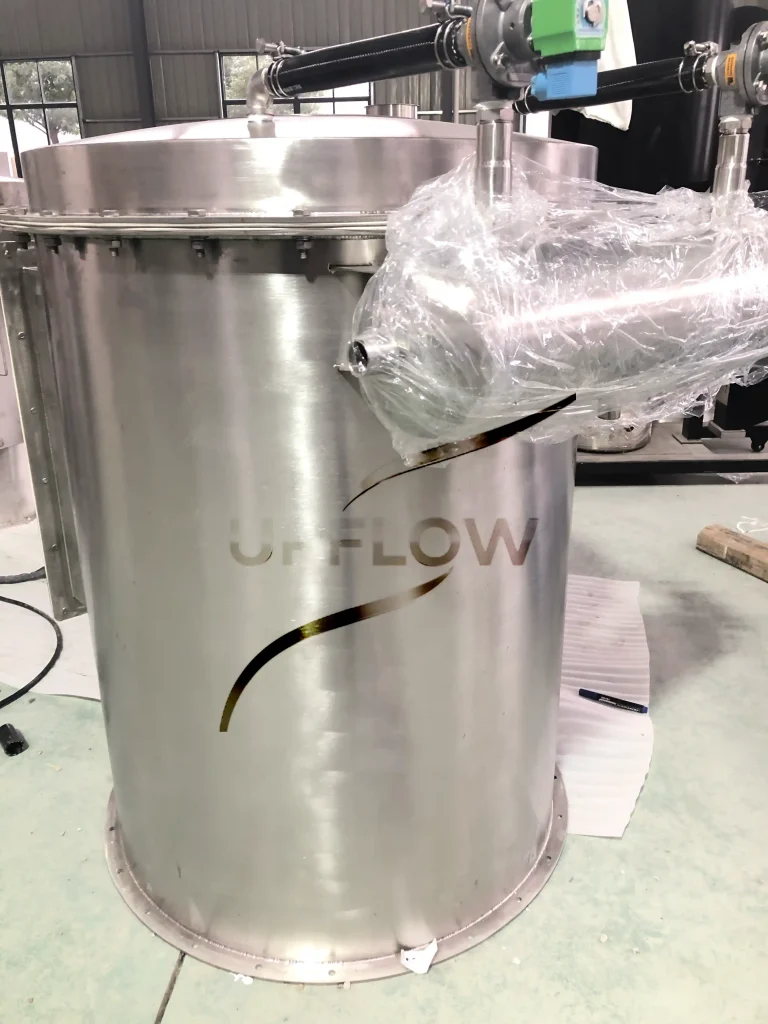
Dust collection equipment plays a critical role in reducing dust emissions in pneumatic conveying systems.
Most industrial systems combine two-stage separation technology.
Cyclone separators
Cyclone separators use centrifugal force to remove larger powder particles from the air stream. In many applications, they can capture more than 90% of coarse dust particles.
Bag filter dust collectors
After the cyclone stage, the air passes through bag filters or pulse jet dust collectors. High-efficiency filter materials can capture particles as small as 0.5 microns with efficiencies above 99.9%.
Collected dust is typically returned to the process through a rotary valve feeder, ensuring minimal material loss.
If you want to understand the equipment used in powder handling systems, you can also explore our article about key components of pneumatic conveying systems.
4. Optimize Conveying Velocity and Airflow Stability
Improper airflow velocity is another major cause of dust emissions.
If the conveying velocity is too high:
Material particles collide with pipe walls
Powder becomes excessively fluidized
Dust generation increases
If the velocity is too low:
Material may settle in the pipeline
Blockages can occur
Therefore, maintaining an optimal conveying velocity is essential.
In many cases, dense phase pneumatic conveying can reduce dust generation because materials move in slow-moving plugs or dunes rather than high-speed suspension. This also reduces pipeline wear and material degradation.
Airflow stability is equally important. Using PLC control systems to regulate air supply, feed rate, and valve operation helps maintain pressure balance throughout the system.
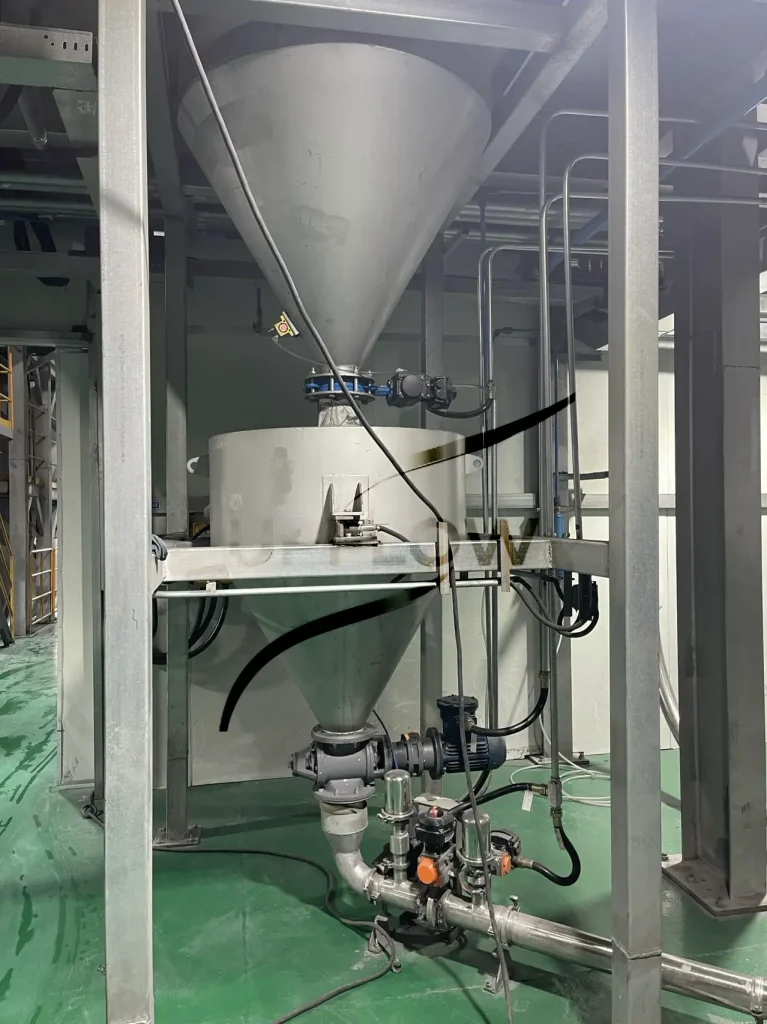
5. Improve Pipeline Layout and Reduce Turbulence
Pipeline design also affects dust generation during pneumatic conveying.
Reduce unnecessary bends
Each bend in a pipeline can create turbulence and increase particle collisions. Whenever possible, engineers should reduce the number of bends in the conveying line.
Use large-radius elbows
When bends are necessary, large-radius elbows or wear-resistant elbows should be used to ensure smoother material flow.
Maintain smooth internal surfaces
Pipelines must be properly aligned and welded to avoid internal steps or rough surfaces that disturb airflow and increase particle abrasion.
A well-designed pipeline layout improves conveying efficiency and helps reduce dust emissions in pneumatic conveying systems.
6. Implement Routine Maintenance and Monitoring
Even the best system design cannot prevent dust emissions without proper maintenance.
Routine inspection
Operators should regularly check:
Rotary valves
Dust collector filters
Pipeline connections
Air supply equipment
Any worn components should be replaced immediately.
Monitor system parameters
Monitoring system parameters such as pressure, airflow, and filter differential pressure helps detect potential issues early.
For example:
Rising pressure drop may indicate filter blockage
Pressure fluctuations may signal pipeline leaks
Maintain proper cleaning procedures
Although pneumatic conveying systems are enclosed, small amounts of dust may accumulate around equipment over time. Regular cleaning prevents secondary dust dispersion in the workplace.
Conclusion
Reducing dust emissions in pneumatic conveying systems requires a comprehensive approach that combines proper system design, equipment selection, and operational management.
Key strategies include:
Using fully sealed conveying pipelines
Maintaining negative pressure at feeding and discharge points
Installing high-efficiency dust collectors
Optimizing airflow velocity and system pressure
Designing smooth pipeline layouts
Implementing regular inspection and maintenance
When these measures are implemented together, pneumatic conveying systems can achieve clean, efficient, and environmentally friendly powder transport. For industries handling fine powders, investing in a properly designed conveying solution not only protects the environment but also improves operational efficiency and material recovery.
Looking for a reliable pneumatic conveying system manufacturer? Contact us today for a free consultation and quotation.