
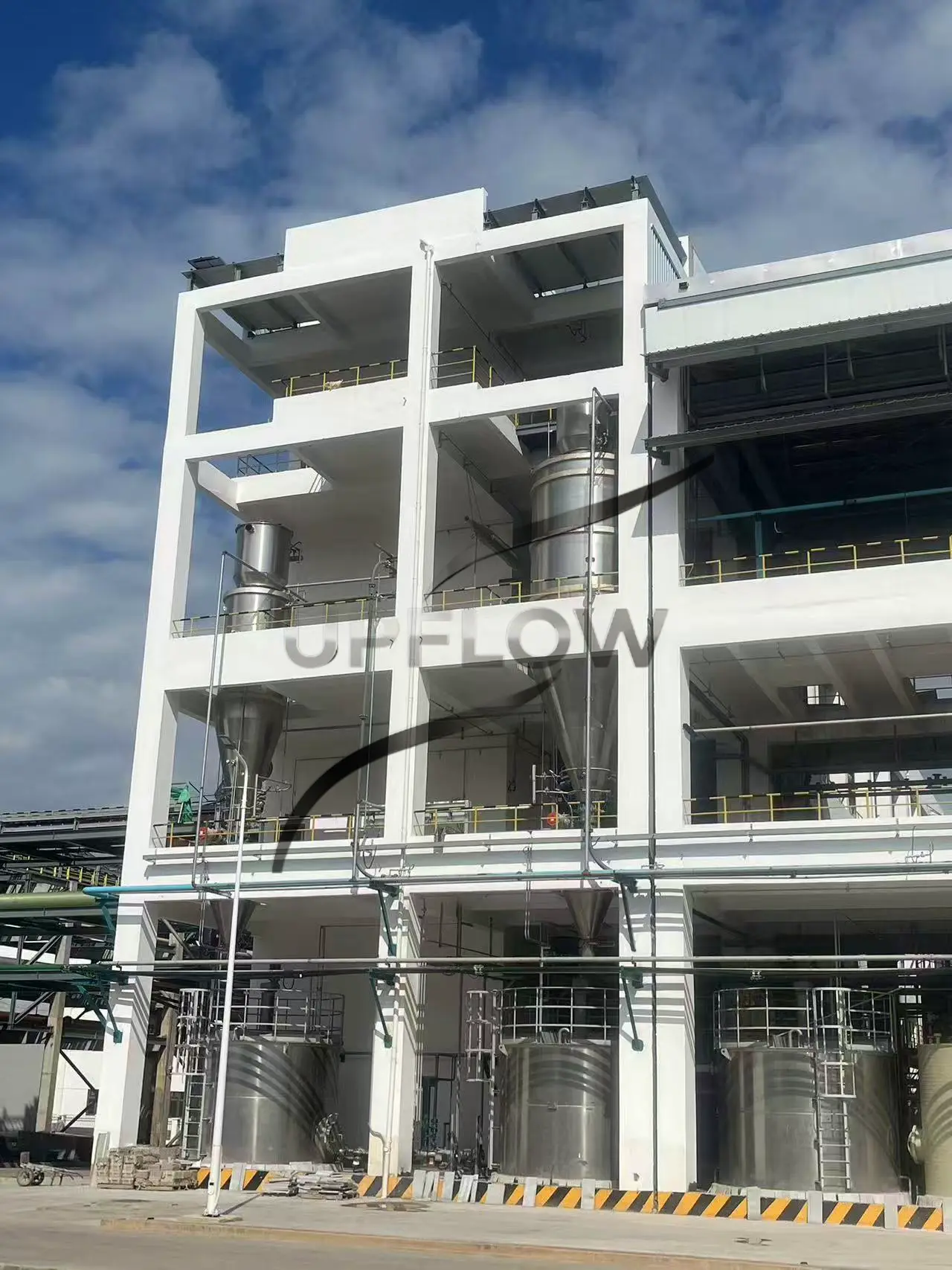
Introduction: Safe and Efficient Powder Handling in Chemical Plants
In modern industrial production, the pneumatic conveying system for chemical powder handling has become a key technology for ensuring safe, efficient, and environmentally friendly material transport, especially as chemical plants continue to increase production capacity while facing stricter safety and emission regulations. Compared with conventional conveying methods, this type of system relies on sealed pipelines and controlled airflow to transfer powders, significantly reducing dust emissions and improving workplace safety.
As part of an integrated pneumatic conveying production line, these systems enable continuous and automated material flow between storage, processing, and packaging stages, making them essential for modern chemical manufacturing environments.
Material Characteristics of Chemical Powders
Designing an efficient pneumatic conveying system for chemical powder handling requires a deep understanding of material properties, as chemical powders often vary significantly in density, particle size, abrasiveness, and flow behavior. Typical materials include calcium carbonate, sodium carbonate, titanium dioxide, polymer powders, pigments, and various chemical additives, many of which are fine, dusty, and prone to dispersion in air.
Some powders exhibit cohesive or hygroscopic characteristics, meaning they can absorb moisture and form agglomerates, while others may be abrasive and cause wear in pipelines over time, which makes it necessary to carefully control conveying velocity, pressure, and pipeline design to maintain stable operation and reduce maintenance costs.
Working Principle and Conveying Modes
A pneumatic conveying system for chemical powder handling operates by generating a gas–solid two-phase flow, where compressed air or vacuum creates the driving force that moves powder materials through a sealed pipeline from the feeding point to the discharge point. Depending on production requirements, the system can be configured as a pressure pneumatic conveying system, where materials are pushed through the pipeline, or adapted into a long-distance pipeline conveying system for high-capacity transport across large industrial facilities.
These conveying modes can be optimized to balance efficiency, energy consumption, and material protection, ensuring that powders are transported smoothly without excessive degradation or pipeline blockage.
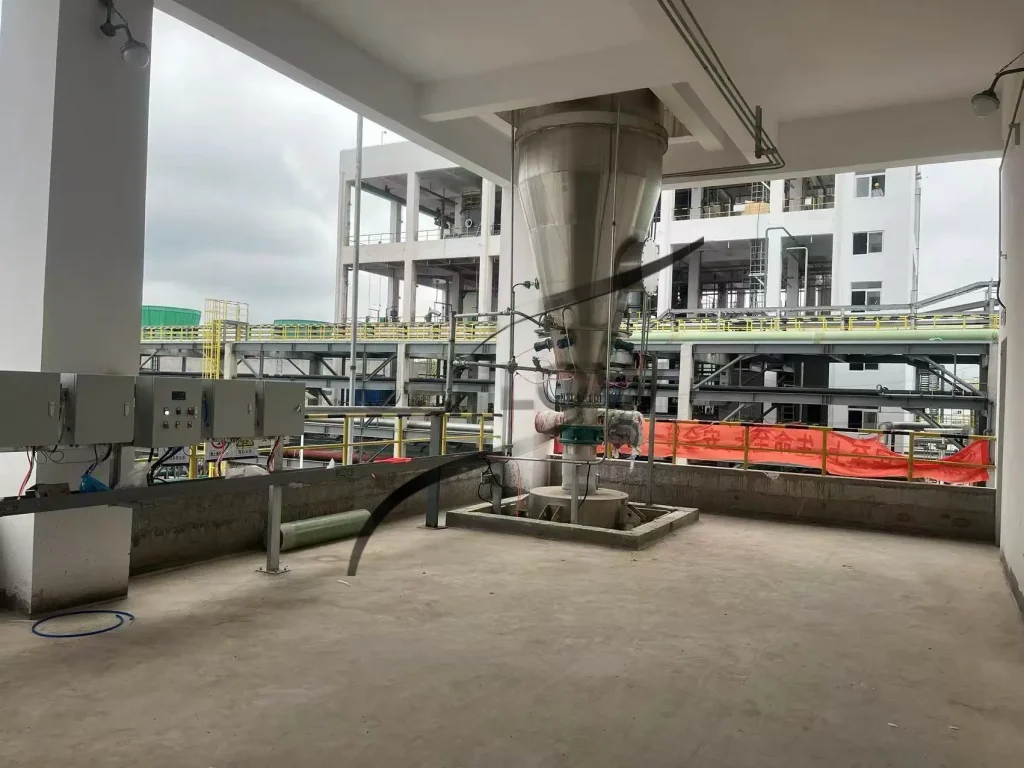
System Components and Functional Design
A typical pneumatic conveying system for chemical powder handling consists of several coordinated components, including air supply equipment, feeding devices, conveying pipelines, separation units, and control systems, all of which work together to ensure stable and continuous operation. Air supply systems such as blowers or compressors provide the required pressure, while feeding devices regulate material input to maintain a consistent flow ratio between air and solids.
The pipeline network is designed to minimize resistance and wear, while separation equipment such as cyclones or dust collectors ensures that materials are efficiently recovered at the discharge point, maintaining a clean production environment.
Advantages in Chemical Powder Handling Applications
The use of a pneumatic conveying system for chemical powder handling offers several advantages, particularly in terms of safety, efficiency, and flexibility, as the enclosed conveying process prevents dust leakage and reduces the risk of exposure to hazardous materials. This is especially important in chemical plants where powders may be toxic, reactive, or environmentally sensitive.
In addition, these systems can support long-distance and multi-directional conveying, making them suitable for complex plant layouts where materials must be transferred between multiple processing units, storage silos, and packaging lines within a fully automated pneumatic conveying production line.
Applications in Chemical Production Lines
A pneumatic conveying system for chemical powder handling is widely used across various chemical industries, including raw material transport, polymer production, pigment processing, and additive feeding systems, where consistent and reliable material flow is essential for maintaining production efficiency. These systems are often integrated with mixers, reactors, and dosing systems, forming a complete long-distance pipeline conveying system that supports continuous and automated plant operation.
Design Considerations for Optimal Performance
To achieve the best performance from a pneumatic conveying system for chemical powder handling, it is important to evaluate key design factors such as material characteristics, conveying distance, system capacity, and plant layout, as well as selecting appropriate pipeline materials and airflow parameters. Proper design ensures stable operation, reduces energy consumption, and minimizes the risk of blockage or excessive wear.
Working with experienced system suppliers can help optimize the design and ensure that the system meets both production and environmental requirements in the long term.
Conclusion: A Reliable Solution for Modern Chemical Plants
Overall, the pneumatic conveying system for chemical powder handling provides an efficient, clean, and highly automated solution for transporting powders in chemical production environments, enabling companies to improve productivity, enhance safety, and meet increasingly strict environmental standards. With its flexibility, scalability, and strong performance, this technology continues to be a core component of modern industrial material handling systems.