
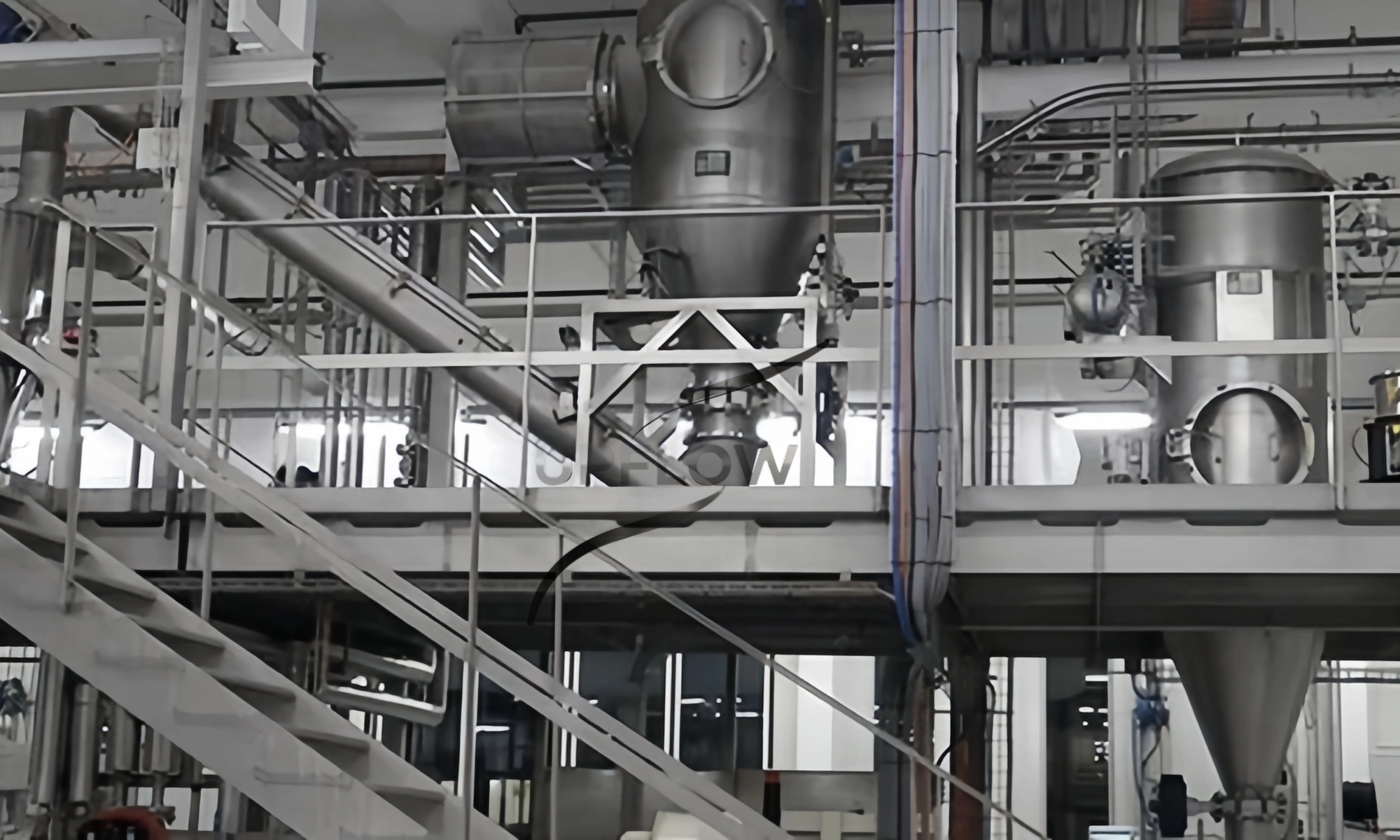
Why Hygienic Pneumatic Conveying Is Critical in Food Processing
A hygienic pneumatic conveying system for food industry is essential for ensuring safe, clean, and controlled material handling in modern food production environments, where strict hygiene standards and process consistency are critical to product quality. As production capacity increases and regulatory requirements become more stringent, manufacturers are shifting toward fully enclosed material automation systems that eliminate contamination risks while improving efficiency and traceability.
Unlike traditional open conveying methods, pneumatic conveying enables a sealed and dust-free process that prevents cross-contamination, reduces operator exposure, and ensures consistent material transfer, making it an ideal solution for industries that handle sensitive powders and require high levels of sanitation. This transition is not only driven by compliance requirements but also by the need for higher production efficiency and reduced operational risks.
Common Food Powders and Their Conveying Behavior
Food manufacturing involves a wide variety of powders, and understanding their conveying behavior is essential when designing a hygienic pneumatic conveying system for food industry, because each material responds differently to airflow, pressure, and environmental conditions. Common powders include wheat flour, powdered sugar, milk powder, cocoa powder, starch, spice blends, and micro-additives, all of which present unique handling challenges.
Wheat flour and starch are fine and free-flowing materials that are prone to dust generation, making them suitable for high-speed airflow conveying but requiring efficient filtration and sealing within a powder conveying system to maintain hygiene. Powdered sugar and milk powder are highly hygroscopic and sensitive to humidity, which means they require controlled airflow and sometimes temperature regulation in a powder transfer system to prevent caking and ensure stable conveying, while cocoa powder and spice powders tend to be cohesive and oily, requiring carefully controlled velocity and pipeline design to avoid adhesion and buildup.
System Design and Conveying Technologies
A hygienic pneumatic conveying system for food industry typically uses air pressure or vacuum to move materials through enclosed pipelines, creating a clean and controlled conveying environment that meets strict food safety standards. Depending on process requirements, different conveying methods can be applied, including positive pressure conveying systems for long-distance conveying systems and centralized feeding, as well as vacuum systems for flexible and dust-free material intake.
In advanced production lines, a central conveying system allows multiple materials to be distributed efficiently from storage silos to different processing units, improving production efficiency and reducing manual handling, while a mixed conveying system can support multi-material transport and automated recipe management. For processes involving both powders and small particles, integrating a granular conveying system ensures stable feeding and consistent production performance across different stages.
Hygienic Design Requirements and Safety Considerations
Hygienic design is the core requirement of any hygienic pneumatic conveying system for food industry, as the system must prevent contamination, allow easy cleaning, and comply with food safety standards such as FDA and EHEDG. This requires the use of stainless steel materials such as SS304 or SS316L, smooth internal surfaces, and fully sealed connections to eliminate dead zones where materials could accumulate.
In addition, safety considerations such as dust explosion protection, anti-static grounding, and proper filtration systems must be incorporated into the design, especially when handling fine powders that may be combustible. A properly designed enclosed conveying system not only improves hygiene but also enhances operational safety and reduces environmental impact.
Key Factors Affecting System Performance
The performance of a hygienic pneumatic conveying system for food industry depends on multiple factors, including airflow velocity, pipeline layout, material characteristics, and system pressure, all of which must be carefully balanced to ensure efficient operation. Improper design can lead to issues such as material degradation, pipeline blockage, or excessive energy consumption, which negatively affect production efficiency.
By optimizing airflow control, minimizing pipeline bends, and selecting the appropriate conveying method, manufacturers can achieve stable and efficient operation while reducing maintenance requirements, and integrating the system into a broader material automation system further improves production consistency and process control.
Automation and Smart Factory Integration
Modern food factories are increasingly integrating pneumatic conveying systems with upstream and downstream processes, creating a fully automated production workflow that includes feeding, conveying, dosing, and packaging. Through PLC control and real-time monitoring, a hygienic pneumatic conveying system for food industry can provide accurate data on material flow, system pressure, and production performance, enabling better decision-making and process optimization.
This level of integration allows manufacturers to reduce manual intervention, improve traceability, and ensure consistent product quality, while also supporting future expansion and digital transformation. As Industry 4.0 technologies continue to evolve, intelligent conveying systems will play an even more important role in modern food production.
Conclusion: A Smart and Safe Choice for Food Manufacturing
A well-designed hygienic pneumatic conveying system for food industry is essential for achieving safe, efficient, and contamination-free material handling in modern food production, as it combines advanced conveying technology with strict hygiene standards and automation capabilities. By selecting the right system design and working with experienced suppliers, manufacturers can improve production efficiency, reduce operational risks, and ensure long-term compliance with food safety regulations.