
Introduction: Why Powdered Sugar Requires Specialized Conveying Solutions
A powdered sugar pneumatic conveying system is essential in industries such as food processing, pharmaceuticals, and confectionery manufacturing, where hygiene, safety, and consistent material handling are critical to production success. Unlike general bulk materials, powdered sugar presents unique challenges due to its fine particle size, strong dusting tendency, and sensitivity to environmental conditions, which makes traditional conveying methods inefficient and potentially hazardous.
As production standards continue to rise, more manufacturers are adopting enclosed powder conveying systems integrated into a material automation system, enabling dust-free, automated, and controlled material transfer that ensures both product quality and operator safety. This shift is driven not only by efficiency requirements but also by strict compliance with food safety and explosion protection regulations.
Powdered Sugar Properties and Conveying Challenges
Understanding the physical properties of powdered sugar is the foundation of designing an effective powdered sugar pneumatic conveying system, because its behavior during conveying directly affects system stability and performance. Powdered sugar, also known as icing sugar, typically has a bulk density of approximately 0.4–0.6 g/cm³, and its extremely fine particle size makes it highly susceptible to airborne dispersion and dust formation.
One of the most critical characteristics of powdered sugar is its hygroscopic nature, meaning it absorbs moisture from the environment easily, which can lead to agglomeration, pipeline blockage, and unstable flow within a powder transfer system. In addition, its high flowability combined with low particle weight makes it difficult to control feeding accuracy, while its combustible dust properties create a serious explosion risk when dispersed in air, making it necessary to implement strict safety measures in any pneumatic conveying system.
System Design and Conveying Technologies
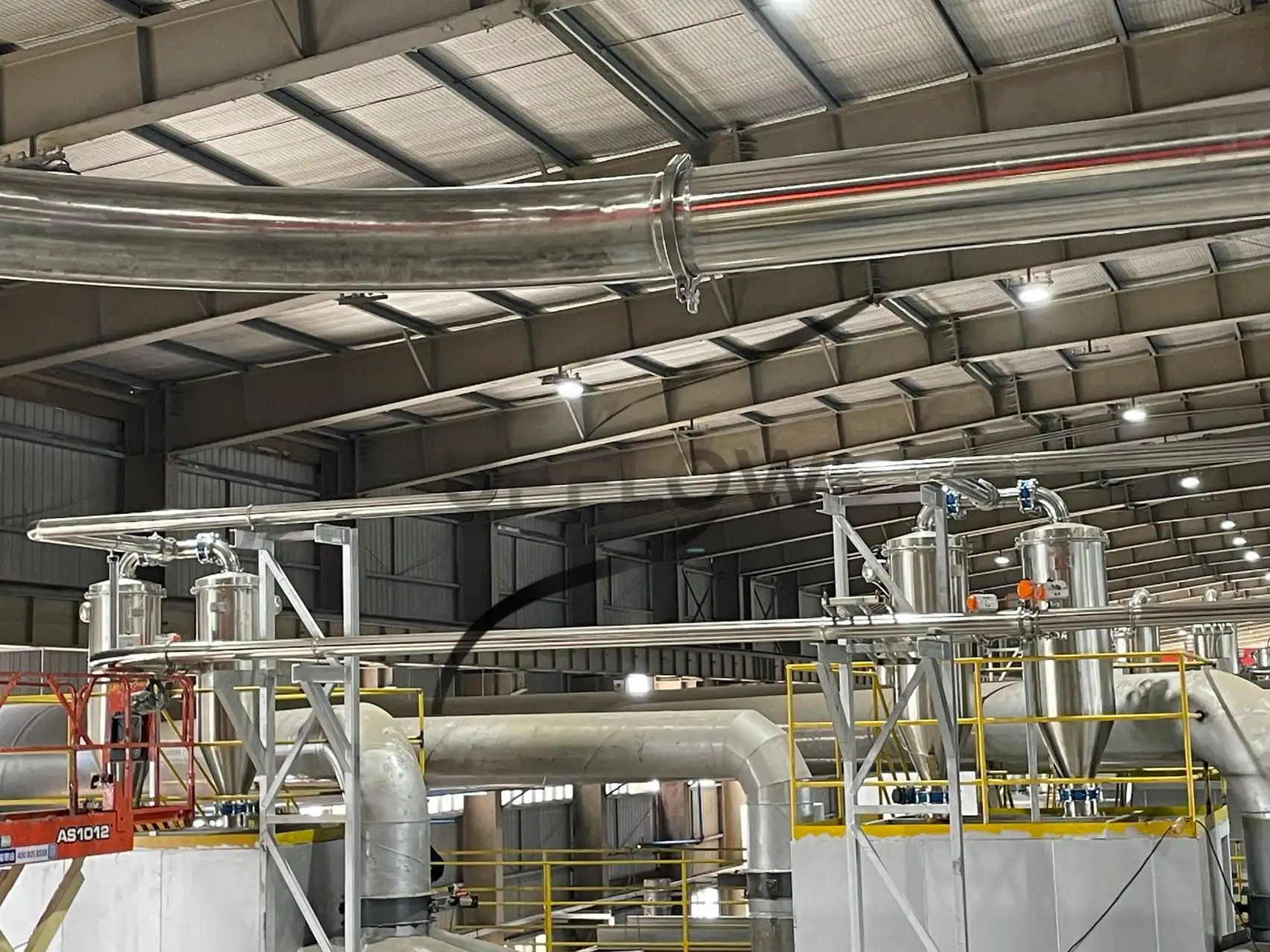
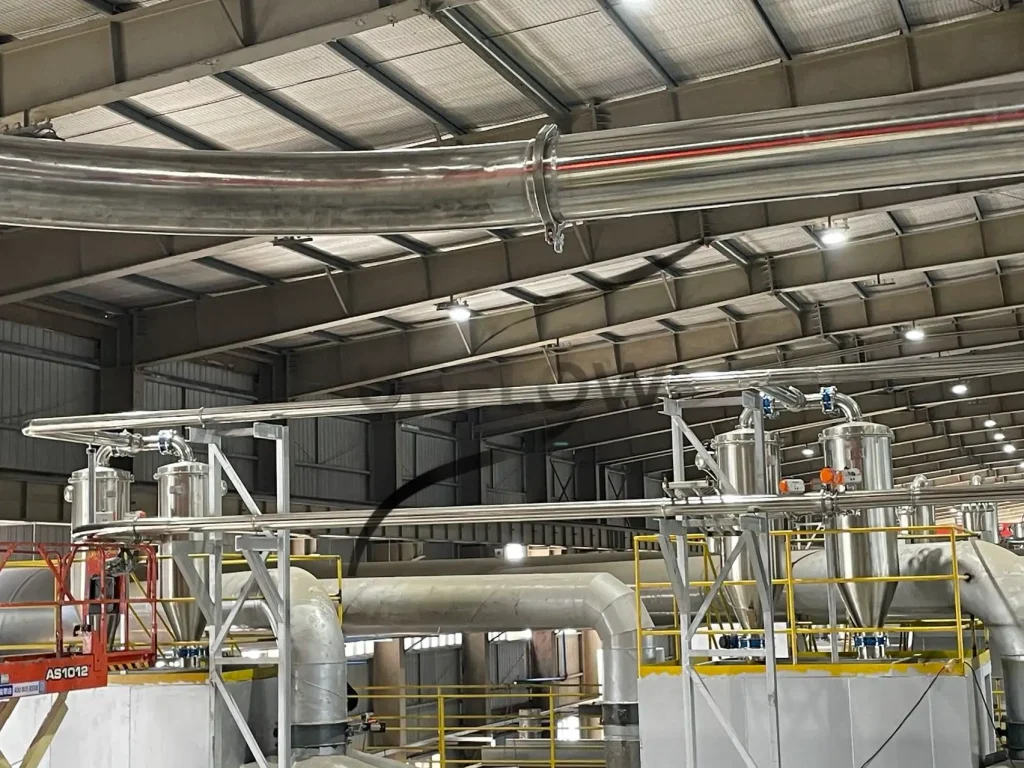
A well-designed powdered sugar pneumatic conveying system typically uses airflow to transport materials through enclosed pipelines, ensuring a clean and controlled process that minimizes dust emission and contamination. In many applications, vacuum-based systems are used for feeding, while positive pressure conveying systems are applied in long-distance conveying systems to ensure stable and continuous material transfer across large production facilities.
For high-efficiency production environments, combining high-speed airflow conveying with optimized pipeline design allows for rapid material transfer, while maintaining system cleanliness and operational stability. In large-scale plants, a central conveying system can distribute powdered sugar to multiple processing lines simultaneously, improving production efficiency and reducing manual handling, while integration with a mixed conveying system allows for blending sugar with other ingredients in automated processes.
Hygienic and Anti-Contamination Design
Hygiene is a top priority in any powdered sugar pneumatic conveying system, as even minor contamination can affect product quality and safety, especially in food and pharmaceutical applications. To meet these requirements, systems are designed as fully enclosed powder conveying systems using food-grade stainless steel materials such as SS304 or SS316L, with polished internal surfaces and sanitary connections to prevent material buildup and facilitate cleaning.
In addition, clean-in-place (CIP) systems and quick-release pipeline connections are often implemented to ensure efficient cleaning and maintenance, while fully sealed structures eliminate external contamination and dust leakage. These hygienic design features are essential for meeting regulatory standards and ensuring consistent product quality in sensitive production environments.
Explosion Safety and Risk Control
One of the most important aspects of designing a powdered sugar pneumatic conveying system is ensuring explosion safety, as powdered sugar dust is highly combustible and can form explosive mixtures when suspended in air. To mitigate this risk, systems must incorporate explosion protection measures such as explosion vent panels, anti-static grounding, and conductive filter materials within the pneumatic conveying system.
In high-risk environments, additional safety measures such as nitrogen inerting systems and real-time pressure monitoring may be used to further reduce explosion hazards, ensuring safe and reliable operation. These safety features are not optional but essential for compliance with international standards such as NFPA and ATEX.
Key Design Strategies for Stable Conveying
Achieving stable performance in a powdered sugar pneumatic conveying system requires careful optimization of airflow, pipeline layout, and feeding systems, as improper design can lead to blockage, excessive wear, or energy inefficiency. Controlling airflow velocity is particularly important, as too high velocity increases dust generation and energy consumption, while too low velocity may result in material settling and blockage.
To improve system performance, engineers often reduce pipeline bends, optimize pipe diameter, and use flow-assist devices such as vibrators or air knockers to maintain smooth material flow, while integrating the system into a broader material automation system ensures consistent feeding and improved production control. These design strategies help achieve reliable and efficient conveying while minimizing maintenance requirements.
Conclusion: Safe, Efficient and Future-Ready Sugar Handling
A well-designed powdered sugar pneumatic conveying system is essential for achieving hygienic, dust-free, and explosion-safe material handling in modern industrial production, as it addresses the unique challenges associated with powdered sugar while improving efficiency and product quality. By combining advanced conveying technology, hygienic design, and safety measures, manufacturers can ensure stable operation and long-term reliability in demanding production environments.