
Introduction
A sodium sulfate powder pneumatic conveying system is a modern bulk material handling solution that transfers fine powder through enclosed pipelines using controlled airflow, enabling continuous, automated, and dust-free operation in industries such as chemicals, detergents, glass, and environmental engineering. Compared with traditional conveying methods, this type of powder transfer system significantly improves productivity, reduces manual intervention, and ensures a cleaner production environment.
Sodium Sulfate Material Characteristics
Sodium sulfate (chemical formula: Na₂SO₄), also known as Glauber’s salt in its hydrated form, is a white crystalline or powder material widely used in detergents, glass production, and chemical processing. It typically has a bulk density of approximately 1.2–1.6 t/m³ depending on moisture content and particle size.
In powder handling applications, sodium sulfate generally shows good flowability, but under humid conditions it may absorb moisture and form lumps, which can affect conveying stability. Therefore, using a well-designed sodium sulfate powder pneumatic conveying system is essential to maintain consistent material flow and avoid blockage or contamination.
Product Overview
The sodium sulfate powder pneumatic conveying system is designed to provide efficient and fully enclosed material transfer, integrating automation control, explosion-proof design, and environmentally friendly operation. As a type of advanced powder conveying system, it combines conveying, dust control, and auxiliary processing functions into a single solution, ensuring reliable performance across various industrial processes.
System Functions
This system supports intelligent control, sealed conveying, and safe operation while enabling additional processing such as heating, cooling, and drying during transport. It can function as a mixed conveying system for complex production lines and is also suitable for long-distance, multi-point conveying scenarios, making it highly adaptable to modern industrial layouts.
With integrated dust collection and purification units, the system effectively minimizes emissions, and its continuous conveying capability ensures efficient bulk material transfer in applications such as powder handling, storage, and packaging.
Product Advantages
One of the main advantages of a sodium sulfate powder pneumatic conveying system is its simplified structure, which mainly consists of pipelines, air supply equipment, and control units, allowing easy operation and maintenance while maintaining high system reliability.
The system offers flexible pipeline configuration, enabling horizontal, vertical, and curved layouts to fit complex plant environments, and compared with conventional mechanical systems, it eliminates packaging and intermediate handling steps, improving conveying efficiency while reducing operational costs.
In addition, the system features a high level of automation, allowing centralized control and remote monitoring, which reduces labor requirements and enhances operational efficiency. Its enclosed conveying design ensures that material quality is maintained by preventing moisture absorption, contamination, and dust leakage.
Product Structure
1. Power Source of the Pneumatic Conveying System: As the core component of the sodium sulfate powder pneumatic conveying system, the air source unit is primarily responsible for providing the airflow power required for the conveying operation. They can continuously and stably generate airflow, providing strong power support for material conveying.
2. Material Supply Unit: The main function of the material supply unit is to uniformly and continuously feed the material into the conveying pipeline. Usually located at the beginning of the system, it uses the negative or positive pressure generated by the air source unit to mix the material with air in a predetermined ratio before conveying it to the pipeline. Screw conveyors and other equipment are common material supply options; their selection requires comprehensive consideration of the material properties and conveying requirements.
3. Conveying Pipeline Network: The conveying pipeline is the path for the material to be transported after mixing with the airflow. It is made of wear-resistant and corrosion-resistant materials to ensure that the material is not contaminated or damaged during conveying. The diameter, shape, and length of the pipeline are customized according to the material characteristics and conveying volume.
4. Dust Removal System: The dust removal system is crucial to the environmental performance of the sodium sulfate powder pneumatic conveying system. It is responsible for treating the dust and exhaust gas generated during the conveying process, ensuring that emissions meet environmental standards. This system typically includes dust collectors, and appropriate dust removal equipment and technologies are selected based on material characteristics and environmental requirements.
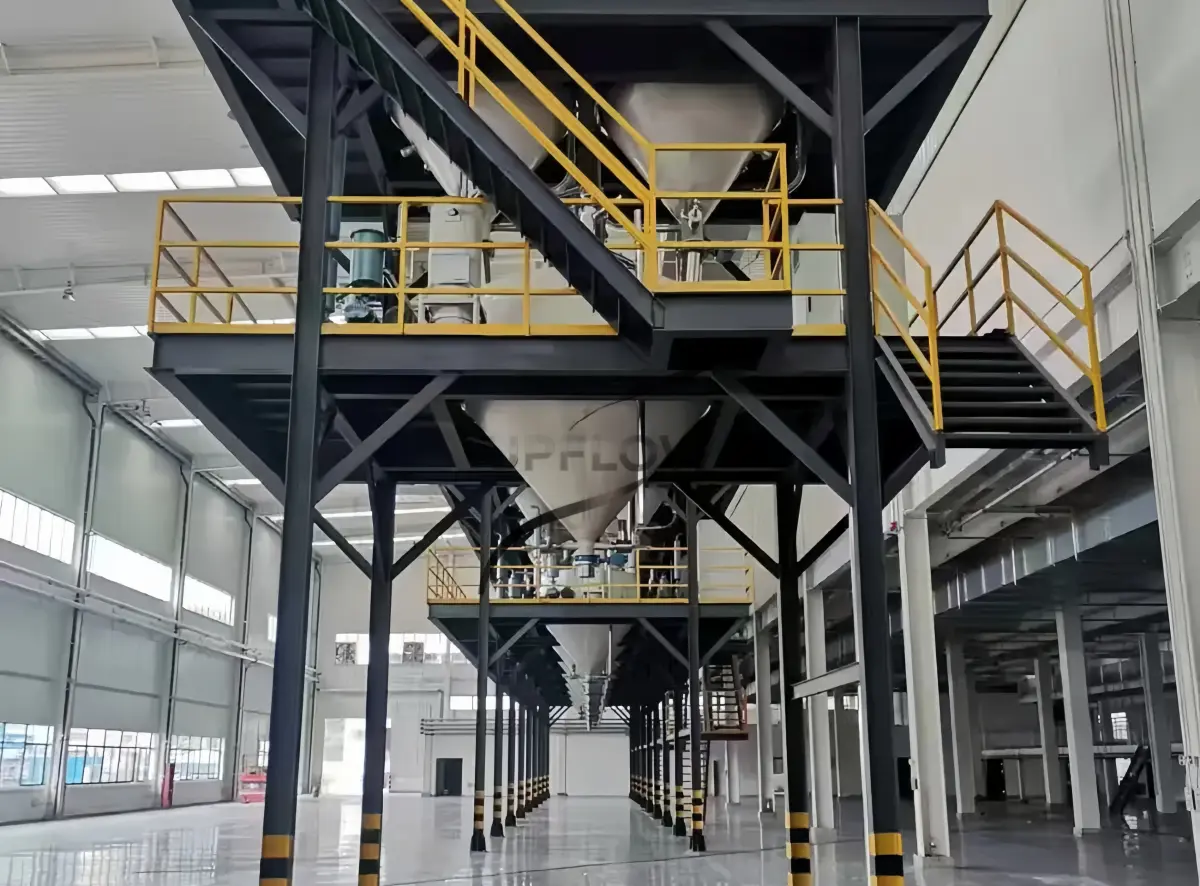
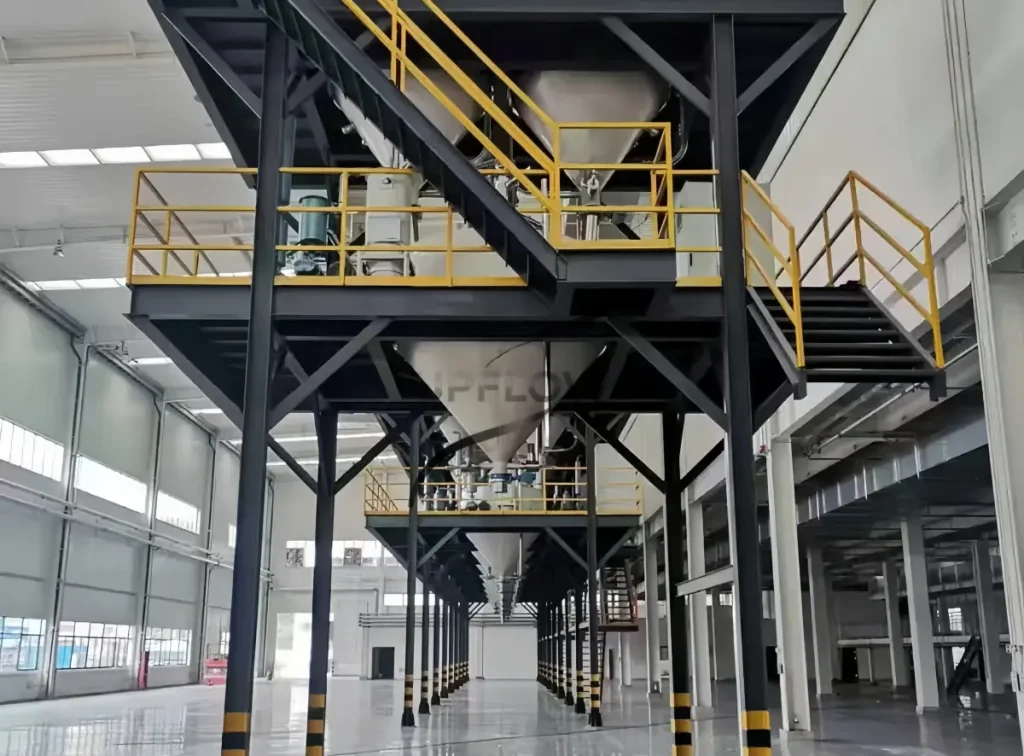
5. Storage Device: The storage device is used for temporary storage and release of materials. It is generally designed in a pyramid or cone shape to facilitate material storage and unloading. When designing the storage device, various issues and flow characteristics of the material during storage and unloading must be considered.
6.Control System: The control system is the central hub of the sodium sulfate powder pneumatic conveying system, responsible for monitoring and managing the entire system. Through programmable logic controllers (PLCs) and other control equipment, precise adjustment of key parameters such as airflow speed, feed rate, and system pressure is achieved to ensure stable system operation and meet production needs.
Conclusion
In summary, a sodium sulfate powder pneumatic conveying system offers a reliable, efficient, and environmentally friendly solution for modern powder handling, integrating functions such as powder transfer, mixed conveying system operation, and automated control within a fully enclosed system. With its advantages in flexibility, efficiency, and clean operation, it is becoming an essential component in advanced industrial material handling systems.