
Introduction
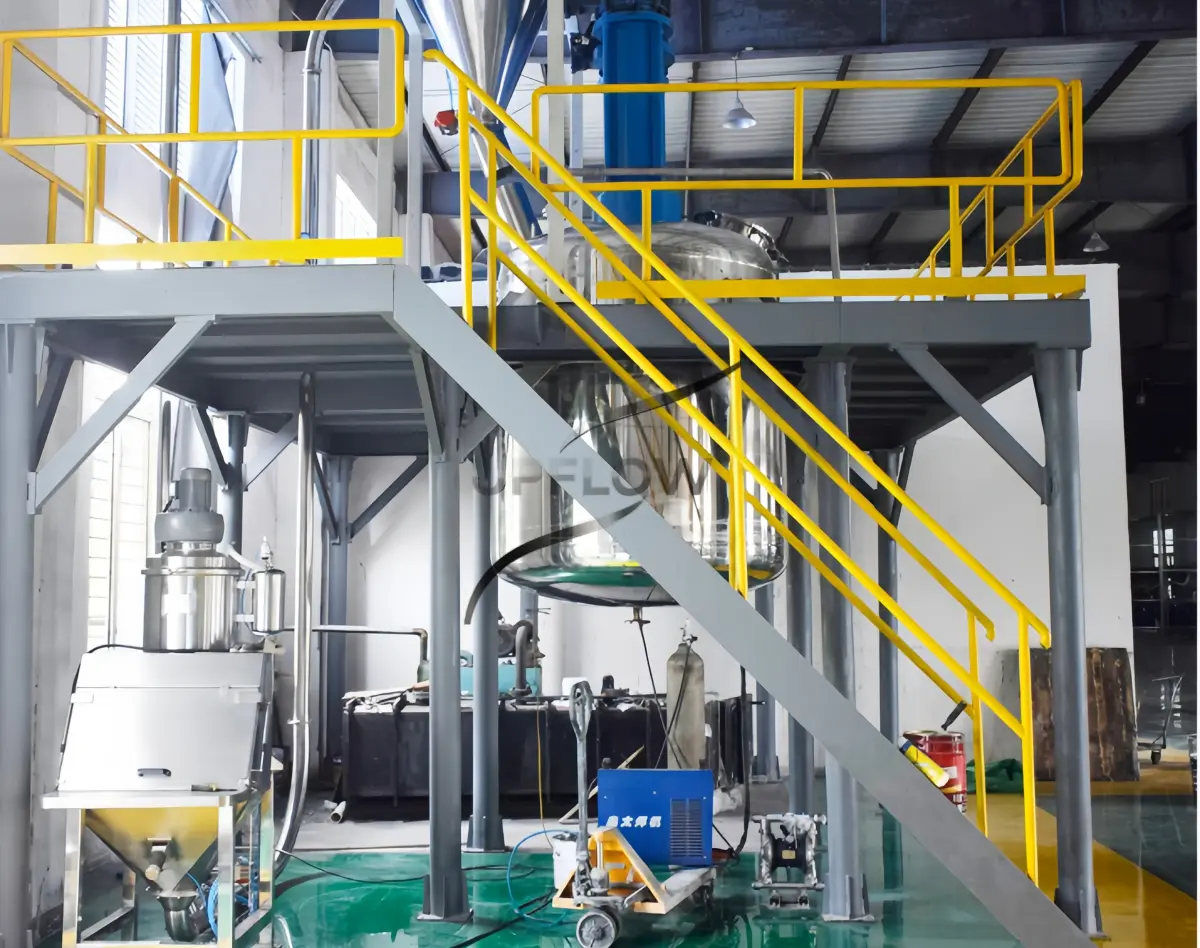
Desulfurized sodium bicarbonate powder conveying is an environmentally friendly solid material conveying method. It utilizes compressed air to transport sodium bicarbonate powder from storage tanks to designated locations. During the conveying process, there is no contact with the external environment, effectively preventing dust pollution and leakage, and ensuring a clean and safe production environment.
This conveying system adopts pneumatic conveying technology, offering high conveying efficiency and speed. It can achieve remote automated control, saving manpower and resources and improving production efficiency. Simultaneously, the conveying pipeline is made of corrosion-resistant materials, resulting in a long service life and low maintenance costs, making it an ideal choice for industries such as chemical, pharmaceutical, and food processing.
Material Properties of Desulfurized Sodium Bicarbonate
Desulfurized sodium bicarbonate (chemical formula: NaHCO₃), also known as sodium bicarbonate or baking soda, is typically processed into fine or ultrafine powder for flue gas desulfurization applications. Its bulk density is generally between 0.7 and 1.1 t/m³, depending on the particle size and grinding process.
Compared to ordinary sodium bicarbonate, desulfurized sodium bicarbonate has a smaller particle size and higher reactivity, which enhances its reactivity with sulfur dioxide in the flue gas system. However, this also makes it more prone to dust generation, agglomeration, and unstable transport during the process, thus requiring a carefully designed powder conveying system to maintain stable operation.
Product Introduction
Desulfurized sodium bicarbonate powder is typically conveyed using a screw conveyor. Its working principle involves a motor driving a screw shaft to rotate, propelling the powder along the screw channel. During conveying, friction occurs between the powder and the screw shaft surface, creating a certain conveying speed and achieving continuous powder transport. To prevent the powder from becoming damp and agglomerated during transport, a drying and ventilation system is usually employed to ensure the stability of the conveying process. Furthermore, different screw conveyor structures, can be selected depending on the conveying volume, distance, and environment. In addition, dust removal, vibration, and anti-clogging technologies can be added to the conveying system to improve efficiency and safety.
Working Principle
The working principle of desulfurized sodium bicarbonate powder conveying is to compress, convey, and unload the powder using conveying equipment. Compressed air is used as the power source, causing the powder to flow in a gas-solid two-phase manner within the conveying pipeline, thus achieving continuous powder conveying. During the conveying process, the powder and compressed air are thoroughly mixed, reducing powder scattering and loss, and improving conveying efficiency and environmental performance.
Types of Pneumatic Conveying
Pneumatic conveying is a method of transporting materials from a conveying point to a destination using airflow. Depending on the type of airflow, it can be divided into positive pressure conveying and negative pressure conveying. Positive pressure conveying creates positive pressure within the conveying pipeline, using compressed air to propel the material forward; negative pressure conveying creates negative pressure within the conveying pipeline, relying on airflow to draw the material in. Pneumatic conveying features long conveying distances, large conveying capacities, and a wide range of applicable materials, and is widely used in the conveying of bulk materials such as coal, ore, and grain.
Structural Composition
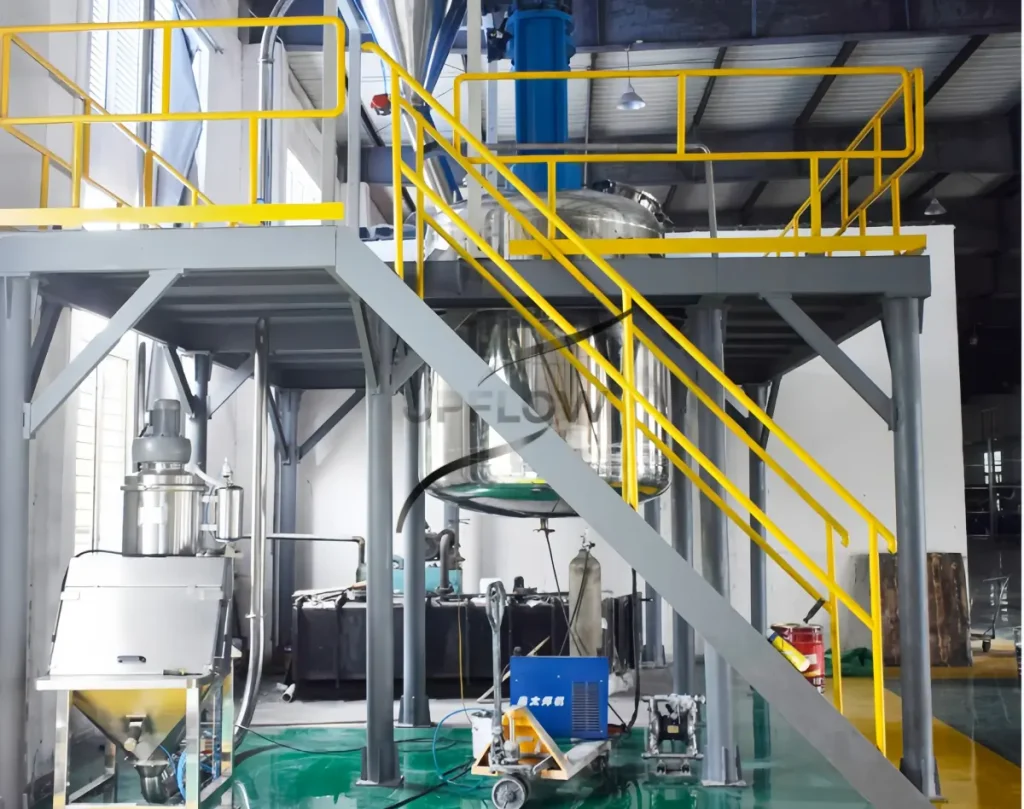
The desulfurized sodium bicarbonate powder conveying structure consists of conveying pipelines, powder conveying pumps, pneumatic conveying systems, dust collectors, storage silos, and control systems. Through rational design and layout, it achieves efficient, safe, and stable powder conveying. The conveying pipelines are made of wear-resistant and corrosion-resistant materials to ensure long-term stable operation; the powder conveying pumps are selected as high-efficiency, low-energy-consumption models to ensure conveying capacity; the pneumatic conveying system uses compressed air as the conveying medium to deliver the powder from the storage silo to the designated location; the dust collector effectively collects dust generated during the conveying process, reducing environmental pollution; the vibrating screen screens the conveyed powder to ensure qualified particle size; the storage silo stores the desulfurized sodium bicarbonate powder, facilitating adjustment of the conveying volume; and the control system enables automated and intelligent management of the conveying process.
Advantages and Features
The desulfurized sodium bicarbonate powder conveying system boasts advantages such as high conveying efficiency, low energy consumption, stable operation, simple equipment structure, convenient maintenance, long conveying distance, large conveying capacity, and strong adaptability, effectively improving production efficiency and reducing production costs.
The UPFLOW desulfurized sodium bicarbonate powder conveying system employs innovative technology to effectively ensure the efficiency, safety, and stability of the powder conveying process. This system boasts the following advantages: First, precision control ensures accurate metering during powder conveying, reducing waste; second, a unique enclosed conveying design prevents dust pollution and improves the working environment; third, modular design facilitates maintenance and expansion, reducing long-term operating costs; and finally, corrosion-resistant materials ensure long-term stable operation under harsh conditions. The UPFLOW desulfurized sodium bicarbonate powder conveying system, with its superior performance, has become a trusted choice for many customers.
Desulfurized sodium bicarbonate powder conveying utilizes specialized conveying equipment to transport powder materials from storage tanks, silos, and other storage facilities to designated locations via pneumatic conveying. This process must ensure the flowability, dispersion, and safety of the powder during conveying. UPFLOW is committed to providing efficient and stable conveying solutions, making material handling simpler and more convenient.