
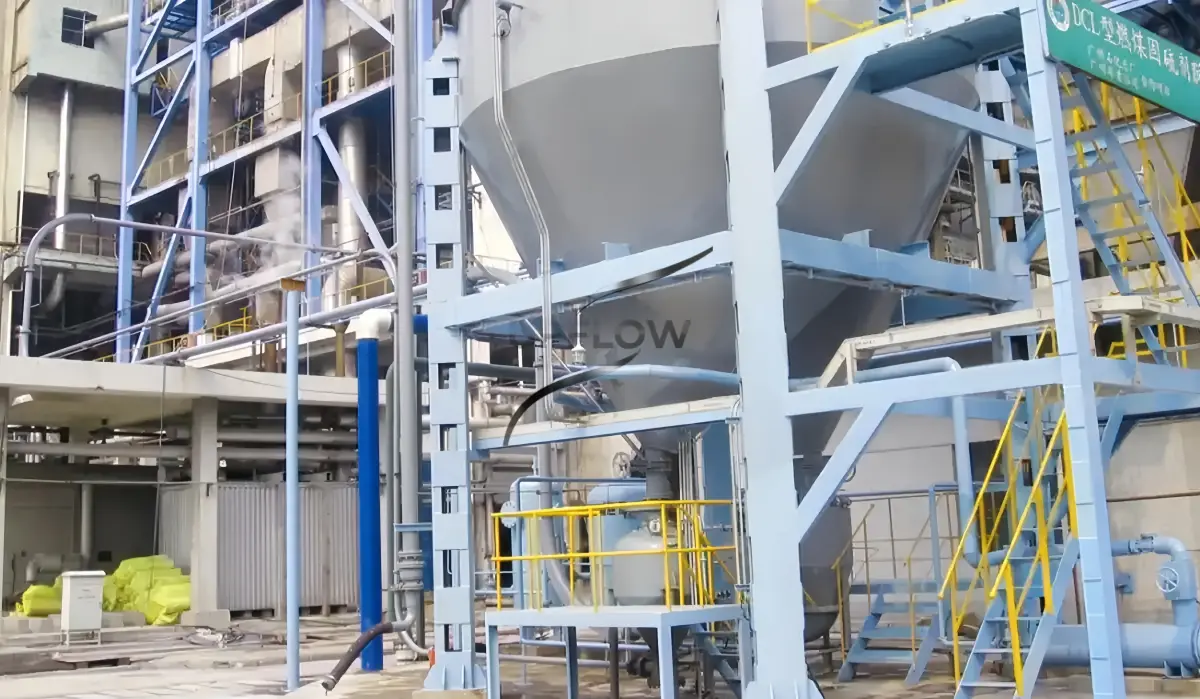
In modern industrial production, the performance of a phosphate powder pneumatic conveying system plays a crucial role in ensuring stable material handling, improving production efficiency, and reducing labor costs, especially in industries such as fertilizers, chemicals, and pharmaceuticals where phosphate powders are widely used. Compared with traditional conveying methods, a well-designed phosphate powder pneumatic conveying system combined with an integrated phosphate powder material transfer system can achieve continuous, enclosed, and high-efficiency transportation, making it an essential component of modern automated production lines.
Material Characteristics of Phosphate Powder
Phosphate powder, commonly used in fertilizers and chemical processing, typically has a bulk density ranging from 0.8 to 1.2 g/cm³, depending on particle size and moisture content, and is generally classified as a fine granular or powdery material with moderate flowability. Although phosphate materials are not highly sticky under normal conditions, they can exhibit dust generation, slight abrasiveness, and sensitivity to moisture, which may lead to caking or flow instability if not properly controlled during conveying.
Because of these characteristics, the design of a phosphate powder pneumatic conveying system must consider factors such as airflow velocity, pipeline wear resistance, and dust control, ensuring that the material can be transported smoothly without excessive degradation, blockage, or environmental contamination.
Types of Phosphate Powder Pneumatic Conveying Systems
A phosphate powder pneumatic conveying system can be configured in different ways depending on material properties, conveying distance, and production requirements, with each system type offering specific advantages for different applications. For example, a phosphate powder dilute phase pneumatic conveying system is suitable for fine particles and low concentration conveying, where the material is suspended in high-velocity airflow and transported efficiently over long distances.
On the other hand, a phosphate powder dense phase pneumatic conveying system is more suitable for larger particles or higher material loading, where the material moves in a low-velocity, high-pressure flow state, reducing pipeline wear and material degradation. In addition, a phosphate powder vacuum conveying system is often used when flexible feeding points and dust-free operation are required, while a phosphate powder positive pressure pneumatic conveying system is more appropriate for shorter distances and higher throughput applications.
Working Principle of the System
In a typical phosphate powder pneumatic conveying system, the material is first introduced into the pipeline through feeding equipment such as hoppers or feeders, while air supplied by blowers or compressors is simultaneously injected into the pipeline to create a controlled airflow environment. The phosphate powder mixes with the air stream and forms a gas-solid two-phase flow, which is then transported through the pipeline under the influence of airflow velocity and pressure.
As the material reaches the end of the conveying line, separation equipment such as cyclones or bag filters is used to separate the phosphate powder from the air, allowing the material to be collected efficiently while the cleaned air is either discharged or recycled, which ensures both environmental protection and system efficiency in the phosphate powder pneumatic conveying system.
System Advantages in Industrial Applications
One of the main advantages of a phosphate powder pneumatic conveying system is its ability to significantly reduce manual handling through automated control, as the system can monitor and adjust parameters such as airflow velocity, pressure, and material flow rate in real time, ensuring stable operation without frequent human intervention. By eliminating intermediate handling steps, the system also shortens conveying time and improves overall production efficiency, making it a reliable phosphate powder bulk material transfer system.
In addition, the enclosed design of the system helps minimize dust emissions and material loss, which not only improves workplace safety but also reduces environmental impact, especially when handling fine powders that are prone to dispersion. Compared with traditional conveying methods, the phosphate powder pneumatic conveying system also reduces material waste and ensures consistent product quality throughout the production process.
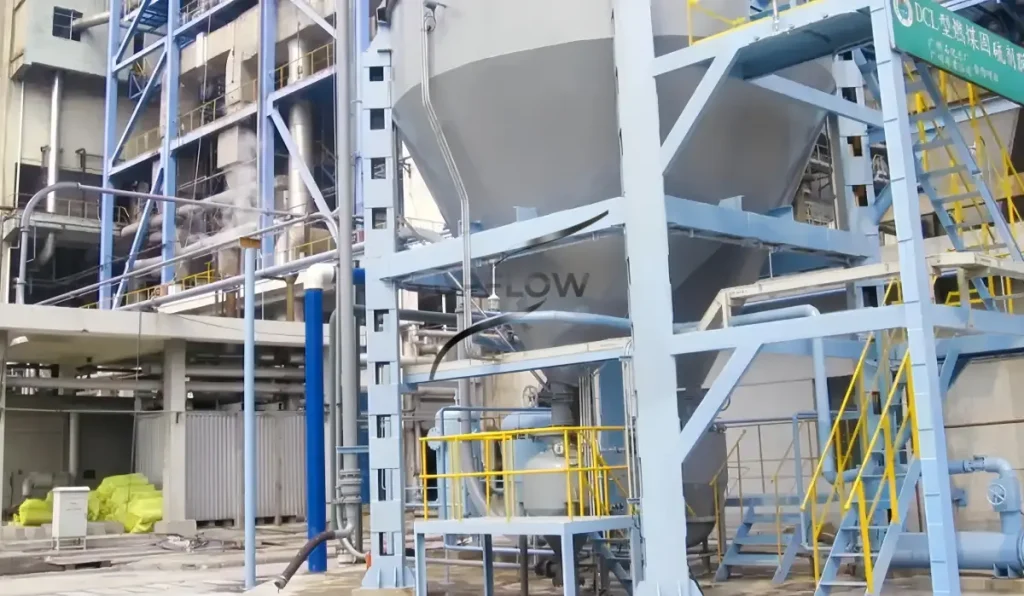
Safety and Environmental Performance
A well-designed phosphate powder pneumatic conveying system operates in a closed environment, which reduces the risk of dust-related hazards such as explosions or contamination, particularly in chemical and fertilizer industries where safety standards are strict. By precisely controlling airflow conditions and integrating filtration systems, the system ensures that the conveying process remains stable and safe.
Furthermore, the use of a phosphate powder vacuum conveying system enhances environmental protection by preventing dust leakage at feeding points, making it especially suitable for applications requiring high levels of cleanliness and emission control.
Applications of Phosphate Powder Conveying Systems
The phosphate powder pneumatic conveying system is widely used across multiple industries, including agriculture for fertilizer production, chemical processing for raw materials and additives, and pharmaceutical manufacturing where phosphate compounds are used as formulation components. In these applications, the integration of a phosphate powder particle conveying system, phosphate powder pneumatic conveying system, and phosphate powder vacuum conveying system ensures efficient and reliable material handling tailored to different process requirements.
Conclusion: Enhancing Efficiency and Automation
With its advantages in automation, efficiency, safety, and environmental protection, the phosphate powder pneumatic conveying system has become an indispensable solution for modern bulk material handling, especially for industries dealing with fine and granular phosphate materials. By adopting advanced conveying technologies such as phosphate powder pneumatic conveying systems, phosphate powder material transfer systems, and phosphate powder vacuum conveying systems, companies can significantly reduce labor costs, improve production efficiency, and achieve more sustainable operations.
If you are looking for a reliable and customized phosphate powder pneumatic conveying system or need technical support for your phosphate powder material transfer system, feel free to contact us for a professional solution tailored to your specific application.