
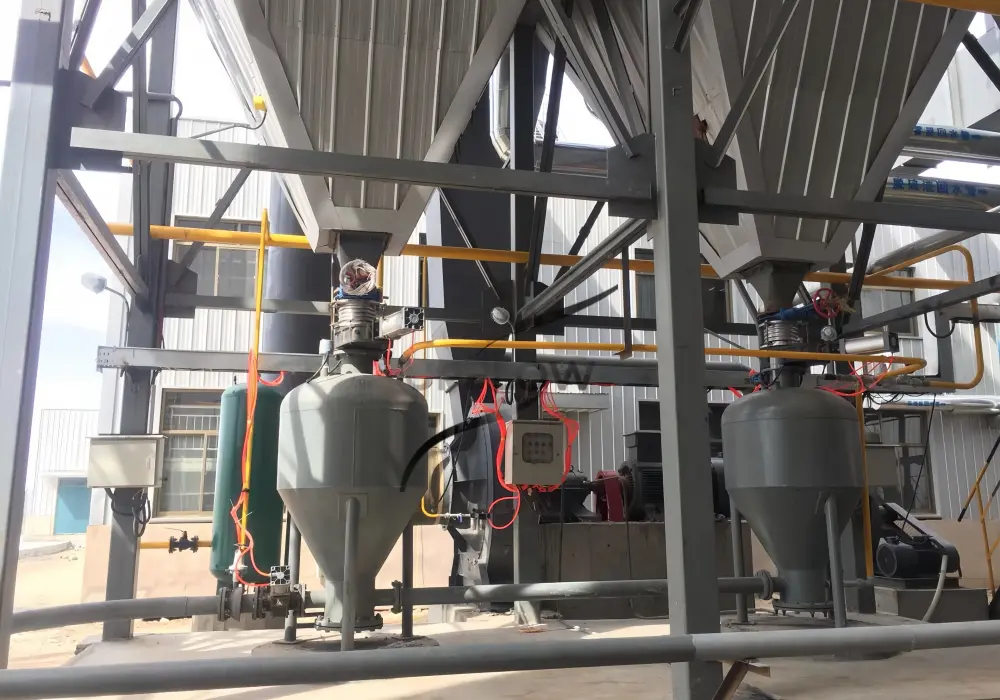
Introduction to Activated Carbon Powder Material Properties
Activated carbon powder is a highly porous, fine particulate material widely used in chemical purification, water treatment, air filtration, and pharmaceutical processes due to its extremely strong adsorption capacity. In bulk form, activated carbon powder typically has a bulk density ranging from approximately 0.35 to 0.55 g/cm³, depending on raw material source and activation process, while the true density of carbon particles is significantly higher.
The particle size is usually very fine and irregular, which makes the material easy to fluidize but also highly prone to dust generation during handling. Another important characteristic is its strong adsorption behavior, meaning it can easily absorb moisture, oils, and airborne contaminants. In industrial environments, this material is often considered difficult to handle because it is lightweight, dusty, and potentially explosive under certain conditions when suspended in air at high concentration.
These properties make it necessary to use a fully enclosed and controlled conveying method, especially in large-scale production lines.
Overview of Activated Carbon Powder Pneumatic Conveying System
An activated carbon powder pneumatic conveying system is an advanced bulk material handling solution designed to transport fine carbon powder from storage or production units to downstream processing points through pipelines using controlled airflow.
This system is widely referred to in industrial applications under several technical variations, including low-pressure conveying system for activated carbon powder, high-pressure pneumatic conveying system for activated carbon powder, vacuum conveying system (negative pressure conveying system) for activated carbon powder, and enclosed conveying system for activated carbon powder.
By utilizing air as the conveying medium, the system forms a gas-solid two-phase flow inside a sealed pipeline, ensuring continuous, stable, and dust-free transportation. Compared with mechanical conveying methods, pneumatic systems significantly reduce leakage risks and material contamination while improving automation efficiency.
Working Principle of Activated Carbon Powder Pneumatic Conveying System
The working principle of the activated carbon powder pneumatic conveying system is based on air-driven suspension and pipeline transport.
In a positive pressure (high-pressure or low-pressure conveying system), compressed air is introduced to the pipeline, pushing activated carbon powder forward while overcoming pipeline resistance. In contrast, in a vacuum conveying system (negative pressure conveying system), a vacuum pump creates a pressure difference that sucks activated carbon powder into the pipeline and transports it to the target destination.
During transportation, the fine particles of activated carbon are fully suspended in the airflow, forming a stable flow state inside the pipeline. The system is carefully designed to control airflow velocity, ensuring that the particles remain suspended without excessive wear or blockage. Meanwhile, dust generated during feeding or discharge is captured by integrated filtration and dust collection units, maintaining a clean production environment.
System Structure and Main Components
A complete enclosed activated carbon powder pneumatic conveying system typically consists of several key components working in coordination to ensure efficient operation.
The feeding section usually includes a hopper and feeding device that ensures controlled and uniform entry of activated carbon powder into the conveying pipeline. The pipeline itself is designed with optimized diameter and layout to reduce pressure loss and prevent material buildup.
Depending on the system configuration, a low-pressure conveying system, high-pressure conveying system, or vacuum conveying system (negative pressure system) may be selected to match different plant layouts and transport distances.
Downstream equipment such as separators, dust collectors, and filtration units play a crucial role in separating air from solid particles and preventing dust emissions. A centralized control system coordinates airflow pressure, feeding rate, and system safety, ensuring stable and continuous operation under different industrial conditions.
Advantages of Activated Carbon Powder Pneumatic Conveying System
The activated carbon powder pneumatic conveying system offers significant advantages in modern powder handling applications, particularly where cleanliness, efficiency, and automation are critical.
Because the entire process is carried out in a fully enclosed pipeline, the system effectively eliminates dust leakage and environmental contamination. This is especially important for fine activated carbon powder, which can easily become airborne and create operational hazards if not properly controlled.
In addition, the system provides strong adaptability, allowing long-distance and multi-point conveying with flexible pipeline routing. Whether using a high-pressure conveying system for activated carbon powder, a low-pressure conveying system for activated carbon powder, or a vacuum conveying system for activated carbon powder, the system can be customized according to plant requirements and production capacity.
Energy efficiency is another important advantage, as modern pneumatic systems are designed to optimize air consumption while maintaining stable conveying performance. At the same time, the enclosed design reduces material loss, improves product recovery rate, and lowers long-term operational costs.
Application Scenarios and Industrial Value
The activated carbon powder enclosed conveying system is widely used in industries such as chemical processing, environmental protection, food purification, pharmaceutical manufacturing, and wastewater treatment.
In these applications, activated carbon powder is often used as an adsorbent material for removing impurities, toxins, and odors. Therefore, maintaining material purity during transportation is critical. The pneumatic conveying system ensures that the material is not exposed to external contamination and remains consistent in quality from storage to end-use.
Furthermore, for large-scale continuous production lines, the system supports automated feeding and dosing integration, improving overall production efficiency and reducing manual handling risks.
UPFLOW Activated Carbon Powder Conveying Technology
UPFLOW provides an advanced engineering solution for activated carbon powder pneumatic conveying systems, focusing on stable performance, energy efficiency, and environmental protection.
By combining optimized pipeline design with precise airflow control, UPFLOW systems ensure that activated carbon powder is transported smoothly without blockage or degradation. The system is engineered to handle fine, lightweight, and highly adsorptive powders, making it suitable for demanding industrial environments.
Whether configured as a low-pressure conveying system for activated carbon powder, a high-pressure conveying system for activated carbon powder, or a vacuum (negative pressure) conveying system for activated carbon powder, UPFLOW designs prioritize operational stability, reduced maintenance requirements, and long service life.
Through fully enclosed conveying technology, UPFLOW helps manufacturers achieve safer, cleaner, and more efficient powder handling processes, supporting modern industries in improving productivity while reducing environmental impact.