
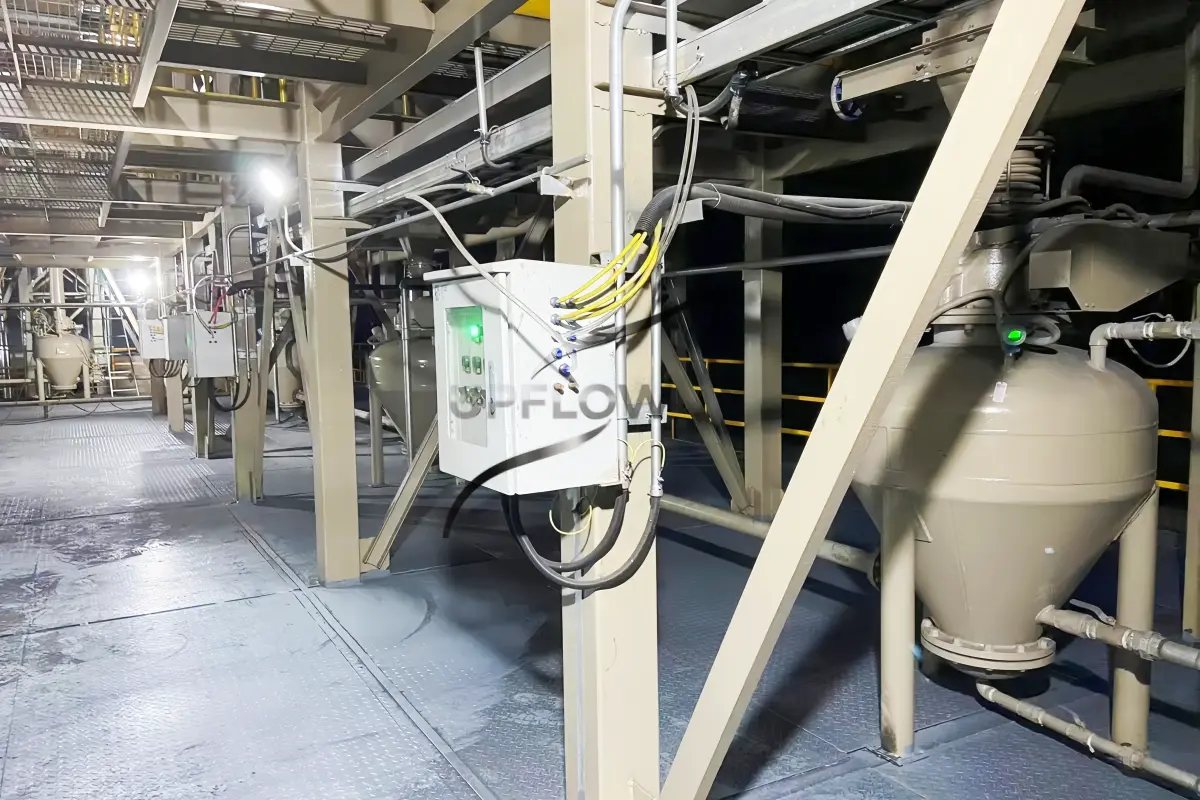
Introduction to Stabilizer Powder Materials
Stabilizers are essential additives widely used in plastics, especially PVC processing, where they help improve thermal stability, prevent degradation, and extend product lifespan. These materials are generally classified into heat stabilizers (such as calcium-zinc stabilizers, lead-based stabilizers, and organotin stabilizers) and light stabilizers (such as UV absorbers and hindered amine light stabilizers, HALS), depending on their function in protecting materials from heat or light-induced degradation.
In terms of physical properties, stabilizer powders typically have a bulk density ranging from 0.6 to 1.2 g/cm³, and are often processed into fine powders or granules. They may exhibit good flowability but can also generate dust, show mild hygroscopic behavior, and in some cases have slight abrasiveness, which requires a reliable and enclosed conveying system to ensure stable transport and prevent environmental contamination.
What Is a Stabilizer Powder Pneumatic Conveying System?
A stabilizer pneumatic conveying system is a comprehensive material handling solution that uses airflow or gas flow as the driving force to transport stabilizer powders such as calcium-zinc stabilizer powder or UV stabilizer additives through pipelines.
In industrial applications, it is also known as a feeding system for stabilizer powder materials, a low-pressure conveying system for PVC heat stabilizer powder, a pneumatic conveyor for light stabilizer additives, or a vacuum conveying system for stabilizer powder handling, depending on system configuration and conveying requirements.
This system forms a gas-solid two-phase flow inside sealed pipelines, enabling continuous, stable, and efficient transport from multiple feeding points to one discharge point, or from a single source to multiple destinations.
System Applications and Functional Capabilities
The stabilizer powder pneumatic conveying system is designed for long-distance and multi-point conveying, making it highly suitable for complex industrial production lines. It can handle centralized conveying from several feeding points or distribute materials from one source to multiple process units, which is particularly useful in large-scale PVC compounding plants and chemical processing facilities.
As a modern powder feeding system for calcium-zinc stabilizer materials, it supports auxiliary processing functions, bulk material transfer, and energy-efficient operation, while also integrating seamlessly into automated production systems.
Key Advantages of Stabilizer Pneumatic Conveying Systems
One of the major strengths of a stabilizer pneumatic conveying system is its flexibility in material routing, allowing both centralized and distributed conveying configurations. This makes it suitable for industries such as environmental protection, construction materials, power generation, metallurgy, and pharmaceuticals.
Additionally, the system offers several functional advantages, including fully enclosed conveying to prevent dust leakage, intelligent control for precise operation, explosion-resistant design for safety, and high adaptability to different material properties. As a low-pressure conveying system or vacuum conveying system for stabilizer powders, it ensures stable operation while minimizing material loss and environmental impact.
Working Principle of Stabilizer Powder Pneumatic Conveying
The working principle of a stabilizer powder pneumatic conveying system is based on aerodynamic transport, where compressed air or other gases generate a controlled airflow inside pipelines.
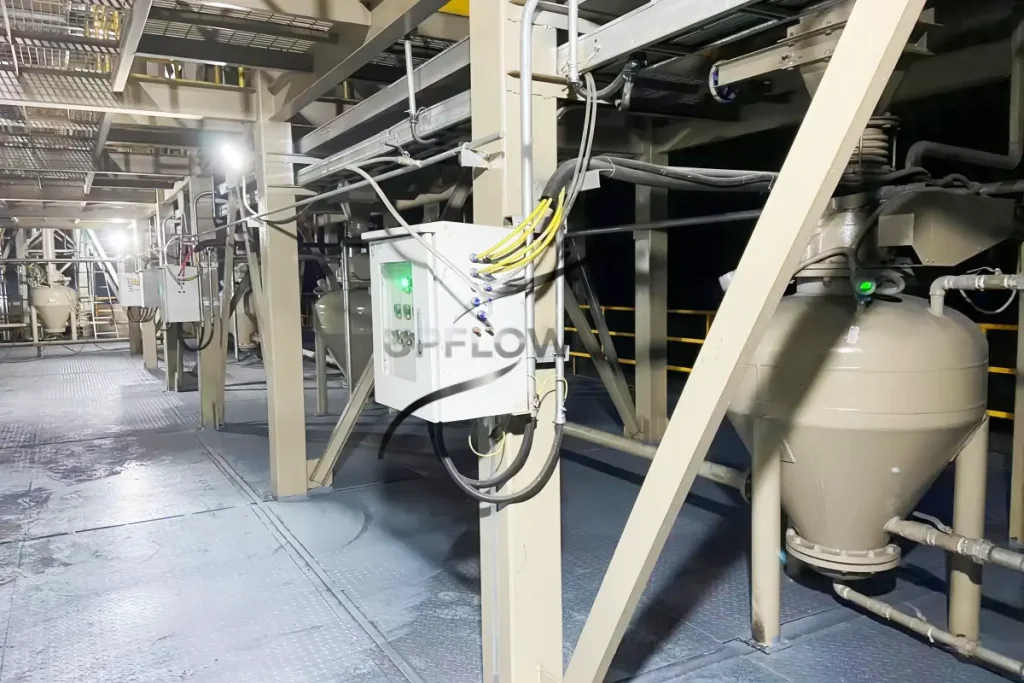
In a low-pressure conveying system for heat stabilizer powder, compressed air pushes the material forward through the pipeline, while in a vacuum conveying system for light stabilizer powder, a negative pressure environment draws the material into the pipeline and transports it to the designated location.
During the conveying process, stabilizer particles are either suspended in the airflow or move in clusters, creating a fluid-like flow state that ensures continuous and stable transport. The system typically includes key components such as air supply units, feeding devices, pipelines, dust collection systems, storage silos, and automated control systems.
Conclusion
The stabilizer powder pneumatic conveying system provides an efficient, flexible, and environmentally friendly solution for handling both heat stabilizers and light stabilizers in modern industrial applications. By combining feeding systems, low-pressure conveying systems, pneumatic conveyors, and vacuum conveying systems for stabilizer powder materials, manufacturers can achieve reliable multi-point transport, improved automation, and enhanced production efficiency, meeting the demands of advanced chemical and plastic processing industries.