
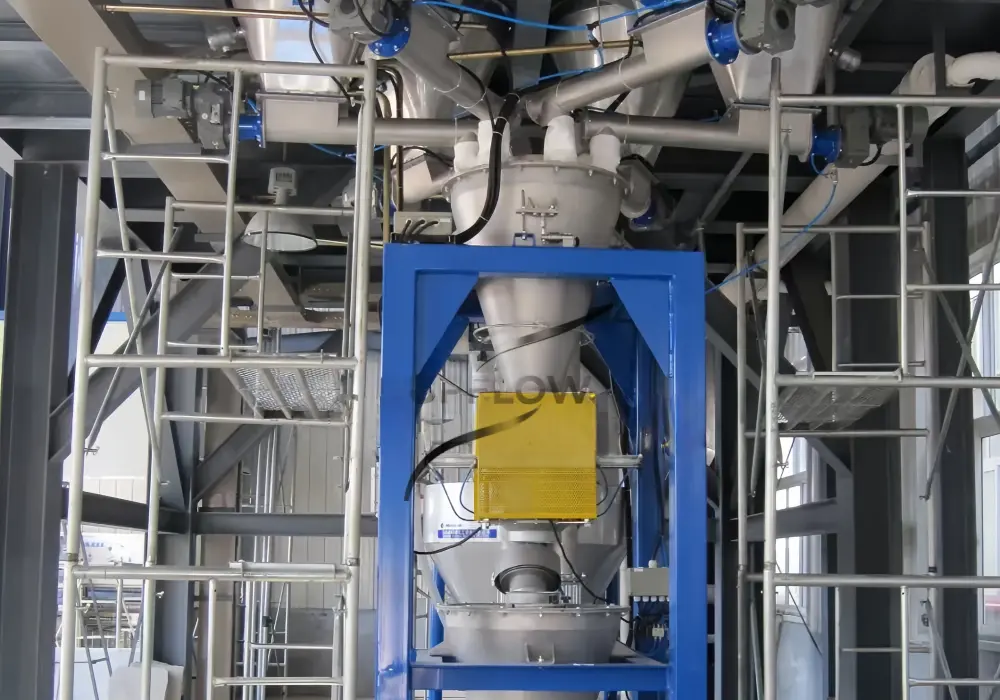
In modern industries where fine powders must be handled safely and efficiently, a well-designed graphite powder pneumatic conveying system has become an essential solution for achieving stable material transfer, reducing environmental impact, and improving production automation, especially in sectors such as metallurgy, battery materials, chemicals, and precision manufacturing. Compared with traditional mechanical conveying methods, an integrated graphite powder material pneumatic conveying system combined with an optimized feeding system can realize long-distance, multi-point, and fully enclosed conveying, making it highly suitable for modern industrial production lines.
Material Characteristics of Graphite Powder
Graphite powder is a fine, black, carbon-based material widely used in industries such as lithium battery production, lubricants, refractories, and conductive materials, where its unique physical and chemical properties provide significant functional advantages. Typically, graphite powder has a bulk density ranging from 0.3 to 0.9 g/cm³, along with characteristics such as high electrical conductivity, good thermal resistance, low friction coefficient, and excellent chemical stability, which make it both valuable and challenging to handle.
However, graphite powder is also known for its high dustiness, strong tendency to disperse, and potential explosibility under certain conditions, which means that the design of a graphite powder pneumatic conveying system must carefully address dust control, airflow stability, and safety considerations in order to ensure reliable and secure material transport.
Working Principle of the Graphite Powder Pneumatic Conveying System
A typical graphite powder pneumatic conveying system operates by using the dynamic and static pressure of airflow to transport materials through pipelines, where the graphite particles are either suspended in the air stream or move in clusters depending on the conveying mode and operating conditions. During operation, the material is introduced into the system through a graphite powder feeding system, where it is mixed with air generated by blowers or compressors and then carried through the pipeline as a gas-solid two-phase flow.
As the material travels through the system, parameters such as air velocity, pressure, and pipeline configuration determine the conveying efficiency and stability, while at the discharge end, separation equipment such as cyclones or filters ensures that the graphite powder is effectively collected and the air is cleaned before being released or recirculated, making the entire graphite powder pneumatic conveying system both efficient and environmentally friendly.
System Components and Structure
The structure of a graphite powder pneumatic conveying system is composed of several key components that work together to ensure stable and efficient operation, each playing a critical role in the overall performance of the system.
The air supply system, which may include vacuum pumps, acts as the power source of the system and provides a continuous and stable airflow required for conveying, while the graphite powder feeding system or graphite powder feeding equipment ensures that the material is introduced into the pipeline in a controlled and uniform manner, preventing fluctuations in flow rate.
The pipeline network, made of wear-resistant and anti-static materials, serves as the transport path for the material-air mixture, and its design must consider factors such as pipeline diameter, layout, and bending radius to minimize resistance and material buildup. In addition, the system is equipped with dust collection units, which are essential for maintaining environmental compliance, as well as storage silos and discharge units that facilitate material handling at both the beginning and end of the conveying process, while an advanced control system continuously monitors and adjusts key parameters to ensure stable operation of the graphite powder pneumatic conveying system.
Application Advantages in Industrial Production
One of the main advantages of a graphite powder pneumatic conveying system is its ability to achieve long-distance and multi-point conveying within a fully enclosed pipeline, which significantly reduces dust emission and material loss while improving overall production efficiency. In addition, the system can function as both a graphite powder feeding system and a graphite powder conveying system, allowing seamless integration with upstream and downstream equipment.
Compared with traditional conveying methods, the system supports low-pressure conveying operation, which helps reduce energy consumption and minimize material degradation, while the use of specialized graphite powder pneumatic conveyors ensures stable performance even when handling fine and dusty materials. Furthermore, the system can be integrated with additional processing functions such as mixing, classification, heating, or drying, which enhances its versatility in complex production processes.
Wide Range of Applications
The graphite powder pneumatic conveying system is widely used in industries such as metallurgy, building materials, power generation, and advanced materials manufacturing, where it plays a critical role in transporting powders between different processing stages. In particular, it is highly suitable for applications requiring clean and efficient handling of fine powders, such as battery material production, chemical processing, and environmental treatment systems.
Thanks to its flexibility, the system can be configured to handle various materials beyond graphite, including cement, fly ash, plastic granules, and pharmaceutical powders, making it a versatile solution for modern bulk material handling.
Conclusion: A Reliable Solution for Graphite Powder Handling
With its advantages in automation, environmental protection, and efficient material transport, the graphite powder pneumatic conveying system has become a key technology for industries seeking to optimize production processes and achieve cleaner operations. By integrating advanced technologies such as graphite powder feeding systems, graphite powder low-pressure conveying systems, and high-performance graphite powder pneumatic conveyors, manufacturers can improve productivity, reduce operational costs, and ensure safe and stable handling of fine powder materials.
If you are looking for a customized graphite powder pneumatic conveying system or need a reliable graphite powder feeding system for your production line, feel free to contact us for a tailored solution based on your specific material characteristics and process requirements.