
- admin
- Sep 4, 2026
- Custom Fabrication
For equipment manufacturers, engineering companies, system integrators, and industrial brands, finding a reliable manufacturing partner is often just as important as developing the equipment itself. While many companies have their own engineering teams and product designs, they may not have the production capacity, fabrication equipment, welding capabilities, or surface finishing resources required to manufacture every component in-house. This is where Custom OEM Manufacturing can provide a practical solution, allowing a specialized fabrication manufacturer to produce components, structures, enclosures, tanks, and equipment according to customer drawings, specifications, samples, or project requirements.
Unlike standard contract manufacturing based on fixed products, OEM fabrication is usually built around the customer’s own design and application, which means that dimensions, materials, tolerances, joining methods, surface treatments, production quantities, and assembly requirements can be adapted to a specific machine or system. For companies that need a dependable long-term supplier rather than a one-time metalworking service, the ability to move from engineering review and prototyping to repeat production can make a significant difference to supply chain efficiency.
What Is Custom OEM Manufacturing?
Custom OEM Manufacturing refers to a production model in which a manufacturer produces parts, components, assemblies, or complete fabricated equipment based on the technical requirements of another company. The OEM customer normally provides engineering drawings, CAD files, 3D models, product specifications, samples, or other technical information, while the manufacturing partner is responsible for transforming those requirements into physical products through appropriate fabrication and production processes.
Depending on the project, the manufacturing scope may include material procurement, laser cutting, sheet metal forming, CNC machining, welding, grinding, surface treatment, assembly, dimensional inspection, and packaging. The exact combination of processes depends on the product design and the customer’s quality requirements.
For an equipment manufacturer, this model makes it possible to outsource selected production operations without giving up control over the product design, specifications, or final application.
What Products Can a Fabrication Manufacturer Produce?
A capable fabrication manufacturer can produce a much broader range of products than simple sheet metal parts, particularly when multiple manufacturing processes are available under one production system. The actual product range depends on the manufacturer’s equipment, engineering capabilities, materials, production capacity, and quality-control procedures, but common OEM fabrication products include structural frames, equipment housings, electrical cabinets, server chassis, storage tanks, silos, brackets, machine components, and customized assemblies.
The following product groups represent some of the most common applications for OEM fabrication.
Custom OEM Metal Parts
Custom metal parts are one of the most straightforward applications of OEM fabrication because many industrial machines require components with dimensions or configurations that are not available as standard products.
These parts can include brackets, mounting plates, covers, panels, supports, structural components, connection parts, guards, and other specially designed metal pieces. Depending on the application, components may be manufactured from stainless steel, carbon steel, galvanized steel, aluminum, or other specified materials.
For OEM customers, the major advantage is that the part can be manufactured according to the actual equipment interface rather than forcing a standard component to fit an existing design. Hole locations, mounting points, thickness, geometry, surface finish, and other details can therefore be developed around the customer’s machine.
Custom Equipment Enclosures and Cabinets
Industrial equipment often requires protective enclosures to house electrical components, mechanical assemblies, control systems, instruments, or other sensitive equipment.
A fabrication manufacturer can produce custom equipment enclosures according to specific dimensions and internal layouts, including access doors, removable panels, cable openings, mounting holes, ventilation openings, hinges, handles, brackets, and other required features.
Stainless steel equipment enclosures are particularly suitable for applications where corrosion resistance, durability, hygiene, or a professional appearance is important, while coated carbon steel can be selected for other industrial environments where cost and structural performance are key considerations.
For OEM equipment manufacturers, outsourcing enclosure production can also simplify the supply chain because the enclosure can be delivered as a finished component that is ready for installation during final equipment assembly.
AI Server Chassis and Data Center Components
The rapid development of AI computing and data center infrastructure has created growing demand for precision-fabricated metal components designed around high-performance computing equipment.
AI server chassis, server enclosures, equipment housings, brackets, cable management structures, and other data center components may require accurate dimensions, controlled openings, mounting points, ventilation structures, and repeatable production quality.
Because these products are often developed around specific server configurations or equipment layouts, standard enclosures may not provide the required flexibility. Custom OEM Manufacturing allows the manufacturer to produce chassis and related components based on the customer’s engineering design while adapting materials, sheet thickness, fabrication methods, and finishing requirements to the application.
For companies developing specialized AI hardware or data center equipment, a fabrication partner can therefore become an extension of the production team rather than simply a supplier of raw metal components.
Machine Frames and Support Structures
Machine frames provide the structural foundation for industrial equipment, production machinery, automation systems, and processing equipment.
Depending on the design, a custom frame may be constructed from stainless steel tubing, carbon steel profiles, plates, sheet metal, or combinations of different materials. The manufacturing process can include cutting, drilling, bending, welding, machining, grinding, and surface treatment.
The dimensional relationship between different frame components is especially important because the finished structure may need to support motors, conveyors, tanks, control cabinets, pneumatic equipment, sensors, or other mechanical assemblies.
For this reason, OEM customers often require frames to be produced directly from engineering drawings with controlled dimensions and clearly defined mounting interfaces.
Stainless Steel Tanks and Silos
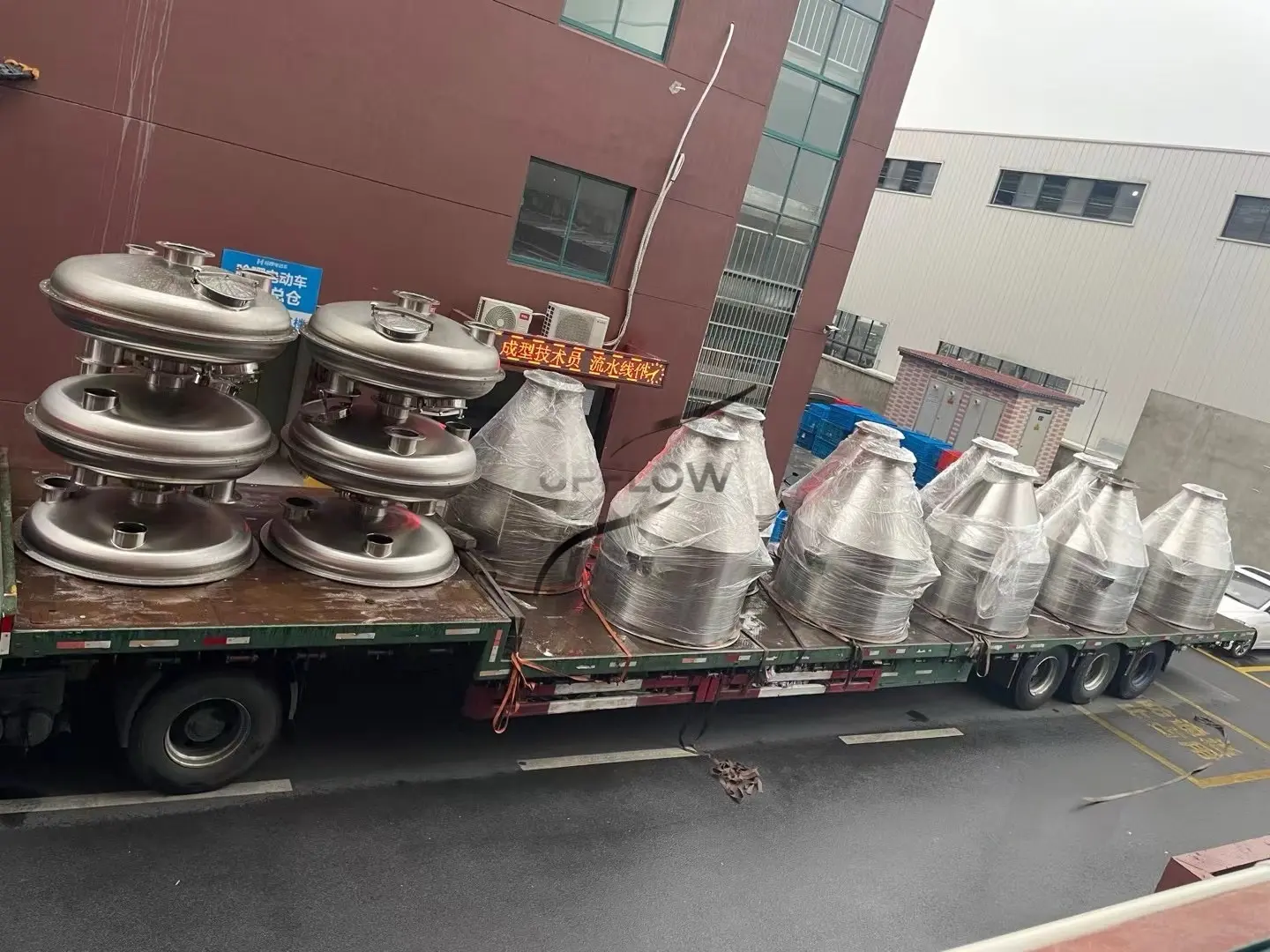
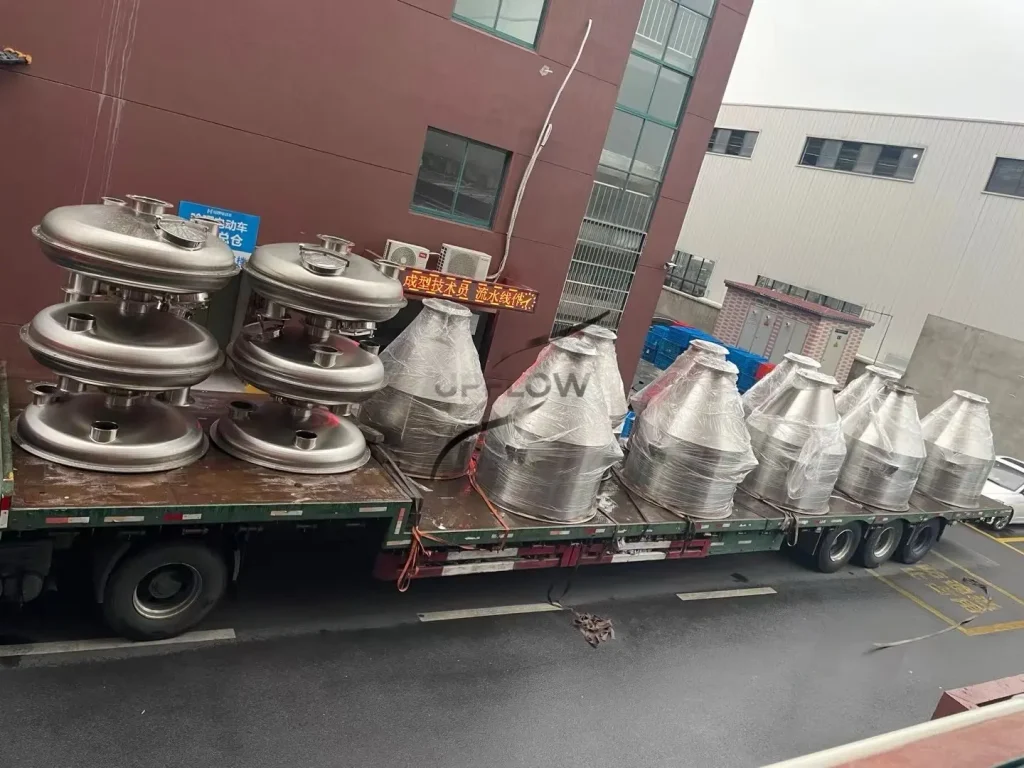
Fabrication manufacturers can also produce larger stainless steel structures such as storage tanks, powder tanks, silos, and cylindrical components for industrial applications.
The design of these products depends heavily on the stored material, working conditions, capacity, connection requirements, structural requirements, and customer’s process design. A powder storage tank, for example, may require different design considerations from a liquid storage tank, while a silo integrated into a powder handling system may require specific inlet, outlet, support, or connection configurations.
For companies manufacturing powder processing or material handling equipment, custom fabricated tanks and silos can be supplied as part of a larger equipment package, allowing the OEM to focus on system integration while outsourcing the metal fabrication work.
Custom OEM Equipment
Some projects require more than individual components and instead involve the fabrication of complete equipment or partially assembled systems.
Depending on the manufacturer’s capabilities and project scope, this may include fabricated frames, housings, tanks, structural assemblies, guards, platforms, support structures, and other integrated components.
In this situation, Custom OEM Manufacturing can provide greater value because several manufacturing operations can be coordinated through one supplier instead of requiring the OEM customer to manage multiple subcontractors for cutting, welding, machining, finishing, and assembly.
A single manufacturing partner can also make communication easier when dimensional relationships exist between different components, since the supplier has a complete understanding of how the individual parts are intended to work together.
Surface Finishing and Final Appearance
Surface finishing is another important part of OEM fabrication because the appearance and protection of a finished product can influence both its service performance and the customer’s perception of quality.
Depending on the material and application, fabricated components may undergo grinding, brushing, polishing, sandblasting, painting, or powder coating. Stainless steel products may be finished to achieve a consistent brushed or polished appearance, while carbon steel enclosures, frames, and components can be powder coated or painted to provide color and additional surface protection.
When surface treatment is coordinated with fabrication, the customer can receive a finished product rather than having to arrange an additional supplier after the fabrication stage.
From Prototype to Repeat Production
OEM manufacturing does not always begin with a large production order. Many industrial projects start with a prototype or small batch that allows the customer to verify dimensions, assembly, appearance, and functionality before committing to repeat production.
During prototype manufacturing, the fabrication partner may identify design features that could be simplified, modified, or optimized for production. This feedback can help reduce manufacturing complexity and improve production consistency when the project moves into subsequent batches.
After the design has been validated, the same manufacturing process can be used for repeat orders, provided that the drawings, materials, quality requirements, and production specifications remain consistent.
This transition from prototype to repeat production is especially useful for equipment manufacturers that develop customized machinery and require the same fabricated components for multiple projects.
Why OEM Customers Work with Fabrication Manufacturers
There are several reasons why equipment manufacturers choose to outsource fabrication instead of producing every component internally.
First, outsourcing can reduce the need to invest in specialized cutting, forming, welding, machining, and finishing equipment. Second, an experienced fabrication supplier may already have established production processes and qualified personnel for handling different types of metal products. Third, outsourcing can allow the OEM company to focus its internal resources on engineering, system integration, sales, project management, and product development.
Another important advantage is production flexibility. An OEM customer may need a prototype this month, a small batch next quarter, and repeat production later as customer demand increases. Working with a flexible fabrication supplier can make it easier to accommodate these changing requirements.
What Should You Provide to an OEM Fabrication Manufacturer?
The more complete the technical information provided at the beginning of a project, the easier it is for the manufacturer to evaluate the product and provide an accurate quotation.
Useful information may include 2D engineering drawings, 3D CAD models, material specifications, dimensions, tolerances, surface finishing requirements, welding requirements, estimated quantities, application information, packaging requirements, and delivery expectations.
If some specifications are not finalized, customers can also provide samples, reference photos, sketches, or preliminary designs for an initial engineering discussion.
An experienced fabrication manufacturer should be able to review the available information, identify missing technical details, and communicate potential manufacturing considerations before production begins.
How to Choose a Long-Term OEM Fabrication Partner
Price is an important factor, but it should not be the only consideration when selecting an OEM manufacturing partner.
Equipment manufacturers should evaluate the supplier’s engineering communication, fabrication capabilities, material sourcing, quality-control procedures, production capacity, surface finishing options, packaging methods, and ability to maintain consistent quality across repeat orders.
It is also important to consider whether the supplier understands the difference between producing a one-time custom part and supporting a long-term OEM program. For repeat customers, documentation, production consistency, communication, and process stability can become more important than the initial unit price.
A reliable supplier should be able to support the project as it develops, from drawing review and prototype production to repeat manufacturing and continuous improvement.
Building a More Flexible OEM Supply Chain
Modern equipment manufacturers increasingly rely on specialized suppliers to provide components and fabricated assemblies that would be expensive or inefficient to manufacture entirely in-house. By outsourcing selected production processes to a capable fabrication partner, OEM companies can maintain greater flexibility while reducing internal manufacturing requirements.
Custom OEM Manufacturing is therefore not limited to producing individual metal parts; it can support an entire range of products, from brackets and panels to machine frames, equipment enclosures, AI server chassis, tanks, silos, and customized equipment.
For companies looking for a long-term manufacturing partner, the most valuable supplier is often one that can understand engineering requirements, coordinate multiple fabrication processes, maintain consistent quality, and scale production as project requirements change.
UPFLOW provides custom fabrication and OEM manufacturing services for equipment manufacturers and industrial customers, with capabilities covering custom metal parts, equipment enclosures, machine frames, stainless steel tanks and silos, AI and data center components, custom equipment, and surface finishing.
If you have an engineering drawing, CAD model, sample, or custom fabrication requirement, send your project information to UPFLOW for engineering review and a quotation.