
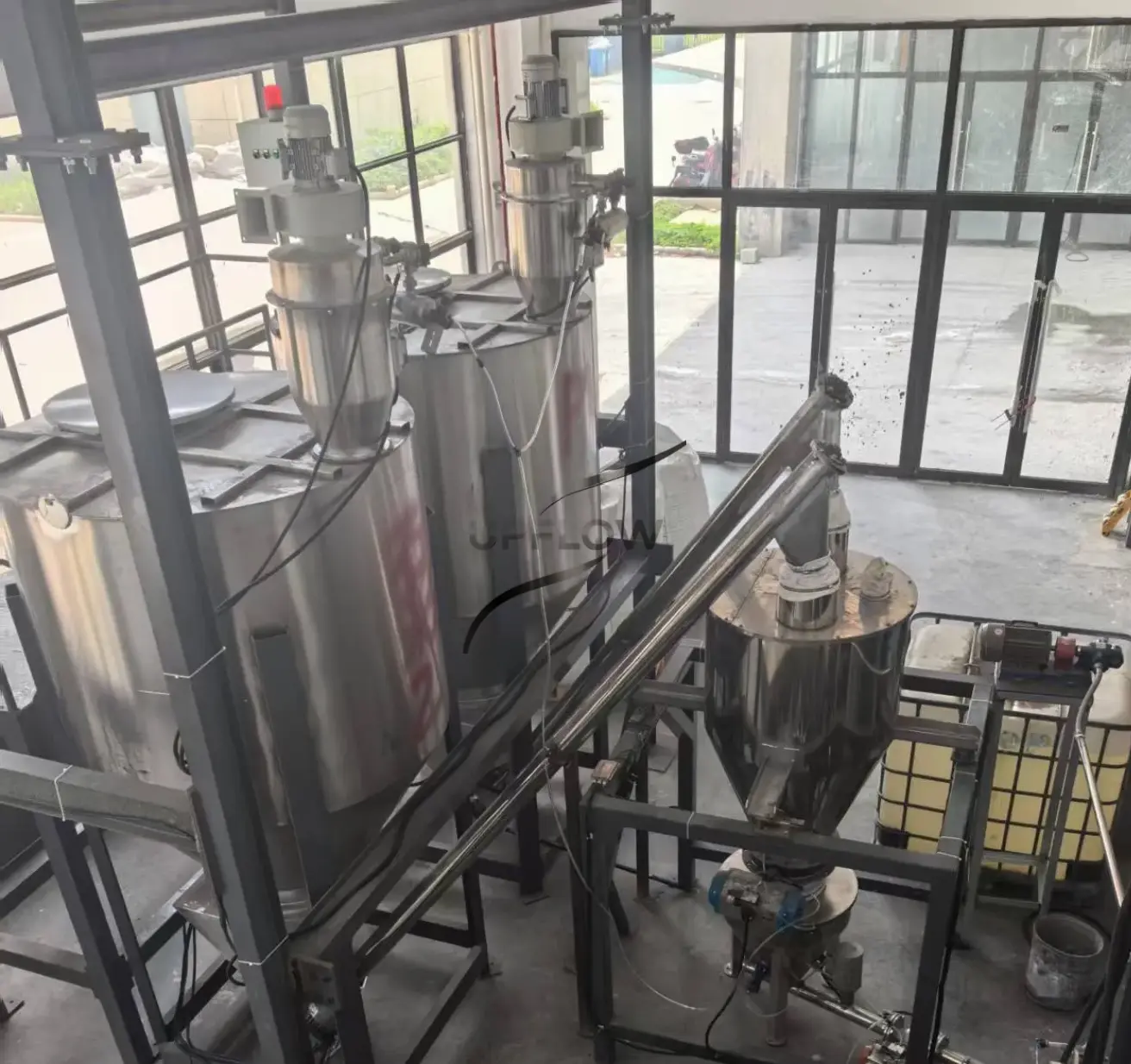
As pharmaceutical manufacturers continue to expand automated production for hormone-based medicines, hormone replacement products, steroid-related formulations, and other highly controlled pharmaceutical preparations, the transportation of hormonal powders has become an important part of modern powder processing because these materials are often used in relatively small quantities, may have high formulation activity, and can require strict control over dust generation, material loss, cross-contamination, and dosing consistency. A properly engineered hormonal powder pneumatic conveying system can provide an enclosed and automated route for transferring hormonal powder between material preparation, weighing, blending, processing, and filling equipment while reducing unnecessary manual handling and supporting a more controlled pharmaceutical manufacturing environment.
Understanding Hormonal Powder and Its Material Characteristics
Hormonal powder is a broad pharmaceutical material category rather than a single chemical substance, and it can include natural hormones, synthetic hormones, hormone derivatives, corticosteroid-related compounds, steroid hormones, and other hormone-active pharmaceutical ingredients used in the production of medicines.
Common descriptions include hormonal powder, hormone powder, pharmaceutical hormone powder, hormone API powder, steroid hormone powder, and hormonal pharmaceutical ingredient, although the exact classification depends on the chemical composition and intended pharmaceutical application.
Because hormonal powder covers many different substances, there is no universal chemical formula. For example, hydrocortisone has the molecular formula C21H30O5, progesterone is C21H30O2, and estradiol is C18H24O2, demonstrating that different hormonal materials can have significantly different chemical and physical characteristics.
The bulk density of hormonal pharmaceutical powders can also vary substantially according to the specific compound, particle size, crystallinity, formulation, and processing method, while many fine pharmaceutical hormone powders may have an apparent bulk density in the approximate range of 0.25–0.70 g/cm³.
From a material-handling perspective, hormonal powders may be very fine, dusty, cohesive, electrostatic, moisture-sensitive, or difficult to feed consistently, while some compounds may also require particularly strict control of material exposure because of their pharmaceutical activity.
These characteristics mean that a hormonal powder pneumatic conveying system should be designed according to the actual powder properties and pharmaceutical process instead of applying one standard conveying configuration to every hormone-related material.
Why Hormonal Powder Requires Controlled Material Transfer
One of the most important characteristics of hormone-based pharmaceutical powders is that the material may be used at relatively low concentrations in the final formulation, which means that accurate material addition can be essential for maintaining batch consistency.
Even relatively small quantities may need to be transferred repeatedly between weighing equipment, intermediate vessels, mixers, and downstream processing machines, creating a strong need for stable feeding and predictable material recovery.
Fine hormonal particles can also become airborne during manual charging or open transfer, while residues left inside conveying equipment may create cleaning and cross-contamination challenges when different formulations are produced in the same facility.
A properly designed hormonal powder pneumatic conveying system can reduce the number of open transfer operations by keeping the powder inside a controlled pipeline throughout the main transportation process.
The objective is therefore not simply to achieve a required conveying capacity, but to maintain controlled powder transfer while supporting dosing accuracy, cleanliness, batch consistency, and pharmaceutical process management.
Hormonal Powder Vacuum Conveying System for Enclosed Transfer
A hormonal powder vacuum conveying system uses a controlled negative-pressure environment to draw the powder from its source toward a receiving vessel or pharmaceutical processing machine.
Vacuum conveying can be useful when hormonal powder needs to be transferred from containers, weighing stations, intermediate hoppers, or multiple pickup points to a centralized receiving location.
The negative-pressure principle can also support a more controlled material path because airflow generally moves toward the conveying system rather than outward through minor leakage points when the equipment is properly sealed.
At the receiving end, a suitable filter separates the hormonal powder from the conveying air before the air reaches the vacuum source.
The receiving vessel, filter, valves, pipeline, and discharge mechanism should be considered as one integrated system because each component can affect material retention, cleaning, and overall conveying performance.
For pharmaceutical production, the hormonal powder vacuum conveying system should be selected and configured according to the specific material, process requirements, cleaning strategy, and facility containment procedures.
Hormonal Powder Feeding System for Accurate Dosing
Feeding stability is particularly important when handling hormonal pharmaceutical powders because the material may represent a relatively small but functionally important part of the final formulation.
A dedicated hormonal powder feeding system can provide controlled material introduction from a hopper, weighing vessel, intermediate container, or other source into the pneumatic conveying pipeline.
Depending on the material’s flowability and the required transfer rate, the feeding arrangement may incorporate suitable screw feeders, rotary valves, controlled discharge devices, or other powder-feeding technologies.
The hopper and discharge interface should be designed according to the powder’s flow characteristics because fine pharmaceutical powders can sometimes bridge, compact, or form stagnant regions during storage.
An automated hormonal powder feeding system can also be connected with weighing and PLC-based controls so that material transfer is coordinated with the production batch and downstream processing sequence.
This approach can reduce repetitive manual intervention while helping establish more consistent material transfer from one batch to another.
Hormonal Powder Low-Pressure Conveying System for Gentle Transportation
A hormonal powder low-pressure conveying system is designed to maintain controlled airflow and pressure conditions rather than relying on unnecessarily aggressive transportation.
This can be beneficial for fine pharmaceutical powders where excessive air velocity may increase turbulence, dust generation, particle impact, or deposition inside the pipeline.
Low-pressure conveying should be engineered according to the actual pipeline configuration and powder behavior, because reducing pressure alone does not guarantee stable conveying.
Pipeline diameter, conveying distance, material loading, pressure drop, feeding rate, and the number of bends all influence the final operating conditions.
For sensitive hormone powders, maintaining predictable conveying conditions can be more important than maximizing transportation speed.
A properly designed hormonal powder low-pressure conveying system can therefore support stable material transfer while helping limit unnecessary powder stress and excessive airborne fines.
Hormonal Powder Pneumatic Conveyor for Pharmaceutical Processing
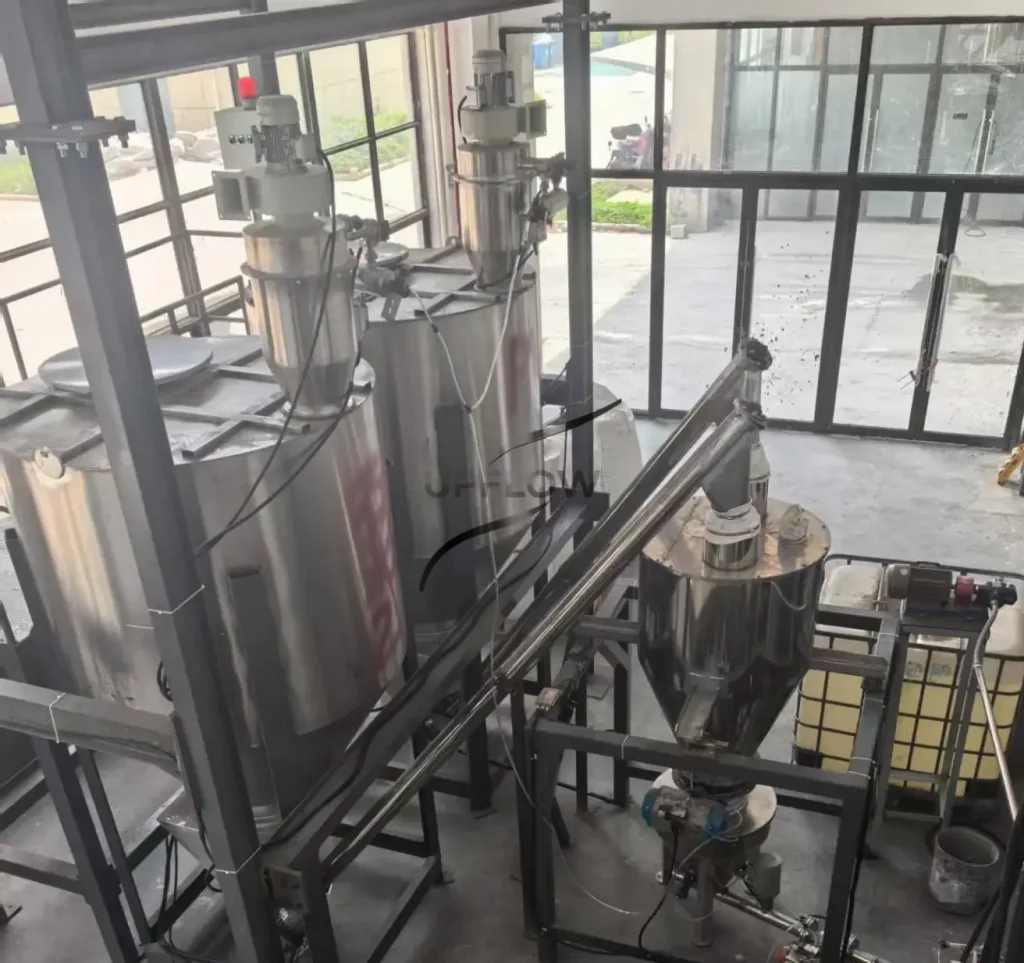
A hormonal powder pneumatic conveyor is normally part of a complete conveying installation that includes feeding equipment, a conveying pipeline, an air or vacuum source, receiving equipment, filtration, valves, sensors, and automated controls.
The receiving filter plays an important role because fine pharmaceutical particles can place a significant load on filtration equipment during repeated conveying cycles.
Pipeline routing should also be considered carefully, with unnecessary bends and material-retention areas minimized wherever possible.
Stainless steel is commonly used for product-contact components in pharmaceutical powder handling because of its corrosion resistance, cleanability, and compatibility with controlled manufacturing environments.
A properly configured hormonal powder pneumatic conveyor can connect weighing stations with intermediate hoppers, blending equipment, or downstream pharmaceutical processing machines while reducing the need for operators to manually move powder containers between production stages.
Maintaining Powder Quality During Pneumatic Transfer
Although hormonal powders may be present in relatively small quantities, maintaining their physical condition during transportation can still be important for consistent downstream processing.
Fine particles can experience changes in flow behavior when exposed to moisture, temperature fluctuations, compaction, or excessive mechanical stress.
Some formulations may also contain carriers or excipients that behave differently from the active hormone itself, meaning that the conveying characteristics of the finished powder blend may not be predicted solely from the properties of the active ingredient.
A suitable conveying design should therefore consider the actual formulation being transported, including bulk density, particle-size distribution, moisture content, flowability, and tendency toward agglomeration.
Controlled conveying conditions can help maintain a predictable material flow while reducing unnecessary powder deposition and accumulation.
Cleaning and Residual Powder Management
Cleaning is an important consideration for pharmaceutical hormone powder transportation because different formulations may be processed through the same production equipment.
Small amounts of residual material can remain around pipeline bends, valve seats, feeders, filters, and receiving vessels if the system contains unnecessary retention areas.
The conveying installation should therefore be designed with cleaning and inspection requirements considered from the beginning.
Appropriate connection methods, accessible components, practical filter maintenance, and minimized dead zones can make routine cleaning and product changeover more manageable.
For facilities producing multiple hormone-related formulations, a properly designed hormonal powder pneumatic conveying system can reduce the number of open handling steps and provide a more controlled route for transferring material during production.
The actual cleaning method should always be determined according to the specific pharmaceutical formulation and the facility’s validated cleaning procedures.
Hormonal Powder Material Automation System
The integration of conveying equipment with weighing, dosing, mixing, and batch controls can create a complete hormonal powder material automation system rather than an isolated material-transfer process.
In an automated installation, the control system can monitor receiving-hopper levels, conveying pressure or vacuum conditions, valve status, feeding sequences, and equipment alarms.
Material transfer can then be coordinated with production recipes so that the correct ingredient is moved at the appropriate stage of the manufacturing cycle.
For pharmaceutical manufacturers, this can reduce repetitive manual operations and make material transfer more consistent across production batches.
A hormonal powder material automation system can also record conveying cycles and equipment operating information, providing useful data for production monitoring, maintenance planning, and process optimization.
Automation is particularly valuable where multiple transfer steps are required because it can coordinate the sequence between weighing, conveying, blending, and downstream processing equipment.
Reducing Cross-Contamination Risks
Cross-contamination control is a major consideration when pharmaceutical manufacturers process multiple hormone-based products or other active pharmaceutical ingredients in the same facility.
The design should aim to minimize powder retention and unnecessary exposure points, particularly around valves, pipeline branches, feeders, and receiving equipment.
An enclosed conveying route can reduce the number of occasions when operators need to open containers or manually transfer powder between machines.
Filtration and receiving systems should also be selected with the characteristics of the actual powder in mind so that material separation and cleaning can be managed effectively.
By combining enclosed transportation with suitable cleaning procedures and controlled batch changeover, manufacturers can establish a more consistent material-handling process for different pharmaceutical formulations.
Selecting a Hormonal Powder Pneumatic Conveying Manufacturer
Selecting an experienced hormonal powder pneumatic conveying manufacturer is important because the system needs to match both the physical properties of the powder and the requirements of pharmaceutical production.
Before designing the equipment, the manufacturer should understand parameters such as bulk density, particle size, moisture content, flowability, cohesiveness, dust generation, and electrostatic behavior.
The production process should also be evaluated, including required capacity, conveying distance, vertical elevation, number of receiving points, batch size, feeding method, cleaning frequency, and automation requirements.
For hormone-active pharmaceutical materials, the supplier should also work within the customer’s established safety, containment, cleaning, and pharmaceutical quality procedures.
A capable hormonal powder pneumatic conveying manufacturer should therefore provide system-level engineering covering feeding, pneumatic transportation, receiving, filtration, automation, and integration with the existing pharmaceutical production line.
Future Trends in Hormonal Powder Conveying
The development of pharmaceutical powder handling is increasingly moving toward automated and data-driven production, and hormone powder transportation is likely to follow the same direction.
Real-time monitoring of conveying pressure, vacuum level, hopper status, filter condition, and feeding performance can help production teams identify abnormal operating conditions earlier.
Automated batch control can coordinate powder transfer with weighing and formulation data, while equipment status information can support preventive maintenance.
For pharmaceutical facilities handling multiple formulations, modular conveying systems may also provide greater flexibility by allowing different feeding and receiving configurations to be connected according to individual production requirements.
The long-term objective is to create a material-handling process in which powder transportation becomes a controlled and traceable part of pharmaceutical manufacturing rather than a separate manual operation.
Conclusion
Hormonal pharmaceutical powders present specific material-handling challenges because they can be fine, lightweight, cohesive, moisture-sensitive, and highly important to formulation accuracy even when used in relatively small quantities.
A properly engineered hormonal powder pneumatic conveying system can provide controlled and enclosed transfer between weighing, storage, blending, processing, and filling equipment while reducing unnecessary manual powder handling.
A hormonal powder vacuum conveying system can provide flexible negative-pressure transfer, while a hormonal powder low-pressure conveying system can support controlled transportation for applications where excessive conveying velocity should be avoided.
At the feeding stage, a reliable hormonal powder feeding system can help maintain stable material introduction, while a properly configured hormonal powder pneumatic conveyor can combine feeding, filtration, receiving, and automation into one coordinated material-handling solution.
By integrating these technologies with appropriate pharmaceutical cleaning, batch management, and process-control procedures, manufacturers can establish a more consistent and controlled powder-transfer process for modern hormone-based pharmaceutical production.