
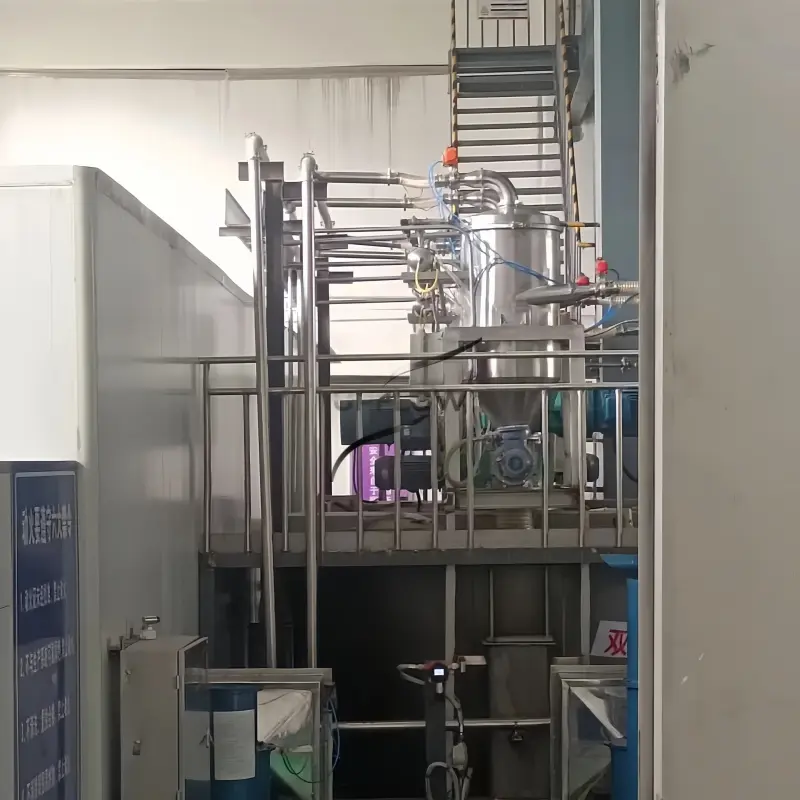
As pharmaceutical manufacturers continue to increase automation and improve capsule production efficiency, the handling of powders before and during capsule filling has become an increasingly important part of the overall production process, because even small variations in powder flow, feeding stability, moisture content, or material distribution can influence dosing consistency and the reliability of downstream capsule filling equipment. A well-designed capsule filling powder pneumatic conveying system provides a closed and controlled method for transferring pharmaceutical powders from storage, blending, or preparation equipment to capsule filling lines while reducing manual handling, limiting dust generation, and supporting a more stable continuous production process.
What Is Capsule Filling Powder?
Capsule filling powder refers to pharmaceutical powder formulations prepared for hard or soft capsule production, although the material characteristics vary significantly according to the active pharmaceutical ingredient, excipients, formulation design, and manufacturing process. Common ingredients may include active pharmaceutical ingredients, lactose, microcrystalline cellulose, starch, magnesium stearate, colloidal silicon dioxide, herbal extracts, and other pharmaceutical excipients.
Unlike a single chemical substance, capsule filling powder does not have one universal scientific name or chemical formula because it represents a formulation category rather than a specific compound. Depending on the formulation, it may also be described as capsule powder, pharmaceutical capsule powder, encapsulation powder, capsule filling material, pharmaceutical formulation powder, or capsule-grade powder.
The bulk density of capsule filling powders can typically range from approximately 0.30 to 0.80 g/cm³, although the actual value should always be determined from the specific formulation because particle size, composition, granulation method, moisture content, and powder morphology can produce substantial differences. Many capsule filling powders are relatively fine and lightweight, and some formulations can be cohesive, hygroscopic, dusty, or electrostatic, which means that conveying conditions need to be selected according to the actual powder rather than relying only on nominal production capacity.
Why Pneumatic Conveying Matters in Capsule Production
In conventional pharmaceutical production, powders may be transferred manually between containers, intermediate bins, feeders, and processing machines, which can increase operator workload and create additional opportunities for material loss, contamination, and dust exposure. For automated capsule manufacturing, a capsule filling powder pneumatic conveying system can connect upstream powder preparation equipment with intermediate storage and capsule filling machines through enclosed pipelines, creating a more continuous material transfer process.
The major advantage is not simply the ability to move powder from one point to another, but the possibility of controlling how the material is transferred throughout the process. Conveying velocity, air-to-material ratio, pressure, feeding rate, pipeline diameter, and filtration configuration can all influence the condition of the powder when it reaches the receiving equipment.
For pharmaceutical manufacturers, this becomes particularly important when the formulation has strict requirements for uniformity and reliable feeding, because excessive conveying velocity or unstable feeding can cause segregation, excessive powder fines, or irregular material flow that may affect downstream filling performance.
Capsule Filling Powder Vacuum Conveying System
A capsule filling powder vacuum conveying system is particularly suitable when the production layout requires enclosed transfer from one or several powder sources to a receiving hopper, intermediate vessel, or capsule filling machine. By creating a negative-pressure conveying environment, the system can draw powder through a sealed pipeline while keeping the transfer route enclosed.
Vacuum conveying can also simplify the connection between multiple upstream points and a central receiving station, which is useful when pharmaceutical production lines need to handle different batches or materials within a controlled process. Filtration at the receiving point separates the conveying air from the transported powder, allowing the powder to remain inside the process while the conveying air is cleaned before being discharged.
For sensitive formulations, the conveying system can be configured with appropriate air velocity and conveying conditions to reduce unnecessary mechanical impact, while the pipeline and contact components can be designed according to the required pharmaceutical hygiene standards.
Capsule Filling Powder Feeding System for Stable Dosing
A stable capsule filling powder feeding system is essential because the pneumatic conveying process does not end when the powder reaches the receiving hopper; the material must then be supplied consistently to the capsule filling machine without creating large fluctuations in powder level or feeding rate.
A properly engineered system can combine storage hoppers, level sensors, rotary valves or other suitable feeding devices, weighing components, filters, and automated controls to maintain a stable supply of powder. Depending on the formulation, the feeding section may also incorporate agitation or bridging-prevention measures when the powder has poor flowability or tends to form arches inside the hopper.
The objective is to establish a controlled relationship between powder conveying and downstream capsule filling, so that the material supply remains stable even when the filling machine operates continuously at high production rates.
Low-Pressure Conveying for Pharmaceutical Capsule Powder
A capsule filling powder low-pressure conveying system can be considered when the formulation is sensitive to excessive airflow, particle degradation, or unnecessary pneumatic stress. Rather than maximizing conveying speed, low-pressure conveying focuses on maintaining sufficient transport capability while controlling the energy and air conditions applied to the powder.
This approach can be useful for pharmaceutical formulations containing fragile particles, agglomerated powders, or mixtures in which particle-size distribution must remain relatively stable during transfer. The final conveying parameters should be established according to powder testing, pipeline length, elevation, required throughput, and the configuration of the receiving equipment.
Low-pressure transport can also help reduce unnecessary dust generation when the system is properly balanced, particularly when combined with appropriate feeding control and filtration.
Capsule Filling Powder Pneumatic Conveyor Design
A capsule filling powder pneumatic conveyor is more than a blower connected to a pipeline, because pharmaceutical powder transfer requires coordinated design of the powder source, feeding mechanism, conveying line, separation equipment, filtration, receiving hopper, and control system.
Pipeline diameter should be selected according to the required conveying capacity and powder properties, while elbows and connection points should be considered carefully because changes in direction can influence pressure loss, wear, powder accumulation, and particle impact. The receiving station should also provide sufficient volume for stable powder separation and temporary storage before the material enters the capsule filling process.
For pharmaceutical applications, stainless steel is commonly selected for product-contact components because it provides a durable, cleanable surface and is suitable for hygienic equipment construction. Surface finish, weld quality, dead-space reduction, gasket selection, and accessibility for inspection and cleaning should all be considered during system engineering.
Preventing Powder Segregation During Conveying
Powder segregation is one of the important considerations in capsule manufacturing because a formulation may contain active ingredients and excipients with different particle sizes, densities, and flow characteristics. If the conveying process causes excessive separation between components, the composition of the material reaching the filling machine may not remain fully representative of the original blend.
A capsule filling powder pneumatic conveying system should therefore be designed around the behavior of the complete formulation rather than the characteristics of only one ingredient. Conveying velocity, feeding method, pipeline geometry, receiving hopper design, and discharge method should work together to minimize unnecessary changes in the powder mixture.
In some applications, pneumatic conveying may be integrated with intermediate blending or controlled hopper discharge to maintain a more consistent material condition before capsule filling.
Automation and Process Monitoring
Modern pharmaceutical powder handling increasingly depends on automation because operators need reliable information about material levels, conveying pressure, filter condition, feeding status, and system alarms without manually checking every transfer point.
An automated capsule filling powder feeding system can use level sensors, pressure transmitters, differential-pressure monitoring, valve feedback, and PLC-based control logic to coordinate the conveying cycle and powder supply. When the receiving hopper reaches a defined level, the system can stop or adjust the upstream conveying sequence, while the capsule filling machine continues receiving powder under controlled conditions.
This type of automation can reduce unnecessary manual intervention and provide better process repeatability, while production data can also support maintenance planning and troubleshooting.
Hygienic Design for Pharmaceutical Powder Transfer
Because capsule production is closely associated with product quality and contamination control, the conveying system should be designed as part of the pharmaceutical production environment rather than treated as an isolated material transport machine. Enclosed pipelines can reduce direct operator contact with powders, while suitable filters and sealed connections help control airborne particles during transfer.
Cleaning and changeover requirements should also be considered from the beginning of the design process. Smooth internal surfaces, minimized dead zones, accessible components, and appropriate connection designs can make inspection and cleaning more practical, particularly for facilities that manufacture multiple capsule formulations.
For manufacturers handling different pharmaceutical products, the capsule filling powder vacuum conveying system can also be configured around batch-based transfer sequences, helping operators establish clearer separation between material batches and production stages.
Choosing the Right Capsule Powder Conveying Solution
Selecting the correct system requires more than calculating the required conveying capacity. Powder bulk density, particle size distribution, moisture content, flowability, electrostatic behavior, formulation composition, required throughput, conveying distance, vertical lift, number of feeding points, and receiving equipment should all be evaluated before the equipment is designed.
A practical capsule filling powder pneumatic conveying system should balance conveying efficiency with powder quality, feeding stability, hygienic requirements, automation, and maintenance accessibility. Vacuum conveying, low-pressure conveying, or another pneumatic configuration may be appropriate depending on the actual process conditions.
For pharmaceutical manufacturers, laboratory powder testing and engineering evaluation can provide useful information before final equipment selection, particularly when the powder has poor flowability or when capsule filling accuracy is highly sensitive to material feeding conditions.
Conclusion
As pharmaceutical production moves toward higher levels of automation, reliable powder transfer is becoming an increasingly important part of capsule manufacturing. A properly engineered capsule filling powder pneumatic conveying system can provide enclosed material transport, stable feeding, reduced manual handling, and better integration between powder preparation and capsule filling equipment.
The most effective solution is not necessarily the system with the highest conveying speed, but the one that matches the formulation’s physical properties, production capacity, hygiene requirements, and downstream filling process. By combining controlled pneumatic transport with a reliable capsule filling powder feeding system, suitable vacuum or low-pressure conveying technology, effective filtration, and automated monitoring, pharmaceutical manufacturers can build a more stable and efficient powder handling process for modern capsule production.