
In industrial powder processing, the performance of a mixing line depends not only on the mixer itself but also on how raw materials are supplied, weighed and discharged throughout each production cycle. When powder feeding equipment and industrial mixers operate without proper coordination, the production line may experience unnecessary waiting time, unstable material supply, inaccurate batch quantities or delays between mixing and discharge.
For food, chemical, pharmaceutical and battery material manufacturers, an effective powder feeding and mixing system should coordinate material availability, dosing accuracy, mixer capacity and production cycle time through an integrated equipment and control strategy.
This article explains how to coordinate powder dosing and mixer operation to improve production efficiency and maintain consistent batch processing.
1. Why Feeding and Mixing Cycles Need to Be Coordinated
A typical batch powder processing line includes raw material storage, feeding equipment, weighing hoppers, a mixer and downstream discharge or conveying equipment.
If the mixer is ready to receive materials but the dosing system has not completed ingredient preparation, the mixer must wait. Similarly, if the next batch is not prepared before the current mixing and discharge cycle finishes, additional production downtime may occur.
The overall production cycle therefore depends on several interconnected operations, including ingredient feeding, weighing, material transfer, mixing, discharge and equipment preparation.
Engineers should evaluate these operations together rather than selecting the mixer and powder feeder independently. The required batch capacity, individual ingredient quantities, feeding rates and mixing time should all be considered during system design.
2. Calculate Feeding Capacity According to Mixer Requirements
The feeding system must deliver the required material quantity within the available charging time without exceeding the receiving capacity of the mixer.
For example, a mixer designed for a 1,000 kg batch may receive several powder ingredients from individual screw feeders or a common weighing hopper. The feeding arrangement should account for the total batch weight as well as the quantity and flow characteristics of each ingredient.
Important design parameters include:
Maximum and minimum batch weight.
Individual ingredient quantities.
Required feeding rate for each material.
Mixer usable volume and loading capacity.
Material bulk density and flowability.
Available charging time.
Downstream discharge capacity.
For multi-ingredient applications, the feeding system may use sequential weighing, parallel dosing or a combination of both, depending on the required production cycle and installation budget.
The objective is to ensure that the feeding process can supply the mixer reliably without creating an upstream bottleneck.
3. Coordinate Ingredient Feeding and Mixer Charging Sequence
The order in which materials enter a mixer can affect the production process, particularly when different powders have different bulk densities, particle sizes or flow characteristics.
A PLC-controlled powder dosing system can execute a predefined charging sequence according to the production recipe, allowing major ingredients, minor ingredients and other formulation components to enter the mixer at their specified stages.
Depending on the process, ingredients may be weighed individually before transfer, dosed directly into the mixer or supplied through an intermediate weighing vessel.
Direct feeding can reduce transfer points and equipment requirements, while an intermediate weighing hopper can provide clearer batch measurement and separate the dosing operation from mixer availability.
The appropriate configuration depends on the required dosing accuracy, material behavior, available installation height and production throughput.
4. Use PLC Interlocks to Synchronize Feeding and Mixing
An automatic powder feeding and mixing system requires coordinated control signals between the feeders, weighing equipment, mixer and discharge devices.
For example, the PLC can check whether the mixer is ready to receive materials, the discharge valve is closed, the correct recipe has been selected and the weighing system has reached the required target before releasing the next charging operation.
Typical control conditions include:
Mixer ready and available for charging.
Correct production recipe selected.
Required material quantity verified.
Feeding equipment available.
Mixer discharge valve in the correct position.
Downstream equipment ready to receive discharged material.
After charging is completed, the control system can start the programmed mixing cycle and prevent additional material feeding unless the recipe and process sequence permit it.
For larger production lines, defined equipment handshakes and interlocks help coordinate several process units and prevent one operation from starting before the receiving equipment is ready.
5. Reduce Waiting Time Between Consecutive Batches
One practical way to improve mixer utilization is to prepare the ingredients for the next batch while the current batch is being mixed.
For example, an independent weighing hopper or buffer vessel can prepare the next batch of ingredients without interfering with the mixer currently in operation. Once the current batch has been discharged and the mixer is ready, the prepared materials can be transferred into the mixer.
This arrangement can reduce the waiting time between batches, although its feasibility depends on available space, weighing accuracy, material stability and the possibility of separating the dosing and mixing operations.
The complete cycle should include charging, mixing, discharge and any required cleaning or inspection time, because optimizing only the mixing duration does not necessarily increase the actual production output.
6. Integrate Powder Conveying, Dosing and Mixing Equipment
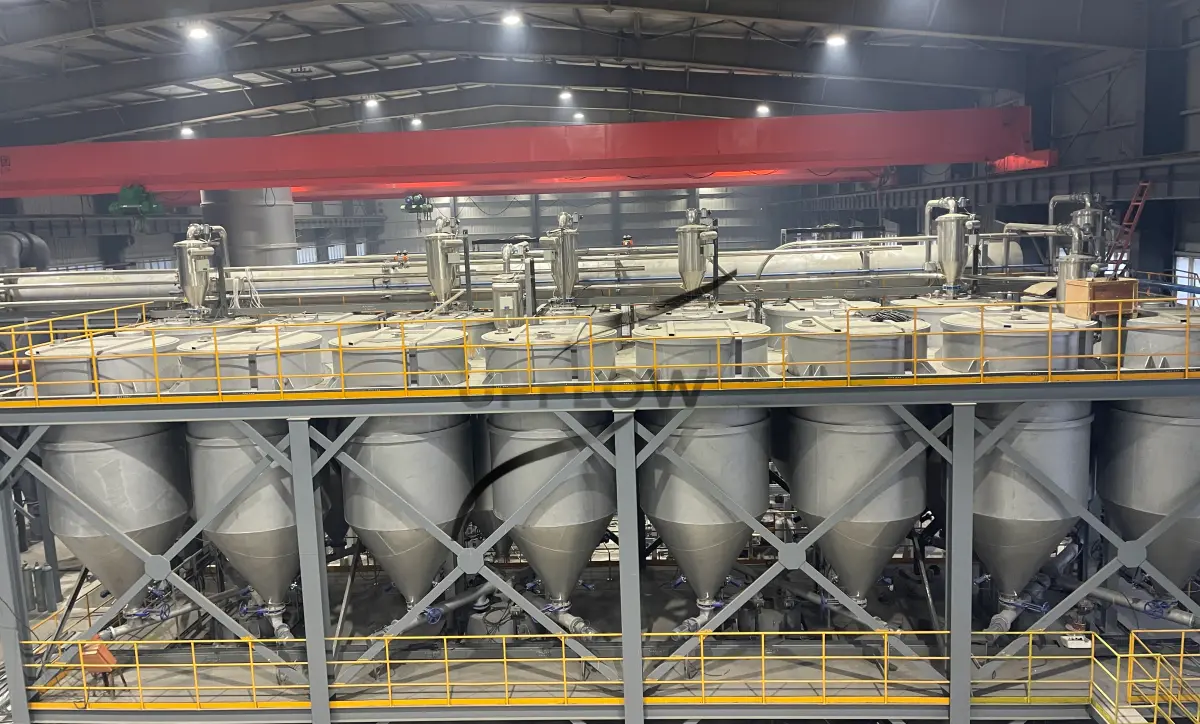
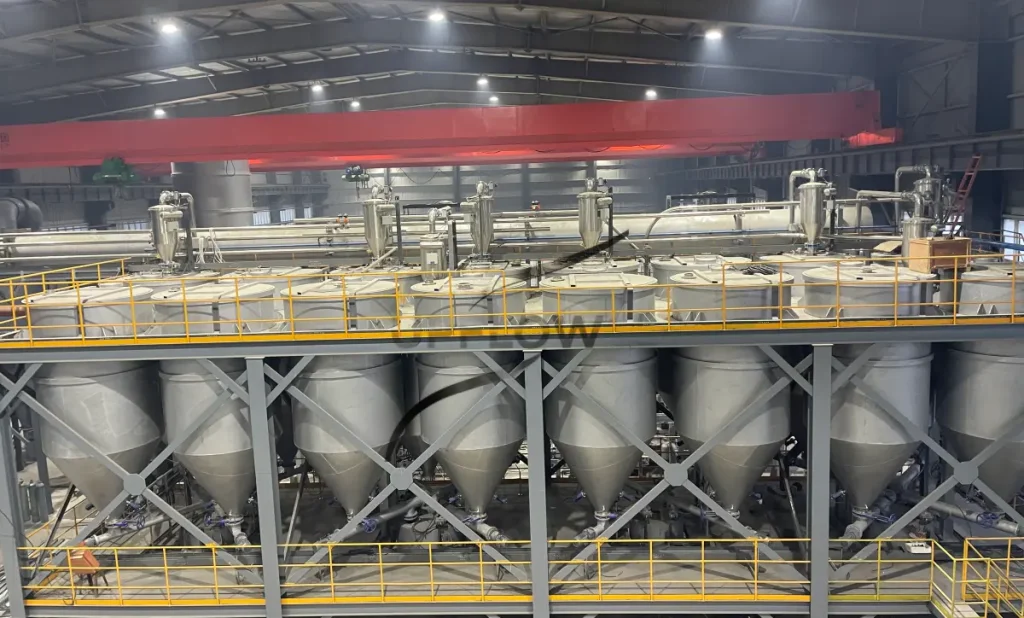
A complete industrial powder feeding and mixing system may combine bulk bag unloading stations, storage hoppers, screw feeders, weighing units, pneumatic conveying pipelines, mixers and dust collection equipment.
The material transfer route should be designed according to the distance between equipment, required conveying capacity, available vertical space and powder flow characteristics.
UPFLOW provides customized Automatic Batching Systems for multi-ingredient weighing and dosing applications.
For enclosed powder transfer between storage and production equipment, a Pneumatic Conveying System can be integrated with the feeding arrangement, while a Big Bag Unloading System can support upstream bulk material receiving and feeding.
The mechanical interfaces, electrical signals, control sequence and dust collection requirements should be defined together during the engineering stage.
7. UPFLOW Project References
Artificial Graphite Airflow Mixing Project
UPFLOW has supplied 12 airflow mixing machines to a battery material manufacturer through four separate contracts.
Each machine has a design volume of 60 m³ and a maximum loading weight of 30 tonnes per batch, with a required mixing cycle of no more than 30 minutes and mixing uniformity of CV ≤5%.
The system also includes coordinated powder feeding, weighing equipment, PLC and HMI control, and a discharge arrangement connected to the customer’s pneumatic conveying process.
This project demonstrates the importance of coordinating material feeding, large-capacity mixing and downstream powder transfer within one production process.
Read more about the Artificial Graphite Airflow Mixing Project.
Magnesium Silicate Pneumatic Conveying and Batching Project
UPFLOW supplied a customized system integrating manual bag dumping, pneumatic conveying, weighing hoppers, screw feeding and centralized control.
This project provides an engineering reference for coordinating raw material feeding, weighing and downstream processing equipment.
Read more about the Magnesium Silicate Conveying and Batching Project.
European Anode Material Big Bag Feeding Project
UPFLOW supplied multiple big bag feeding systems for a European anode material manufacturer, supporting the customer’s battery material handling process.
The project demonstrates how bulk bag unloading equipment can be integrated into an upstream powder feeding arrangement for industrial production.
Read more about the European Anode Material Big Bag Feeding Project.
8. Frequently Asked Questions
Q1. How can powder feeding and mixer operation be synchronized?
A PLC-controlled system can coordinate feeder operation, weighing signals, mixer availability, charging sequence and discharge status according to predefined process conditions.
Q2. Should powder ingredients be weighed before entering the mixer?
For batch processes requiring defined ingredient quantities, weighing materials in individual or shared weighing hoppers can help control batch composition. Direct gravimetric feeding may also be suitable for certain configurations.
Q3. Can the next batch be prepared while the mixer is running?
Yes. An independent weighing hopper or buffer vessel can prepare the next batch during the current mixing cycle, provided that the material handling arrangement and production sequence allow it.
Q4. What determines the feeding time of a powder mixer?
Feeding time depends on batch weight, material flowability, feeder capacity, dosing accuracy, transfer distance and the number of ingredients.
Q5. What information is needed to design a powder feeding and mixing system?
Provide the material list, bulk density, particle size, batch weight, required mixing time, feeding capacity, mixer specifications, equipment layout and automation requirements.
Conclusion
Efficient powder dosing into industrial mixers requires coordinated design of feeding equipment, weighing units, mixer capacity, PLC control and downstream discharge systems.
By matching feeding capacity to the mixing cycle, defining clear equipment interlocks and preparing subsequent batches where practical, manufacturers can reduce unnecessary waiting time and improve overall production coordination.
UPFLOW provides customized powder feeding, automatic batching and pneumatic conveying solutions according to material characteristics, batch capacity and production requirements.
Planning a powder feeding and mixing project? Contact UPFLOW with your material specifications, mixer capacity, target batch time and equipment layout to discuss a suitable engineering configuration.