
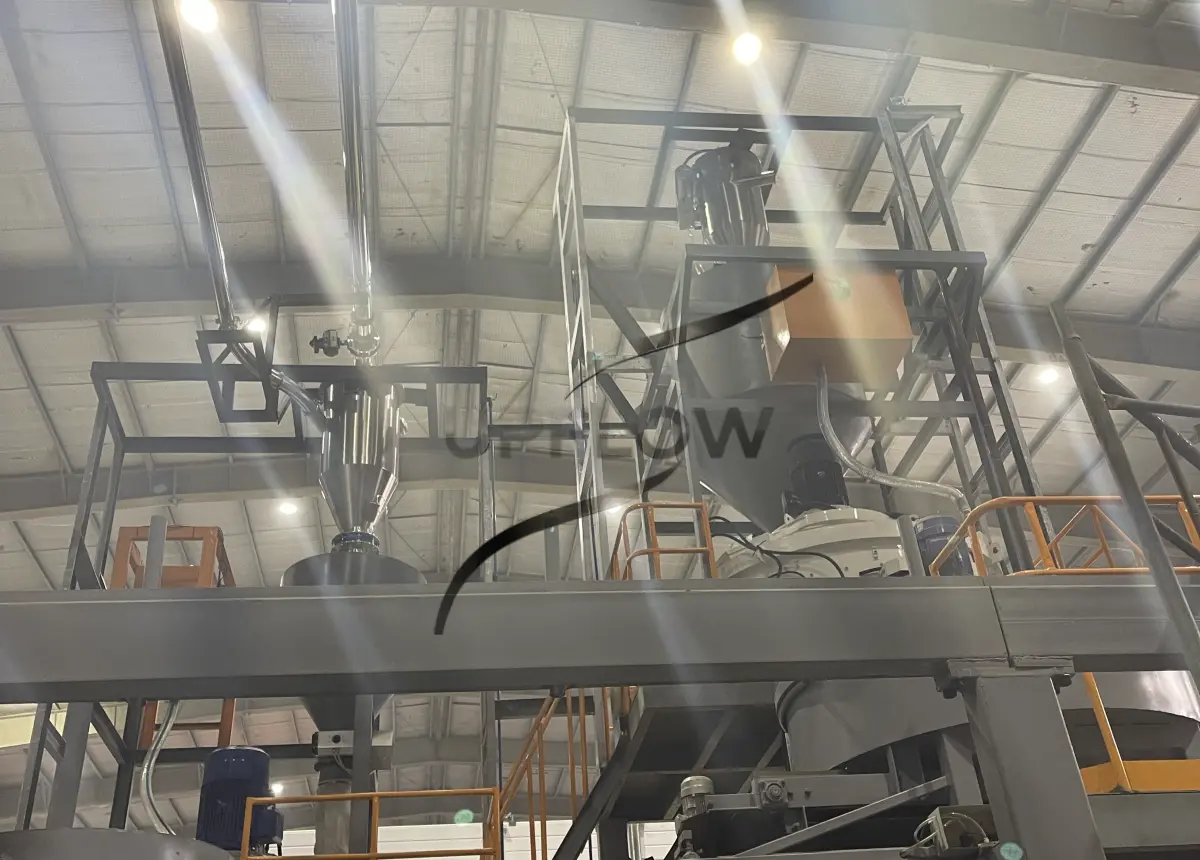
In industrial powder processing plants, several manual bag dump stations may be required to supply raw materials to a centralized storage hopper, mixer, reactor or production line. Instead of installing an independent vacuum conveying system for every feeding station, manufacturers may consider a centralized vacuum conveying arrangement that connects multiple material pickup points to shared conveying equipment.
However, operating several bag dump stations through one conveying network requires careful pipeline design and valve sequencing. If multiple pickup branches are opened simultaneously when the system is designed for sequential operation, the conveying airflow may become unstable, material transfer may be interrupted and unwanted mixing between different powder sources may occur.
A properly designed multiple bag dump station vacuum conveying system should therefore coordinate pneumatic valves, vacuum generation, receiver capacity, material selection and PLC control to ensure that each feeding point operates according to the required production sequence.
1. How Does a Centralized Vacuum Conveying System Work?
A centralized vacuum conveying system connects several material feeding stations to a common conveying network, allowing powder to be transferred from different locations to one or more receiving vessels.
A typical configuration may include:
Multiple manual bag dump stations with dust collection.
Individual material pickup connections.
Pneumatic isolation or selector valves.
Common vacuum conveying pipelines.
A centralized vacuum source.
Vacuum receiver with filter assembly.
Discharge valves and downstream storage hoppers.
PLC control cabinet and operating interface.
During operation, the PLC selects the required feeding station, opens the corresponding pipeline valves and activates the vacuum conveying equipment. Powder is drawn from the selected bag dumping station through the designated pipeline branch and transferred into the receiving unit.
After the required conveying cycle is completed, the system isolates the active branch and prepares for the next feeding station.
The exact configuration depends on whether different stations supply the same material, different materials or separate production destinations.
2. Why Is Valve Sequencing Important?
Valve sequencing determines which material pickup point is connected to the vacuum conveying system at a particular stage of operation.
In a sequential conveying arrangement, only the selected feeding branch should normally be connected to the active conveying route, while the remaining branches stay isolated.
If two or more pickup branches are opened unintentionally, the vacuum airflow may be distributed between them, reducing the available conveying performance at the intended pickup point. Unused branches may also draw ambient air, making it more difficult to maintain the required operating conditions.
For applications handling different powder grades, incorrect valve sequencing may additionally create material mixing inside common pipelines or receiving equipment.
A suitable valve control strategy should therefore define:
Which bag dump station is authorized to operate.
Which branch isolation valves must open.
Which unused branches must remain closed.
When the vacuum source can start.
When the receiver can accept material.
When the conveying branch must be isolated.
When the next feeding station can be selected.
The objective is to ensure that the conveying route is correctly established before material transfer begins.
3. Design the Pipeline Branches and Isolation Valves
The pipeline network should be designed according to the number of bag dump stations, their positions, conveying distances and required material transfer routes.
For example, a factory with three manual bag dump stations may use three independent pickup branches connected to a common conveying header. Each branch can have an individual pneumatic isolation valve, allowing the control system to select the required feeding point.
Important design considerations include:
Branch pipeline diameter: Each branch should be evaluated according to its required conveying capacity and material characteristics rather than automatically using the same diameter for every connection.
Pipeline resistance: Different branch lengths, bends and elevation changes can create different pressure losses, so the system should be checked under the intended operating configurations.
Valve location: Isolation valves should be installed at suitable positions to separate inactive branches and provide convenient maintenance access.
Material retention: Branch connections, elbows and valve cavities should be designed to minimize powder accumulation, especially when different materials are conveyed through the same network.
Common pipeline arrangement: The shared pipeline should be evaluated according to the actual conveying route, maximum simultaneous demand and whether materials are allowed to share common sections.
For applications requiring frequent material changeovers, detachable connections or dedicated pipelines may be considered to simplify cleaning and reduce cross-contamination risks.
4. Establish a PLC Valve Sequencing Procedure
A PLC-controlled vacuum conveying system can automatically coordinate valve positions, vacuum generation, receiver status and material feeding operations.
A typical sequential operating process may include:
The operator selects the required bag dump station through the HMI.
The PLC checks that the receiving hopper has sufficient available capacity.
The selected branch isolation valve opens while other feeding branches remain closed.
The PLC confirms the required valve position and starts the vacuum source.
Material is transferred from the selected bag dump station to the vacuum receiver.
When the conveying cycle is completed, the pickup branch is isolated according to the designed sequence.
The vacuum source stops or enters its specified standby condition.
The receiver discharges material into the designated downstream equipment.
The system confirms that the previous cycle is complete before accepting the next feeding request.
The exact sequence may differ depending on the receiver design and whether conveying, discharge and filter cleaning can overlap.
Valve position feedback, pressure monitoring, receiver level detection and alarm functions can provide additional operating confirmation.
The PLC should also prevent conflicting commands, such as opening an incompatible discharge route or starting a new conveying cycle before the required equipment conditions have been satisfied.
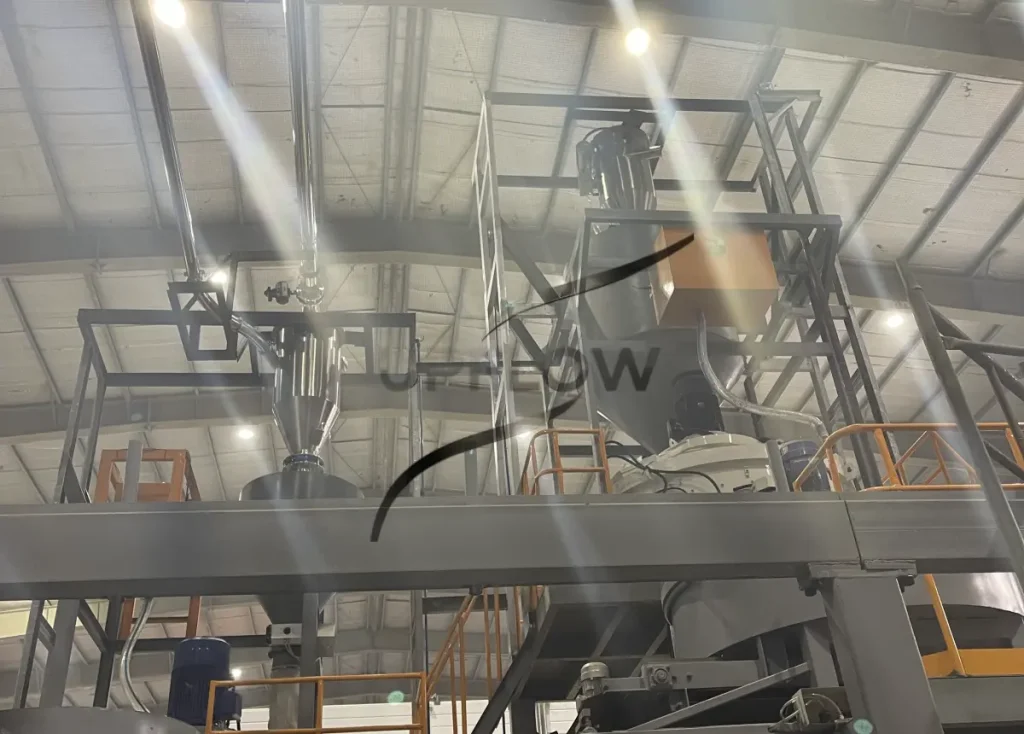
5. How to Prevent Cross-Contamination Between Different Powders
When multiple bag dump stations handle different materials, pipeline sharing requires particular attention to material compatibility and cleaning requirements.
For example, a chemical production line may use several stations to introduce different powder ingredients, while a food manufacturer may handle different grades of starch, flour or other dry ingredients through separate feeding points.
Even if each station operates independently, the common conveying pipeline and receiver may retain powder from previous transfer cycles.
To reduce cross-contamination risks, engineers should evaluate:
Whether different materials are permitted to share the same pipeline.
Whether dedicated conveying branches are required.
Whether the common receiver needs cleaning between materials.
Whether an approved air-purging or mechanical cleaning procedure is suitable.
Whether material identification and batch records are required.
Whether the cleaning condition must be verified before the next material is introduced.
For sensitive pharmaceutical materials, hazardous powders or products with strict purity requirements, dedicated material paths may be more appropriate than relying on valve sequencing alone.
6. Coordinate Dust Collection at Multiple Bag Dump Stations
Each manual bag dump station generates dust during bag opening and material discharge, so the local dust collection arrangement should be considered together with the centralized vacuum conveying system.
The dust extraction system may use individual dust collectors or a shared dust collection network, depending on the number of stations, operating conditions and required airflow.
When several feeding stations operate in the same production area, engineers should determine whether they will operate simultaneously or sequentially, because this directly affects the required dust extraction capacity.
The dust collection airflow should also be coordinated with the conveying airflow to avoid unintended interference with material pickup and transfer performance.
UPFLOW’s Manual Bag Dump Station can be configured with integrated dust collection and optional screening equipment, while the Vacuum Feeding System can provide enclosed powder transportation to downstream production equipment.
For more information about feeding station filtration and airflow, read our guide to Bag Dump Station Dust Collector Sizing: Airflow and Filter Selection.
7. UPFLOW Project References
PVC Powder Feeding and Vacuum Conveying Project
UPFLOW designed and supplied a customized PVC powder feeding and vacuum conveying system for a new materials manufacturer, connecting the bag unloading area with multiple downstream receiving points.
The project incorporated five UPFLOW-320 conveying units, bag unloading equipment, approximately 30 meters of stainless steel conveying pipeline, receiving hopper modifications, dust collection connections, level detection and centralized electrical control.
This project demonstrates the importance of coordinating multiple conveying units, pipeline connections and existing receiving equipment within one integrated powder handling arrangement.
Read more about the PVC Powder Feeding and Vacuum Conveying System Project.
Magnesium Silicate Pneumatic Conveying and Batching Project in Kenya
UPFLOW supplied a customized magnesium silicate pneumatic conveying and batching system for a Kenyan industrial customer.
The system integrated manual bag dumping, vacuum conveying, weighing hoppers, screw feeding equipment, filtration, storage and centralized control, providing an engineering reference for connecting manual powder feeding with downstream automated material handling.
Read more about the Magnesium Silicate Pneumatic Conveying and Batching System Project.
These projects demonstrate UPFLOW’s experience in integrating bag feeding, pneumatic conveying, receiving equipment and centralized control. Their published configurations should not be interpreted as identical multi-station valve sequencing installations.
8. Frequently Asked Questions
Q1. Can multiple bag dump stations share one vacuum conveying system?
Yes. Multiple feeding stations can share a centralized vacuum source and conveying network when the pipeline arrangement, conveying capacity, valve configuration and control sequence are properly designed.
Q2. Can two bag dump stations operate simultaneously?
It depends on the system design. A sequential system normally selects one feeding branch at a time, while simultaneous operation requires the vacuum source, pipeline network and receiving equipment to be designed for the combined airflow and material demand.
Q3. Why are pneumatic isolation valves needed?
Pneumatic isolation valves separate individual feeding branches, allowing the PLC to select the required material pickup point while keeping unused branches isolated.
Q4. How does PLC sequencing prevent material mixing?
PLC sequencing controls which feeding branch is connected to the active conveying route and prevents unauthorized valve combinations. However, it cannot remove residual powder already present in shared pipelines, so cleaning procedures may also be necessary.
Q5. Is a dedicated pipeline necessary for every powder?
Not always. Compatible materials may share a conveying route when cleaning and contamination requirements permit it. Dedicated pipelines may be necessary for sensitive, hazardous or incompatible materials.
Conclusion
A vacuum conveying system serving multiple bag dump stations requires coordinated design of pipeline branches, pneumatic isolation valves, receiver capacity, dust collection and PLC sequencing.
By selecting the correct feeding point, isolating unused branches and verifying equipment status before each conveying cycle, manufacturers can improve material transfer reliability and reduce the risk of unintended mixing between different powder sources.
UPFLOW provides customized manual bag dump stations, vacuum conveying systems and automated powder feeding solutions for chemical, food, pharmaceutical, battery material and other industrial applications.
Planning a centralized vacuum conveying system for multiple feeding stations? Contact UPFLOW with the number of bag dump stations, material specifications, conveying distances, receiving equipment and operating sequence to discuss a suitable system configuration.