
- admin
- Sep 14, 2026
- Custom Fabrication
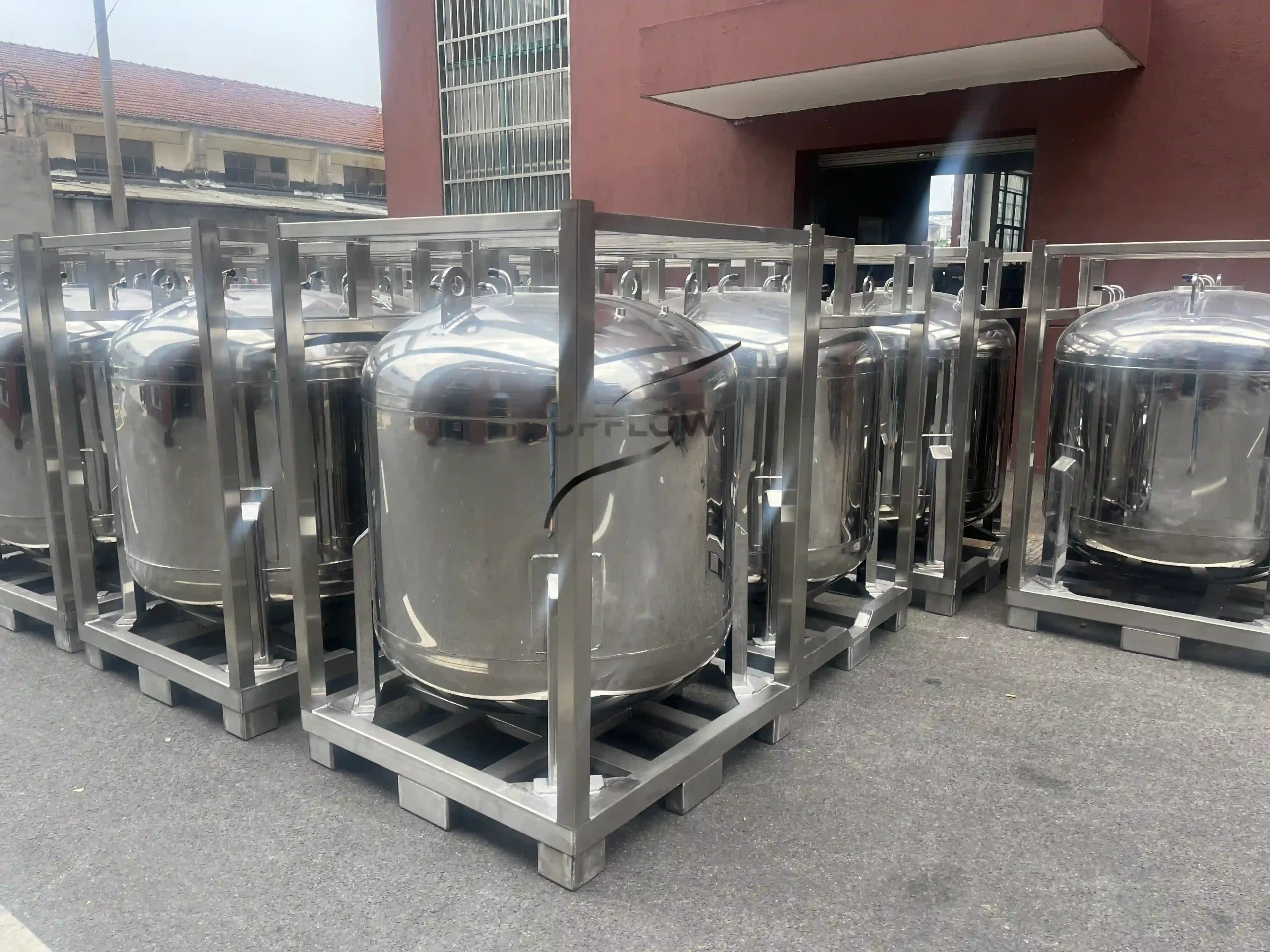
Storage tanks and silos play an essential role in many industrial processes, especially in industries involving powder handling, chemical processing, food production, pharmaceuticals, and material storage. Because different materials require different storage conditions, standard storage solutions are often unable to meet specific production requirements. Stainless Steel Tank and Silo Fabrication provides a flexible solution by allowing manufacturers to design and produce storage equipment according to material characteristics, capacity requirements, installation conditions, and customer specifications.
Unlike standard storage containers, custom fabricated tanks and silos are developed around the actual application, including stored material, operating environment, connection requirements, structural requirements, cleaning methods, and integration with other equipment. For OEM equipment manufacturers and industrial companies, a reliable fabrication partner can help transform engineering drawings and process requirements into finished storage equipment ready for installation.
Why Custom Stainless Steel Tanks and Silos Are Required
Different industries have different requirements for storage equipment. A powder storage system may require specific discharge designs and flow considerations, while a liquid storage tank may require different connection configurations, pressure considerations, and surface requirements.
Standard products often cannot provide the flexibility needed for specialized applications, especially when equipment must fit into an existing production line or work together with other machinery.
Stainless Steel Tank and Silo Fabrication allows manufacturers to customize dimensions, capacity, material selection, inlet and outlet locations, support structures, inspection openings, surface finishing, and other design details according to the customer’s process requirements.
This flexibility is especially valuable for companies that manufacture complete industrial systems and need storage equipment designed as part of a larger solution.
Material Selection for Stainless Steel Tanks and Silos
Material selection is one of the most important decisions during tank and silo fabrication because the selected material affects durability, corrosion resistance, cleanliness, maintenance requirements, and service life.
Stainless steel is widely used for industrial storage applications because it provides good corrosion resistance, strength, and a clean surface suitable for many demanding environments.
Common stainless steel grades include 304 and 316. 304 stainless steel is frequently selected for general industrial applications because it provides a good balance between performance and cost, while 316 stainless steel may be considered for environments requiring higher corrosion resistance.
The final material selection should depend on factors such as stored material properties, operating environment, cleaning requirements, temperature conditions, and customer specifications.
For this reason, professional Stainless Steel Tank and Silo Fabrication should begin with understanding the actual application rather than simply choosing the most common material grade.
Design Considerations for Powder Storage Tanks and Silos
Powder materials can create unique storage challenges because different powders may have different flow characteristics, moisture sensitivity, density, and discharge behavior.
A properly designed powder silo or storage tank may need to consider:
Material flow characteristics
Internal volume requirements
Inlet and outlet configuration
Discharge design
Cleaning requirements
Connection points
Support structure
Integration with conveying equipment
For example, powders with poor flow characteristics may require special discharge solutions, while systems connected with pneumatic conveying equipment may require specific outlet designs to ensure reliable material transfer.
A well-designed storage system should not only provide sufficient capacity but also support stable operation within the complete production process.
Fabrication Process for Stainless Steel Tanks and Silos
The manufacturing process of tanks and silos usually involves multiple fabrication stages, including material preparation, cutting, forming, welding, surface treatment, and inspection.
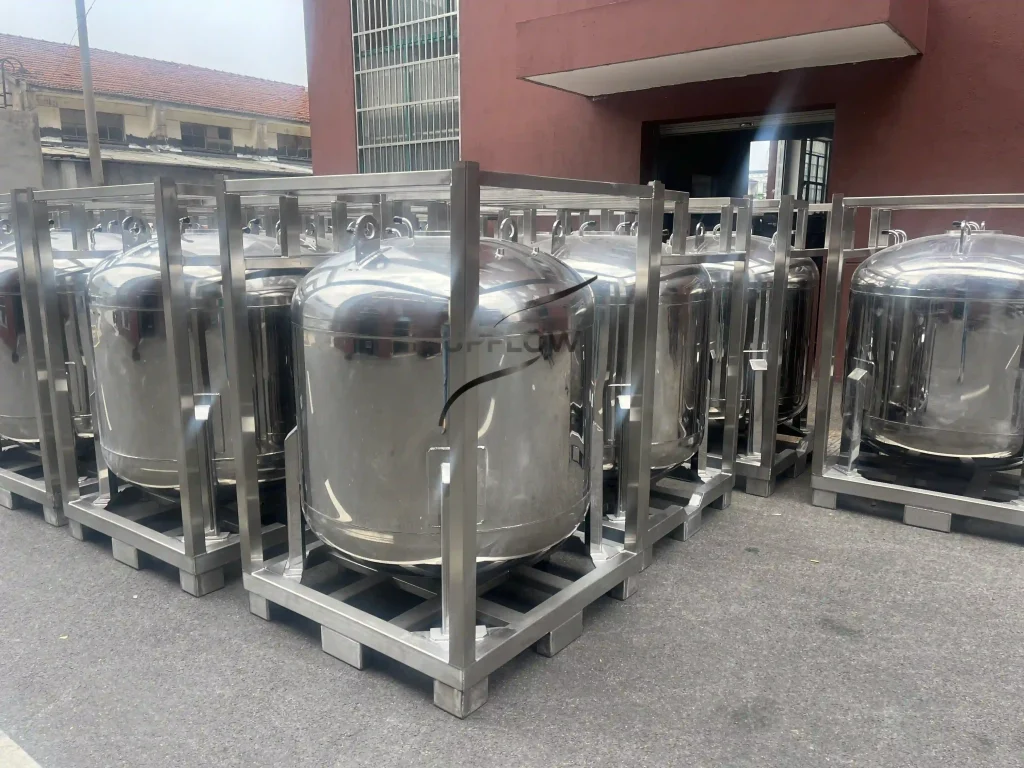
Stainless steel sheets or plates are first prepared according to engineering drawings before being formed into the required shapes. Welding is a critical process because tank and silo structures must maintain strength, dimensional accuracy, and sealing performance.
For larger storage equipment, controlling welding quality and minimizing deformation are especially important because structural distortion can affect installation accuracy and overall performance.
After fabrication, surface treatment processes such as grinding, polishing, brushing, or other finishing methods may be applied depending on the application requirements.
A complete fabrication process ensures that the final equipment meets both functional and appearance expectations.
Welding Quality and Structural Strength
Welding quality directly influences the reliability and service life of fabricated tanks and silos.
Poor welding control may result in dimensional problems, surface defects, or reduced structural performance, while professional welding processes help maintain consistent quality and durability.
For industrial storage equipment, welding requirements may include controlling joint quality, maintaining smooth surfaces, reducing contamination risks, and ensuring that the finished structure meets customer requirements.
Experienced fabrication manufacturers typically combine engineering review, skilled welding processes, and inspection procedures to produce reliable storage equipment.
Surface Finish and Cleaning Requirements
Surface finishing is an important consideration for stainless steel tanks and silos because the internal and external surfaces may directly affect maintenance, cleaning efficiency, and product quality.
Depending on the application, customers may require different surface conditions, including brushed finishes, polished surfaces, smooth internal surfaces, or other specified treatments.
For industries such as food processing, chemical production, and pharmaceutical manufacturing, surface quality can be particularly important because equipment cleanliness and maintenance efficiency directly influence production performance.
The surface finish should therefore be selected according to the stored material, cleaning method, operating environment, and industry requirements.
Integration with Industrial Systems
Modern storage equipment is often not used as an independent product but as part of a complete production system.
For example, a powder silo may need to connect with pneumatic conveying equipment, feeding systems, weighing systems, mixers, or packaging equipment.
Because of this, the tank or silo design should consider connection locations, support structures, access requirements, and compatibility with surrounding equipment.
For OEM equipment manufacturers, customized fabrication allows storage equipment to become a fully integrated part of the overall system rather than a separate standard component.
Applications of Stainless Steel Tanks and Silos
Custom stainless steel tanks and silos are widely used across different industries, including:
Chemical processing
Food and beverage production
Pharmaceutical manufacturing
Powder handling systems
Industrial material storage
Specialty manufacturing equipment
Typical fabricated products include:
Powder storage tanks
Powder silos
Liquid storage tanks
Cylindrical shells
Custom stainless steel vessels
Each application requires different engineering considerations, which is why custom fabrication is often preferred over standard storage solutions.
Choosing the Right Fabrication Partner
Selecting a reliable manufacturer for Stainless Steel Tank and Silo Fabrication requires evaluating more than production price.
Important factors include engineering capability, material control, welding experience, fabrication equipment, surface finishing capability, inspection procedures, and experience with similar industrial applications.
A capable supplier should be able to understand customer drawings, recommend practical fabrication solutions, maintain consistent quality, and support repeat production when required.
For OEM customers, communication and production stability are especially important because storage equipment is often integrated into larger industrial systems.
Supporting Industrial Equipment Through Custom Fabrication
As industrial processes become increasingly specialized, companies require storage solutions that are designed around their specific production requirements.
Stainless Steel Tank and Silo Fabrication provides the flexibility needed to manufacture customized storage equipment with appropriate materials, dimensions, structures, and connection designs.
From powder storage tanks and silos to liquid tanks and fabricated stainless steel components, a professional fabrication partner can support customers from engineering review through final production.
UPFLOW provides custom fabrication solutions for stainless steel tanks, powder silos, equipment structures, enclosures, OEM parts, and industrial components according to customer drawings and project requirements.
If you require customized storage equipment or stainless steel fabrication support, contact UPFLOW with your drawings and application details for engineering review and quotation.