
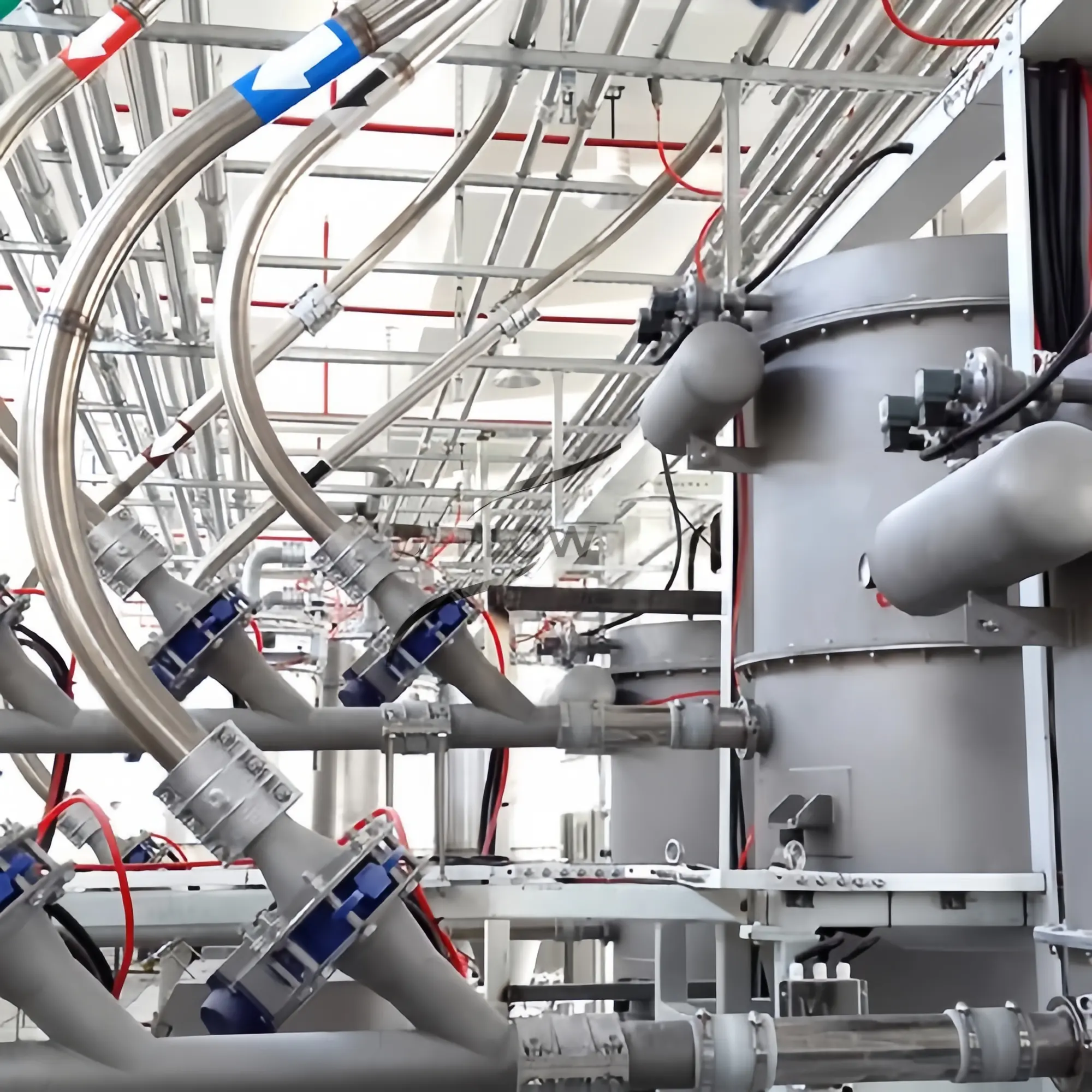
As pharmaceutical manufacturers continue to increase production capacity while maintaining strict requirements for containment, cleanliness, traceability, and process consistency, the transportation of active pharmaceutical ingredients has become an increasingly important part of modern drug manufacturing. Unlike conventional industrial powders, API materials are often high-value, highly active, and sensitive to contamination or environmental exposure, making reliable powder transfer essential for both product quality and operator protection. In this environment, the API powder pneumatic conveying system provides an enclosed and automated approach for transferring pharmaceutical powders between storage, weighing, blending, granulation, and other critical production processes.
Understanding API Powder and Its Material Characteristics
API stands for Active Pharmaceutical Ingredient, referring to the biologically active substance responsible for producing the intended therapeutic effect in a pharmaceutical formulation. API powders may also be described as active ingredients, active pharmaceutical substances, or drug substances, and they can include a wide range of chemical compounds such as small-molecule drugs, peptides, hormones, antibiotics, and other pharmaceutical substances.
Because different APIs have completely different molecular structures, there is no universal chemical formula or single density value for API powder. Depending on the specific substance, particle morphology, crystallization method, moisture content, and processing conditions, bulk density can vary considerably, commonly ranging from approximately 0.2 to 0.8 g/cm³ for many fine pharmaceutical powders.
API powders may exhibit extremely fine particle sizes, poor flowability, electrostatic behavior, hygroscopicity, high potency, or strong sensitivity to environmental conditions, while certain active ingredients can also create significant occupational exposure concerns if released into the surrounding workspace.
These characteristics make conventional open material handling unsuitable for many pharmaceutical applications, and the API powder pneumatic conveying system is therefore increasingly used to provide controlled and enclosed transportation from one process stage to another.
Why API Powders Require Specialized Conveying Technology
The handling of APIs presents a different engineering challenge from ordinary pharmaceutical excipients because the material itself may have a high pharmacological activity even when handled in relatively small quantities. Consequently, preventing powder leakage, minimizing product loss, and controlling operator exposure are essential considerations when designing a pharmaceutical material transfer process.
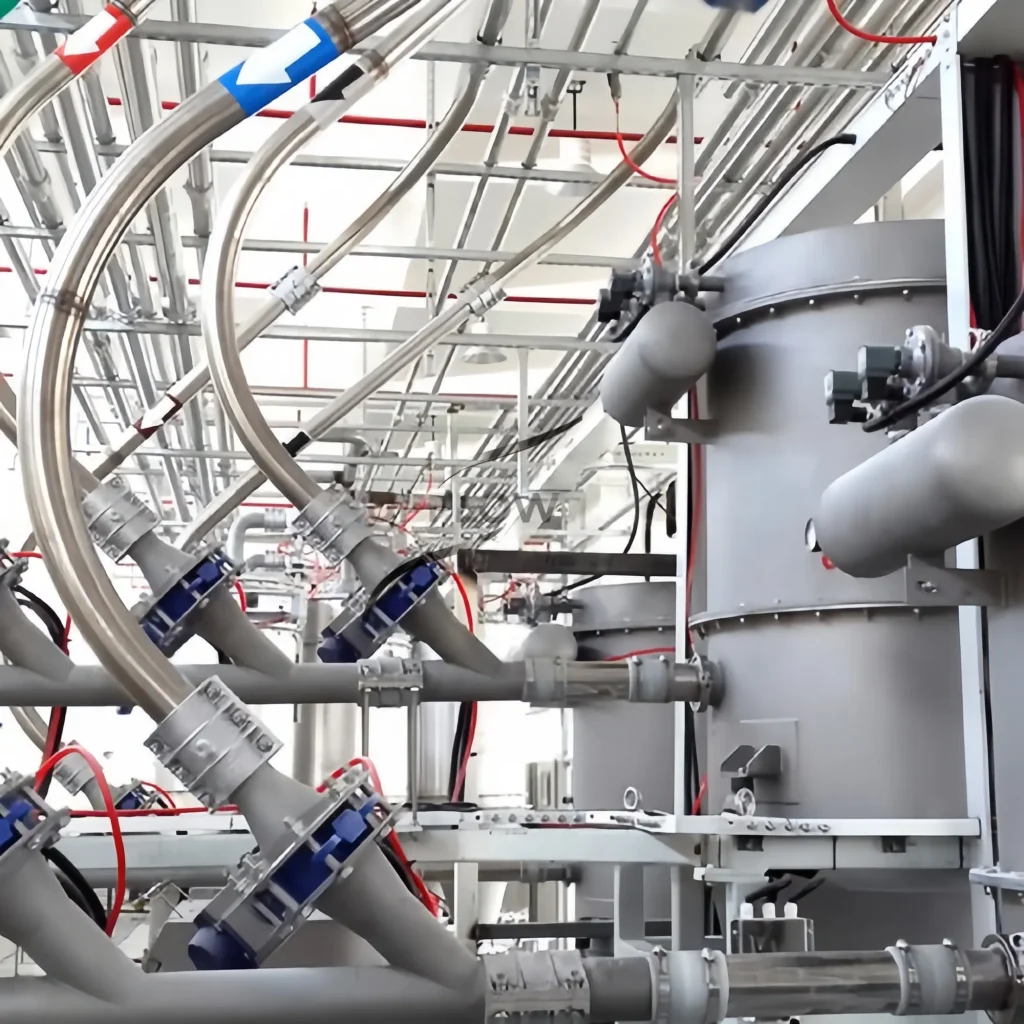
A properly engineered API powder pneumatic conveying system can transport active pharmaceutical ingredients through sealed pipelines and closed receiving equipment, significantly reducing the number of manual transfer points within the production area.
The system can also be connected to an API powder material automation system, allowing material transfer to be coordinated with weighing, batching, blending, granulation, and other production operations. This approach helps manufacturers reduce manual intervention while improving batch consistency and traceability.
For facilities handling highly valuable or potent pharmaceutical materials, an API powder pneumatic conveying manufacturer should evaluate containment requirements, material characteristics, cleaning procedures, pressure conditions, and equipment configuration before determining the most suitable conveying method.
Working Principle of an API Powder Pneumatic Conveying System
The API powder pneumatic conveying system uses controlled airflow to move pharmaceutical powder through an enclosed pipeline between a feeding point and a receiving point. Depending on the characteristics of the API and the requirements of the production process, the system can be designed around vacuum conveying, positive pressure conveying, or specially controlled low-velocity transport.
In a typical API powder positive pressure conveying system, compressed air generated by a blower or compressor provides the driving force for moving powder through the conveying pipeline. This configuration can be advantageous when material needs to be transferred over relatively long distances or supplied to multiple downstream production points.
The API powder powder conveying system can incorporate controlled feeding devices to regulate the amount of powder entering the airflow, while pressure monitoring and filtration systems help maintain stable operation throughout the conveying process.
For sensitive pharmaceutical applications, nitrogen or another suitable inert gas may also be considered where the API has particular oxidation or environmental sensitivity, although the appropriate conveying medium must always be determined according to the specific material and process requirements.
Key Components of an API Powder Conveying Installation
A complete API powder pneumatic conveying system may include vacuum receivers or pressure vessels, feeding hoppers, rotary valves, screw feeders, conveying pipelines, high-efficiency filters, dust collection equipment, discharge devices, and automated control systems.
The design of the API powder powder conveying system should pay particular attention to dead zones, internal surface finish, pipeline bends, equipment connections, and powder retention because residual material can create cleaning difficulties or increase cross-contamination risks during product changeover.
The API powder material automation system can connect these individual components through PLC-based control, enabling automatic sequence operation, pressure monitoring, material level detection, and alarm management. When integrated properly, automated control can reduce unnecessary manual operations and provide more consistent material transfer from batch to batch.
For pharmaceutical manufacturers, selecting an experienced API powder pneumatic conveying manufacturer can also help optimize the system according to the API’s flowability, bulk density, particle size, required capacity, conveying distance, and containment requirements.
Advantages of Automated API Powder Transportation
One of the major advantages of an API powder pneumatic conveying system is its ability to create an enclosed material transportation route, which can substantially reduce direct operator contact with pharmaceutical powders and minimize the possibility of airborne powder escaping during transfer.
The API powder positive pressure conveying system can provide an efficient solution for moving material between separated processing areas, while properly designed feeding and filtration equipment helps maintain stable powder flow and reduce material loss.
Meanwhile, the API powder powder conveying system can be incorporated into centralized pharmaceutical production layouts, allowing several processing units to receive material from controlled feeding points rather than requiring repeated manual handling.
The API powder material automation system further improves production efficiency by coordinating material transfer with upstream and downstream equipment, allowing manufacturers to establish more consistent automated workflows for weighing, feeding, blending, and processing.
Cleaning, Containment, and Cross-Contamination Control
For API manufacturing, conveying efficiency alone is not sufficient because equipment design must also consider cleaning, containment, and product changeover requirements. Internal pipeline surfaces should therefore be designed to minimize material accumulation, while connections and valves should be selected according to the required containment level and cleaning strategy.
A well-designed API powder pneumatic conveying system can reduce the number of open transfer operations and help create a cleaner production environment, particularly when combined with suitable filtration and closed receiving technology.
Depending on the pharmaceutical process, manufacturers may require removable components, sanitary connections, automated cleaning procedures, or dedicated conveying lines for specific products. These requirements should be determined during the engineering stage rather than added after installation.
The API powder pneumatic conveying manufacturer therefore plays an important role in evaluating the complete process rather than simply supplying individual conveying equipment.
Future Development of API Powder Conveying Systems
The pharmaceutical industry is moving toward increasingly automated and data-driven manufacturing environments, and powder transportation is becoming an important part of this transformation. Future API powder material automation systems are expected to incorporate more advanced sensors, electronic batch records, real-time monitoring, and predictive maintenance functions.
At the same time, improvements in filtration, containment technology, automated cleaning, and intelligent pressure control will allow the API powder pneumatic conveying system to support more demanding pharmaceutical manufacturing applications.
For high-value active ingredients, the combination of an API powder positive pressure conveying system, intelligent control, and a carefully designed API powder powder conveying system can provide manufacturers with a reliable approach to reducing manual handling while improving production consistency and material utilization.
Conclusion
The API powder pneumatic conveying system is becoming an important technology for pharmaceutical manufacturers seeking to improve the safety, cleanliness, and automation of active pharmaceutical ingredient handling. By transporting API powders through enclosed pipelines and integrating feeding, filtration, and automated control technologies, manufacturers can reduce manual transfer operations while maintaining stable material flow.
A complete solution combining an API powder material automation system, API powder powder conveying system, and API powder positive pressure conveying system can be customized according to the physical properties, potency, capacity, conveying distance, and containment requirements of different pharmaceutical materials.
Working with an experienced API powder pneumatic conveying manufacturer during the engineering stage allows pharmaceutical companies to develop a powder handling solution that is better aligned with their production process, cleaning strategy, containment requirements, and long-term automation objectives.