
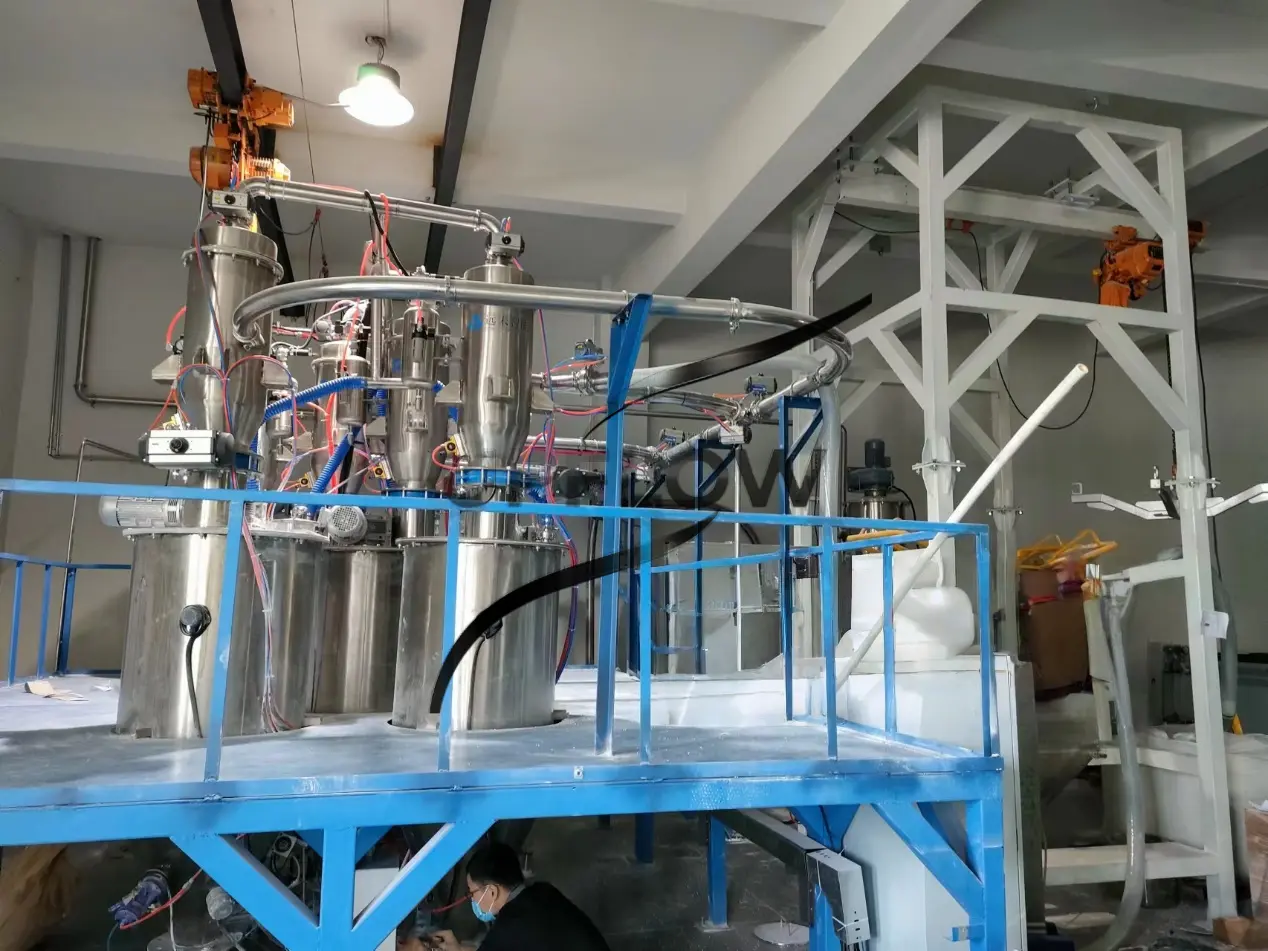
In modern manufacturing environments, efficient bulk material handling is critical to maintaining stable production and reducing operational costs. Pneumatic conveying systems have become a preferred solution for transporting powders and granular materials across various industries due to their flexibility, cleanliness, and automation capability.Learn more about our pneumatic conveying system solutions here.
From food production lines to heavy chemical processing plants, pneumatic conveying systems support continuous material transfer while minimizing contamination, dust emission, and manual handling.Understanding the key components of a pneumatic conveying system is essential for proper industry application.
Below are some of the most typical industrial applications.
1. Food and Beverage Processing
In food manufacturing, hygiene and product integrity are top priorities. Pneumatic conveying systems are widely used to transport ingredients such as flour, sugar, starch, spices, and milk powder between storage silos, mixers, and packaging lines.
Closed pipeline transport helps prevent external contamination while reducing airborne dust inside production workshops. Automated conveying also improves batch accuracy and supports consistent product quality.
Both dilute phase and dense phase systems can be applied depending on material sensitivity and production capacity requirements.
2. Chemical and Petrochemical Industry
The chemical industry often handles powders and granules that require controlled and sealed transportation. Pneumatic conveying is commonly used for:
Plastic resins
Chemical additives
Catalysts
Pigments
Polymer pellets
Because many chemical materials can be abrasive, reactive, or moisture-sensitive, enclosed conveying pipelines help maintain process safety and material stability. In some cases, inert gas conveying is used to enhance safety in explosive environments.
3. Pharmaceutical Manufacturing
Pharmaceutical production demands strict environmental control and precise material transfer. Pneumatic conveying systems are suitable for transporting fine powders between reactors, dryers, mills, and tablet presses.
Automated systems reduce manual intervention and lower the risk of cross-contamination. Integrated dust collection and filtration units help maintain cleanroom standards while protecting operators.
Compact pipeline layouts also make pneumatic conveying ideal for facilities with limited floor space.
4. Plastics and Polymer Processing
In plastics manufacturing, resin pellets and regrind materials must be transferred efficiently between storage silos, dryers, injection molding machines, and extrusion lines.
Vacuum conveying systems are particularly common in this sector. They provide flexible routing, centralized material supply, and reduced labor intensity. The ability to connect multiple machines to a central feeding station improves production efficiency and simplifies plant layout.
5. Building Materials and Cement Industry
Heavy-duty pneumatic conveying systems are widely applied in cement plants and construction material production lines. Typical materials include:
Cement powder
Fly ash
Lime
Gypsum
Mineral powders
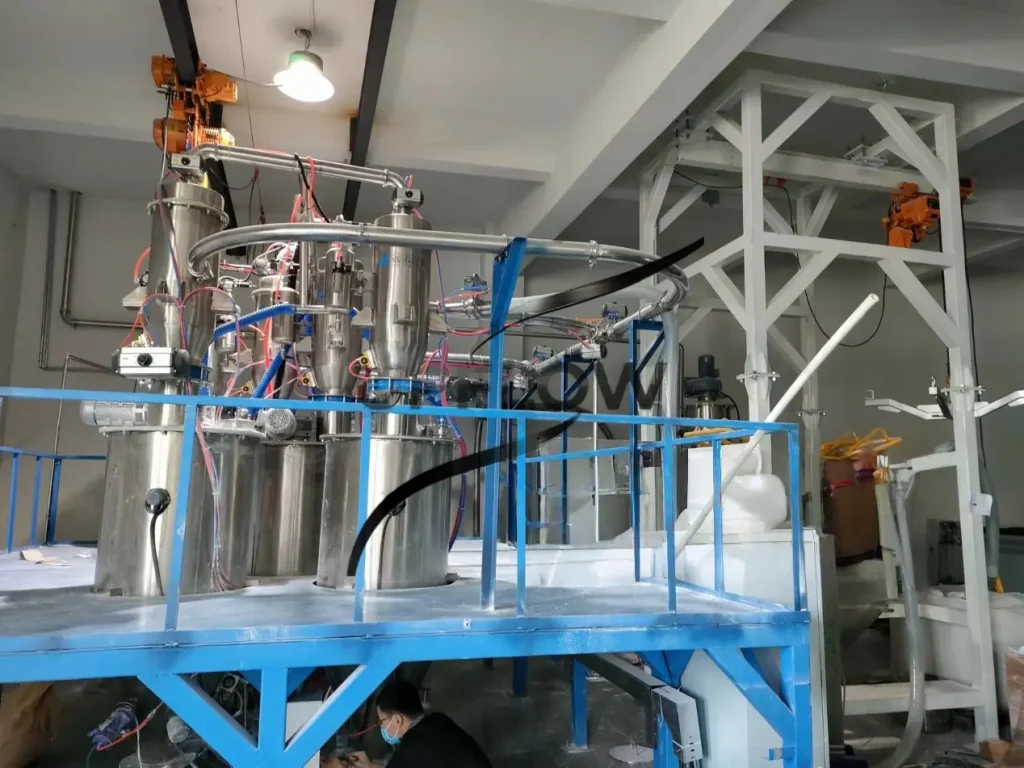
These systems are designed to handle high-capacity transport over long distances. Dense phase conveying is often selected to reduce pipeline wear and energy consumption when handling abrasive materials.
6. Metal and Mining Processing
Mining and metallurgical operations require reliable transfer of fine mineral powders and concentrates. Pneumatic conveying supports:
Ash handling systems
Metal powder transport
Slag processing
Dust recovery systems
The sealed nature of pneumatic systems reduces material loss and improves environmental compliance in facilities where dust control is essential.
7. Environmental and Waste Treatment
In environmental engineering applications, pneumatic conveying systems are used to transport sludge, ash, biomass particles, and processed waste materials.
These systems contribute to cleaner plant operation and support automated handling in waste-to-energy facilities and recycling plants.
8. New Energy and Advanced Materials Industry
With the rapid development of new energy technologies and advanced materials, pneumatic conveying systems are increasingly used in this sector to handle fine, high-value, and performance-sensitive materials.
Typical applications include the conveying of:
Lithium battery raw materials
Cathode and anode powders
Graphite and silicon-based materials
Fine chemical intermediates
Advanced functional powders
In battery and new material production lines, material purity and process stability are critical. Pneumatic conveying systems provide enclosed, contamination-free transport, helping prevent moisture absorption, foreign particle intrusion, and material loss.
Automated conveying also supports precise batching and centralized material management, which are essential for maintaining product consistency in large-scale production. For materials with strict safety requirements, systems can be designed with controlled airflow or inert gas conveying to improve operational safety.
As the new energy and advanced materials industries continue to expand, pneumatic conveying systems play an important role in supporting clean production, automation, and efficient bulk material handling.
Why Pneumatic Conveying Is Suitable Across Industries
The broad application of pneumatic conveying systems in industry is driven by several inherent advantages:
Enclosed and dust-free transport
Flexible pipeline routing
Reduced manual handling
Easy integration with automated processes
Suitable for complex plant layouts
By adjusting airflow velocity, pressure level, and system configuration, pneumatic conveying can accommodate a wide range of material characteristics and production requirements.
Conclusion
Typical applications of pneumatic conveying systems span across food processing, chemicals, pharmaceuticals, plastics, building materials, mining, and environmental industries. Their ability to provide clean, efficient, and automated bulk material transport makes them a reliable solution for modern industrial production.
As manufacturing standards continue to rise, the demand for flexible and contamination-free material handling solutions will further increase. Pneumatic conveying systems will remain a key technology supporting safe and efficient industrial operations.
For industries seeking reliable and customized bulk material handling solutions, explore our positive pressure conveying system designed to meet diverse production requirements.