When comparing China vs Europe pneumatic conveying system suppliers, many buyers initially focus on price differences, but in reality the decision is far more complex and depends on project requirements, technical expectations, and long-term operational goals, because choosing between different conveying system manufacturers is not just about cost but about finding the right balance between engineering capability, reliability, and overall system performance.
In today’s market, the traditional assumption that European suppliers always provide higher quality while Chinese suppliers only offer lower prices is no longer entirely accurate, as many Chinese pneumatic conveying suppliers now deliver engineering-level solutions with strong customization capabilities, while European manufacturers still maintain advantages in highly standardized and premium applications, making the best choice dependent on project complexity and budget rather than geography alone.
From a cost perspective, China-based pneumatic conveying system suppliers typically offer 30–60% lower prices due to advantages in manufacturing scale and supply chain integration, while European suppliers generally have higher costs driven by labor, standardization, and certification requirements, which means buyers need to evaluate whether their project truly requires high-end specifications or if a cost-effective customized solution from flexible material handling system providers can achieve similar performance.
Engineering capability is often where the real difference appears, as European conveying system manufacturers tend to rely on standardized designs and validated engineering models to ensure stability, while Chinese suppliers focus more on flexible customization, rapid iteration, and cost-performance optimization, meaning that the choice between different pneumatic conveying suppliers depends on whether the project prioritizes standardization or adaptability.
In applications such as pharmaceuticals, high-end food processing, or complex automated systems, European pneumatic conveying system suppliers may still be the preferred choice due to strict compliance requirements and advanced engineering standards, while for projects that require cost optimization, faster delivery, or customized solutions, Chinese material conveying system providers often offer a more practical and efficient option.
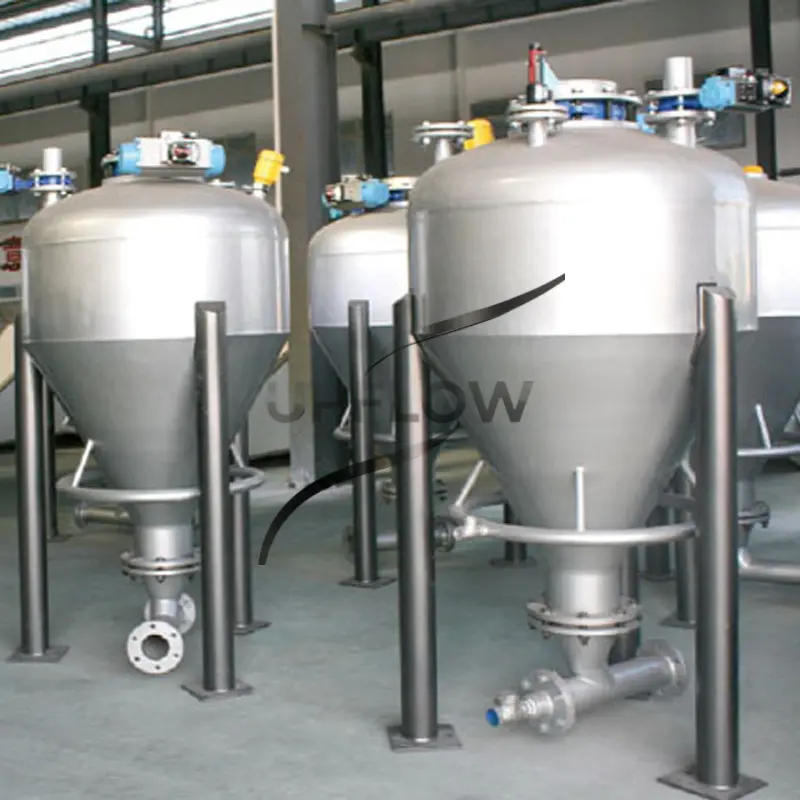
Another important factor is supply chain efficiency, as China’s well-developed industrial ecosystem allows pneumatic conveying system suppliers to achieve faster production cycles, lower manufacturing costs, and easier customization, while European manufacturers may rely on specialized suppliers and longer production timelines, which can impact both delivery time and project flexibility.
However, one of the biggest risks is not choosing between regions but selecting the wrong supplier, because poor decisions based only on price, without evaluating engineering capability, project experience, or technical support, can lead to unstable systems and higher long-term costs regardless of whether the supplier is from China or Europe, making it essential to assess the real capability of any pneumatic conveying system suppliers before making a decision.
Quality variability is often a concern when working with Chinese conveying system manufacturers, as the large number of suppliers leads to differences in engineering level and quality control, but this risk can be minimized by carefully evaluating technical expertise, reviewing similar project cases, and ensuring professional communication, which helps identify reliable pneumatic conveying suppliers capable of delivering global-standard solutions.
In practice, many global buyers are adopting a hybrid sourcing strategy, where high-end or highly regulated projects are assigned to European pneumatic conveying system suppliers, while standard or scalable projects are sourced from Chinese material handling system providers, allowing companies to balance cost, quality, and risk while optimizing their global supply chain.
Ultimately, smart buyers focus not on which region is cheaper but on total cost of ownership, including energy consumption, maintenance cost, system reliability, and downtime risk, because the most cost-effective solution is not necessarily the lowest-priced option but the one that delivers the best long-term value from experienced and capable pneumatic conveying system suppliers.