
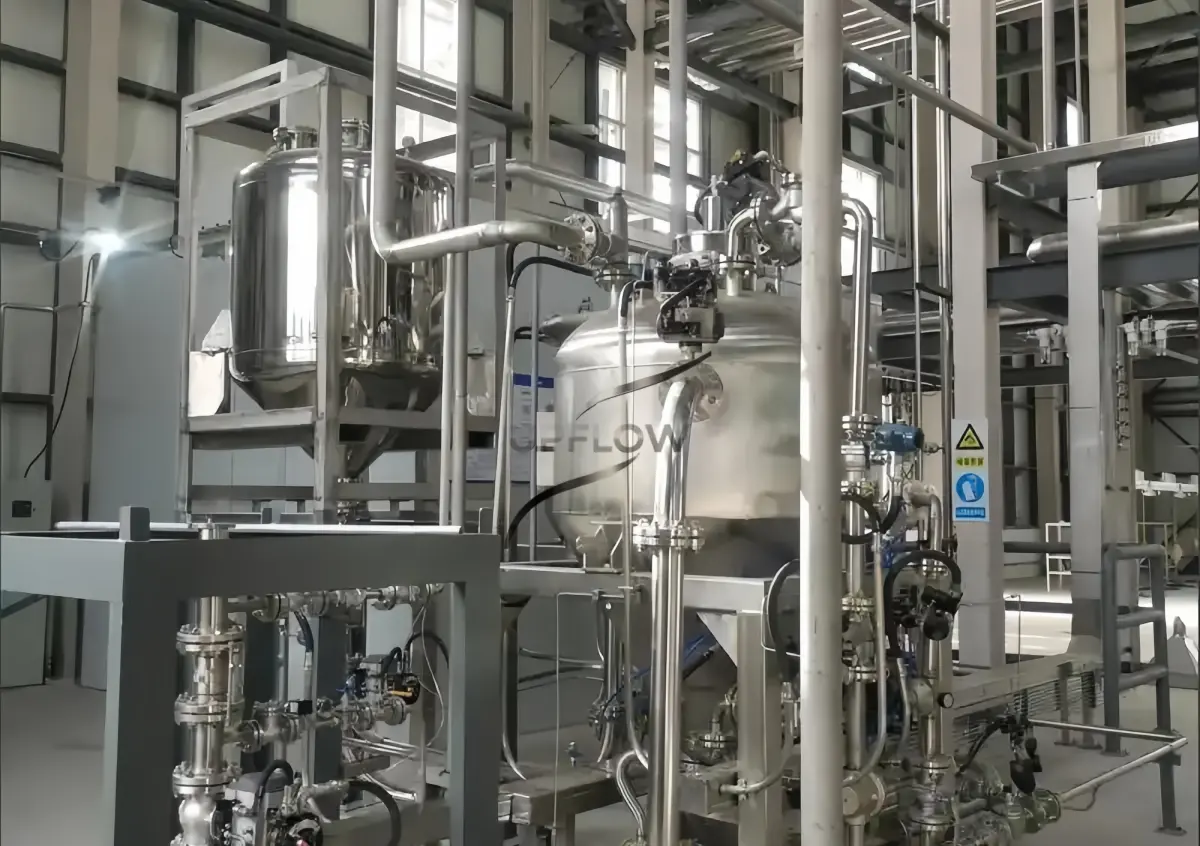
Material Profile: Characteristics of Hard Carbon Anode Powder
Hard carbon, also known as non-graphitizable carbon, hard carbon anode material, or HC powder, is widely used in sodium-ion batteries and next-generation lithium battery systems due to its stable structure, high capacity, and good cycling performance.
In industrial handling, hard carbon anode powder is typically a fine, low-density powder, with a bulk density ranging from approximately 0.3 to 0.8 g/cm³, depending on processing and particle size. It is characterized by high surface area, strong adsorption capacity, dusting tendency, and sensitivity to contamination, while also showing moderate abrasiveness and electrostatic behavior during conveying. Hard carbon materials can be classified into biomass-derived hard carbon, resin-based hard carbon, and pitch-based hard carbon powders, each requiring specific conveying conditions.
What Is a Hard Carbon Anode Pneumatic Conveying System?
A hard carbon anode conveying system is a specialized material handling solution that transports hard carbon powder through enclosed pipelines using airflow or vacuum, ensuring clean, stable, and automated transfer.
In industrial applications, it is also referred to as a closed conveying system for hard carbon anode powder, a vacuum conveying system for hard carbon materials, or a pneumatic airflow conveying system for battery anode powders. This material pneumatic conveying system for hard carbon anode materials is designed to meet the strict cleanliness and consistency requirements of battery manufacturing.
Conveying Methods for Hard Carbon Powder
Due to the lightweight and dusty nature of hard carbon powder, selecting the appropriate conveying method is essential.
For high-purity environments, a vacuum conveying system for hard carbon anode powder is commonly used, as it provides low-velocity and fully enclosed transport, minimizing dust emission and contamination. In cases requiring longer distances or higher throughput, a pneumatic airflow conveying system for hard carbon materials can be applied with controlled airflow to maintain stable transport.
As a closed powder conveying system for hard carbon anode materials, it ensures that the material remains isolated from external moisture and impurities.
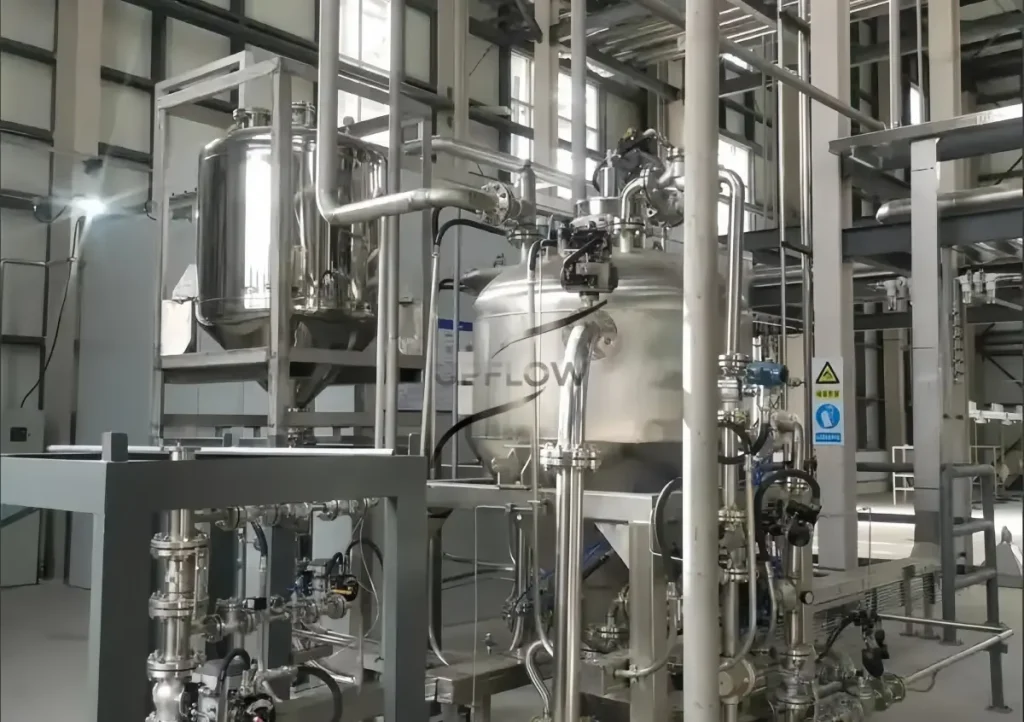
System Operation and Integration
In a typical hard carbon anode pneumatic conveying system, powder is transferred from storage silos or feeding stations into pipelines through controlled feeding devices, and then transported to downstream equipment such as mixers, reactors, or coating systems.
As a material pneumatic conveying system for hard carbon powders, it integrates advanced monitoring systems to control airflow, pressure, and feeding rates, ensuring stable conveying performance and precise dosing throughout the production process.
Advantages of Hard Carbon Anode Conveying Systems
The hard carbon anode conveying system offers several key advantages.
As a fully enclosed conveying system for hard carbon powder, it ensures dust-free operation and protects material purity, which is critical for battery performance. In addition, it supports automated feeding and flexible layout, functioning as an efficient powder conveying system for battery anode materials.
Furthermore, the system reduces material loss, improves production consistency, and enhances operational efficiency in advanced energy storage applications.
Conclusion
The hard carbon anode pneumatic conveying system provides a reliable and efficient solution for handling sensitive battery materials. By integrating closed conveying systems, airflow conveying systems, and vacuum conveying systems for hard carbon anode powders, manufacturers can achieve clean, stable, and high-efficiency material transfer in modern battery production environments.