
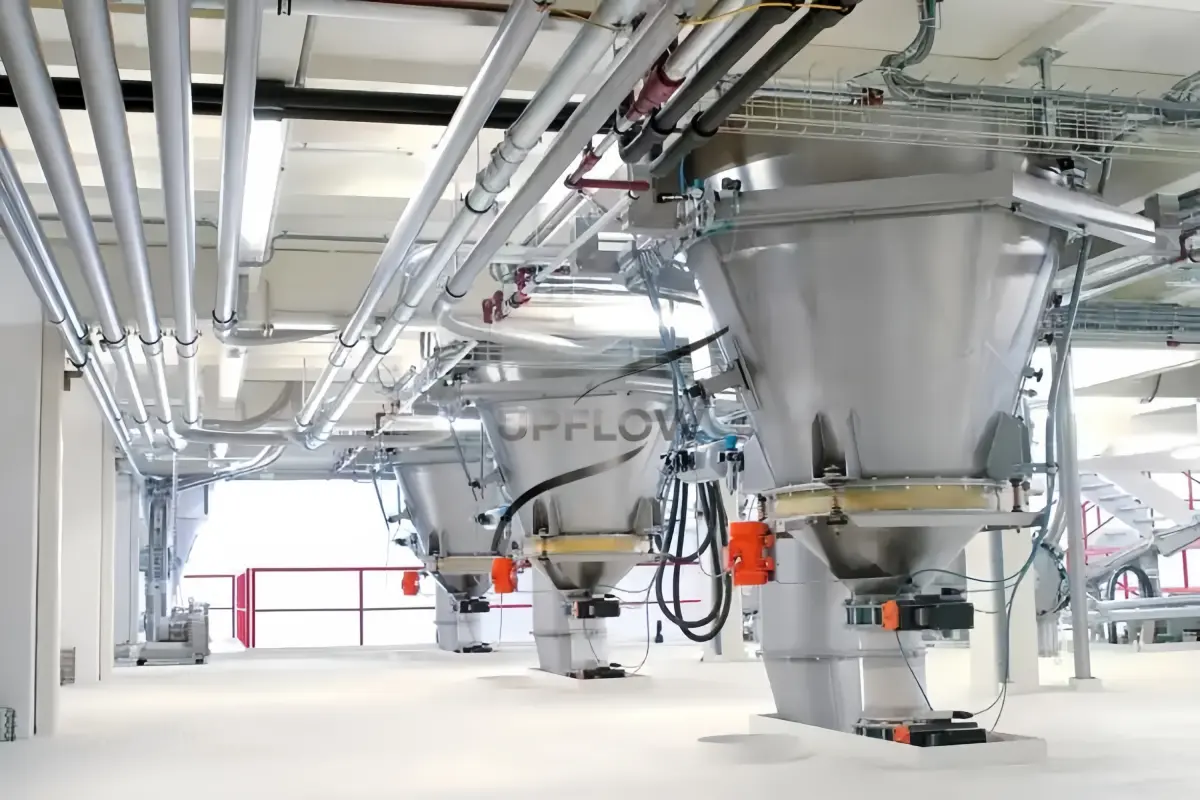
Material Overview: Properties of Lithium Carbonate
Lithium carbonate, commonly known as Li₂CO₃, is a critical raw material widely used in lithium-ion batteries, ceramics, glass manufacturing, and pharmaceutical applications, and it is also referred to as battery-grade lithium carbonate, industrial-grade lithium carbonate, or lithium salt powder depending on purity and application.
In industrial handling, lithium carbonate is typically processed as a fine white powder, with a bulk density ranging from approximately 0.5 to 0.9 g/cm³, and it is characterized by fine particle size, high chemical purity requirements, slight hygroscopic behavior, and a tendency to generate dust during handling. Lithium carbonate can be classified into battery-grade (high purity, used in energy storage applications) and technical-grade (used in ceramics and glass industries), each requiring precise and contamination-free conveying systems to maintain product quality.
What Is a Lithium Carbonate Pneumatic Conveying System?
A lithium carbonate pneumatic conveying system is an advanced material handling solution that uses airflow or gas flow as the driving force to transport lithium carbonate powder through enclosed pipelines in a controlled and automated manner.
In industrial applications, it is also known as a positive pressure conveying system for lithium carbonate powder, a negative pressure conveying system for lithium carbonate materials, a powder conveying system for lithium salt processing, or a fully enclosed conveying system for battery-grade lithium carbonate, depending on system configuration and production requirements.
By forming a stable gas-solid flow inside pipelines, this powder conveying system for lithium carbonate materials ensures continuous, dust-free, and efficient transport, which is especially important in high-purity applications such as battery production.
Conveying Principle and System Operation
The lithium carbonate pneumatic conveying system operates based on gas-solid two-phase flow, where compressed air or controlled airflow carries fine lithium carbonate particles through sealed pipelines.
In a positive pressure conveying system for lithium carbonate powder, compressed air pushes the material along the pipeline, making it suitable for long-distance and large-capacity transport. In contrast, a negative pressure conveying system for lithium carbonate materials uses vacuum suction to draw powder into the pipeline, which is ideal for multi-point feeding and high cleanliness requirements.
As a fully enclosed conveying system for lithium carbonate powder, the system ensures that the material is transported without exposure to external contaminants, maintaining product purity and minimizing dust emissions.
Advantages of Lithium Carbonate Pneumatic Conveying Systems
The lithium carbonate pneumatic conveying system offers several key advantages compared with traditional conveying methods.
First, as a sealed powder conveying system for lithium carbonate materials, it effectively prevents dust leakage and reduces contamination risks, which is critical for battery-grade materials requiring strict quality control. Second, the system supports long-distance and flexible pipeline layout, allowing efficient integration into complex plant designs.
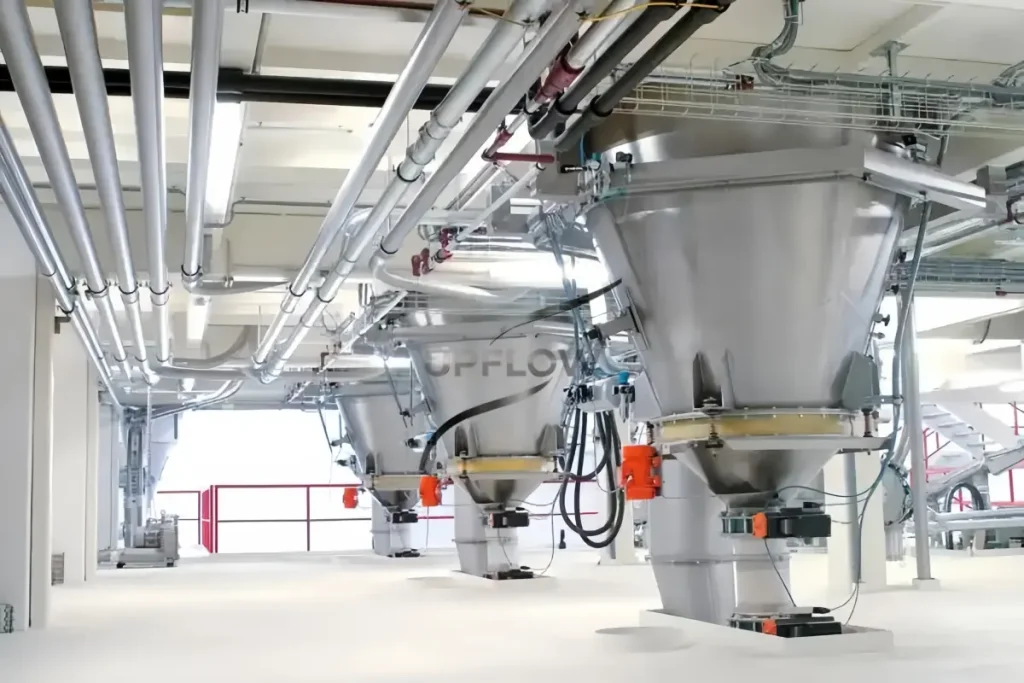
Additionally, as a powder conveying system for lithium carbonate powder handling, it improves automation, reduces manual labor, and ensures stable and consistent feeding into reactors, mixers, or packaging systems.
Industrial Applications in Lithium and Chemical Industries
The lithium carbonate pneumatic conveying system is widely used in lithium battery material production, chemical processing plants, and advanced material manufacturing facilities.
As a positive pressure conveying system for battery-grade lithium carbonate powder, it is commonly applied in transporting materials from production units to storage silos or mixing systems. In battery material processing, a negative pressure conveying system for lithium carbonate powder ensures clean and precise feeding into cathode material preparation processes.
Furthermore, a powder conveying system for lithium carbonate materials is also used in ceramics and glass manufacturing, where stable and dust-free handling is required to maintain product consistency.
Conclusion
The lithium carbonate pneumatic conveying system provides a reliable, efficient, and environmentally friendly solution for handling fine lithium powder materials. By integrating positive pressure conveying systems, negative pressure conveying systems, powder conveying systems, and fully enclosed conveying systems for lithium carbonate, manufacturers can achieve improved efficiency, better environmental control, and consistent product quality in modern industrial production environments.