
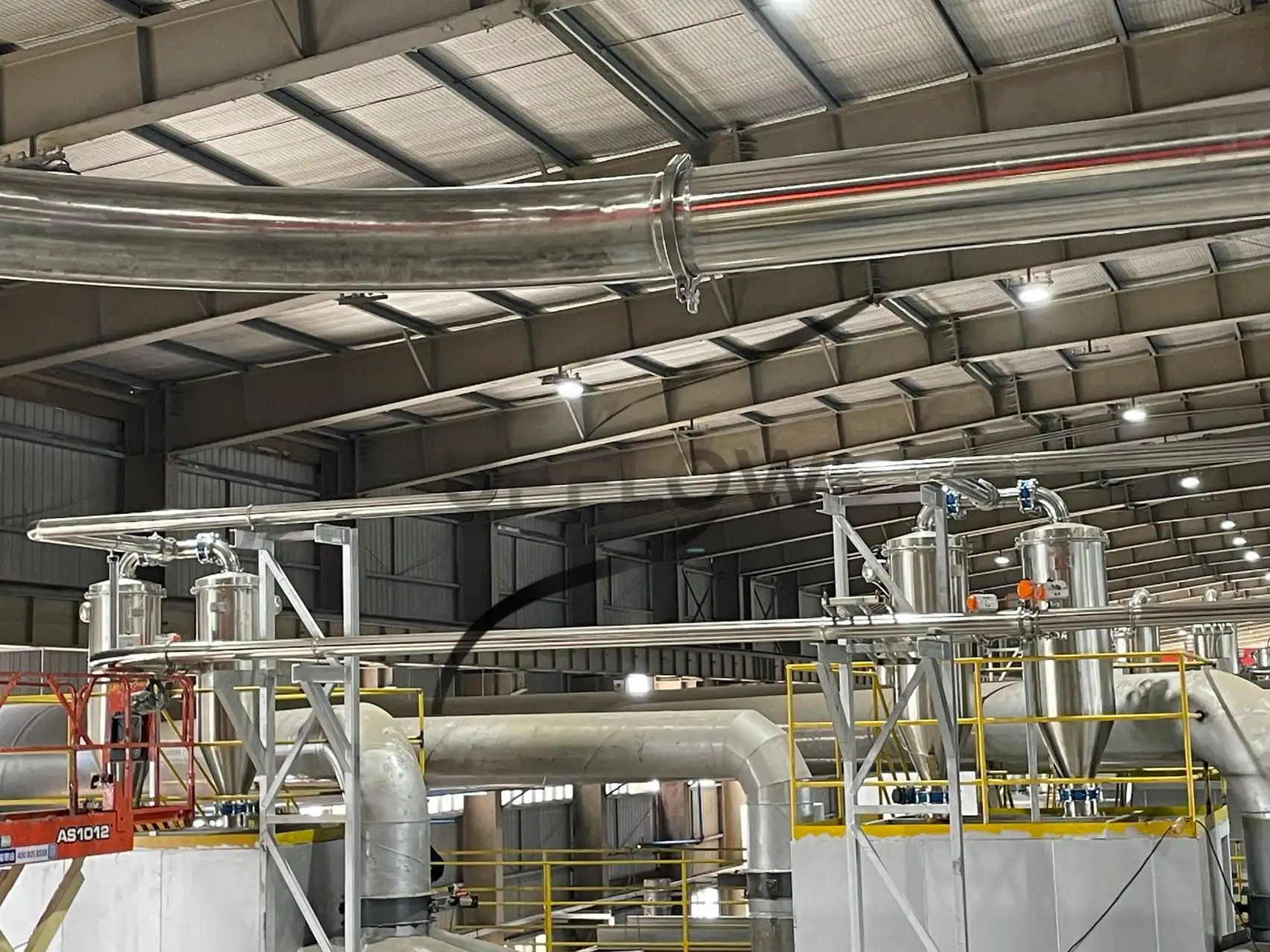
A pneumatic conveying system is widely used in industries such as chemicals, food processing, pharmaceuticals, and building materials to transport powders and granular materials. Compared with traditional mechanical conveying methods, pneumatic conveying offers advantages such as enclosed transportation, flexible layout, and reduced dust emissions.
However, the overall efficiency of a pneumatic conveying system depends on many factors, including pipeline design, air supply configuration, material characteristics, and system control. If these factors are not optimized, problems such as low conveying efficiency, excessive energy consumption, pipeline blockage, or unstable material flow may occur.
In this article, we will explore several practical methods to improve the efficiency of pneumatic conveying systems, helping manufacturers achieve higher productivity and lower operating costs.
1. Choose the Right Pneumatic Conveying Method
One of the most important steps in improving conveying efficiency is selecting the appropriate conveying method according to the material properties.
Different materials require different conveying technologies:
Dilute phase conveying is suitable for lightweight powders and long-distance transport. Materials are suspended in high-speed airflow and transported through pipelines.
Dense phase conveying is commonly used for abrasive or fragile materials, because it operates at lower velocity and reduces material degradation.
You can learn more about Dilute Phase vs Dense Phase Conveying in this article: Dilute Phase vs Dense Phase Conveying: Key Differences, Applications, and How to Choose the Right System.
Vacuum conveying is ideal for lightweight powders and granular materials, especially in food or pharmaceutical industries where contamination control is critical.
For example, many production lines use a vacuum feeder to transfer powder from storage containers into mixers or batching equipment. This method ensures clean material transfer while maintaining stable feeding conditions.
Selecting the proper conveying method ensures that the pneumatic conveying system operates within its optimal efficiency range.
2. Optimize Pipeline Design and Layout
Pipeline design plays a critical role in the performance of a pneumatic conveying system. Poorly designed pipelines can increase pressure loss, reduce conveying capacity, and cause frequent blockages.
Several design factors should be considered:
Reduce Pipeline Length and Bends
The longer the pipeline and the more elbows it contains, the greater the pressure loss. Excessive bends can also cause material accumulation and blockages. Therefore, pipelines should be designed to be as short and straight as possible.
Select the Proper Pipe Diameter
The pipeline diameter should match the material density and conveying capacity. For dense materials, larger pipe diameters may be required to reduce resistance and improve flow stability.
Use Wear-Resistant Materials
Materials such as stainless steel or ceramic-lined pipelines can reduce wear caused by abrasive powders. Durable pipelines not only improve system reliability but also reduce long-term maintenance costs.
A well-designed pipeline system can significantly increase conveying efficiency while reducing energy consumption.
3. Control the Solid–Air Ratio for Optimal Performance
The solid–air ratio is one of the most important parameters in a pneumatic conveying system. It represents the ratio between the mass flow of materials and the mass flow of conveying air.
If the solid–air ratio is too low, excessive air is used to transport a small amount of material. This situation leads to unnecessary energy consumption and high airflow velocity, which can increase pipeline wear.
On the other hand, if the solid–air ratio is too high, the material concentration inside the pipeline becomes too dense. The airflow may not have enough energy to move the materials, leading to blockages or unstable conveying.
Recommended Solid–Air Ratio
The optimal solid–air ratio depends on the material type:
Fine powders: 10–20
Granular materials: 5–10
Sticky materials: 3–5
Modern pneumatic conveying systems often use PLC-based control systems and sensors to monitor airflow velocity, pressure, and material flow rate in real time. These systems automatically adjust feeding rates and blower speed to maintain the optimal solid–air ratio.
If you want to understand the system principles in more detail, you can also read our guide on how a pneumatic conveying system works.
4. Improve the Air Supply System
The air supply system provides the driving force for material transport. A poorly configured air supply system can significantly reduce conveying efficiency.
Key components include:
Air compressors
Roots blowers
High-pressure centrifugal fans
These devices must provide sufficient airflow and pressure based on the conveying distance and material density.
Maintain Stable Air Pressure
Fluctuating air pressure can cause unstable conveying and uneven material flow. Installing pressure regulators and monitoring sensors can help maintain consistent system performance.
Ensure Clean Airflow
Dust accumulation in filters or pipelines can reduce airflow efficiency. Regular inspection and cleaning of air filters and pipelines help maintain optimal airflow.
Many factories also install pulse jet bag filter dust collectors to remove dust particles and keep the air supply system clean.
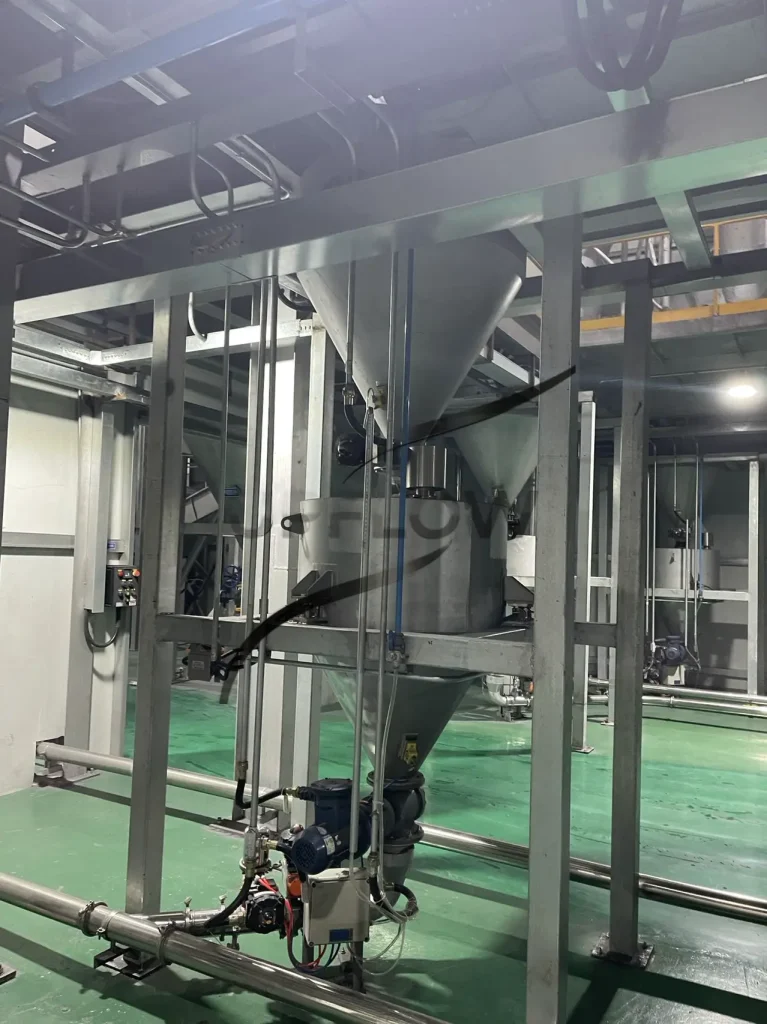
5. Use Advanced Feeding and Unloading Equipment
Feeding stability directly affects the efficiency of a pneumatic conveying system. If material feeding is inconsistent, the airflow cannot transport the material smoothly.
Automated feeding equipment can significantly improve system stability.
For example:
Screw feeders provide accurate material feeding rates.
Rotary valves ensure continuous feeding while maintaining pressure sealing.
Bulk bag unloading stations provide stable material supply for large production lines.
A ton bag unloading station is often used in powder processing industries to handle large quantities of bulk materials safely and efficiently.
By combining reliable feeding equipment with pneumatic conveying technology, manufacturers can achieve consistent material flow and higher production efficiency.
6. Implement Intelligent Monitoring and Automation
Modern industrial plants increasingly use intelligent monitoring systems to improve the performance of pneumatic conveying systems.
Sensors installed throughout the system can monitor:
Air velocity
Pipeline pressure
Material flow rate
Equipment vibration
These data are transmitted to a central control system, where operators can analyze system performance and quickly detect potential problems.
Advanced automation systems can also adjust blower frequency, feeding rate, and airflow automatically. This dynamic control ensures that the pneumatic conveying system always operates within the most efficient conditions.
7. Perform Regular Maintenance and Inspection
Regular maintenance is essential to maintain the efficiency of a pneumatic conveying system.
Operators should regularly inspect key components such as:
Pipelines
Valves and seals
Blowers and compressors
Feeders and rotary valves
Cleaning pipelines and replacing worn components in time can prevent blockages and equipment failures.
Preventive maintenance not only improves system reliability but also reduces unexpected downtime and maintenance costs.
Conclusion
Improving the efficiency of a pneumatic conveying system requires a combination of proper system design, optimized operating parameters, reliable equipment selection, and regular maintenance.
By selecting the appropriate conveying method, optimizing pipeline layout, maintaining the optimal solid–air ratio, and implementing intelligent monitoring systems, manufacturers can significantly increase conveying efficiency while reducing energy consumption and operational costs.
As industries continue to move toward automation and smart manufacturing, optimizing pneumatic conveying systems will play an increasingly important role in improving production efficiency and ensuring stable material handling processes.
Need a High-Efficiency Pneumatic Conveying System?
If you are looking to improve the performance of your production line or design a new pneumatic conveying system, our engineering team can help you find the best solution.
We provide customized powder handling solutions including:
Pneumatic conveying systems
Vacuum feeders
Ton bag unloading stations
Dust collection systems
Contact us today to get a professional consultation and quotation for your project.
Visit our contact page to request a customized solution for your material handling system.