
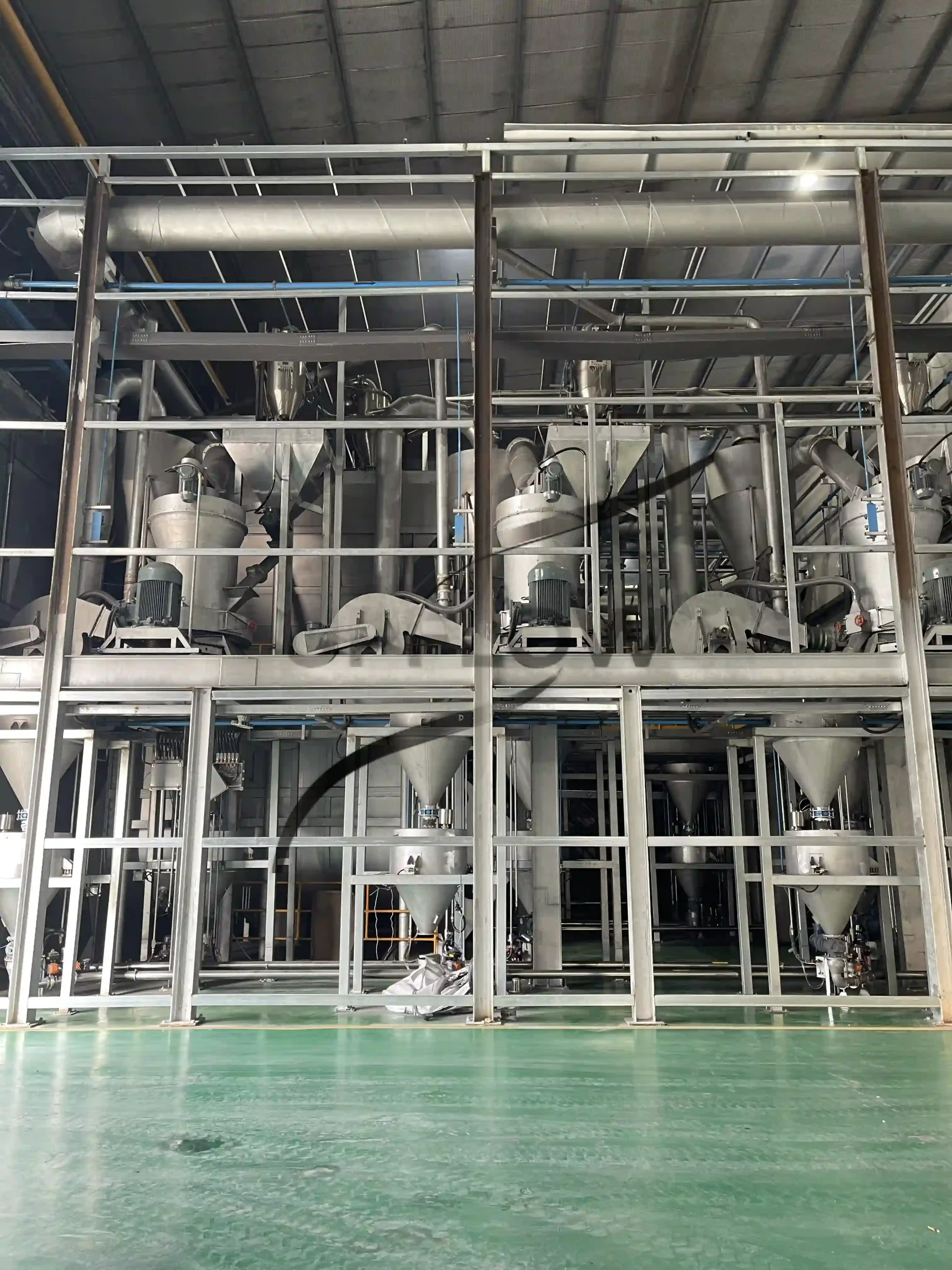
A pneumatic conveying system is widely used in industries such as chemicals, food processing, building materials, and new energy materials to transport powders and granules efficiently. By using airflow or gas pressure, materials can be conveyed through sealed pipelines, ensuring clean and automated production.
However, like any industrial equipment, a pneumatic conveying system may encounter operational problems if the system design, equipment selection, or operating parameters are not properly optimized. Common issues include pipeline blockage, unstable conveying capacity, equipment wear, pressure abnormalities, and material leakage.
Understanding the causes of these problems and implementing effective solutions is essential for maintaining stable production and reducing maintenance costs. In this article, we explore the most common problems in pneumatic conveying systems and provide practical solutions based on engineering experience.
1. Pipeline Blockage in Pneumatic Conveying Systems
Pipeline blockage is one of the most frequent and challenging problems in a pneumatic conveying system. In many industrial plants, more than 40% of system failures are related to pipeline clogging. You can also learn more about how to prevent pipeline blockage in our detailed guide on How to Prevent Pneumatic Conveying Pipeline Blockage in Industrial Powder Handling Systems.
Main Causes
Several factors may lead to pipeline blockage:
Material moisture or agglomeration
Low conveying air velocity
Excessive feeding rate
Too many bends in the pipeline
Sudden changes in pipe diameter
Poor material flowability
Blockage often occurs at the connection between horizontal and vertical pipelines or at pipe elbows where material velocity decreases.
Effective Solutions
To quickly resolve pipeline blockage, the following steps are recommended:
Stop the material feeding immediately.
Release system pressure through the pipeline vent valve.
Use reverse air blowing to loosen and remove the blocked material.
Inspect the material condition and remove lumps or moisture.
For long-term prevention, the pipeline layout should be optimized to minimize sharp bends, and the conveying air velocity should remain higher than the material suspension velocity.
Many factories also integrate advanced conveying equipment such as a vacuum feeder to ensure stable and continuous powder feeding into the pneumatic pipeline.
2. Unstable Conveying Capacity
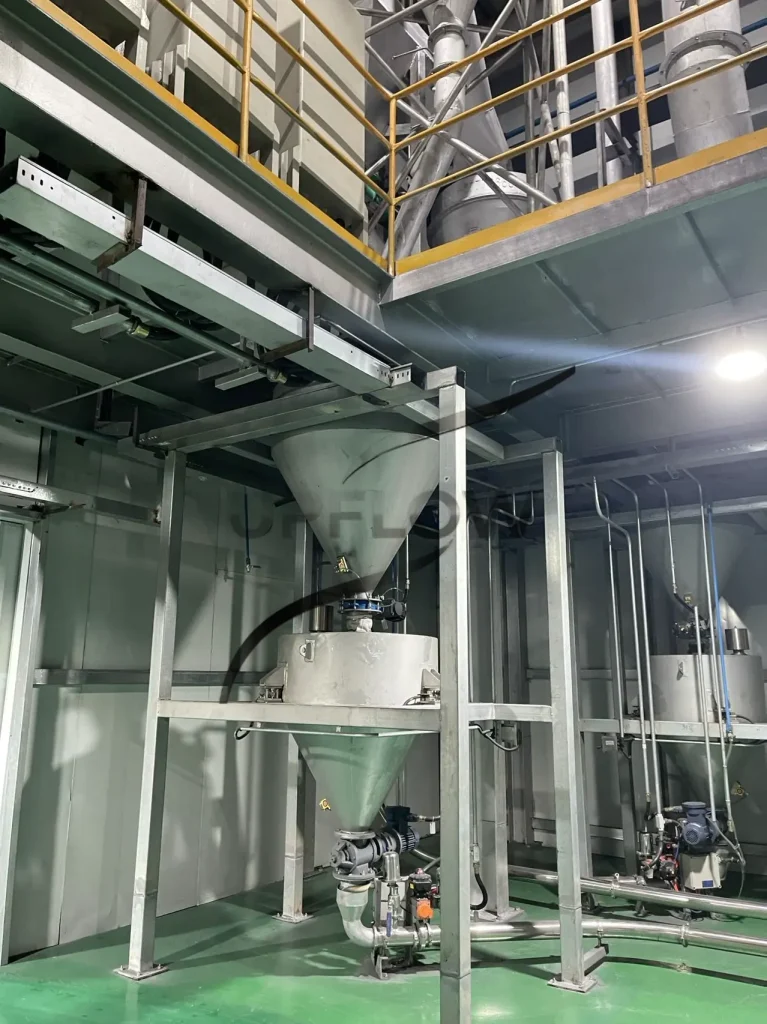
Another common problem in a pneumatic conveying system is unstable conveying capacity. When the material flow fluctuates, it can disrupt downstream processes such as mixing, batching, or packaging.
Possible Reasons
Inconsistent feeding quantity
Air pressure fluctuations
Partial pipeline blockage
Leaking feed valves or rotary feeders
Poor material flow properties
Optimization Measures
To improve conveying stability, operators should standardize the feeding process and maintain consistent operating parameters.
For example:
Ensure that storage vessels reach the full level signal before pressurization.
Maintain stable conveying pressure and air supply.
Regularly check feeding devices such as rotary valves and screw feeders.
If the system handles large bulk materials, installing a ton bag unloading station can significantly improve feeding efficiency and prevent manual feeding inconsistencies.
You can also learn more about the working principles in our detailed guide on how a pneumatic conveying system works.
3. Pressure Abnormalities in the Conveying System
Pressure stability is critical for the efficient operation of a pneumatic conveying system. Both excessive pressure and insufficient pressure can negatively affect system performance.
High Pressure Issues
High pressure may occur due to:
Pipeline blockage
Malfunction of dust collection equipment
Exhaust valve failure
In such cases, operators should inspect the pipeline and dust collection system, especially components like pulse bag filters, to ensure proper airflow.
Low Pressure Issues
Low pressure may be caused by:
Air leakage in pipelines or valves
Blower efficiency decline
Insufficient material feeding
To identify leakage points, technicians can apply soapy water to pipeline joints and observe bubbles indicating air leakage. Faulty seals or gaskets should be replaced immediately.
Proper air pressure settings are also important. The minimum pressure for bin pumps should typically be set slightly higher than the conveying pressure to ensure complete material discharge.
4. Equipment Wear and Component Damage
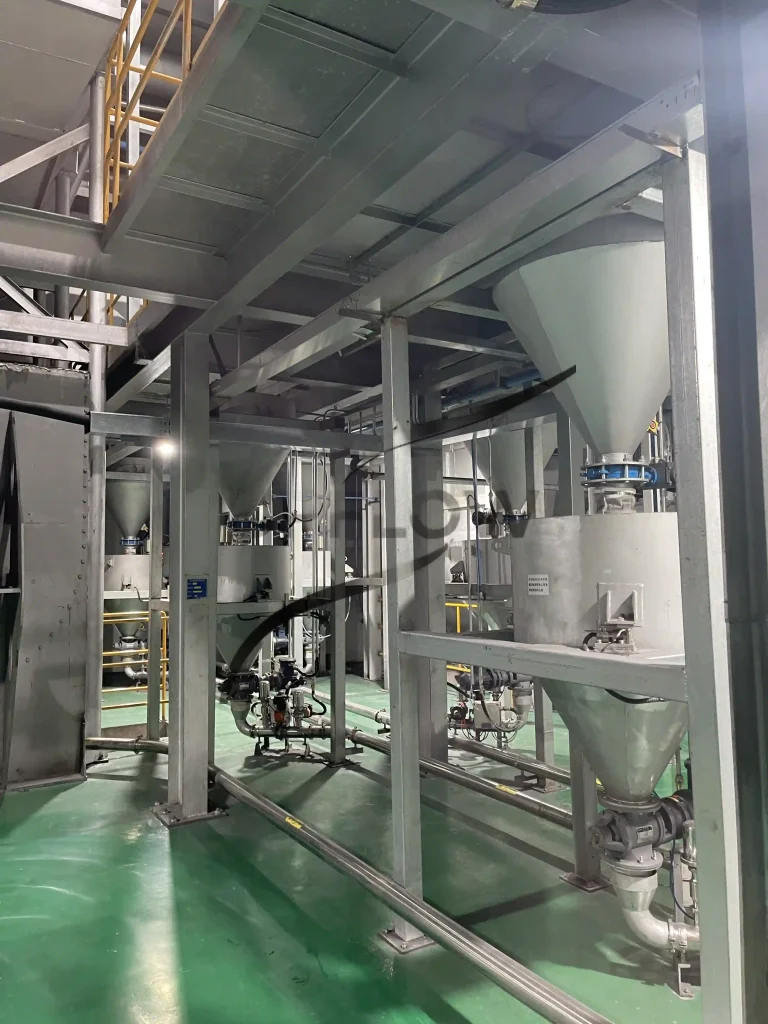
Over time, high-speed airflow and abrasive materials can cause wear in various components of the pneumatic conveying system.
Common Wear Locations
The most common wear areas include:
Pipeline elbows
Bin pump outlets
Rotary feeders
Valves and seals
Hard materials such as silica sand or mineral powders can accelerate wear in these components.
Maintenance Strategies
To extend equipment life, manufacturers often use wear-resistant materials such as ceramic-lined pipelines or hardened steel elbows.
Regular inspection and preventive maintenance are also essential. Operators should monitor critical components such as valves, seals, and pipeline bends, replacing worn parts before serious damage occurs.
Proper airflow velocity control can also reduce pipeline erosion and extend system lifespan.
5. Dust Leakage and Material Loss
Dust leakage is another issue that may occur in pneumatic conveying systems. Besides reducing material efficiency, it can also create environmental pollution and health risks for workers. You can also learn more about reducing dust emissions in our detailed guide How to Reduce Dust Emissions in Pneumatic Conveying Systems for Powder Handling.
Causes of Dust Leakage
Common reasons include:
Poor sealing at pipeline connections
Damaged gaskets or flanges
Semi-open feeding equipment
Cracks or damage in the pipeline
In some cases, manual feeding operations may also create dust emissions if the system is not fully enclosed.
Prevention Measures
To prevent dust leakage:
Ensure all pipeline connections are tightly sealed.
Replace worn sealing gaskets regularly.
Use enclosed feeding systems instead of manual feeding.
Install reliable dust collection equipment.
Many modern factories install a pulse jet bag filter dust collector to capture airborne particles and maintain a clean production environment.
Conclusion
A pneumatic conveying system is a highly efficient solution for automated powder handling, but its performance depends on proper design, operation, and maintenance. The most common problems—including pipeline blockage, unstable conveying capacity, pressure abnormalities, equipment wear, and dust leakage—can be effectively prevented through optimized system design and regular maintenance.
By selecting suitable equipment, maintaining stable operating parameters, and implementing preventive inspection programs, manufacturers can significantly improve system reliability and reduce downtime.
As industrial automation continues to evolve, modern pneumatic conveying systems are increasingly integrated with intelligent monitoring technologies, enabling factories to achieve safer, cleaner, and more efficient powder handling processes.
Need Help Optimizing Your Pneumatic Conveying System?
If your production line is experiencing issues such as pipeline blockage, unstable conveying capacity, or excessive dust emissions, our engineering team can help.
We provide customized solutions including:
Pneumatic conveying systems
Vacuum feeding systems
Ton bag unloading stations
Dust collection equipment
Contact our engineers today to get a professional solution tailored to your material and production requirements.
Visit our contact page to request a quotation or technical consultation.