
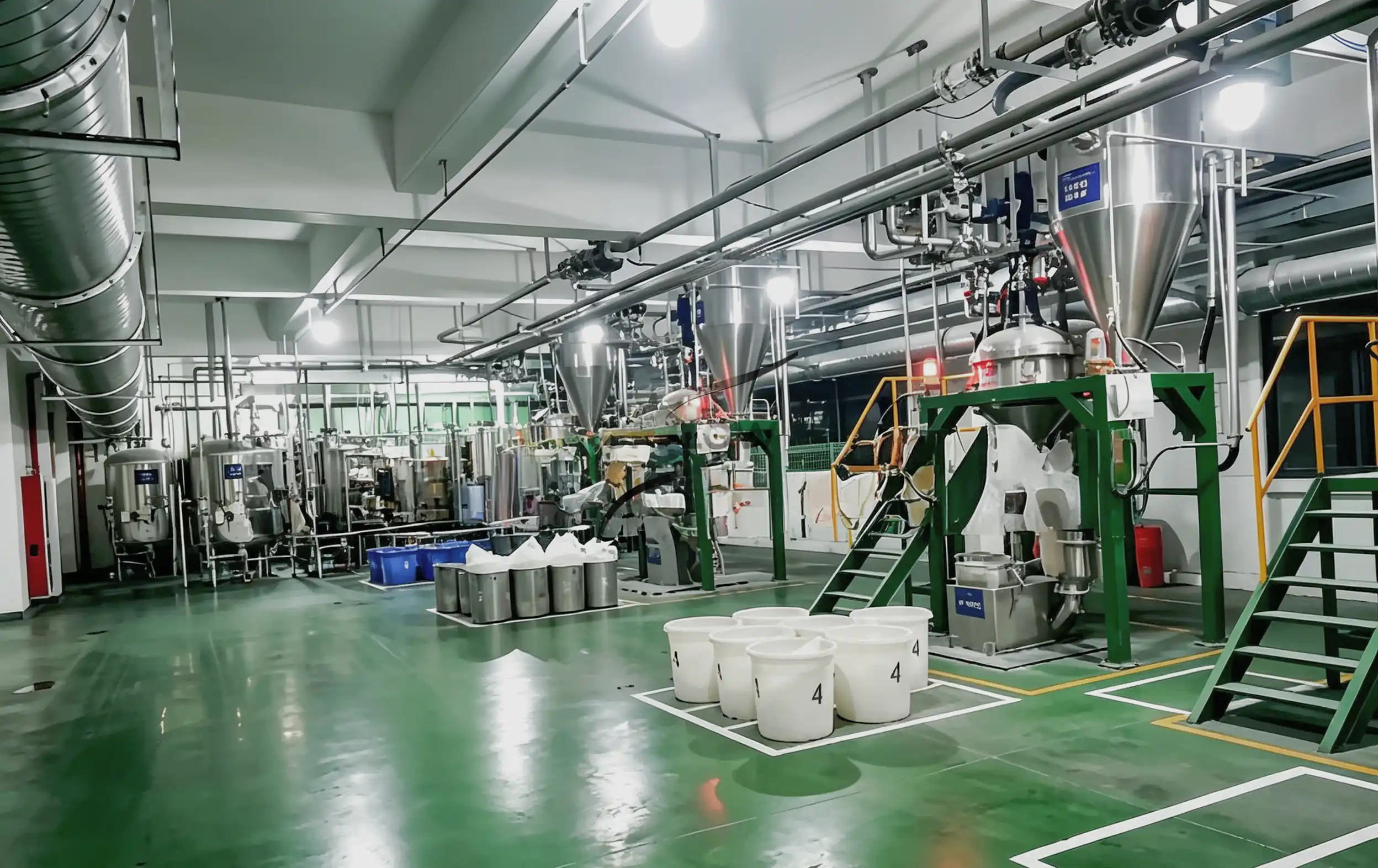
As pharmaceutical manufacturers continue to develop protein-based medicines, nutritional formulations, biological ingredients, and specialized powder products, the reliable handling of protein extract powders has become increasingly important in automated pharmaceutical production. Protein-derived materials can behave differently from conventional inorganic powders because their particle structure, moisture content, bulk density, and flowability are strongly influenced by the extraction, concentration, drying, and milling processes used during manufacturing. A properly engineered protein extract pneumatic conveying system can provide a controlled and enclosed method for transferring protein-based pharmaceutical powders between storage vessels, preparation equipment, intermediate hoppers, and downstream production machines while reducing manual handling and maintaining a cleaner powder processing environment.
What Is Protein Extract Powder?
Protein extract powder is a powdered material obtained by separating and concentrating proteins from biological or natural raw materials, followed by a suitable drying process such as spray drying or another industrial dehydration method. Depending on the application, protein extracts may originate from plant, animal, microbial, or other biological sources and can be used in pharmaceutical formulations, nutritional products, biological preparations, and specialized functional ingredients.
Common names include protein extract powder, protein concentrate powder, protein isolate powder, extracted protein, protein ingredient powder, pharmaceutical protein powder, and biological protein powder. Because protein extract represents a broad category of materials rather than one pure compound, it does not have a single universal scientific name or chemical formula.
Proteins are macromolecules composed primarily of amino acids linked through peptide bonds, and their chemical composition varies according to the source and extraction process. For example, individual proteins such as albumin, casein, or specific plant proteins have different molecular structures and formulas, while a commercial protein extract normally contains a mixture of proteins and other naturally occurring components.
The bulk density of many dried protein extract powders is approximately 0.25–0.70 g/cm³, although the actual value can vary substantially depending on particle size, drying technology, protein concentration, moisture content, and powder morphology. These materials are often lightweight, dusty, hygroscopic, cohesive, and susceptible to agglomeration, making controlled feeding and conveying conditions particularly important.
Why Protein Extract Requires Controlled Powder Conveying
Protein powders can present several challenges during pharmaceutical handling because their low bulk density and fine particle structure may result in significant dust generation when material is manually transferred. In addition, exposure to moisture can cause particles to stick together, reducing flowability and creating unstable discharge from hoppers and containers.
A protein extract pneumatic conveying system provides an enclosed transfer route that can connect upstream powder preparation equipment with downstream pharmaceutical processing machinery, reducing the need for repeated manual loading and open material transfer. This approach is especially useful when the production process requires consistent powder movement between dryers, storage bins, blending systems, intermediate vessels, and final formulation equipment.
The conveying process should be designed around the physical properties of the complete protein extract rather than simply selecting equipment according to the required capacity, because excessive airflow, unstable feeding, or unsuitable pipeline geometry may negatively affect powder behavior.
Protein Extract Dust-Free Conveying System
A protein extract dust-free conveying system is designed to reduce the release of fine powder into the surrounding production environment during material transfer. This is particularly relevant in pharmaceutical facilities where maintaining a controlled processing area and reducing airborne powder are important operational requirements.
Instead of manually opening containers and pouring protein powder between machines, an enclosed conveying line can transfer the material through sealed pipelines. Appropriate filtration at the receiving station separates the powder from the conveying air, while sealed valves and connections help maintain a controlled material path.
For pharmaceutical manufacturers, dust-free transfer can also reduce product loss and make routine material handling more consistent, particularly when lightweight protein powder would otherwise become airborne during manual charging operations.
Protein Extract Automatic Feeding System
Stable feeding is one of the most important factors in pharmaceutical powder handling because the downstream process depends on receiving a consistent quantity of material. A protein extract automatic feeding system can combine storage hoppers, level sensors, controlled discharge devices, filters, valves, and PLC-based controls to maintain a more predictable powder supply.
Protein extract powders may sometimes bridge at hopper outlets or form unstable flow patterns because of their cohesive characteristics, particularly when moisture content increases. The feeding system can therefore be designed with an appropriate hopper outlet, discharge mechanism, and monitoring arrangement according to the actual powder flow properties.
By coordinating the feeding equipment with the pneumatic conveying cycle, the system can automatically replenish receiving vessels when the material level falls below a defined point, reducing unnecessary operator intervention and helping maintain continuous pharmaceutical production.
Protein Extract Powder Transfer System
A protein extract powder transfer system provides a dedicated route for moving protein-based powders between different stages of pharmaceutical production. Unlike open manual transfer, a closed pneumatic system can reduce the number of handling steps while allowing the material to remain inside a controlled process environment.
The transfer route may connect a drying system with an intermediate storage hopper, a blending machine with a formulation vessel, or a central powder storage area with several downstream processing machines. Pipeline diameter, conveying distance, vertical elevation, bends, powder feeding rate, and receiving capacity should all be considered when designing the system.
Because protein powders are often lightweight, the relationship between conveying air velocity and solids loading is particularly important. Excessive air velocity can create unnecessary turbulence and dust, while insufficient conveying velocity may increase the risk of material accumulation in horizontal pipeline sections.
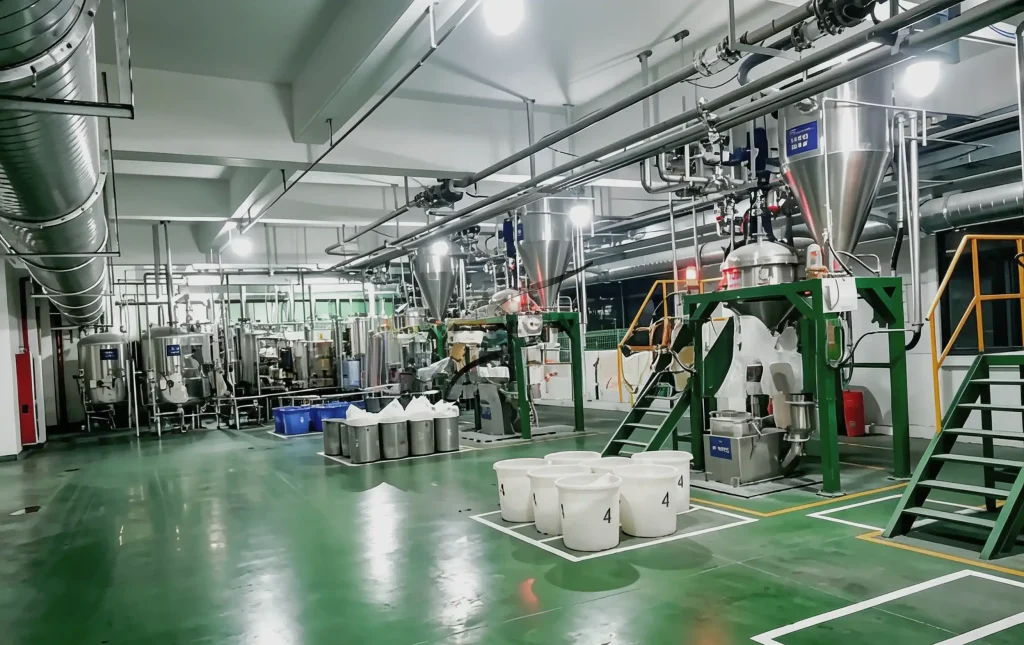
Protecting Protein Powder During Pneumatic Transfer
Protein-based materials can be sensitive to environmental and mechanical conditions, depending on their composition and intended pharmaceutical application. Moisture, temperature, excessive residence time, and aggressive mechanical handling can influence powder characteristics or, in some cases, affect the functional properties of the protein.
A well-designed protein extract pneumatic conveying system should therefore use conveying parameters appropriate to the material rather than treating protein powder in the same way as dense mineral or metallic powders. Controlled conveying velocity and stable powder feeding can help reduce unnecessary mechanical impact, while an enclosed pipeline can limit uncontrolled contact with ambient humidity.
The actual conveying conditions should be determined through material testing and engineering evaluation, especially when the protein extract has high value or strict quality requirements.
Protein Extract Central Conveying System for Pharmaceutical Production
When a pharmaceutical plant has several powder processing lines, a protein extract central conveying system can provide a centralized method of distributing material from one or more storage locations to multiple production points. Instead of installing completely independent transfer equipment for every processing machine, a centralized arrangement can coordinate material movement through a planned conveying network.
Such a configuration can be useful in facilities where protein extracts are supplied to several blending, formulation, or packaging areas. The central system may incorporate multiple valves, receiving stations, filters, sensors, and automated controls to determine which destination should receive material during each conveying cycle.
Centralized material handling can also simplify plant layout by reducing the number of independent powder transfer routes and creating a more organized connection between material storage and pharmaceutical processing equipment.
Pipeline Design and Filtration
Pipeline design plays a major role in the performance of a protein powder conveying system because lightweight powders can behave differently at bends, vertical sections, and changes in conveying direction. Smooth internal surfaces, appropriately selected pipe diameters, and carefully positioned elbows can help reduce material accumulation and unnecessary pressure losses.
Filtration is equally important because the conveying air must be separated from the transported powder at the receiving point. A suitable filter system can prevent powder from entering the vacuum or air-handling equipment while supporting stable pneumatic operation.
For pharmaceutical applications, product-contact components are commonly manufactured from stainless steel, with attention given to internal surface quality, welding, seals, sanitary connections, and cleaning accessibility.
Automation and Pharmaceutical Process Control
Modern pharmaceutical powder handling systems increasingly use automated controls to coordinate material transfer, feeding, filtration, and equipment status. A protein extract automatic feeding system can use level sensors to determine when material is required, while pressure sensors can monitor conveying conditions and provide alarms if abnormal pressure changes indicate a potential blockage or operating problem.
PLC-based control can also coordinate valves and conveying equipment so that only the required transfer route is active during a production cycle. This helps reduce unnecessary manual operation and provides a more repeatable material handling process.
For larger facilities, process data can be integrated into plant monitoring systems, allowing operators to observe conveying status, material levels, filter differential pressure, and equipment alarms from a centralized interface.
Hygienic Design for Pharmaceutical Protein Powder
Hygienic design is essential when protein extracts are used in pharmaceutical production because residues from previous batches can become a concern during product changeover. The conveying equipment should therefore be designed with cleanable surfaces, minimized dead zones, accessible components, and appropriate sealing arrangements.
An enclosed protein extract dust-free conveying system can reduce open powder handling points, while suitable equipment configuration can make inspection and cleaning more practical. The final design should be determined according to the pharmaceutical manufacturer’s cleaning procedures, material characteristics, production requirements, and applicable quality standards.
For facilities processing multiple protein formulations, the conveying system should also consider the possibility of cross-contamination and residual powder in pipelines, valves, filters, and receiving equipment.
Selecting the Right Protein Extract Conveying Solution
Selecting pneumatic conveying equipment for protein extract powder requires an evaluation of the actual material and production conditions. Bulk density, particle size distribution, moisture content, flowability, cohesiveness, electrostatic behavior, required throughput, conveying distance, vertical lift, and number of receiving points should all be considered during engineering.
The appropriate solution may include a dust-free conveying arrangement, automated feeding equipment, a dedicated powder transfer route, or a central conveying configuration depending on the factory layout and production process. The system should also balance conveying efficiency with powder quality, hygienic requirements, maintenance accessibility, and automation.
Material testing before final equipment selection can be particularly valuable for protein extracts because powders produced by different extraction and drying methods may behave very differently even when they have similar nominal protein content.
Conclusion
As pharmaceutical manufacturing moves toward increasingly automated powder processing, reliable handling of protein-derived materials is becoming an important part of production system design. Protein extract powders can be lightweight, cohesive, moisture-sensitive, and dusty, which creates specific requirements for feeding, conveying, filtration, and hygienic equipment design.
A properly engineered protein extract pneumatic conveying system can provide enclosed and automated material transfer while reducing manual handling and supporting a more controlled pharmaceutical powder process. When integrated with a protein extract dust-free conveying system, protein extract automatic feeding system, protein extract powder transfer system, and protein extract central conveying system, the overall powder handling process can achieve better material control, cleaner operation, and improved automation for modern pharmaceutical production.