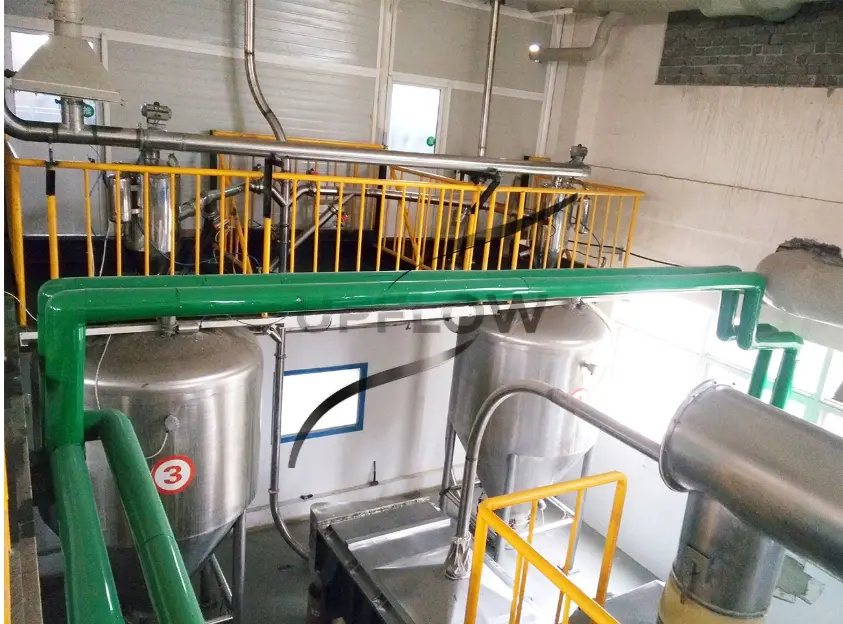
In modern industries such as chemicals, food processing, pharmaceuticals, plastics, and building materials, the pneumatic conveying system has become one of the most widely used solutions for transporting powder and granular materials. While these systems provide efficient and enclosed material transfer, many factories face a common challenge: high energy consumption.
In fact, the pneumatic conveying system energy consumption is often dominated by air compressors or blowers, which can account for a significant portion of a plant’s electricity cost. If the system design or operation is not optimized, the conveying line can become an invisible “energy consumer” that continuously increases operating expenses.
Therefore, understanding how to reduce energy consumption in pneumatic conveying systems has become essential for companies aiming to improve efficiency, reduce operating costs, and achieve sustainable production.
This article explores the main causes of high energy consumption and presents seven practical strategies to optimize pneumatic conveying system performance.
1. Choose the Right Conveying Method
One of the most important factors influencing pneumatic conveying system energy consumption is the conveying mode itself.
Generally, pneumatic conveying can be divided into two main types:
Dilute phase conveying
Dense phase conveying
Dilute phase conveying uses high air velocity to suspend materials in the airflow. While it is suitable for long-distance conveying and flexible pipelines, it often requires higher airflow and energy consumption.
Dense phase conveying, on the other hand, uses lower air velocity and higher solid-to-air ratio, allowing materials to move in plugs or dunes. This significantly reduces airflow demand and pipeline wear.
For many industrial applications, especially long-distance powder conveying, switching from dilute phase to dense phase conveying can reduce energy consumption by 20–30%.
If you want to learn more about differences between Dilute Phase and Dense Phase, you can also read our guide:Dilute Phase vs Dense Phase Conveying: Key Differences, Applications, and How to Choose the Right System.
2. Optimize Pipeline Design to Reduce Pressure Loss
Poor pipeline layout is another major contributor to high pneumatic conveying system energy consumption.
Every bend, connection, or unnecessary pipe length increases airflow resistance, forcing the blower or compressor to consume more power.
To reduce pressure loss:
Keep the conveying pipeline as short as possible
Reduce the number of bends and directional changes
Use large-radius elbows instead of sharp bends
Avoid sudden pipe diameter changes
Use smooth inner pipe surfaces
Studies show that replacing standard elbows with large-radius elbows can reduce pressure loss by up to 30%, significantly improving system efficiency.
You can learn more about the Pneumatic Conveying Pipeline Blockage in our another guide: How to Prevent Pneumatic Conveying Pipeline Blockage in Industrial Powder Handling Systems.
3. Optimize the Solid-to-Air Ratio
The solid-to-air ratio is a key parameter that directly affects pneumatic conveying system energy consumption.
It represents the ratio between the mass flow rate of conveyed material and the airflow mass.
If the ratio is too low, the system uses excessive airflow to move a small amount of material. This is often referred to as the “big motor pulling a small load” problem.
If the ratio is too high, materials may accumulate in the pipeline, causing blockages and unstable conveying.
To achieve the best performance:
Fine powders usually work well with higher solid-to-air ratios
Granular materials often require lower ratios
System parameters should be adjusted according to material density, particle size, and conveying distance
Maintaining an optimized solid-to-air ratio ensures stable conveying while minimizing energy consumption.
4. Upgrade to Variable Frequency Drive (VFD) Systems
Traditional pneumatic conveying systems often use fixed-speed motors, which operate at full capacity regardless of actual demand.
This results in unnecessary energy waste during low-load operation.
Installing variable frequency drives (VFD) allows the blower or compressor to automatically adjust airflow according to system requirements.
Benefits of VFD control include:
Reduced electricity consumption
Stable conveying pressure
Extended equipment life
Improved process control
In many industrial applications, upgrading to VFD-controlled equipment can reduce pneumatic conveying system energy consumption by 20–35%.
5. Improve Feeding Efficiency
The feeding stage also plays an important role in system efficiency.
Poor feeding control can cause unstable material flow, forcing the air supply system to compensate with higher pressure and airflow.
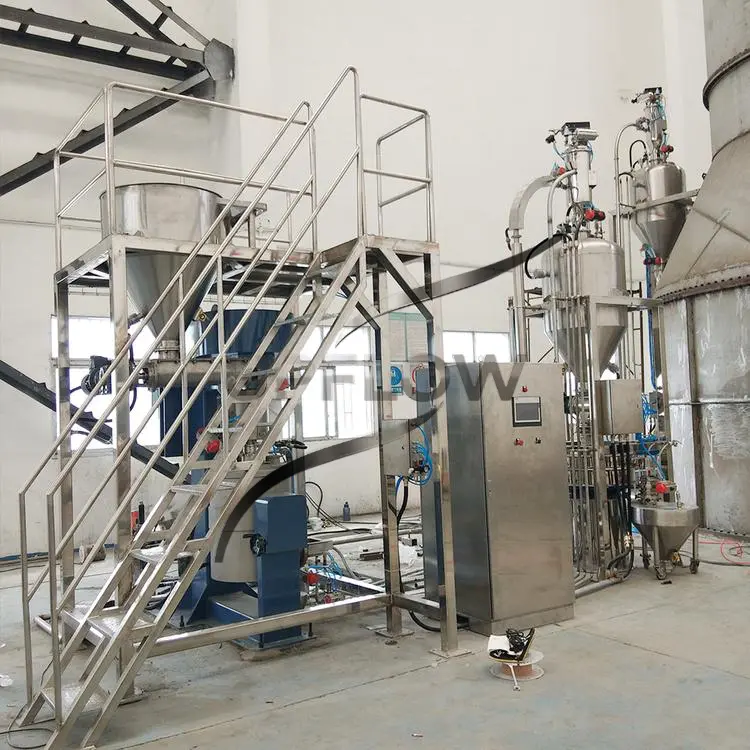
Modern feeding equipment such as a vacuum feeder can improve material loading efficiency and reduce airflow demand.
You can learn more about this equipment here: vacuum feeder for powder conveying.
Additionally, for bulk bag handling applications, using a ton bag unloading station ensures consistent feeding and stable material flow into the conveying line.
This significantly improves system stability while reducing energy consumption.
6. Prevent Air Leakage and Maintain System Sealing
Even small air leaks can greatly increase pneumatic conveying system energy consumption.
For example, a small leak of only 1 mm under compressed air pressure can result in substantial energy loss over time.
Common leakage points include:
Pipeline flange connections
Valve seals
Rotary feeders
Dust collectors
Compressor pipelines
Regular inspections should be conducted to identify and repair leaks promptly. Maintaining proper system sealing ensures that compressed air is used only for conveying materials rather than escaping into the environment.
7. Implement Intelligent Control and Monitoring
Modern industrial plants are increasingly using smart control systems to improve pneumatic conveying efficiency.
By installing sensors and PLC systems, operators can monitor key parameters such as:
Air pressure
Airflow rate
Material flow rate
Pipeline pressure drop
These data allow the system to automatically adjust airflow and feeding rates, ensuring optimal operation at all times.
Smart monitoring systems can also provide early warnings for blockages, wear, or abnormal pressure changes, preventing energy waste and unexpected downtime.
To control dust emissions while maintaining airflow efficiency, many systems also integrate a pulse jet bag filter dust collector.
If you want to learn more about how to reduce dust emissions, please check this guide: How to Reduce Dust Emissions in Pneumatic Conveying Systems for Powder Handling.
Additional Tips to Reduce Pneumatic Conveying System Energy Consumption
Besides the strategies mentioned above, companies can also improve efficiency through daily operational practices:
Avoid excessive conveying pressure
Shut off air supply immediately after conveying
Clean filters and pipelines regularly
Maintain blower and compressor performance
Train operators to follow energy-efficient procedures
Even small operational improvements can collectively reduce pneumatic conveying system energy consumption over time.
Conclusion
Reducing pneumatic conveying system energy consumption requires a comprehensive approach that includes proper system design, equipment optimization, intelligent control, and regular maintenance.
By optimizing conveying methods, improving pipeline design, adjusting solid-to-air ratios, and upgrading equipment with variable frequency drives, companies can significantly lower energy costs while improving system reliability.
As industries continue to focus on energy efficiency and sustainable manufacturing, optimizing pneumatic conveying systems is no longer optional—it has become an essential step toward reducing operating costs and improving competitiveness.
Need an Energy-Efficient Pneumatic Conveying System?
If you are looking to reduce pneumatic conveying system energy consumption and improve powder handling efficiency, our engineering team can help design a customized solution based on your materials, conveying distance, and production capacity.
We provide complete powder handling solutions including:
Pneumatic conveying systems
Vacuum feeders
Ton bag unloading stations
Dust collection systems
Contact us today to get a professional solution and quotation.