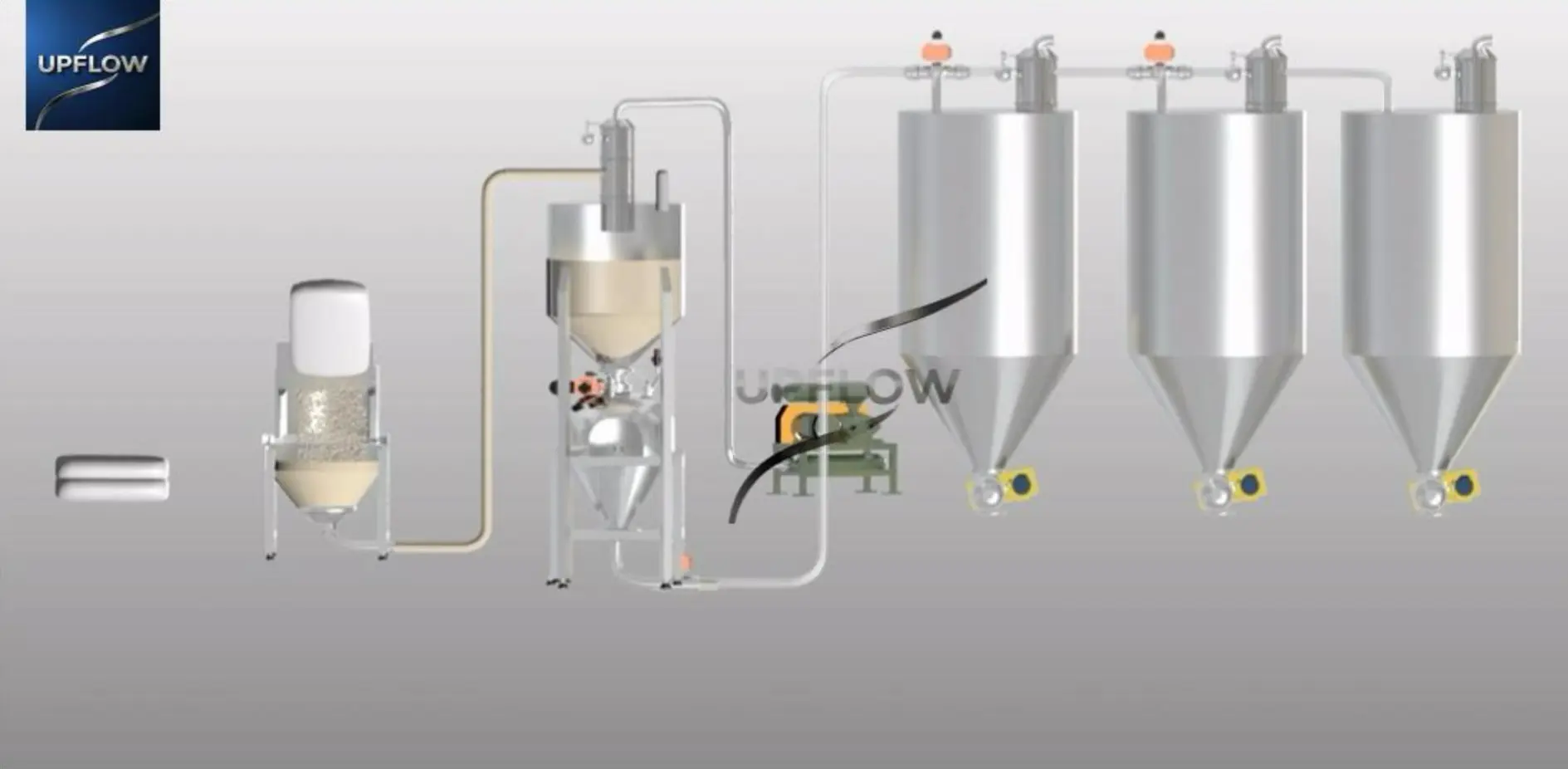
In modern industrial production, pneumatic conveying systems are widely used in food processing, chemical, plastics, pharmaceutical, and new energy materials industries for transporting powders, granules, and bulk materials.
One of the most important decisions when planning a system is choosing between positive pressure pneumatic conveying systems and negative pressure (vacuum) pneumatic conveying systems.
Both technologies utilize airflow to transport materials in pipelines, but their operating principles, system layouts, and application scenarios are quite different. Understanding these differences is crucial for selecting the right solution for your plant.
What is a positive pressure pneumatic conveying system?
A positive pressure system uses a blower or compressor to force air into the pipeline. The airflow, at a pressure higher than atmospheric pressure, transports the material from the inlet to the outlet.
Key Features
Materials are propelled forward by compressed air.
Suitable for medium to long distance conveying.
High conveying capacity.
Can convey materials to multiple unloading points.
Typical Applications
Positive pressure conveying systems are commonly used in:
Cement and building materials
Chemical raw materials
Plastic granules
Large bulk material handling systems
Since this system operates under pressure, it typically employs sealed pipes and robust components to withstand the internal pressure.
You can explore real-world use cases in our article Typical Applications of Pneumatic Conveying Systems in Industry.
Advantages
High conveying capacity, flexible layout, relatively simple equipment, easy maintenance and operation.
Disadvantages
High requirements for system airtightness; leaks may cause environmental pollution; limited conveying distance and height; excessively long distances may lead to increased energy consumption.
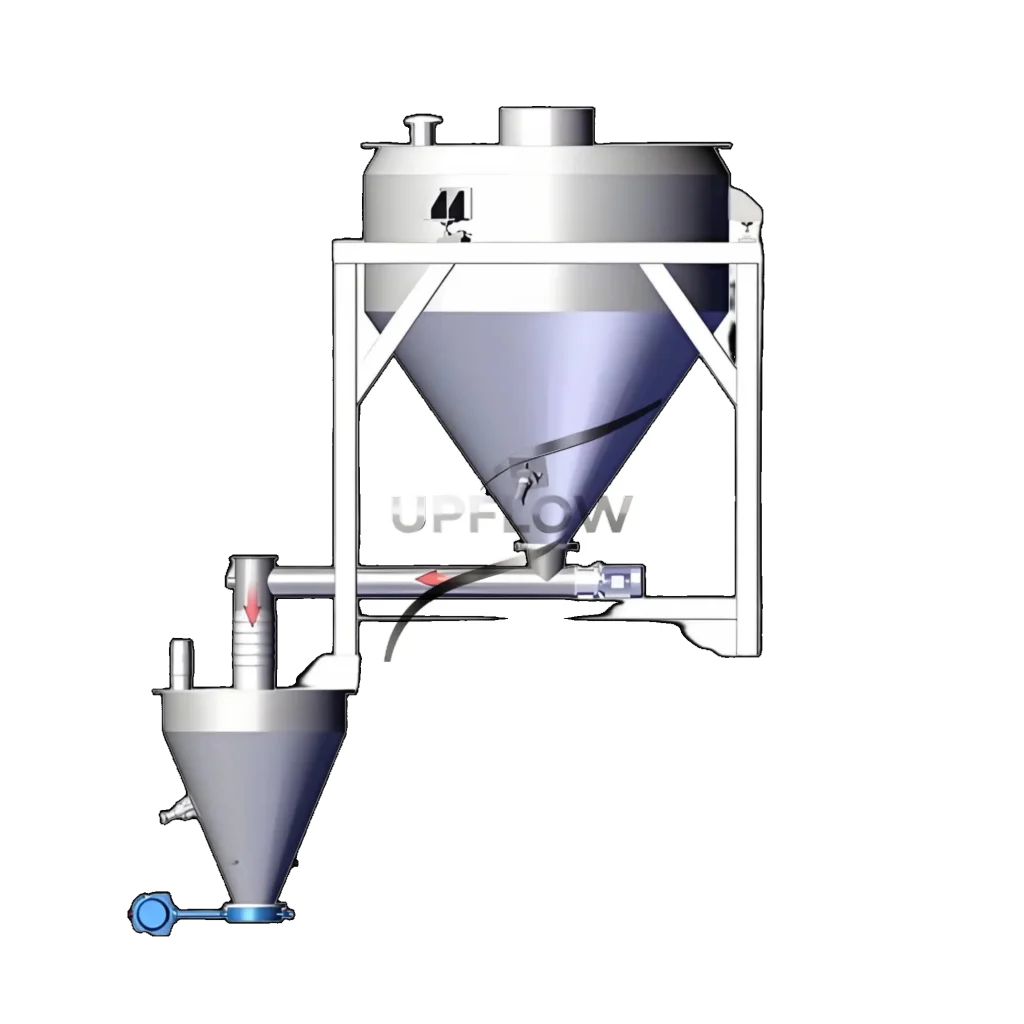
What is a negative pressure (vacuum) pneumatic conveying system?
A negative pressure system, also known as a vacuum conveying system, uses a vacuum pump to generate negative pressure within the pipeline. Materials are drawn into the system and conveyed to a separation unit.
Key Features
Materials are conveyed by pulling rather than pushing.
Operates under vacuum conditions.
Cleaner, dust-free conveying.
Suitable for short to medium distance conveying.
Typical Applications
Negative pressure conveying systems are widely used in:
Food and pharmaceutical industries
Fine powder conveying
Cleanroom environments
Lithium battery and new materials industries
Since this system operates at sub-atmospheric pressure, the risk of dust leakage is reduced, making it more suitable for hygienic or high-precision production environments.
Advantages
Good sealing, high safety, materials are less susceptible to external contamination during conveying; suitable for multi-point material collection and conveying.
Disadvantages
Shorter conveying distance; requires certain density and particle size of materials; more complex equipment; higher initial investment cost.
Positive Pressure vs. Negative Pressure: Key Differences
Factors: Positive Pressure vs. Negative Pressure
Driving Force: Compressed air vs. vacuum suction
Conveying Distance: Suitable for long-distance conveying vs. better suited for short to medium-distance conveying
Dust Control: Requires high sealing; naturally dust-free
System Complexity: Higher pressure design vs. simpler piping stress
Application Focus: Heavy-duty bulk material conveying; clean and precision industries
Each system has its own advantages. The right choice depends on your material characteristics and production requirements.
How to Choose the Right Pneumatic Conveying System?
When choosing between positive and negative pressure conveying, consider the following factors:
1. Material Characteristics
Particle Size
Bulk Density
Flowability
Abrasiveness
Moisture Content
Fragile or fine powdery materials may be better suited to vacuum conveying to minimize material degradation.
2. Conveying Distance and Layout
Longer horizontal or vertical conveying distances are generally better suited to positive pressure systems, while compact plant layouts typically use vacuum systems.
3. Production Environment
Industries with stringent hygiene requirements (food, pharmaceuticals, new energy materials) typically prefer negative pressure systems to prevent contamination and dust emissions.
4. Conveying Capacity Requirements
Large-volume bulk material handling is generally better suited to positive pressure systems.
5. Budget and Energy Consumption
System complexity, maintenance costs, and energy efficiency should also be evaluated during the decision-making process.
Can the two systems be used in combination?
In some advanced industrial plants, positive and negative pressure conveying systems can be integrated into the same production line. For example, vacuum conveying can be used to transport raw materials, while positive pressure conveying can be used for long-distance transport of finished products.
Customized solutions based on process requirements usually provide the best overall efficiency.
Conclusion
Both positive and negative pressure pneumatic conveying systems play a vital role in modern material handling. There is no one-size-fits-all solution—the best system depends on material characteristics, plant layout, environmental standards, and production capacity.
Choosing the right conveying method can not only improve production efficiency, but also ensure long-term operational stability and control costs.
Learn more about our pneumatic conveying system solutions here.
Looking for a reliable pneumatic conveying system manufacturer? Contact us today for a free consultation and quotation.