
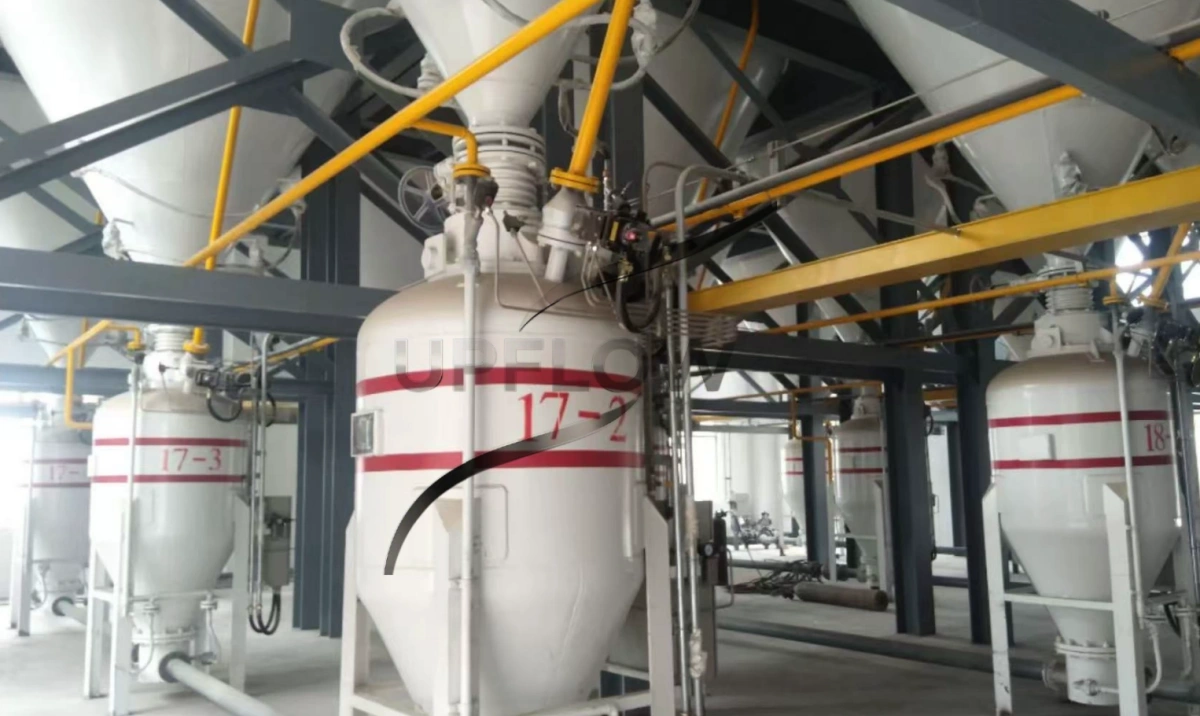
Introduction: Enabling Efficient and Clean Powder Handling
A pneumatic conveying system for chemical powder production lines is widely used in modern industrial plants where large volumes of powders must be transferred efficiently, safely, and without contamination, especially as manufacturers move toward automated and environmentally compliant production systems. By integrating advanced airflow-based transport with enclosed pipeline design, this type of material conveying system allows chemical powders to be moved continuously between different process stages while maintaining a clean and controlled production environment.
Compared with traditional conveying equipment, pneumatic systems not only reduce dust emissions but also improve production consistency, making them an essential component in modern chemical manufacturing facilities.
Chemical Powder Types and Material Handling Characteristics
Designing a pneumatic conveying system for chemical powder production lines requires a detailed understanding of the various powders involved, as chemical materials often exhibit diverse physical behaviors that directly affect conveying performance. Typical powders include calcium carbonate, titanium dioxide, resins, pigments, catalysts, fertilizers, and specialty additives, each with different particle sizes, densities, and flow characteristics.
Fine powders such as pigments and additives tend to generate dust easily and require fully enclosed powder conveying systems to prevent environmental contamination, while cohesive materials like certain resins or chemical intermediates may exhibit poor flowability and require carefully controlled feeding mechanisms. In addition, abrasive materials such as calcium carbonate can cause wear in pipelines, making it necessary to select suitable materials and system configurations within a bulk powder conveying system to ensure long-term reliability.
System Working Principle and Conveying Methods
A pneumatic conveying system for chemical powder production lines operates by using airflow, either through vacuum or positive pressure, to transport powders through sealed pipelines, allowing materials to move efficiently across different sections of the production line. This method enables flexible routing and supports complex plant layouts, making it ideal for modern automated factories.
Depending on the application requirements, the system can be configured for dilute phase conveying, which is suitable for free-flowing powders, or dense phase conveying, which is more appropriate for fragile, abrasive, or high-value materials that require low-velocity transport. This flexibility allows the powder transfer system to adapt to a wide range of chemical processes while maintaining stable and efficient operation.
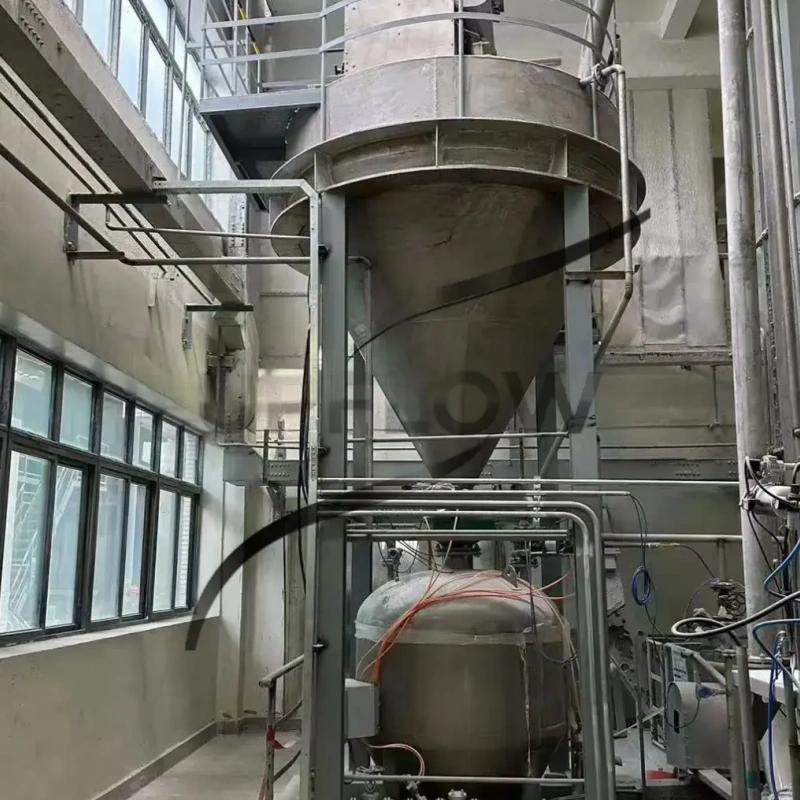
Key System Components and Functional Integration
A complete pneumatic conveying system for chemical powder production lines typically consists of several integrated components working together to ensure efficient and reliable operation, including air supply units, feeding systems, conveying pipelines, separation and filtration units, and receiving equipment. These components are designed to handle powders in a controlled and enclosed manner, minimizing material loss and ensuring consistent performance.
In advanced applications, the system is often integrated with upstream and downstream equipment, forming a comprehensive material conveying system that supports continuous production and automated process control. This integration enhances efficiency while reducing the need for manual intervention.
Operational Advantages and Process Stability
One of the major benefits of a pneumatic conveying system for chemical powder production lines is its ability to provide stable and continuous material transport, which is essential for maintaining consistent production quality. By controlling airflow and system parameters, manufacturers can achieve uniform feeding and reduce fluctuations that may affect product performance.
Additionally, the enclosed design of the powder conveying system significantly reduces dust emissions, improving workplace safety and environmental compliance, while also minimizing the risk of material contamination. This makes pneumatic conveying particularly suitable for industries with strict quality and safety requirements.
Design Considerations for Chemical Powder Conveying
When designing a pneumatic conveying system for chemical powder production lines, several key factors must be considered to ensure optimal performance and reliability, including material characteristics, conveying distance, system capacity, and plant layout. Each of these factors influences the selection of conveying method, pipeline design, and system configuration.
Safety and environmental requirements are also critical, especially when handling hazardous or reactive powders, as proper dust control, explosion protection, and anti-static design must be incorporated into the system to ensure safe operation under all conditions.
Applications in Chemical Production Processes
A pneumatic conveying system for chemical powder production lines is widely applied across various sectors of the chemical industry, including additive production, pigment processing, resin manufacturing, fertilizer production, and fine chemical processing, where efficient and reliable powder handling is essential for maintaining production efficiency and product quality.
By enabling seamless material transfer between different process stages, the system supports continuous production workflows and helps manufacturers achieve higher levels of automation and operational efficiency.
Conclusion: A Core Solution for Modern Chemical Manufacturing
A well-designed pneumatic conveying system for chemical powder production lines provides a clean, efficient, and flexible solution for handling a wide range of chemical powders, enabling manufacturers to overcome challenges related to dust, contamination, and process instability. By adopting advanced conveying technologies and integrating them into automated production systems, companies can improve efficiency, enhance product quality, and meet the growing demands of modern industrial production.