Introduction: From Decentralized Feeding to Centralized Automation
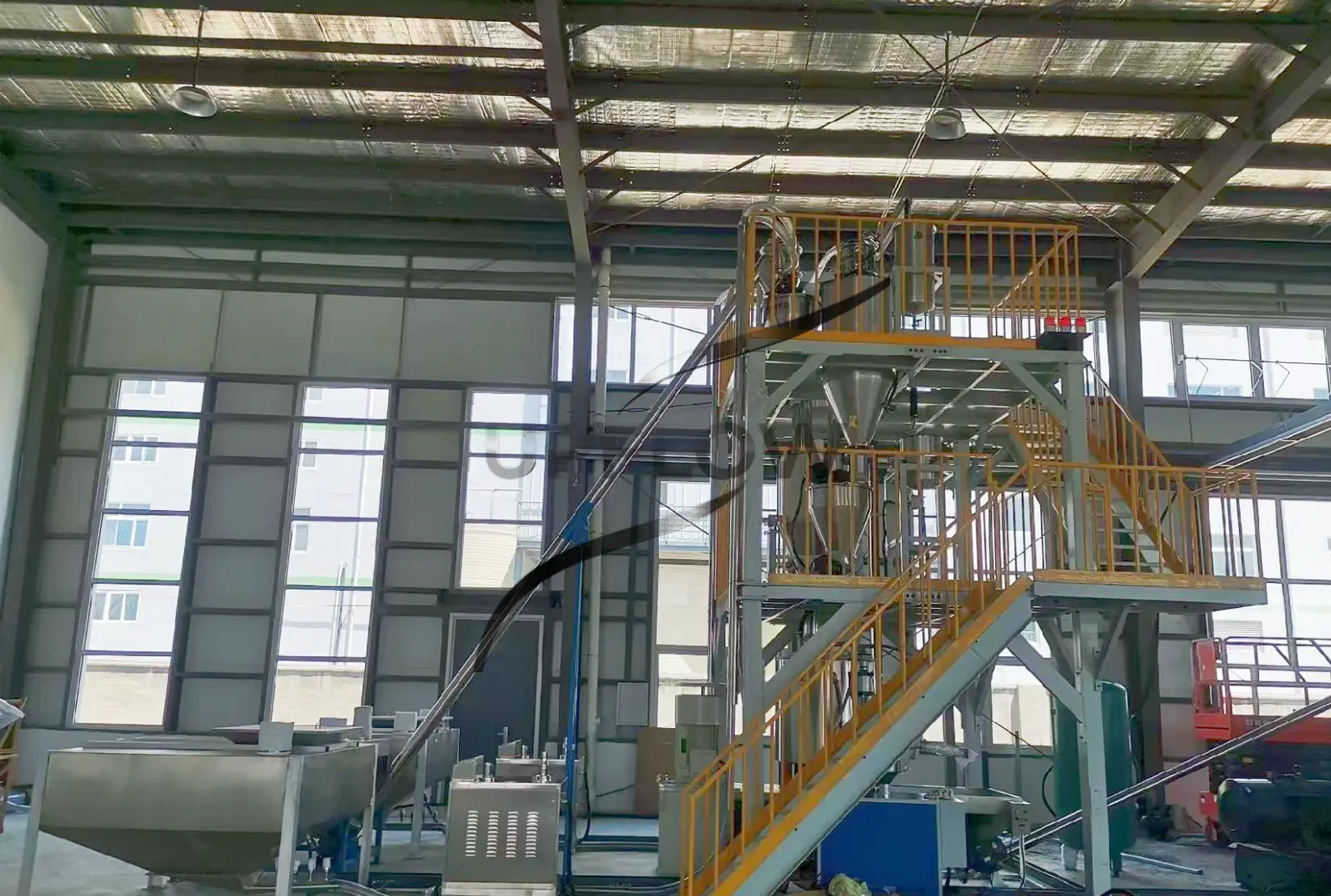
A centralized conveying system for multi-machine production lines has become an essential solution in modern plastic and chemical factories, where multiple processing units require stable, continuous, and precisely controlled material supply. Instead of relying on manual transport or independent feeding for each machine, manufacturers are increasingly adopting integrated material conveying lines that connect storage, conveying, and processing into a unified automated system.
By implementing a centralized system, factories can significantly reduce labor dependency while ensuring consistent material distribution across all machines, which is critical for maintaining product quality and improving overall production efficiency.
Material Types and Handling Characteristics
Designing a centralized conveying system for multi-machine production lines requires a clear understanding of the different materials involved, as plastic and chemical industries typically handle a wide range of bulk solids with varying flow properties. Common materials include plastic pellets such as PE, PP, ABS, and PET, which are generally free-flowing and suitable for high-speed conveying, as well as chemical powders like calcium carbonate, titanium dioxide, resins, and additives that may exhibit dusting, cohesion, or moisture sensitivity.
In addition, recycled plastics and regrind materials often have irregular shapes and inconsistent bulk density, which can affect conveying stability and require specially designed feeding and pipeline configurations. These variations make it necessary to select appropriate conveying technologies, such as a vacuum pneumatic conveying system for flexible multi-point feeding or a dense phase conveying system for handling fragile or abrasive materials.
System Architecture and Conveying Methods
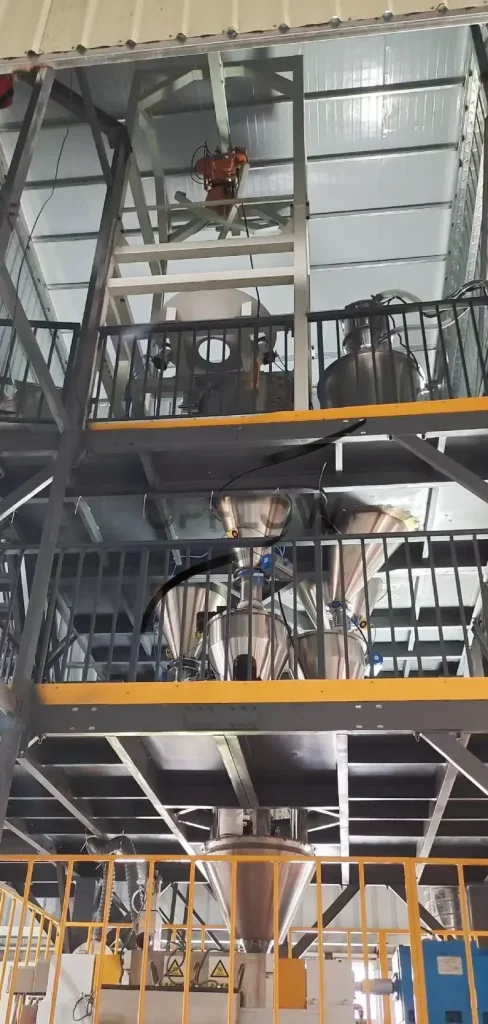
A typical centralized conveying system for multi-machine production lines is built around a central storage and distribution concept, where materials are stored in silos or hoppers and then transported through pipelines to multiple machines based on real-time demand. Depending on the layout and production requirements, the system can operate using a vacuum pneumatic conveying system for short-distance, flexible routing, or a positive pressure pneumatic conveying system for long-distance and high-capacity transport.
In large production facilities, these conveying methods can be combined to form a hybrid system that maximizes efficiency and flexibility, allowing materials to be delivered to different machines with minimal delay while maintaining stable and controlled flow conditions throughout the process.
Centralized Feeding and Multi-Machine Coordination
One of the key advantages of a centralized conveying system for multi-machine production lines is its ability to coordinate material supply across multiple processing units, ensuring that each machine receives the required material at the right time and in the correct quantity. This is achieved through intelligent control systems that monitor material levels at each machine and automatically trigger feeding cycles when needed.
Such a system transforms traditional production lines into highly efficient automated environments, where material flow is synchronized with production demand, reducing downtime and eliminating inconsistencies caused by manual feeding. This coordinated approach is particularly valuable in applications such as injection molding and compounding, where multiple machines operate simultaneously.
Pipeline Design and Long-Distance Conveying Capability
In a centralized conveying system for multi-machine production lines, the pipeline network serves as the backbone of the entire system, connecting storage units, conveying equipment, and processing machines into a unified material conveying line. Proper pipeline design is essential for minimizing resistance, reducing energy consumption, and ensuring stable material transport, especially in complex plant layouts.
For large-scale facilities, a long-distance pipeline conveying system is often required to transport materials over distances of 100 meters or more, which demands careful control of airflow, pressure, and pipeline configuration to maintain consistent performance and avoid material segregation or blockage.
System Flexibility and Multi-Material Handling
Modern centralized conveying systems for multi-machine production lines are designed to handle multiple materials within a single system, allowing manufacturers to switch between different products or formulations without major modifications. This is achieved through material distribution stations and automated valves that direct materials to specific machines based on production requirements.
Such flexibility is particularly important in industries where production lines frequently change products or colors, as it enables efficient and reliable material handling while minimizing downtime and cross-contamination risks.
Conclusion: Enabling Smart and Scalable Production
A well-designed centralized conveying system for multi-machine production lines provides a highly efficient, flexible, and automated solution for material handling in plastic and chemical industries, integrating conveying, storage, and feeding into a unified system that supports modern manufacturing requirements. By combining advanced conveying technologies such as vacuum, dense phase, and positive pressure systems, manufacturers can achieve improved efficiency, reduced costs, and consistent product quality across all production units.