
Introduction: Why Conveying Design Is Critical for Lithium Battery Materials
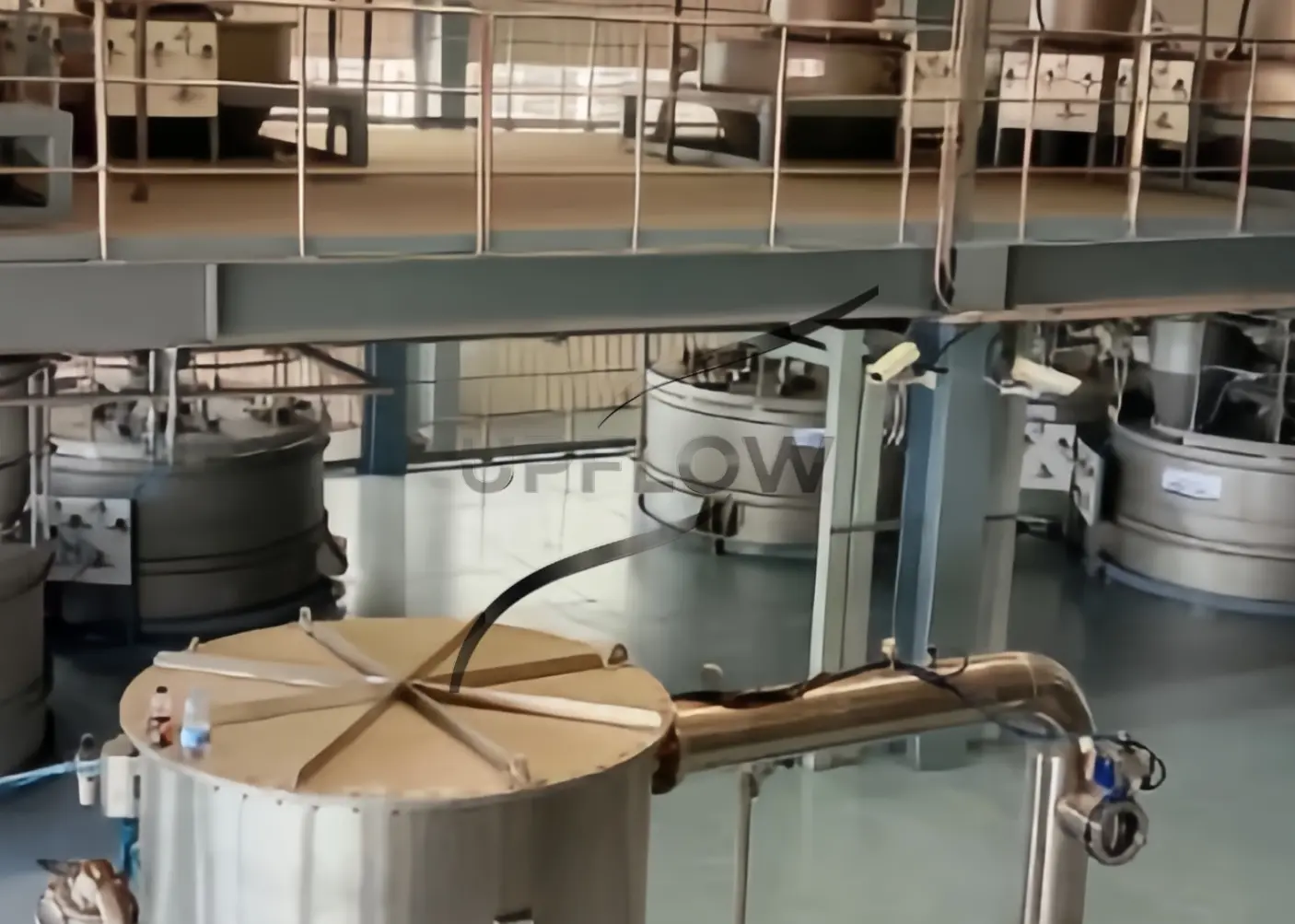
A well-engineered lithium battery material conveying system is not simply a transport solution but a core part of the production process, as it directly determines material purity, moisture control, and final battery performance in modern lithium battery manufacturing. With the increasing demand for high-performance batteries, manufacturers are adopting advanced powder automatic conveying systems to ensure stable, clean, and controlled material transfer while minimizing environmental interference and human contact.
Unlike conventional powder handling, lithium battery materials require extremely strict control over contamination and humidity, which means the conveying system must be designed as a fully enclosed and highly controlled process unit rather than a basic mechanical system.
Typical Lithium Battery Materials and Their Characteristics
Lithium battery production involves a wide range of powders, each with specific physical and chemical properties that significantly influence the design of a lithium battery material conveying system, particularly in terms of sensitivity and handling difficulty. Common materials include lithium iron phosphate (LFP), nickel cobalt manganese (NCM/NCA) cathode materials, graphite anode powders, conductive carbon black, and electrolyte additives.
Cathode materials such as NCM powders are highly sensitive to metal contamination and require extremely clean conveying environments, while graphite powders are lightweight and prone to dust dispersion, making them suitable for high air volume pneumatic conveying but requiring precise sealing and filtration. Carbon black is ultra-fine and cohesive, which can lead to agglomeration and pipeline buildup, while lithium salts and additives are often sensitive to moisture and require strict humidity control within a low pressure conveying system to maintain chemical stability.
Contamination Control in System Design
Preventing contamination is one of the most critical objectives when designing a lithium battery material conveying system, as even trace amounts of metal particles can significantly affect battery performance and safety. To achieve this, the entire conveying process must be designed as a fully enclosed system, often referred to as a fully automatic conveying system, where materials are isolated from the external environment.
Material selection is equally important, as all contact parts must be made from high-grade stainless steel or coated with ceramic linings to minimize wear and prevent metal particle generation, while system connections must be highly sealed to avoid cross-contamination between different materials. These design strategies ensure that the conveying process maintains the highest level of purity required in lithium battery production.
Moisture Control and Dry Conveying Technology
Moisture is one of the most critical factors affecting lithium battery material quality, and therefore a lithium battery material conveying system must incorporate advanced moisture control strategies to maintain a dry and stable environment throughout the conveying process. This is typically achieved by using dry gas, such as nitrogen, as the conveying medium, combined with closed-loop systems that prevent moisture ingress.
In addition, maintaining a low dew point and controlling system pressure are essential for preventing condensation and material degradation, while integrating humidity sensors and monitoring systems allows real-time control of environmental conditions. These measures ensure that materials remain stable and free from moisture-related defects during transfer.
Selecting the Right Conveying Method
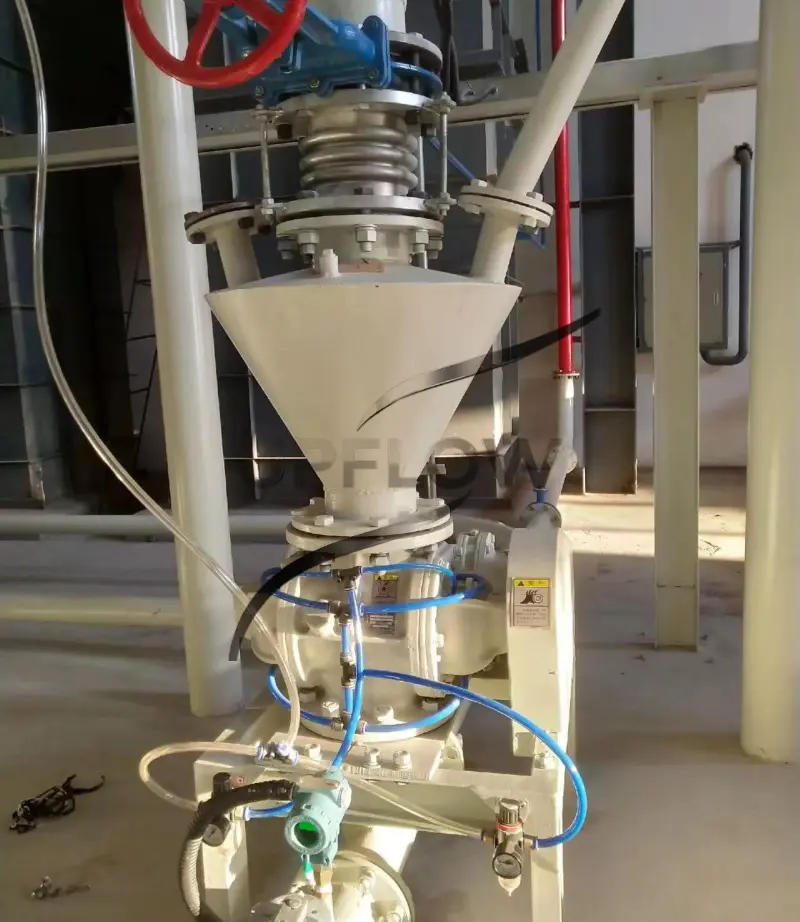
Choosing the appropriate conveying method is essential for balancing efficiency, material protection, and system reliability in a lithium battery material conveying system, as different materials and production layouts require different solutions. For example, dilute phase conveying systems are often used for free-flowing materials and high-capacity transport, while low-velocity conveying methods are preferred for fragile or sensitive powders to minimize particle breakage.
In many cases, a low pressure conveying system is selected to reduce wear and energy consumption while maintaining stable material flow, especially in long-distance applications where pipeline design and airflow control become critical factors. By carefully selecting the conveying method, manufacturers can optimize both performance and product quality.
System Integration and Automation
Modern lithium battery plants are moving toward highly integrated production systems, where the lithium battery material conveying system is connected with feeding, batching, mixing, and packaging processes to form a continuous and automated workflow. Through advanced control systems, operators can monitor key parameters such as pressure, flow rate, and humidity in real time, ensuring stable and efficient operation.
This level of integration not only improves production efficiency but also enhances process consistency and traceability, which are essential for meeting the strict quality requirements of lithium battery manufacturing. As a result, conveying systems are becoming an integral part of smart factory solutions in the energy storage industry.
Conclusion: Designing for Purity, Stability and Efficiency
A well-designed lithium battery material conveying system must achieve a balance between contamination control, moisture prevention, and efficient material handling, as these factors are essential for ensuring consistent product quality and safe production. By combining enclosed conveying, dry gas technology, optimized airflow, and intelligent monitoring, manufacturers can build a reliable system that supports long-term production stability and performance.