
blog img

Introduction

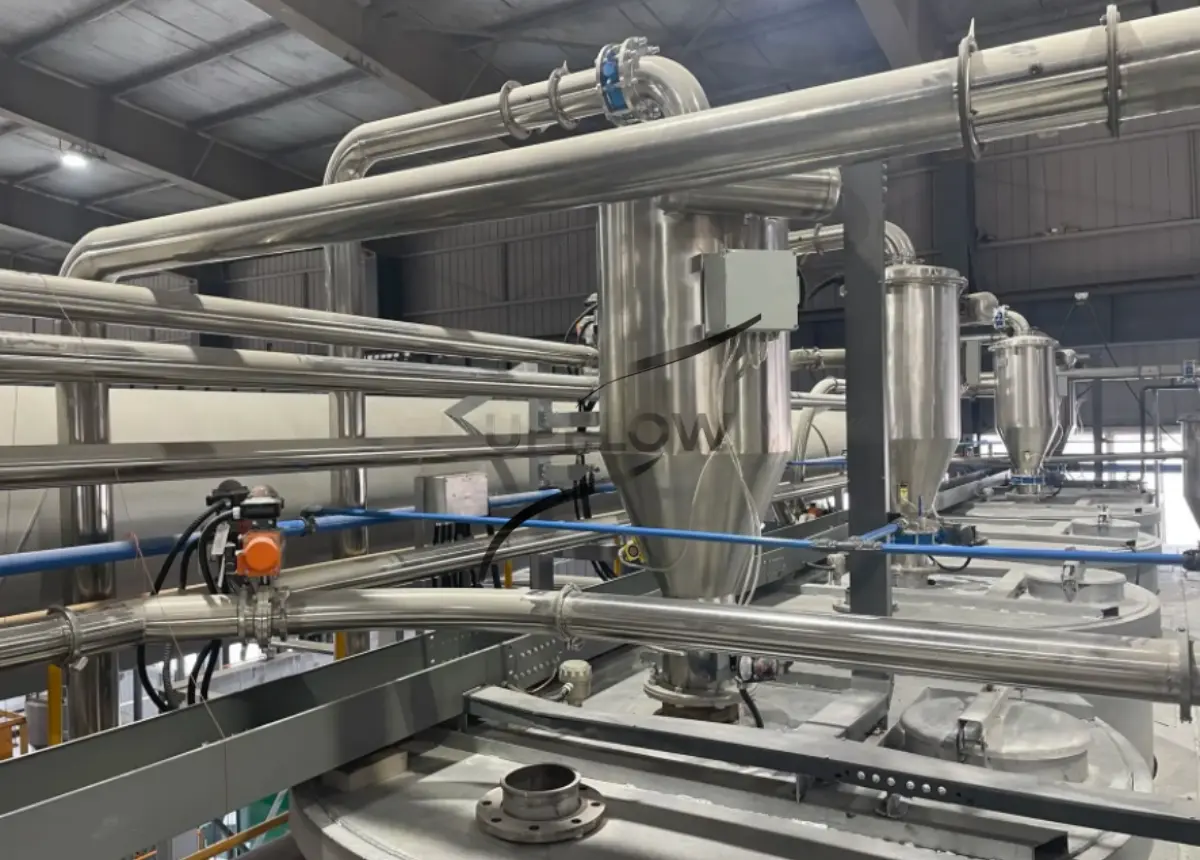
A turnkey pneumatic conveying system for industrial plants is a complete solution designed to handle bulk powders and granular materials efficiently, safely, and automatically. In today’s advanced manufacturing environment, industries such as chemical processing, food production, pharmaceuticals, and new energy materials demand high standards of cleanliness, automation, and long-distance conveying.

Traditional mechanical conveying systems can no longer meet these requirements due to dust leakage, material loss, and limited flexibility. In contrast, a turnkey pneumatic conveying system integrates design, equipment supply, installation, and commissioning into a single solution, ensuring seamless operation and optimal performance from day one.

Looking for a complete turnkey conveying solution? Contact us for a FREE system design and quotation within 24 hours.

Industry Background

With the rapid development of Industry 4.0 and intelligent manufacturing, bulk material handling has evolved from a simple transport process into a critical part of production efficiency and product quality.

Many industrial plants still face challenges such as:

Dust pollution affecting workplace safety

Material contamination in sensitive industries

High labor costs from manual handling

Inefficient layout of traditional conveying systems

Frequent maintenance and downtime

Modern industries must comply with strict standards such as ISO and OSHA, which emphasize safety, environmental protection, and efficiency.

This has led to the increasing adoption of turnkey pneumatic conveying systems, which provide:

Fully enclosed, dust-free conveying

High automation and digital control

Flexible plant layout integration

Reduced operational costs

System Solution

A turnkey pneumatic conveying system for industrial plants is not just equipment. It is a complete engineered solution covering the entire lifecycle of a project.

What Does ”Turnkey”Mean?

A turnkey solution includes:

Process consultation and material testing

System design and engineering

Equipment manufacturing

Installation and commissioning

Operator training

After-sales support

This ensures that the system is ready for operation immediately after installation, minimizing risks and reducing project complexity.

Conveying Technologies

Turnkey systems are typically based on different conveying principles:

Dilute Phase Conveying

High-speed conveying (15-30 m/s)

Suitable for free-flowing materials

Ideal for long-distance transport

Dense Phase Conveying

Low-speed conveying (2-8 m/s)

Gentle handling of fragile materials

Reduced wear and energy consumption

Positive Pressure System

Material is pushed through pipelines

Suitable for long-distance, high-capacity systems

Vacuum Conveying System

Material is sucked into pipelines

Ideal for dust-free feeding and multi-point collection

Recommended Equipment

A complete turnkey system includes:

Pneumatic Conveying System

Automatic Bag Emptying Machine

Vacuum Conveyor

Screw Conveyor

Related articles:

Bulk Powder Pneumatic Conveying System

Hygienic Pneumatic Conveying System for Food Industry

Why Turnkey Solutions Matter for Modern Industrial Plants

For many industrial manufacturers, buying a pneumatic conveying system is not just about purchasing equipment. The real challenge is how to ensure that the system fits the plant layout, matches the process flow, and operates reliably from the first day of production. This is exactly why a turnkey pneumatic conveying system for industrial plants has become increasingly important.

A turnkey project reduces the complexity that usually comes with multi-supplier coordination. Instead of separately managing system design, equipment sourcing, installation, and commissioning, the customer works with one engineering partner that takes full responsibility for the whole project. This greatly reduces communication errors, project delays, and interface problems between different suppliers.

In practical terms, a turnkey solution provides several critical advantages:

Single-source responsibility for engineering, manufacturing, and startup

Faster project execution with fewer coordination issues

Better system compatibility between components and controls

Lower project risk because the supplier is responsible for final system performance

Simplified after-sales support with one technical service team

This approach is especially valuable in industries where conveying is closely tied to product quality, safety, and regulatory compliance. In chemical plants, for example, incorrect pipe routing or unstable airflow may affect throughput and increase dust hazards. In food and pharmaceutical factories, poor integration can create hygiene risks or cleaning difficulties. A turnkey supplier solves these issues at the design stage rather than after production begins.

Another major advantage is that turnkey projects allow the supplier to optimize the system from a process perspective instead of just delivering standard machines. This means the conveying method, air source, pipeline diameter, elbow design, control logic, and discharge method are all selected as one integrated package. As a result, the final solution is more stable, more efficient, and easier to maintain.

For industrial plants planning expansion, automation upgrades, or line retrofits, a turnkey pneumatic conveying system is often the most cost-effective and long-term choice.

System Components

A turnkey pneumatic conveying system integrates multiple subsystems to ensure stable and efficient operation.

1. Feeding System

Bag dumping station or silo discharge

Rotary valve or screw feeder

Ensures consistent material flow

2. Air Supply System

Air compressor or blower

Provides stable airflow

Energy-efficient design

3. Conveying Pipeline Network

Optimized using CFD simulation

Wear-resistant bends

Flexible routing across plant layouts

4. Separation and Filtration System

Cyclone separator or filter receiver

Dust collection system

High material recovery rate

5. Control System

PLC-based automation

Real-time monitoring

Integration with MES/ERP systems

6. Smart Monitoring System

Modern systems include:

Predictive maintenance

Data tracking and traceability

Remote diagnostics

Design Considerations

Designing a turnkey pneumatic conveying system for industrial plants requires a comprehensive evaluation of multiple factors.

1. Material Properties

Particle size

Bulk density

Moisture content

Abrasiveness

2. Process Requirements

Conveying capacity

Distance and height difference

Feeding and discharge points

3. Plant Layout

Space constraints

Equipment positioning

Pipeline routing

4. Safety and Environmental Requirements

Dust control systems

Explosion protection (ATEX if required)

Compliance with environmental regulations

5. Energy Efficiency

Optimized airflow

Variable frequency control

Reduced pressure loss

6. Automation and Integration

Integration with existing production lines

Centralized control systems

Smart factory compatibility

A well-designed turnkey system ensures long-term reliability, efficiency, and cost savings.

Common Challenges in Industrial Pneumatic Conveying Projects

Although pneumatic conveying offers major advantages, not every system performs well if it is poorly designed or incorrectly selected. In industrial plants, several common issues can affect system reliability and operating cost.

1. Material Blockage

Some powders are hygroscopic, sticky, or poorly flowing. If the conveying velocity is too low, or if the pipeline design contains too many sharp bends, material may accumulate and eventually block the line. This is why material testing and proper velocity calculation are essential before final design.

2. Excessive Wear

Highly abrasive materials such as catalysts, minerals, or battery powders can cause severe wear in bends, valves, and pipe walls. In these cases, dense phase conveying, ceramic-lined bends, or wear-resistant pipe materials should be considered to extend service life.

3. Product Degradation

Fragile or high-value materials may break down if they are conveyed at excessive speed. This is a common concern in food, pharmaceutical, and new energy applications. Low-velocity dense phase conveying is often the preferred solution for protecting product quality.

4. Dust and Leakage

A poorly sealed system not only wastes material, but can also create serious housekeeping and safety problems. Industrial plants increasingly prefer fully enclosed conveying systems because they minimize dust emissions and support cleaner production environments.

5. High Energy Consumption

An oversized blower, inefficient pipe routing, or excessive conveying air can make the system expensive to operate. Energy-efficient design should therefore be considered from the beginning, not added later as an afterthought.

These challenges highlight why engineering expertise matters so much. A professional turnkey supplier does not simply choose a standard model; they evaluate the material, process, layout, and production target to deliver a customized solution that works in real conditions.

Case Example

Project Overview

Industry: Petrochemical

Material: Catalyst powder

Capacity: 50 tons/hour

Distance: 500 meters

Challenges

High dust pollution

Long-distance conveying requirement

Strict safety and explosion-proof standards

High maintenance cost of mechanical conveyors

Solution

We provided a turnkey pneumatic conveying system, including:

Dense phase conveying technology

Nitrogen inert gas protection system

Fully enclosed pipeline network

Intelligent PLC control system

Results

100% dust-free conveying

30% reduction in maintenance cost

Improved operational safety

Stable long-distance conveying

Additional Case: Food Industry

Material: Milk powder and sugar

Result:

20% increase in production efficiency

No contamination

Fully automated operation

Have a similar industrial conveying project? Send us your requirements today.

Typical Industries That Benefit from Turnkey Pneumatic Conveying

A turnkey pneumatic conveying system for industrial plants is widely used across many sectors because of its flexibility, cleanliness, and automation advantages.

Chemical Industry

Used for resins, catalysts, pigments, additives, and specialty powders. These systems often require corrosion resistance, explosion protection, and reliable sealed conveying.

Food Industry

Suitable for flour, sugar, milk powder, starch, cocoa, and additives. Hygienic design, stainless steel contact parts, and easy cleaning are especially important in this sector.

Pharmaceutical Industry

Applied to APIs, excipients, and intermediate powders. The main priorities are containment, traceability, and GMP-compliant design.

New Energy Materials

Widely used for lithium battery cathode and anode materials, carbon powder, and other fine powders that demand low contamination and precise process control.

Building Materials and Minerals

Ideal for cement, fly ash, lime, and other abrasive bulk powders requiring long-distance and continuous conveying.

This wide applicability makes turnkey pneumatic conveying one of the most practical investments for factories seeking both immediate process improvement and long-term automation benefits.

Long-Term Value Beyond Equipment Supply

The true value of a turnkey pneumatic conveying project is not only the equipment itself, but the long-term improvement it brings to plant performance. A well-executed system can help manufacturers reduce labor dependency, improve workshop cleanliness, lower maintenance frequency, and create more stable production results.

Over time, these benefits translate into measurable value:

Higher production efficiency

Lower product loss

Reduced downtime

Improved plant safety

Easier future expansion

For many factories, the investment decision is no longer based only on initial purchase price. More buyers now evaluate total lifecycle value, including energy consumption, maintenance cost, spare parts demand, and technical service support. This is where an experienced turnkey supplier provides a major advantage.

In short, choosing a turnkey pneumatic conveying system means choosing a solution that supports the entire production process—not just one conveying task.

Conclusion

A turnkey pneumatic conveying system for industrial plants represents the future of bulk material handling. By integrating advanced conveying technologies, intelligent control systems, and full lifecycle services, it delivers unmatched efficiency, safety, and flexibility.

As industries continue to evolve toward automation and sustainability, turnkey solutions will play a crucial role in improving productivity and reducing operational costs.

Upgrade your industrial material handling system today:

Get a FREE turnkey system design within 24 hours

Receive a customized quotation

Talk to our engineering experts

Contact us now via WhatsApp or email and start building a smarter, cleaner, and more efficient conveying system.

Leave a Reply