
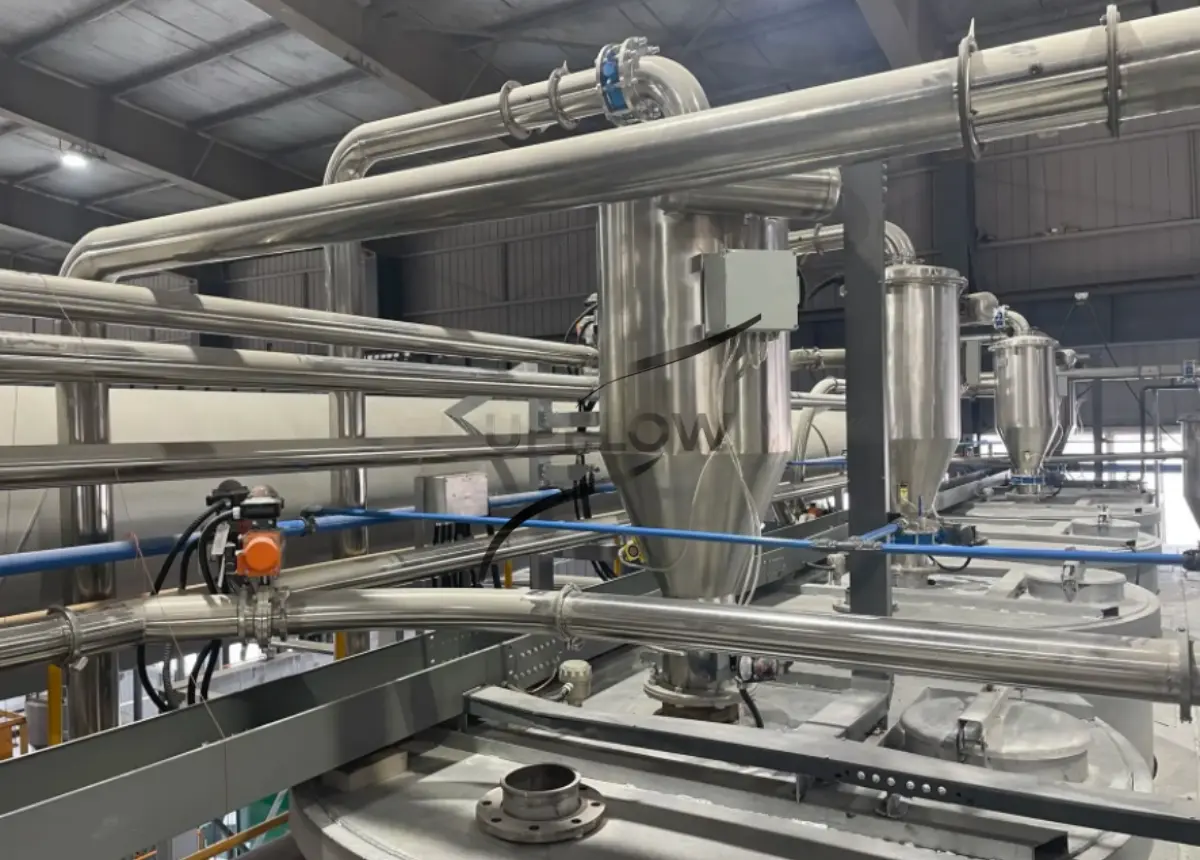
Introduction: Why Turnkey Pneumatic Conveying Systems Are the Future
A turnkey pneumatic conveying system has become a key solution for modern industrial plants that require efficient, dust-free, and fully automated material handling, especially as industries such as chemicals, food, pharmaceuticals, and new energy continue to move toward intelligent manufacturing. Compared with traditional conveying methods, an integrated material automation system allows manufacturers to achieve continuous production, reduce labor costs, and improve process stability while ensuring a clean and safe working environment.
Common Industrial Powders and Their Conveying Characteristics
Industrial plants handle a wide variety of powders, and understanding their characteristics is essential when designing a turnkey pneumatic conveying system, because different materials require different conveying strategies and system configurations. Common industrial powders include calcium carbonate, cement, fly ash, silica powder, carbon black, lithium battery materials, catalysts, pigments, and chemical additives, all of which are widely used across different industries.
For example, calcium carbonate and cement are heavy and abrasive materials that often require wear-resistant pipelines and robust system design, while fly ash is typically handled using an ash conveying system due to its fine particle size and high dust potential. Carbon black and silica powder are lightweight and easily airborne materials that require precise airflow control within a powder conveying system, while lithium battery powders and catalysts are often sensitive or hazardous materials that require low-velocity conveying and a fully enclosed system to prevent contamination and ensure safety.
System Technologies and Integrated Solutions
A turnkey pneumatic conveying system is not just a single piece of equipment, but a complete engineering solution that integrates conveying, feeding, and control into one coordinated system, ensuring seamless operation across the entire production line. Depending on process requirements, different conveying technologies can be applied, including high-speed airflow conveying for free-flowing materials and dense phase conveying for fragile or abrasive powders.
In many industrial plants, a positive pressure conveying system is used for long-distance conveying systems, as it provides stable material flow and high conveying capacity, while vacuum systems are often used for short-distance or hygienic applications. In complex production processes, a mixed conveying system may be implemented to handle multiple materials, and a central conveying system can distribute materials efficiently to multiple production lines, improving automation and reducing manual intervention.
Key Components of a Turnkey Pneumatic Conveying System
A complete turnkey pneumatic conveying system integrates several subsystems to ensure stable and efficient operation, including feeding systems, air supply units, pipeline networks, separation and filtration systems, and advanced control systems. These components work together to form a fully automated powder transfer system, ensuring consistent material flow and reliable system performance.
The conveying pipeline, often designed with wear-resistant materials and optimized routing, plays a critical role in system efficiency, while the air supply system ensures stable airflow for continuous conveying. In addition, modern systems include intelligent control platforms that allow real-time monitoring and integration with production lines, making the system an essential part of a smart factory environment.
Design Considerations for Industrial Applications
Designing a reliable turnkey pneumatic conveying system requires a comprehensive evaluation of material properties, conveying distance, capacity requirements, and plant layout, as these factors directly influence system performance and cost. For example, abrasive materials require reinforced components, while long-distance conveying requires optimized pipeline design and high-capacity air supply systems.
In addition, system efficiency depends heavily on airflow control and pipeline design, as excessive bends or improper routing can lead to pressure loss and increased energy consumption. By optimizing system design and integrating it into a broader material automation system, manufacturers can achieve stable operation while reducing maintenance and operating costs over time.
Common Challenges and How Turnkey Solutions Solve Them
Industrial conveying projects often face challenges such as material blockage, excessive wear, product degradation, dust leakage, and high energy consumption, especially when systems are poorly designed or not properly matched to material characteristics. A turnkey pneumatic conveying system addresses these issues by providing a fully engineered solution that considers all aspects of the process, from material testing to system optimization.
By working with a professional pneumatic conveying manufacturer, companies can ensure that the system is designed based on real operating conditions, reducing the risk of downtime and improving overall system reliability. This approach not only enhances performance but also reduces long-term operating costs and maintenance requirements.
Applications Across Industries
A turnkey pneumatic conveying system is widely used across multiple industries due to its flexibility and efficiency, including chemical processing, food production, pharmaceutical manufacturing, new energy materials, and building materials industries. In each of these sectors, the system plays a key role in ensuring safe, clean, and efficient material handling while supporting high levels of automation.
Whether handling powders, granules, or mixed materials, a properly designed granular conveying system or powder conveying system can significantly improve production efficiency, reduce labor costs, and enhance product quality, making it an essential investment for modern industrial plants.
Conclusion: A Smart Investment for Modern Industry
A well-designed turnkey pneumatic conveying system represents the future of industrial material handling, as it combines advanced conveying technology, intelligent control, and full lifecycle support into one integrated solution. By adopting this approach, manufacturers can achieve higher efficiency, better product quality, and lower operational costs while preparing for future expansion and automation upgrades.